


Cao Hailong, Director of the Cardiovascular Surgery Department at Zhongda Hospital affiliated with Southeast University, performed over 800 heart surgeries in a year with a success rate close to 100%.
He has successfully completed multiple top-level heart surgeries in a single day: three valve repairs and replacements, coronary artery bypass surgery, major vascular surgery, complex congenital heart disease, and atrial fibrillation ablation, including "David-Barlow mitral valve repair," covering all types of open heart surgery. Globally, there are no more than 10 doctors who can handle all these surgeries.
Now, Cao Hailong continues to break records - recently, he performed a highly challenging complex cardiovascular surgery on a 97-year-old elderly person, including the replacement of two heart valves, the repair of an aortic valve, and the completion of a heart bypass...
Public information shows that performing multiple high-difficulty cardiovascular combination surgeries for such elderly patients is the first case in the country.
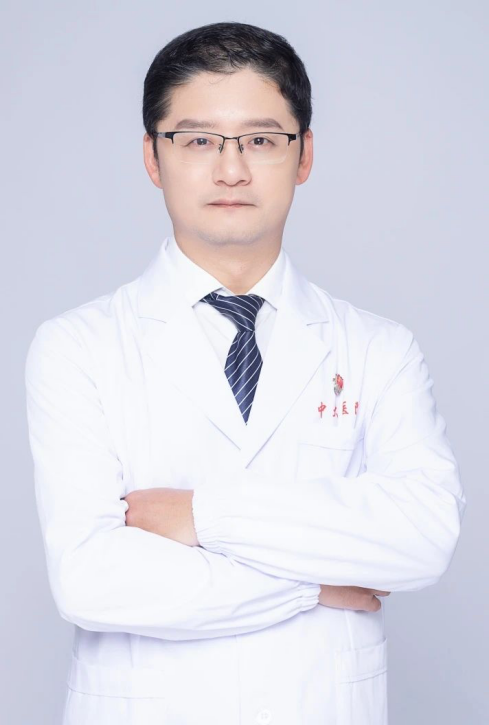
Cao Hailong
The patient is 97 years old, conservative treatment or take a chance?
When Cao Hailong saw the examination report of 97-year-old Grandma Zhou, he fell into a brief contemplation. She had a history of stroke, mitral valve, tricuspid valve, and aortic valve insufficiency. This means that out of the patient's four heart valves, three have been severely damaged.
Eventually, Grandma Zhou was diagnosed with heart failure, heart function level III, combined with severe coronary artery stenosis and atrial fibrillation. In Cao Hailong's words, "(the patient's) heart is close to a scrap state." If surgery is not performed in time, it could endanger life at any moment.
At this time, a difficult problem was presented to the patient's family.
From a medical perspective, surgery may be the only means to reverse the deterioration of the disease, but Grandma Zhou's heart problem is extremely complex, with high surgery difficulty and long duration. At the same time, old age is one of the risk factors for surgery, especially in the cardiovascular surgery department, which generally considers 80 years old as the dividing line for surgery difficulty.
Cao Hailong introduced to "MedJ" that for the elderly, postoperative bleeding is a common and fatal complication. Because the function of many organs in the elderly is declining, they often have multiple chronic basic diseases, which will affect the tolerance of surgery and anesthesia, increasing the risk of postoperative complications and death.
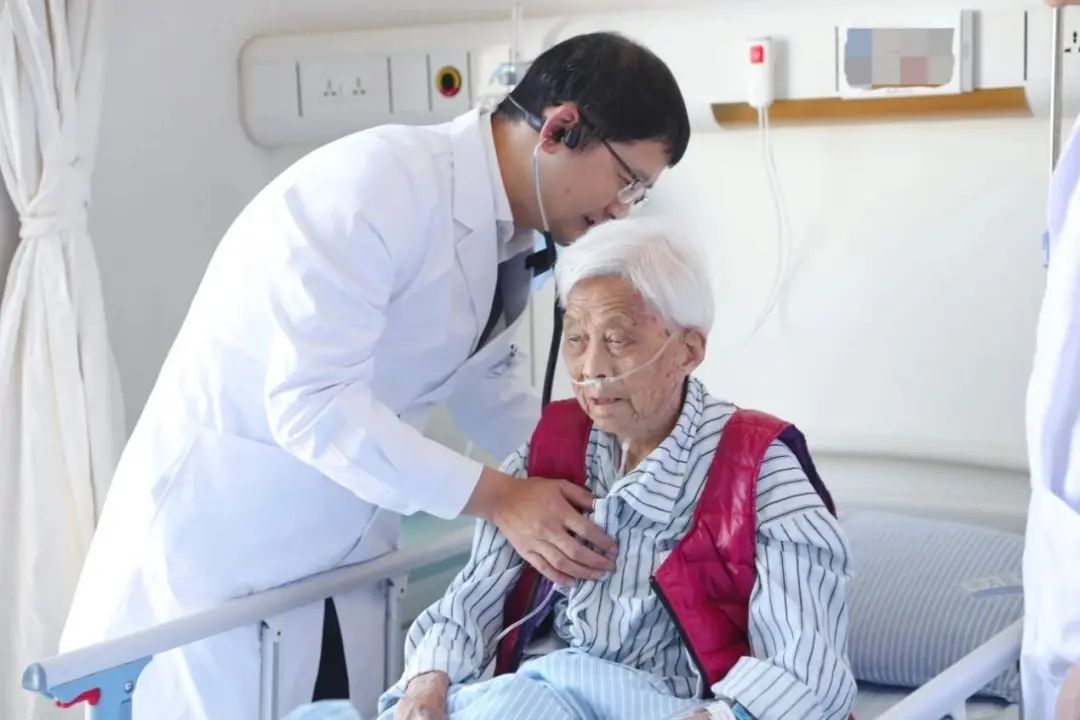
Cao Hailong, Director of the Cardiovascular Surgery Department at Zhongda Hospital affiliated with Southeast University, is conducting a postoperative check-up for Grandma Zhou. Photo source/interviewee.
In addition, most elderly people have osteoporosis, and after cardiovascular surgeons open the chest, they need to use instruments to open and close the sternum, which has high requirements for bone density and bone quality. Once damage occurs during surgery, it may cause bleeding, infection, and other situations.
Because of this, at least 30%-50% of aortic valve disease patients in China cannot tolerate surgery due to old age, poor heart function, and serious complications, or give up surgical treatment due to fear.
From a more realistic level, the patient is already 97 years old, and Cao Hailong estimated that if conservative treatment such as medication is used, "it may not be able to last until the Spring Festival of 2025." After hearing this news, Grandma Zhou and her children still chose to believe in the doctor's surgical ability and decided to take a chance.
In fact, Cao Hailong is an authority in this field. Since July 2023, Cao Hailong's team has completed nearly 100 complex heart surgeries for elderly people over 80 years old, accounting for nearly 1/10 of the total surgery volume, covering all areas of open heart surgery.
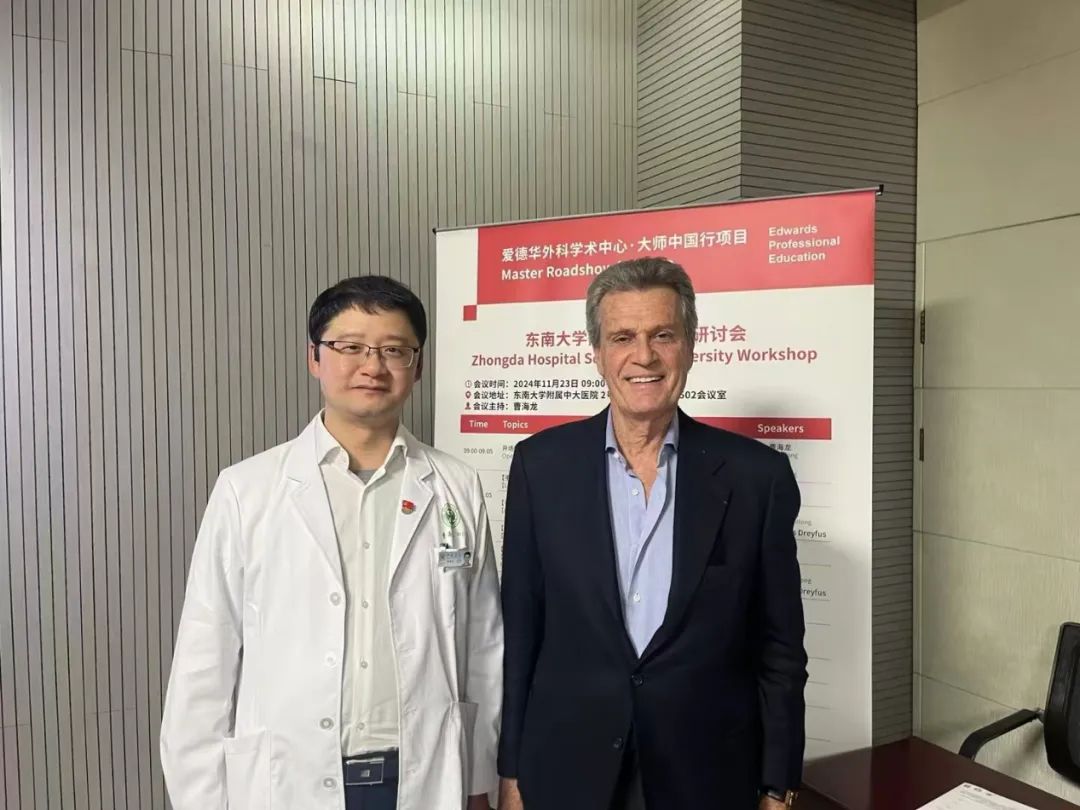
In November 2024, Cao Hailong (left) is pictured with internationally renowned valve repair master Gilles Dreyfus. Photo source/interviewee.
Once, Cao Hailong performed four surgeries in a day, involving valve repair and replacement, coronary artery bypass, major vascular surgery, complex congenital heart disease, and atrial fibrillation ablation, covering all open surgical procedures of cardiovascular surgery.
In addition, the first upper sternal small incision, aortic root replacement surgery (David surgery) that retains the aortic valve in Jiangsu Province, also came from him. This type of surgery has very high anatomical requirements, and any improper operation may cause serious complications, and the surgery is long, has many operations, and has high risks.
Cao Hailong can perform this surgery at twice the speed of ordinary people, and some people call him an "all-round cardiovascular surgeon", "globally, there are no more than 10 doctors who can handle all types of open heart surgery."
He performs more than 800 heart surgeries a year.
After comprehensive assessment, Cao Hailong believes that the surgical risks for Grandma Zhou are controllable and the chances of success are great.
Just two months ago, Grandma Zhou successfully completed laparoscopic radical surgery for sigmoid colon cancer at the hospital and recovered well. "This shows that the elderly's basic condition is good, and the body may be stronger than some people in their forties and fifties." Cao Hailong said.
More importantly, he is full of confidence in the cardiovascular surgery team. "We perform surgery on the elderly over 80, and the success rate is close to 100%. The elderly get perfect surgical results, the quality of life in their later years is improved, and the burden of children's support is significantly improved." Cao Hailong said.
On November 11th this year, it was Grandma Zhou's surgery day. According to her condition, the surgery needed to establish extracorporeal circulation and be performed under cardiac arrest.
Under the leadership of Cao Hailong, the cardiovascular team successfully completed Grandma Zhou's aortic valve replacement, mitral valve replacement, tricuspid valve repair, and heart bypass... To reduce tissue damage, the team used clamps or ligation very sparingly, with a total of more than 500 sutures and four to five hundred knots, and there was no bleeding.
Cao Hailong believes that a surgeon must have a "sense of touch". "A good surgeon can understand the toughness and elasticity of the patient's tissue when the first knife is cut, and knows how much strength to use, from what angle the instrument should enter, how far it can enter, and how much tension the tissue can withstand."
Looking back at the entire surgery process, he has a more vivid metaphor: "It's like a martial arts master fighting, as soon as the other party raises their hand, you know where to dodge."
The "sense of touch" comes from the physical instinct trained by thousands of surgeries.
"When I was a graduate student, the medical technology was not as good as it is now, and some patients couldn't get off the operating table. At that time, the pressure was great, and I was very confused, thinking about how far I could go in the future, and whether I could perform such difficult surgeries? As the working years increased, in the slow accumulation, some levels naturally passed." Cao Hailong said.
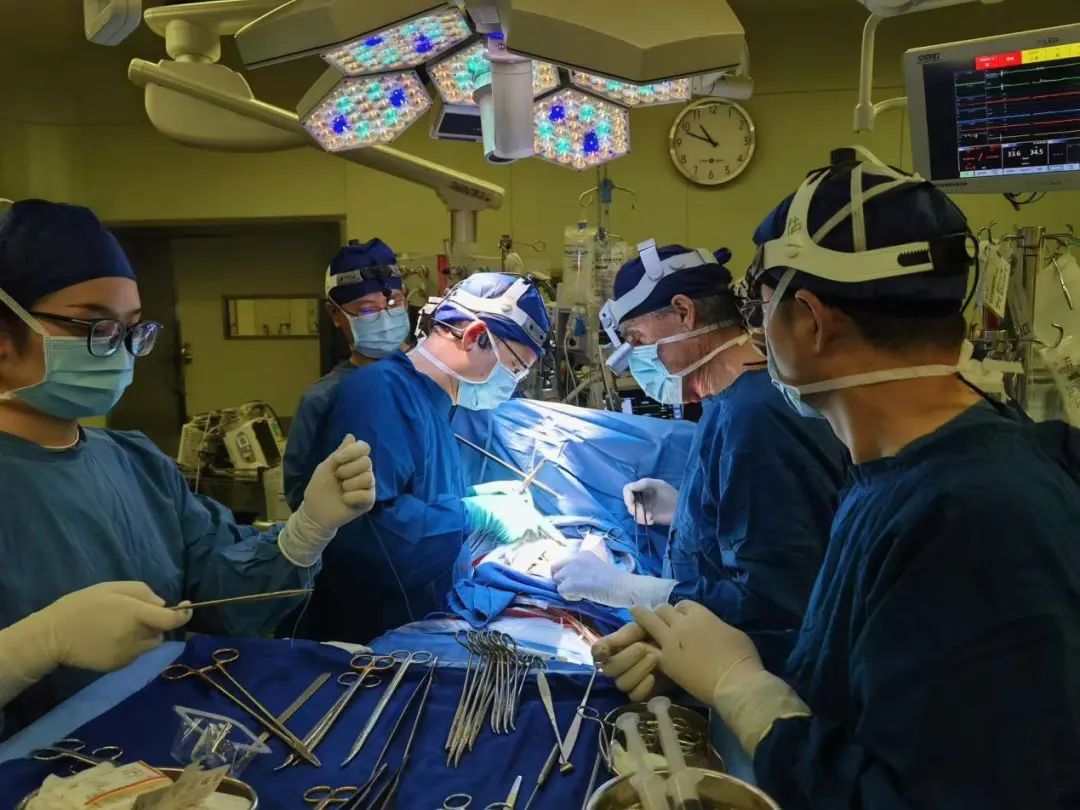
Cao Hailong and Professor Gilles Dreyfus in surgery / Photo source: Interviewee.
Cao Hailong introduced to the "MedJ" that he performs more than 800 surgeries a year, and the surgical volume has been at the top in Jiangsu for four consecutive years. Among them, he performs more than 200 complex mitral valve repairs each year, more than 50 David surgeries and other aortic valve repairs, more than 20 complex tricuspid valve repairs, and more than 150 coronary artery bypasses.
In addition to the large surgical volume, Cao Hailong also has several leads: the surgery time is significantly shorter than the industry average; the surgery success rate is close to 100%; the treatment cost is only 88% of the national average cost.
Grandma Zhou's surgery lasted 4 hours. For the same condition, Cao Hailong has seen others take six or seven hours and still not finish. When it comes to the reason for "fast hand speed", Cao Hailong said that on the one hand, it is preoperative simulation, and on the other hand, he is used to giving surgical orders in advance.
"Efficiency is the most important! My hands are still repairing tissue, and my mouth has already reminded the nurse to prepare the suture line, and the instructions will be detailed to use how many lines, how much. I will also give a preliminary prompt to the anesthesiologist, what operation is being performed, and how long it will take to inject heparin." Cao Hailong told the "Medical Community" that in the surgeries he performed, there was no minute of waiting.
In the accumulation of day after day, no matter what the situation, Cao Hailong's heart rate is only 60-70 beats per minute. Everyone found that he rarely gets anxious on the operating table, "full of confidence, any emergency can be perfectly solved." A colleague commented.
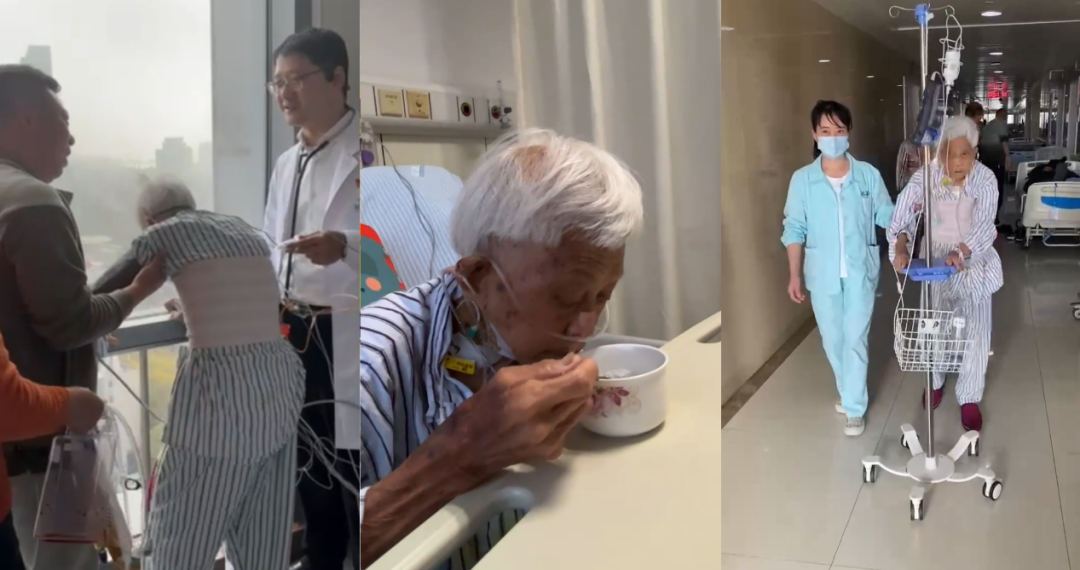
From left to right: Grandma Zhou walking on the second day after surgery; eating independently on the third day; starting rehabilitation training on the fifth day. Photo source/interviewee.
Break the ultra-high age surgery forbidden zone
At the beginning of December, Grandma Zhou was smoothly discharged from the hospital, and her weight increased by nearly 10 pounds, but for her, the successful completion of the surgery was just the first hurdle.
For elderly people like her, Cao Hailong introduced that the difficulty lies in the control of every life support link. Including preoperative accurate calculation of anesthesia dosage; during the operation, the perfusionist should shorten the extracorporeal circulation time as much as possible to reduce organ damage; after the operation, the intensive care medicine department needs to closely observe.
Among the patients Cao Hailong has successfully treated, the age range spans from 6 months to 97 years old, and he still has the WeChat of tens of thousands of patients and their families in his mobile phone, and the corridor outside his office is full of brocade flags.
"In cardiovascular surgery, the proportion of elderly people is getting higher and higher. Patients in their early 70s can't even make it into the top 20 of the hospital's high-age surgery list." Cao Hailong recalled that more than ten years ago, there were few elderly people over 65 on the operating table. Now, he is in charge of 45 beds, and the number of patients over 70 admitted all year round has exceeded 200.
This is related to China's rapid entry into an aging society and other factors. The World Health Organization (WHO) has shown in many studies that cardiovascular and cerebrovascular diseases are the leading cause of death worldwide, accounting for 1/3 of all deaths. Among them, senile heart valve disease has begun to receive attention, and the incidence rate increases significantly with age.
The Lancet article indicates that the incidence rate of heart valve disease in people over 75 is about 13.2%. The Framingham study also shows that the incidence rate of moderate to severe mitral regurgitation in people aged 70-83 is 11.1%.
Western scholars have proposed that valvular disease has become the third most important cardiovascular disease, more common than atrial fibrillation, cardiomyopathy, heart failure, and elderly heart conduction degeneration. "Heart valve decay (valvular disease) is a hurdle that human longevity must cross." In 2021, Ge Junbo, the director of the Department of Cardiology at Zhongshan Hospital affiliated with Fudan University, wrote in an article.
Cao Hailong pointed out that with the continuous development of minimally invasive techniques such as transcatheter valve repair and replacement technology, age is no longer a surgical forbidden zone, and the physical condition is the key indicator of whether surgery can be performed. Secondly, the family must have good care conditions to ensure postoperative recovery.
"The constantly beating heart is one of the last forbidden areas that the scalpel reaches, and it is also one of the most difficult surgeries. I want to take the most difficult path and complete the impossible." Cao Hailong said.

