


On January 5, Merck announced that Xinruilai (sotatercept for injection, Sotatercept), the world’s first and currently only activin signaling inhibitor (ASI) designated as a breakthrough therapy, has been approved in China for adult patients with pulmonary arterial hypertension (PAH, WHO Group 1) in WHO functional class II–III to improve exercise capacity and WHO functional class.
Notably, this was a core pipeline asset obtained when Merck spent US$11.5 billion to acquire Acceleron in 2021.
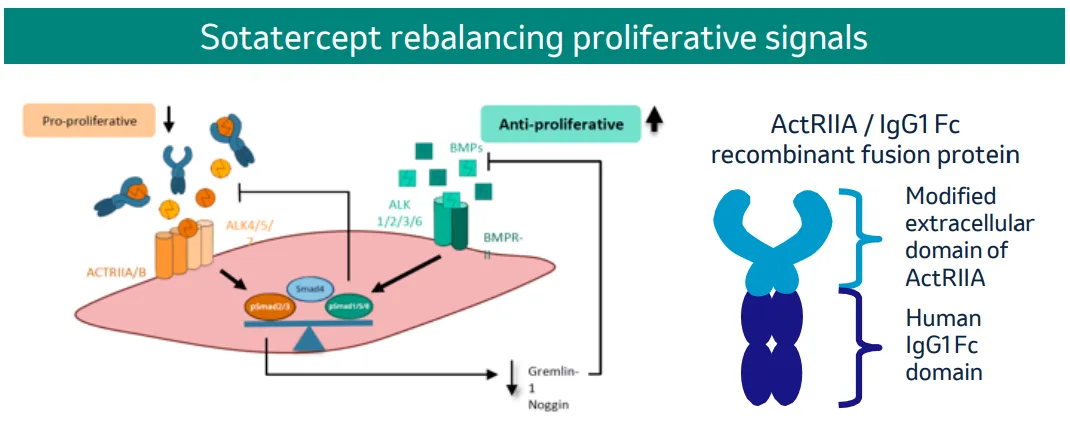
Sotatercept is a first-in-class activin receptor type IIA (ActRIIA) fusion protein. By binding activin ligands in the TGF-beta superfamily, it blocks their interaction with the ActRIIA receptor, thereby inhibiting the ActRIIA-Smad2/3 signaling pathway and restoring the balance between pro-proliferative and anti-proliferative signals that drive vascular cell proliferation in PAH, ultimately suppressing pulmonary vascular remodeling.
According to the Insight database, sotatercept achieved its first global approval in the United States in March 2024 under the brand name Winrevair, and was later approved in the European Union the same year. In less than one year on the market, the drug generated US$419 million in global sales in 2024; in 2025 Q2 alone, quarterly sales reached US$336 million, putting it on track to become a blockbuster in only its second year on the market and underscoring its commercial potential.
In 2025, sotatercept continued to expand globally and was approved in Japan and South Korea in June and July. The latest Chinese approval means the drug has now entered all major pharmaceutical markets worldwide.
Its earlier FDA approval was based on the STELLAR trial (NCT04576988), a randomized, double-blind, placebo-controlled, multicenter pivotal Phase III study evaluating the efficacy and safety of sotatercept plus stable background therapy versus placebo in adults with PAH.
The study enrolled 323 patients with PAH in WHO functional class II–III, excluding patients with portal hypertension, schistosomiasis, HIV infection, or pulmonary veno-occlusive disease. All participants had received background PAH therapy for at least 90 days before enrollment and continued it throughout the trial.
Patients were randomized 1:1 to receive subcutaneous sotatercept or placebo for 24 weeks. The primary endpoint was change from baseline in 6-minute walk distance at week 24. Nine secondary endpoints included improvement in overall condition, change in pulmonary vascular resistance, and improvement in WHO functional class.
At week 24, the placebo-adjusted increase in 6-minute walk distance was 41 meters in the sotatercept group (95% CI: 28, 54; p<0.001), with significant improvements in multiple key secondary endpoints, including an 84% reduction in the risk of all-cause death or PAH clinical worsening events versus background therapy alone.
In addition to STELLAR, Merck has conducted multiple Phase III studies and has successively reported positive results. In the ZENITH study reported in March 2025, sotatercept reduced the risk of clinical worsening events by 76% in PAH patients at the highest risk of death (functional class III/IV), and the trial was stopped early because of strong efficacy. In October 2025, the FDA expanded the indication to include reduction of the risk of clinical worsening events such as PAH hospitalization, lung transplantation, and death.
In addition, the HYPERION study, prominently published in The New England Journal of Medicine in September, focused on adults newly diagnosed with PAH within the prior 12 months, in WHO functional class II/III and at intermediate or high risk of disease progression, and showed a 76% reduction in the risk of clinical worsening events.
PAH is a rare and often rapidly progressive disease. It is characterized by vascular thickening of the pulmonary arterial wall driven by an imbalance between proliferative and anti-proliferative signals, which restricts blood flow, progressively increases right ventricular burden, and ultimately leads to heart failure or death. According to Insight statistics, the global prevalence of PAH in 2023 was 15 per million.
Compared with conventional targeted therapies, another advantage of sotatercept is its subcutaneous mode of administration: one injection every three weeks. In later treatment, patients may self-administer the drug at home without physician supervision, whereas currently available PAH-targeted agents still require daily long-term dosing. The approval of sotatercept not only provides patients with a new treatment option, but may also substantially reduce the burden on both physicians and patients.

