


At the 29th Chinese Society of Clinical Oncology (CSCO) Annual Meeting in Jinan, China (September 17–19, 2026), Prof. Dirk Schadendorf of University Hospital Essen, Germany, and Prof. Jun Guo of Peking University Cancer Hospital joined MedJ’s “China–World Top Talk” session, “Melanoma · Pursuing Light: Iteration of Targeted‑Immunotherapy and East‑West Handshake in Real‑World Practice.” Together, they discussed advances in melanoma targeted therapy and immunotherapy, East–West perspectives on acral and mucosal melanoma, and the complementary roles of randomized controlled trials (RCTs) and real-world evidence (RWE).
Article Key Points
- PD-1, ipilimumab, and BRAF/MEK inhibitors transformed advanced melanoma from 6-9 month survival to long-term outcomes
- China has >50% acral and ~25% mucosal melanoma vs <5% combined in Europe; PD-1 ORR <15% in acral/mucosal
- Chinese-led trials of anti-angiogenic + PD-1 and triple regimens raised ORR in some acral subtypes
- Most Chinese melanoma trials lack global multicenter validation; ESMO 2026 guidelines first added acral/mucosal subtypes
- Future priorities include AI and digital twins for evidence generation; CSCO led global 4-subtype classification
Western Melanoma Progress
Schadendorf opened by reviewing the generational shift in Western melanoma care. He noted that 20 years ago, a diagnosis of advanced metastatic melanoma was nearly equivalent to a death sentence, with a median overall survival of only 6 to 9 months. Three classes of drugs have changed that picture over the past two decades.
He outlined that the CTLA-4 inhibitor ipilimumab, with data first published in 2010, was the first to demonstrate long-term tumor control in a subset of patients. PD-1 blocking antibodies subsequently delivered long-term disease control in approximately 40% of patients with cutaneous melanoma, with efficacy maintained even in those with brain metastases. For the approximately 40% of patients carrying BRAF V600 mutations, BRAF inhibitor combined with MEK inhibitor regimens delivered high objective response rates (ORRs) and durable responses. “Today it is no longer uncommon to see patients surviving five or ten years, and these drugs have moved into the adjuvant setting,” Schadendorf summarized.
Expert Profile: Prof. Dirk Schadendorf

- Director, Department of Dermatology, University Hospital Essen, Germany
- Director, West German Cancer Center (WTZ)
- Chair, Dermatologic Cooperative Oncology Group (DECOG)
- Chair, Melanoma Group, European Organisation for Research and Treatment of Cancer (EORTC)
- Former Research Associate, Department of Dermatology, Benjamin Franklin Medical Center, Free University of Berlin (1989-1993)
- Former Senior Physician and Scientific Assistant, Department of Dermatology, Benjamin Franklin Medical Center (1993-1995)
- Former Assistant Professor, Department of Dermatology, Rudolf Virchow Hospital (1994)
- Former Assistant Professor, Department of Skin Oncology, Mannheim Hospital
- Former C3 Professor and Director, Clinical Cooperation Unit for Dermato-Oncology, German Cancer Research Center, Mannheim (1997-2008)
- Former Senior Physician, Department of Dermatology, Mannheim University Hospital (2000-2008)
- Director, Department of Dermatology, University Hospital Essen (since 2008)
China’s Distinct Landscape
Guo, speaking from a Chinese perspective, acknowledged that early Chinese practice borrowed extensively from Western evidence on BRAF mutation management, PD-1 inhibitors, and ipilimumab. However, fundamental differences in melanoma subtype distribution between China and the West have created a persistent efficacy gap.
He observed that cutaneous melanoma predominates in the West, while in China more than 50% of cases are acral and approximately 25% are mucosal subtypes; the two subtypes combined account for less than 5% of cases in Europe. PD-1 monotherapy yields ORRs of approximately 40% to 50% in cutaneous melanoma but less than 15% in acral or mucosal disease.
Facing this gap, Chinese researchers have pursued an independent path. Guo outlined that domestic clinical trials have explored anti-angiogenic agents combined with PD-1 inhibitors, as well as triple regimens combining chemotherapy, anti-angiogenic agents, and PD-1 antibodies for acral melanoma, with ORRs rising substantially above the single-agent era and exceeding 50% in some subtypes. Trials of interleukin-2 (IL-2) combined with PD-1 inhibitors as first-line therapy for acral and mucosal melanoma have also been initiated. Together, these studies suggest that the treatment of acral and mucosal melanoma, which dominate China’s disease landscape, must be answered with Chinese data.
Expert Profile: Prof.Jun Guo
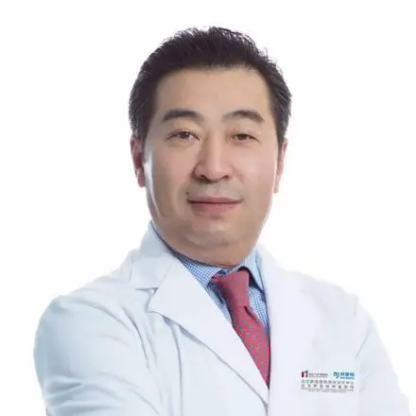
- Chief Physician, MD, Doctoral Supervisor
- Director, Department of Melanoma and Sarcoma Medical Oncology, Peking University Cancer Hospital
- Director, Department of Urological Oncology, Peking University Cancer Hospital
- Vice President and Secretary-General, Chinese Society of Clinical Oncology (CSCO)
- Vice President, International Melanoma Society (MWS)
- Chair, Melanoma Specialist Committee, National Cancer Quality Control Center, National Cancer Center
- Former Chair, CSCO Melanoma Expert Committee
- Vice Chair, CSCO Renal Cancer Expert Committee
- Vice Chair, CSCO Immunotherapy Committee
- Vice Chair, CSCO Urothelial Cancer Committee
- Vice Chair, CSCO Prostate Cancer Committee
- National Drug Registration Review Expert, China Food and Drug Administration (CFDA)
- Member, National Health Commission Rational Drug Use Expert Committee (Antitumor Drug Group)
Moving Beyond One-Size-Fits-All
Schadendorf emphasized that international trial design must move beyond the “one size fits all” approach toward subtype- and mutation-informed individualization, and that Chinese success in acral melanoma illustrates this principle. He added that desmoplastic melanoma also deviates from the broader paradigm, indicating that subtype differences extend beyond ethnicity alone.
Guo agreed, noting that most historical melanoma trials enrolled only cutaneous patients, but global trials are now stratifying by acral and mucosal subtypes. BRAF mutations are largely confined to cutaneous melanoma, he said, while KIT and NRAS mutations are more common in acral disease.
New Modalities in a Low-Neoantigen Setting
Guo highlighted that new modalities including tumor-infiltrating lymphocytes (TIL), chimeric antigen receptor T cells (CAR-T), T cell receptor-engineered T cells (TCR-T), and messenger RNA (mRNA) vaccines combined with pembrolizumab continue to emerge. He cautioned, however, that acral and mucosal tumors carry a low neoantigen burden, and how to make these therapies work in low-neoantigen tumors remains a global challenge.
East-West Collaboration on Acral and Mucosal Disease
With acral and mucosal subtypes now central rather than rare, Western researchers are looking to China for guidance. Schadendorf acknowledged that European experience with acral and mucosal melanoma is limited, and raised deeper questions: whether these subtypes in Asian populations differ from those in Western Europe in mutation profile and tumor immune microenvironment, and whether such differences affect efficacy. “We lack experience, while our Chinese colleagues have a broader research space; the Western community has every reason to learn from China,” he said.
Guo summarized China’s distinctive advantages as patient resources and industry ecosystem. The large population of acral and mucosal patients enables rapid trial enrollment, and China’s biotech industry has developed rapidly, with pipelines covering antibody-drug conjugates (ADC), TIL, CAR-T, and TCR-T, allowing researchers to initiate clinical trials more easily. Acral and mucosal subtypes are also more sensitive to chemotherapy than cutaneous disease, making ADCs a potential avenue worth exploring, he added.
On limitations, Guo was direct: low tumor mutational burden (TMB) and low neoantigen load constrain not only mRNA vaccines but also TCR-T and CAR-T. More critically, he said, many Chinese trials are conducted only in Chinese populations without global multicenter validation, so even when domestic data are impressive, Western peers will request validation in Western populations. “Phase III trials should be designed as global multicenter studies from the outset, so as to fundamentally address the question of data generalizability,” he said.
Schadendorf added a complementary perspective on the global value of Chinese patient resources, noting that the field still does not know how many neoantigens a vaccine requires to be effective, and that acral and mucosal subtypes are ideal models to answer this foundational question.
RCT and Real-World Evidence as Twin Engines
Schadendorf framed RCTs as the strongest evidence, but observed that their strict inclusion and exclusion criteria mean the conclusions often represent only a small subset of real-world patients; Western RCT data are difficult to generalize to Asian populations. Real-world data carry inherent issues including older age, comorbidities, and physician selection bias, and require rigorous confounder control before entering guideline discussions.
Guo summarized the division of labor: RCTs answer “which is better, A or B, for this patient group,” while real-world studies may surface new questions that RCTs did not cover, prompting a new round of RCTs. RWE alone, however, remains cautious as a strong evidence basis for guideline inclusion.
This complementarity has already translated into practice. Guo noted that this year’s European Society for Medical Oncology (ESMO) melanoma guidelines, for which he and Schadendorf serve as chapter authors, included acral and mucosal subtype content for the first time, with the bulk of acral evidence coming from Chinese studies.
Looking Ahead: AI, Digital Twins, and Global Guidelines
Schadendorf said artificial intelligence and related technologies, including real-world evidence and digital twins, may help answer questions that traditional methods cannot. He cited conference observations that many scientific questions take decades to answer with traditional trials, during which the treatment landscape has already changed, making new technologies essential to accelerate evidence generation. This process will depend on global collaboration, he added, and China, he noted, is already at the forefront in this area.
Guo described the evolution of guidelines. He said the CSCO melanoma guideline was, to his knowledge, the first to classify melanoma into four subtypes (cutaneous, acral, mucosal, and uveal), updated each year for more than a decade, while the ESMO melanoma guideline historically focused on cutaneous disease and only recently caught up to multi-subtype stratification, with this year almost in sync with CSCO.
This reflects an important trend, Guo said: melanoma is no longer treated as a single disease, and different subtypes require different treatment strategies, not only for first-line therapy but also for adjuvant and neoadjuvant care. “For China, we need to continue leading global multicenter research in acral and mucosal melanoma, while learning humbly from international peers on cutaneous disease,” he said.
Closing Note
Two decades on, Western evidence has laid a solid foundation for cutaneous melanoma care, while Chinese researchers, building on China’s distinct disease landscape, have filled global gaps in acral and mucosal melanoma through domestic RCTs and real-world evidence, evolving from technology followers into an indispensable Eastern force in the global evidence map. East-West collaboration has moved from one-way learning to two-way partnership, with RCTs and real-world evidence reinforcing each other, and digital tools and global cooperation continuing to accelerate progress toward higher cure rates in melanoma.

