


On 26 June 2026, Martha Ann Lillard died at her home in Shawnee, Oklahoma, at the age of 78.
Her final night, like most of the previous 73 years, was spent inside a steel cylinder roughly the size and shape of a small capsule. That device was an iron lung, a negative-pressure ventilator first introduced in the late 1920s. Her sister said Lillard had slept peacefully outside the iron lung for the first time in 73 years only after she died.
Lillard’s life was, in effect, tethered to the machine. At age 5, in 1953, she was struck by poliomyelitis — commonly known as polio — which left her unable to breathe without mechanical assistance. The Salk vaccine would not become available for another two years.
Doctors told her family she would not live past 20. She went on to use the same iron lung for nearly seven more decades.The iron lung is one of the most recognizable medical artifacts of the mid-20th-century polio epidemic, and a defining image of a generation’s encounter with the disease.
As vaccines drove poliovirus to near-extinction, iron lungs largely disappeared from clinical practice and into museum displays. Lillard was among the very last people still kept alive by one.
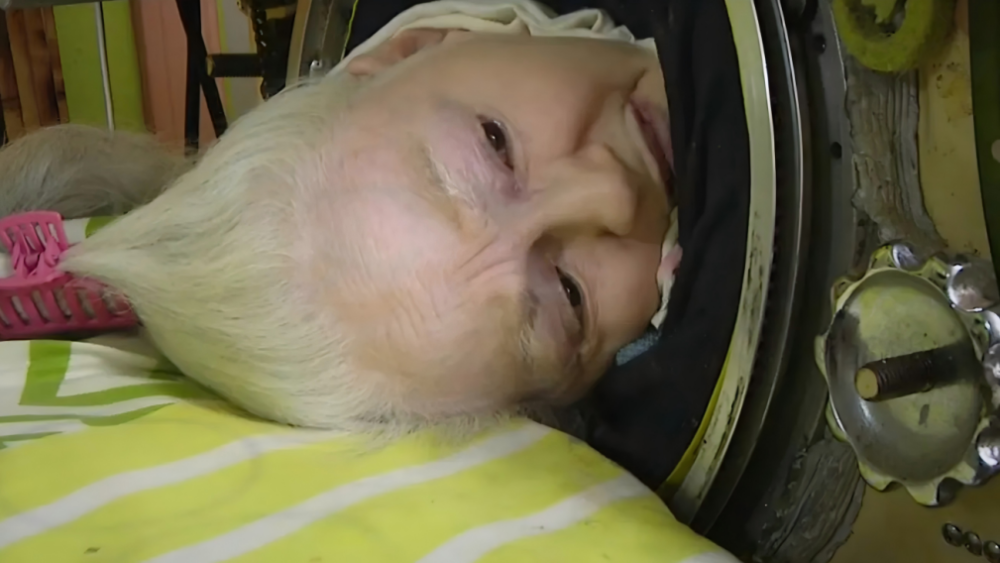
Fig.1.Martha is Undergoing Treatment in an Iron Lung
Fifth Birthday, Nightmare Begins
Lillard was born on 8 June 1948 in Shawnee, Oklahoma. Five days after her 5th birthday party, held at an amusement park called Joyland in Kansas, she developed a sore throat, neck pain, and could not lift her head.
Her family took her to hospital. Within four days, she was unconscious, in respiratory failure, and paralyzed from the neck down. The diagnosis was polio.
The year 1953 was among the worst in the U.S. polio epidemic. Approximately 35,000 Americans were infected that year, and roughly half were left with some degree of paralysis. The Salk vaccine arrived in 1955. In the interval, the iron lung was, for many severe cases, the only available means of keeping patients alive.
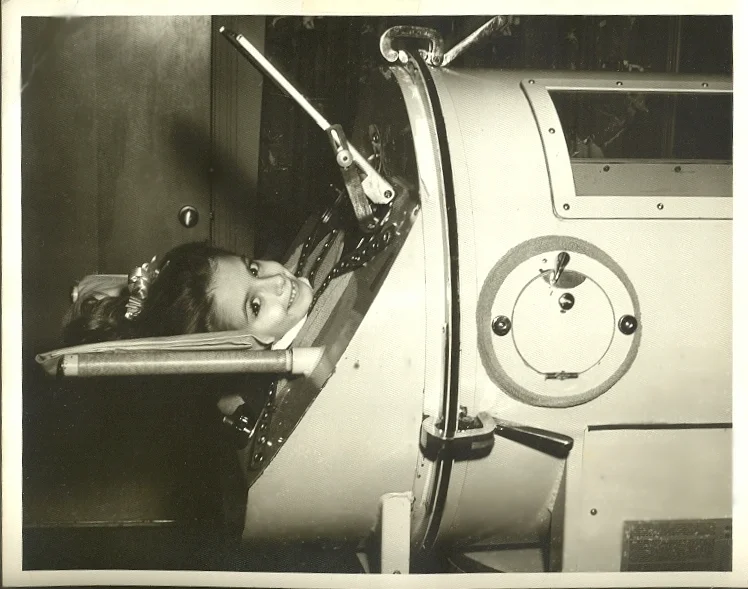
Fig.2.Martha as a Child
The iron lung was invented in 1928 by Harvard researchers Philip Drinker and Louis Shaw. Its principle is straightforward: the patient lies inside an air-tight chamber with only the head exposed, and a cuff seals the neck. By cyclically lowering and raising the air pressure inside the chamber, the device pulls air into and pushes it out of the lungs, substituting for paralyzed respiratory muscles. A standard iron lung is approximately 2.1 meters long, weighs around 800 pounds, and requires continuous electrical power.
Lillard was placed in the iron lung shortly after diagnosis and spent the next six months in hospital relearning how to breathe. Initially, she spent roughly 23 hours a day inside the chamber, with only one hour outside for physical therapy. Doctors predicted she would not survive past 20.
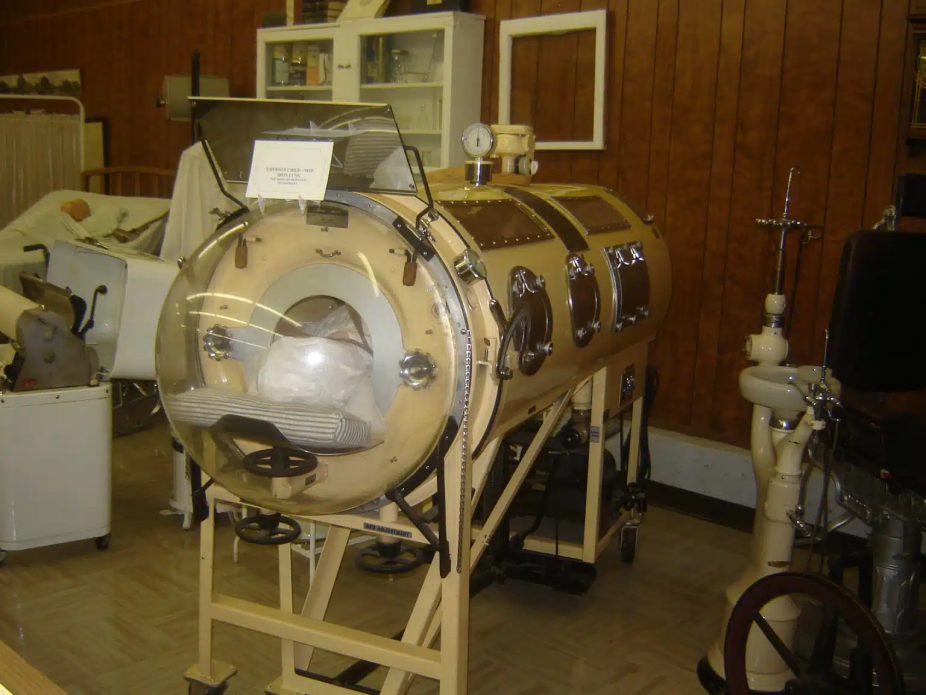
Fig.3.Iron Lung
Her right arm never recovered, and her left arm could move only slightly at waist level. Yet she taught herself to walk again. Her grandfather modified the iron lung by adding a second motor so that she could open the chamber door from inside.
Polio had effectively erased her childhood.
She attended school for only one hour a day, completed her coursework by telephone, and never attended a high school graduation dance. Because she lacked certain credits, she never received a diploma. A girl who should have been running in sunlight spent the bulk of her life encased in a steel shell.
Inside the iron box, she lives her life in her own way.
If Lillard’s story had ended there, it would have been simply another tragedy swallowed by disease. She refused to accept that framing.
As her body slowly recovered, she eventually needed the iron lung only at night.
She lived alone for many years, cooked for herself, and took up painting, poetry, and music composition — including piano works written for the left hand alone, the only hand she could still use with full control.
The advent of the internet opened a wider world. She used it to learn about her own disease and to follow current events, including the September 11, 2001 attacks. Through online networks, she met her future husband, Baha Celai. She volunteered with a local humane society, a daycare center, and a crisis hotline in Shawnee, and was a devoted beagle enthusiast who participated in long-term rescue work, channeling care and persistence into both people and animals she had never met.

Fig.4.Martha’s Photograph Taken During Her Lifetime
But the iron lung’s pull was never fully broken.
As the machine aged through the 1990s, replacement parts became difficult to find. She tried every modern ventilator she could access. None could match the chamber pressure her body required — approximately 21 pounds per square inch. They just don’t work, she said.
In the early 2000s, an ice storm knocked out power to her home; the backup generator failed, and she was trapped inside the unheated iron lung, struggling to make a phone call for help. She later described the experience as almost like being buried alive. In 2025, a tornado caused another power outage and another generator failure; her husband sustained her with mouth-to-mouth resuscitation until help arrived.
The COVID-19 pandemic, by her family’s account, was the final blow. She was infected twice and subsequently developed long COVID. With baseline lung capacity already reduced to under 25%, and compounded by the progressive weakness of post-polio syndrome, she became essentially dependent on the iron lung 24 hours a day in her last two years.
Her death certificate lists chronic respiratory failure and post-polio syndrome. In the obituary she had drafted for herself, she added one more line: long COVID.
Three weeks before her death, Lillard invited a local television crew into her home, in part to appeal publicly for help. No one could be found to repair the machine.
From Iron Lung to Sugar Pill
Lillard’s life overlapped almost exactly with the global arc of polio control. In the United States, the iron lung population fell from approximately 1,200 in 1959 to about 39 in 2004. Paul Alexander, often described as the world’s longest-surviving iron lung user, died on 11 March 2024. U.S. polio cases dropped below 100 per year in the 1960s, below 10 per year in the 1970s, and the country was declared polio-free in 1979.
In 1988, the World Health Assembly passed a resolution launching the Global Polio Eradication Initiative. In the nearly four decades since, reported polio cases have fallen by more than 99%, and an estimated 20 million cases of paralysis have been averted, according to figures cited in the source report.
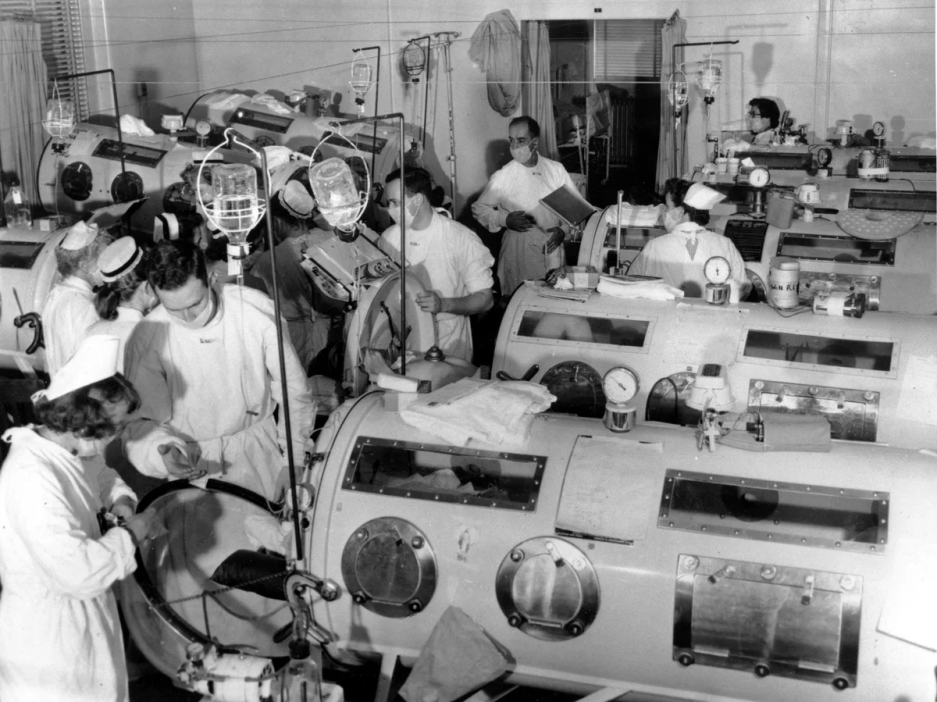
Fig.5.In August 1955, the emergency polio ward at a Boston hospital prepared iron lung respirators
China’s own polio story ran in parallel. The disease was once widespread across the country, leaving many families to bear the cost of paralysis or death. In 1960, the Chinese virologist Gu Fangzhou developed an attenuated live polio vaccine, which was later formulated into the now-iconic sugar pill that several generations of Chinese children received as part of routine immunization. After decades of sustained vaccination, the World Health Organization formally confirmed in 2000 that China had achieved polio-free status, and the country entered a polio-free era. In 2016, the sugar pill was retired in favor of a new sequential vaccination schedule. China has now maintained polio-free status for more than 20 consecutive years.
Notably, 2026 marks the centennial of Gu Fangzhou’s birth — a coincidence that places Lillard’s death and the closing of the iron lung era in quiet dialogue with the history of polio control in China.
Lillard’s passing carries meaning beyond a single life. She was, in the words of the source report, a living specimen of a disease history, and a human embodiment of medical progress. It was ultimately vaccination that reduced the population of iron lung patients from a cohort to a handful, and from a handful to one — and, now, to none.
In her final hours, she stepped out of the steel shell she had carried for a lifetime, and slept peacefully for the first time in 73 years. The bellows of the iron lung have stopped. The history it represented, however, deserves to be remembered.

