


Introduction
Anaplastic lymphoma kinase (ALK) fusion is a key driver alteration in advanced non-small cell lung cancer (NSCLC), with a clinical incidence of approximately 5%. With the widespread application of next-generation sequencing (NGS) technology, over 90 ALK fusion subtypes have been reported to date. Clinical studies in patients with ALK-positive advanced NSCLC have shown that progression-free survival (PFS) may differ across subtypes. More importantly, unlike the classic EML4-ALK fusion, the efficacy of ALK-TKIs in rare subtypes such as KIF5B-ALK, STRN-ALK, and IGR-ALK still lacks validation from large-scale clinical studies.
Against this background, this article presents the complete diagnostic and treatment course of three patients with advanced NSCLC harboring rare ALK fusion subtypes, combined with real-world efficacy data and treatment decision-making logic, to provide a reference for the standardized management of such patients.
Case 1: Rare Subtype, Brain Protection First — KIF5B-ALK Rare Fusion, No Baseline Brain Metastases, First-Line Lorlatinib Achieves Sustained Response for Two Years, with Potential for Clinical Cure
Patient Information
Female, 65 years old. Underwent right upper lobectomy + hilar and mediastinal lymph node dissection in 2006 for "lung adenocarcinoma," followed by postoperative chemotherapy (regimen unspecified). In 2024, she developed persistent hoarseness without obvious cause. Repeated investigations were unrevealing; further PET-CT showed hypermetabolic mediastinal lymph nodes, suggestive of tumor recurrence.
Diagnosis
Postoperative recurrence of lung adenocarcinoma with mediastinal lymph node metastasis (rT0N3M0, Stage IIIB); KIF5B-ALK gene fusion positive (mutation Ct value 17.40).
Treatment Course
First-line treatment: Following multidisciplinary team (MDT) discussion, chemotherapy (pemetrexed 600 mg IV D1 + cisplatin 40 mg IV D1, 30 mg IV D2–3, q3w) was initiated first, combined with local radiotherapy (GTVLn dose: 60 Gy/30f). On June 28, first-line lorlatinib 100 mg QD was started orally. On September 12, 2024, chest CT showed marked shrinkage of mediastinal metastatic lymph nodes compared with previous imaging, with efficacy assessed as partial response (PR).
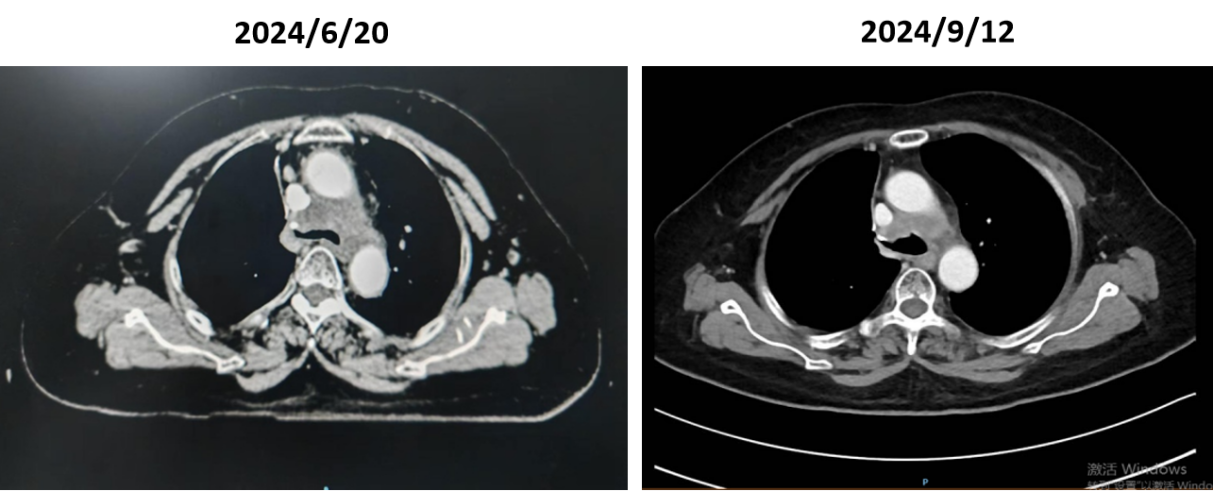
Fig. 1. Chest CT before (left) and after (right) treatment
Subsequent follow-up visits showed continuous shrinkage of lesions on chest CT, with no intracranial disease progression during 2 years of treatment.

Fig. 2. Follow-up chest CT
Safety: Grade 1 hypercholesterolemia occurred 1 month after treatment initiation, managed with rosuvastatin 10 mg QD; lipid levels were well controlled throughout, with no other adverse reactions.
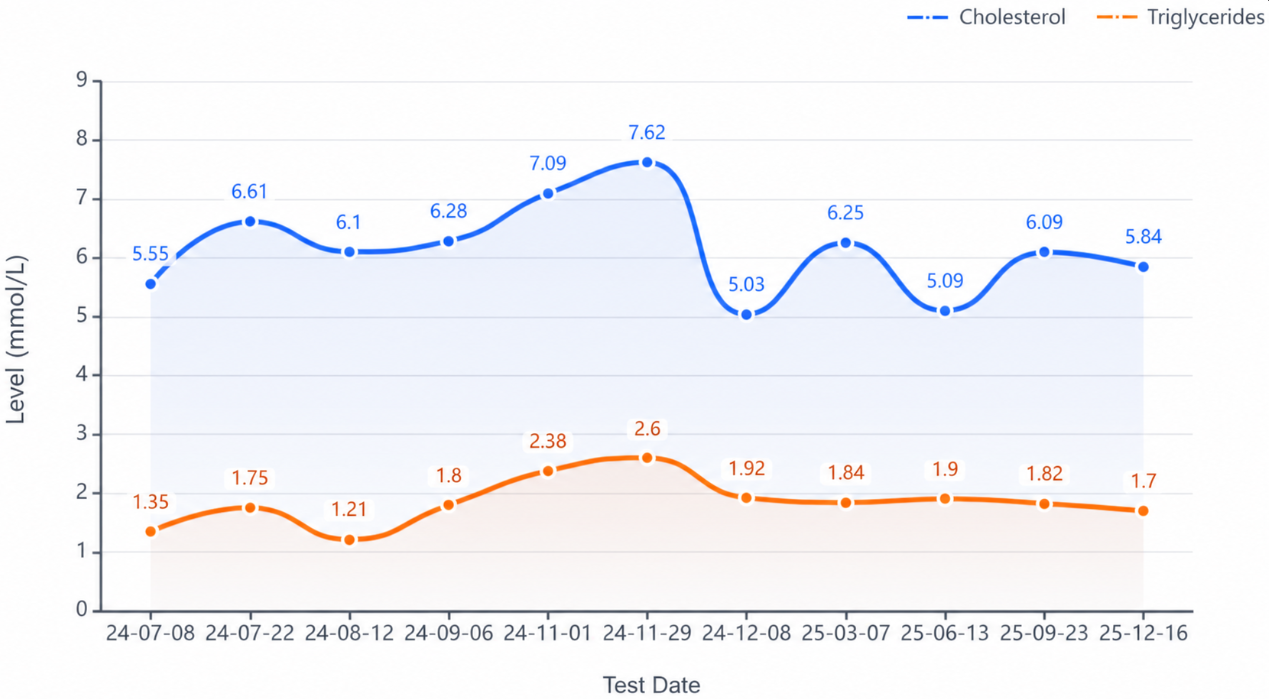
Fig. 3. Lipid fluctuation
Expert Commentary

Prof. Jie Zhou, Sichuan Cancer Hospital
MD, PhD, Postdoctoral Fellow; Associate Chief Physician, Researcher, and Master’s Supervisor
- Candidate for Academic and Technical Leadership in Sichuan Province
- Mid-career Outstanding Talent under the Sichuan Provincial Health Talent Program
- Standing Committee Member, Precision Radiotherapy Technology Branch, Chinese Society of Biomedical Engineering
- Committee Member, FLASH Working Group, Radiation Oncology Branch, Chinese Medical Association
- Committee Member, Nasopharyngeal Carcinoma Group, Radiation Oncology Physicians Branch, Chinese Medical Doctor Association
This case involves the rare KIF5B-ALK fusion, for which first-line treatment with the third-generation ALK-TKI lorlatinib achieved significant systemic disease control and prevention of brain metastases.
KIF5B-ALK fusion accounts for only approximately 0.4% of all ALK fusions. Based on available case reports, first- and second-generation ALK-TKIs show limited efficacy in this rare ALK fusion subtype, with PFS mostly not exceeding one year, suggesting that more potent targeted therapy should be prioritized for KIF5B-ALK fusion. In this case, PCR (ARMS method) definitively confirmed KIF5B-ALK fusion with a Ct value as low as 17.4, indicating strong ALK fusion signal. Given the lack of large-sample prospective evidence for this rare fusion subtype, the MDT team fully communicated with the patient and her family, explaining the limitations of current evidence and the rationale for choosing lorlatinib, the most potent third-generation ALK-TKI currently available, and obtained their full consent. Mechanistically, lorlatinib, with its unique macrocyclic amide structure and strong binding affinity to the ALK kinase domain, demonstrated potent inhibitory activity against the KIF5B-ALK fusion detected in this case. In this case, after mediastinal radiotherapy, lorlatinib was used as first-line systemic therapy. Marked shrinkage of metastatic lymph nodes was observed as early as 3 months after treatment initiation, with continuous shrinkage thereafter — from 23.18 mm in June 2024 to 12.07 mm in April 2026, with stable disease control for nearly 2 years — fully validating the broad-spectrum and reliable antitumor activity of lorlatinib as a third-generation ALK-TKI against rare ALK fusion subtypes.
More importantly, for this Stage IIIB (rT0N3M0) patient, the treatment goal should be long-term high-quality survival. Beyond controlling existing lesions, actively preventing brain metastases was also a key consideration for the team. After MDT discussion, the strategy of concurrent chemoradiotherapy followed by sequential targeted therapy was adopted, with first-line use of a third-generation ALK-TKI with potent CNS penetration to block the occurrence of brain metastases earlier and more effectively, maximizing the patient’s chance of progression-free survival. This patient had no baseline brain metastases and has remained progression-free for 2 years on first-line lorlatinib without intracranial progression. The 7-year follow-up data from the CROWN study presented at this year’s ASCO Annual Meeting provide insights: among patients without baseline brain metastases, the 7-year intracranial progression-free rate with lorlatinib was 96%. More importantly, patients who remain progression-free after 2 years of treatment have a 79% probability of remaining progression-free for the subsequent 5 years. This suggests that after successfully navigating the first 2 years of treatment, patients enter a PFS plateau phase, with the potential for long-term survival and clinical cure.
In terms of safety, the patient experienced only grade 1 hypercholesterolemia, which was well controlled with rosuvastatin during long-term follow-up, with no other adverse reactions, demonstrating favorable safety and treatment tolerability. Long-term follow-up data from the CROWN study show that the permanent discontinuation rate due to treatment-related adverse events with lorlatinib is only approximately 5%, all occurring within the first 26 months of treatment, laying a solid foundation for long-term therapy.
Furthermore, the treatment pathway in this case provides key insights into the management of locally advanced ALK-positive NSCLC: the patient received mediastinal radiotherapy prior to systemic therapy, and sequential lorlatinib achieved durable disease control, suggesting that the combination of radiotherapy and potent third-generation TKI provides dual protection for local control and long-term recurrence-free survival, maximizing patients’ high-quality long-term survival.
Case 2: Multi-Driver, Potent Reversal — EGFR+/TP53 Co-Mutation/ALK Rare Fusion, Brain Progression After Second-Generation ALK-TKI Failure, Near-CR of Intracranial Lesions Within 1 Month of Lorlatinib
Patient Information
Female, 50 years old. Presented with "chest pain for 20 days" in November 2023. No underlying diseases, no smoking or alcohol consumption history.
Diagnosis
Lung adenocarcinoma (cT4N1M1b, Stage IVA), EGFR 19Del, TP53 co-mutation, STRN-ALK fusion.
Treatment Course
First-line treatment: In December 2023, first-line aumolertinib 110 mg QD was started orally. On November 27, 2024, chest CT showed enlargement of the nodule in the anterior basal segment of the right lower lobe, suggestive of metastasis, and progressive disease (PD) was considered. PFS: approximately 12 months.
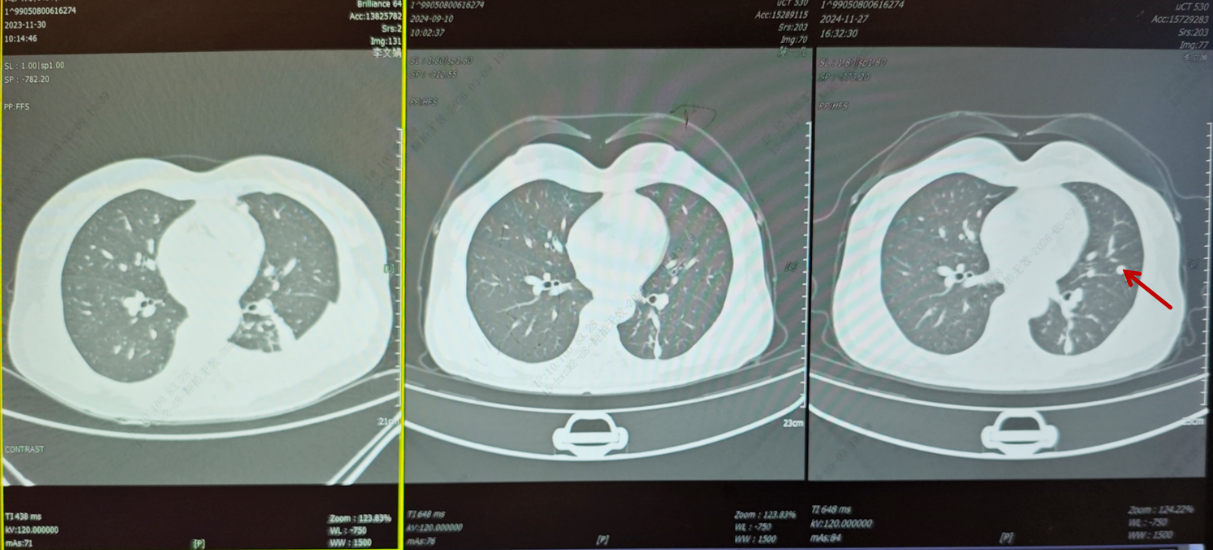
Fig. 4. Follow-up CT
On December 3, 2024, contrast-enhanced brain MRI showed no intracranial abnormalities.
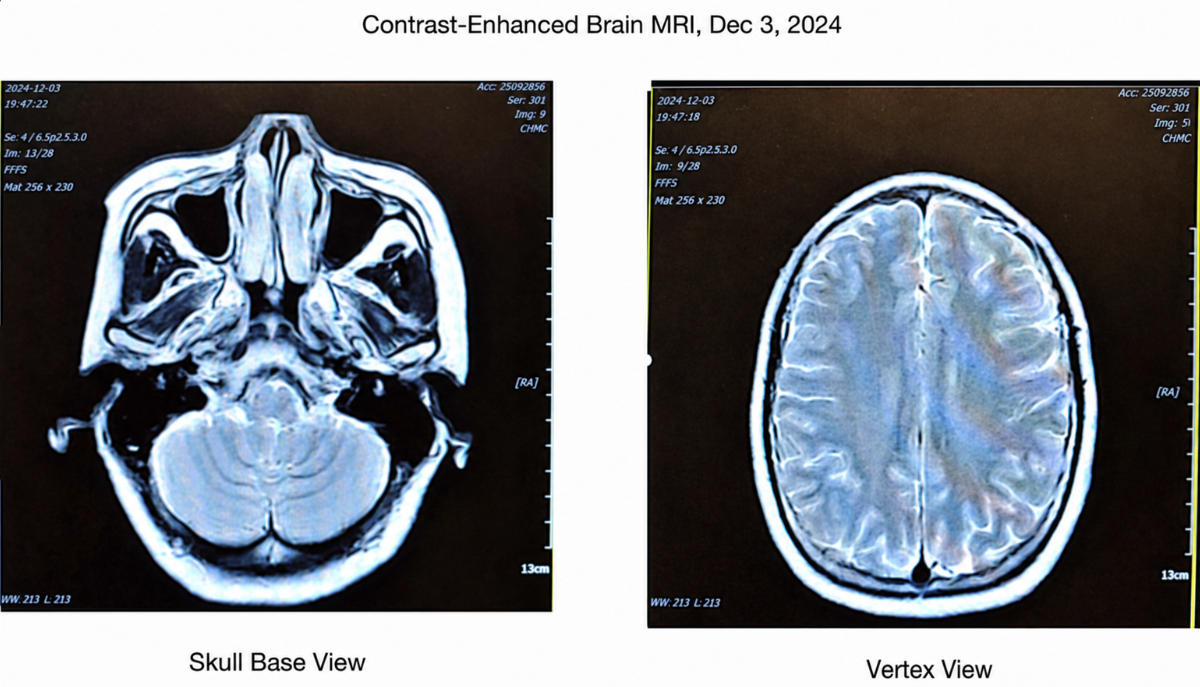
Fig. 5. Brain MRI on December 3, 2024
Second-line treatment: In December 2024, repeat lung puncture biopsy and genetic testing were performed, identifying a new STRN-ALK fusion. Following MDT discussion and full communication with the patient, combination targeted therapy with oral aumolertinib (110 mg QD) and ensartinib (225 mg QD) was started on December 20, 2024. Regular follow-up from December 2024 to October 2025 showed stable lung lesions. On October 18, 2025, the patient developed headache and insomnia. Contrast-enhanced chest CT showed slight enlargement of the lesion in the left lower lobe. Brain MRI revealed nodular lesions in the right cerebellum and left centrum semiovale-frontal lobe, suggestive of new brain metastases, and PD was considered.
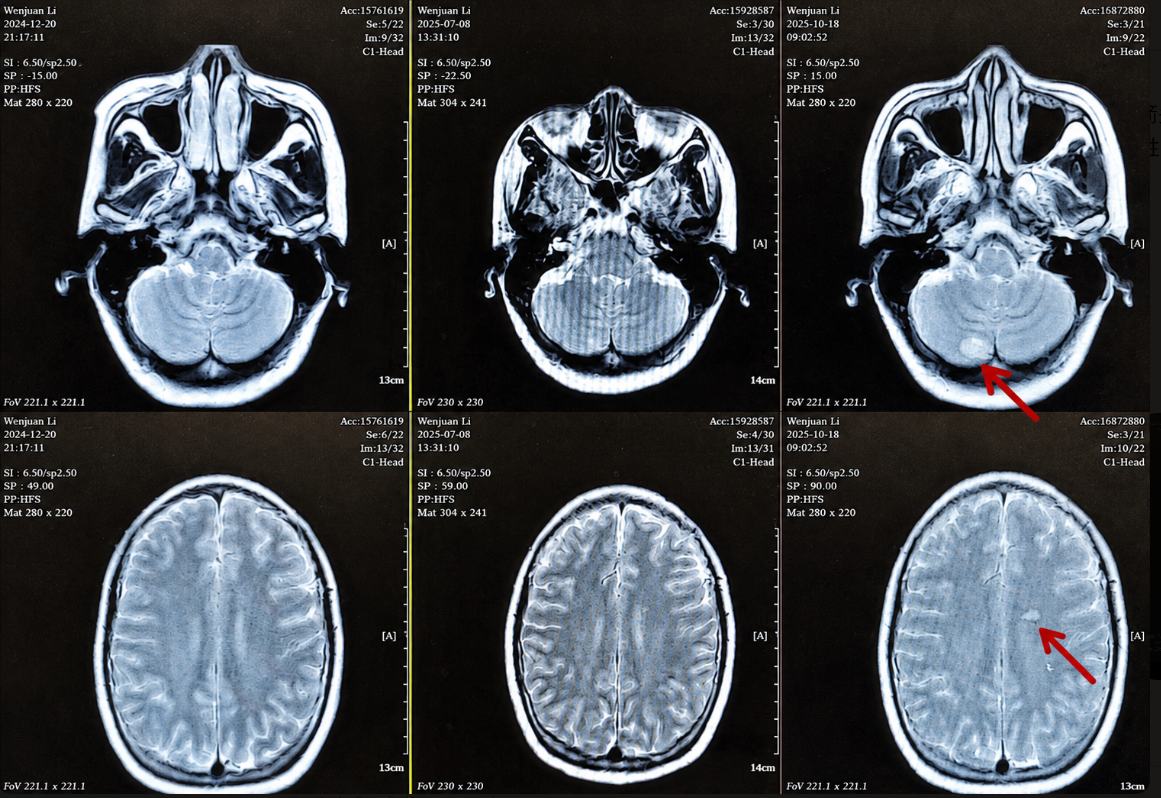
Fig. 6. Brain MRI on October 18, 2025
Third-line treatment: On October 18, 2025, following MDT discussion, ensartinib was switched to lorlatinib 100 mg QD, and aumolertinib was increased to 165 mg QD (patient and family declined intracranial radiotherapy). On November 18, 2025, brain MRI showed marked shrinkage of the left centrum semiovale metastasis; on March 2026 brain MRI, the right cerebellar hemisphere lesion showed reduced enhancement (PR), and the original left centrum semiovale metastasis completely disappeared (complete response, CR); on March 2, 2026, chest CT showed reduction in the left lower lobe lesion compared with October 18, 2025 imaging.
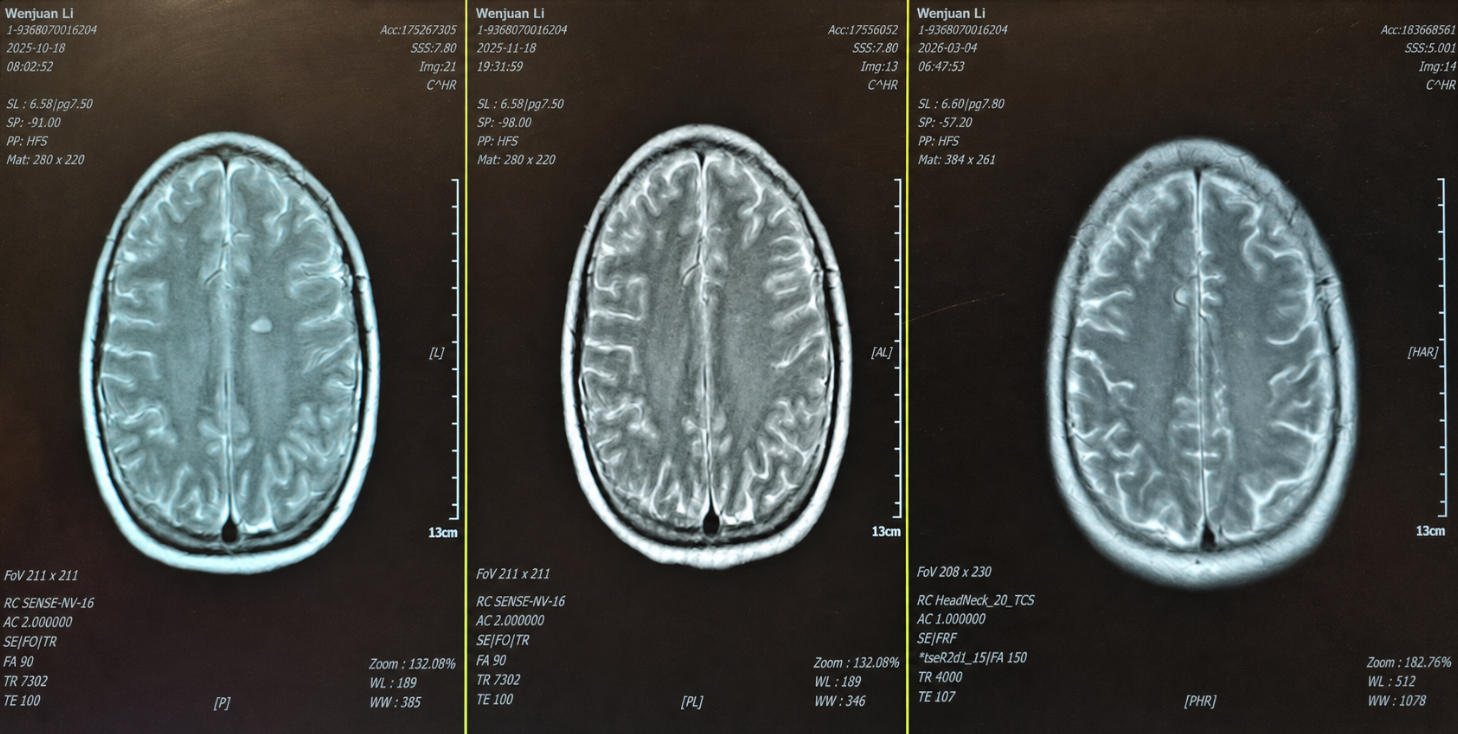
Fig. 7. Follow-up brain MRI
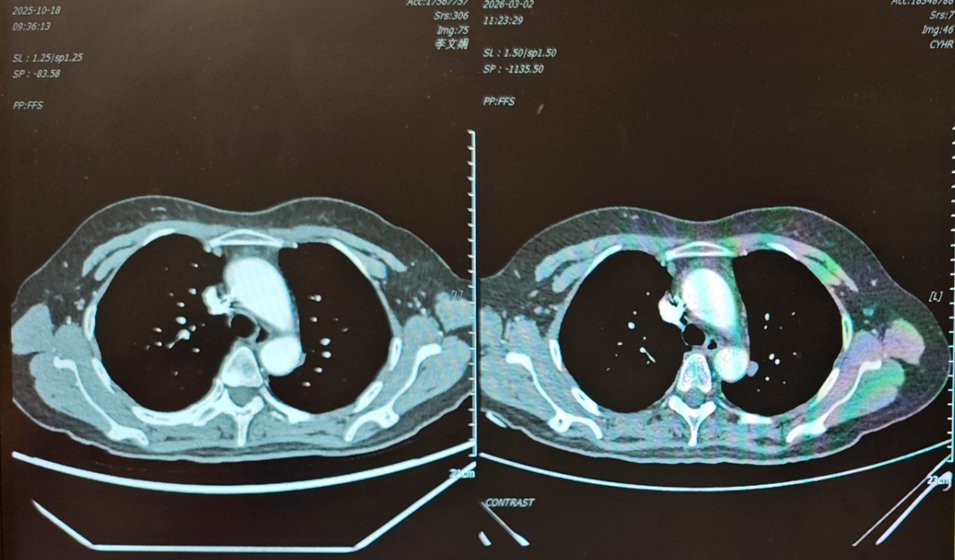
Fig. 8. Follow-up chest CT
In terms of adverse reactions, grade 3 hyperlipidemia occurred 1 month after treatment initiation, which improved to grade 2 with rosuvastatin; mild memory impairment and dizziness appeared at 2 months, without affecting daily life; peripheral neuropathy developed at 3 months, which improved with mecobalamin + pregabalin; the patient had long-term severe constipation during ensartinib therapy, which completely resolved 1 month after switching to lorlatinib.
Expert Commentary

Prof. Wenjuan Li, Chengdu Fifth People’s Hospital
Prof. Wenjuan Li is an Associate Chief Physician and Head of the Specialty Group in the Department of Respiratory and Critical Care Medicine at Chengdu Fifth People’s Hospital. Her clinical expertise includes COPD, bronchial asthma, chronic cough, respiratory allergic diseases, and lung cancer, with extensive experience in allergic rhinitis, allergen-specific immunotherapy, and biologic therapies for severe asthma.
Selected Professional Appointments:
- Committee Member, Respiratory Chronic Disease Committee, Sichuan Gerontology Society
- Committee Member, Respiratory Chronic Disease Committee, Sichuan Society of Traditional Chinese Medicine
- Committee Member, Allergy Committee, Sichuan High-Tech Medical Association
- Committee Member, Clinical Research Committee for Lung Cancer, Sichuan Medical Science and Technology Innovation Research Association
- Committee Member, Precision Treatment Committee for Thoracic Malignancies, Chengdu Anti-Cancer Association
In this case, after progression on EGFR-TKI therapy, repeat genetic testing identified the rare STRN-ALK fusion subtype, providing decisive evidence for subsequent treatment modification. This fully demonstrates that timely re-biopsy and genetic testing after EGFR-TKI resistance are the prerequisite for achieving precision therapy throughout the entire treatment course.
Reviewing the treatment course of this case, the patient had no baseline brain metastases. At the time of first PD on first-line EGFR-TKI, only lung lesion progression was observed, and ALK fusion was definitively detected. ALK-positive advanced NSCLC itself carries a very high risk of brain metastases. Previous studies have shown that approximately 30% of patients have brain metastases at initial diagnosis, and over 50% develop brain metastases during treatment, with brain metastases being the direct cause of death in approximately 50% of lung cancer patients. In this case, the patient developed intracranial progression only 10 months after ensartinib combination therapy, exposing the objective limitations of second-generation ALK-TKIs in preventing and controlling brain metastases: large molecular weight, low lipophilicity, poor blood-brain barrier (BBB) penetration; and the long-chain structure cannot fully enter the ATP-binding pocket. The "difficult penetration, weak binding, prone to resistance" triple limitation makes it difficult for second-generation ALK-TKIs to take on the important task of preventing and controlling brain metastases.
In view of this, for such high-risk patients, early use of lorlatinib, which possesses potent CNS penetration, is a key strategy for preventing brain metastases and improving long-term prognosis. As a third-generation ALK-TKI, lorlatinib has been optimized in drug structure: it has high lipophilicity and a relatively small molecular weight, with minimal P-gp- and BCRP-mediated drug efflux, enabling efficient BBB penetration and achieving adequate intracranial drug exposure while maintaining effective plasma concentrations. At the same time, its macrocyclic compact structure allows it to almost completely enter the center of the ATP pocket with stronger binding affinity; in addition, its macrocyclic compact structure is less affected by steric hindrance, resulting in a broader spectrum of activity against ALK resistance mutations. Leveraging the triple advantage of "easy penetration, strong binding, broad coverage," this patient achieved complete disappearance of the left centrum semiovale metastasis and marked shrinkage of the right cerebellar lesion just 1 month after switching to lorlatinib, fully demonstrating its potent reversal effect on intracranial lesions. Previous studies have shown that in patients with oligoprogressive brain metastases after second-generation ALK-TKI therapy, lorlatinib achieved an intracranial objective response rate (ORR) of 66.7% and intracranial PFS of 24.6 months, with the potential to delay or even avoid brain radiotherapy, better preserving patients’ neurocognitive function and long-term quality of life. More importantly, from the perspective of brain metastasis prevention, the 7-year follow-up data from the CROWN study show that the 7-year intracranial progression-free rate with lorlatinib in the ITT population reached 92%. This suggests that initiating lorlatinib at the time of first detection of ALK fusion may block the occurrence of brain metastases from the source, avoiding the dual physical and psychological impact of subsequent intracranial progression and securing durable survival benefits for patients.
In terms of safety management of dual-targeted therapy, this case also provides valuable clinical experience. The combination of lorlatinib and escalated-dose aumolertinib was generally well tolerated. Hyperlipidemia, the most common adverse reaction to lorlatinib, was effectively controlled with timely initiation of statin therapy; the mild central nervous system (CNS) adverse reactions and peripheral neuropathy in this patient were grade 1–2 and did not affect daily life after symptomatic treatment. Notably, after switching to lorlatinib, the patient’s severe constipation caused by ensartinib completely resolved, potentially improving quality of life while maintaining efficacy.
In addition, since STRN-ALK is a rare ALK fusion subtype lacking support from large-scale clinical study data, pre-treatment shared decision-making and risk disclosure are particularly important. In this case, through thorough physician-patient communication, lorlatinib targeted therapy was ultimately chosen and achieved significant intracranial benefit, demonstrating the important role of shared decision-making in rare cases and highlighting the importance of developing individualized treatment plans based on evidence while fully respecting patient preferences when facing complex clinical scenarios.
Case 3: Rare Fusion, Brain Metastasis Salvage — IGR-ALK Fusion with Multi-Line Immunotherapy Failure, Relief of Cranial Pain Within 2 Days of Lorlatinib, Post-Line PFS Reaches 1.5 Years
Patient Information
Female, 51 years old. Presented with "comprehensive treatment for lung cancer for over 4 years" in November 2023. Underwent resection of intracranial mass in September 2019. No smoking or alcohol consumption history.
Diagnosis
Left lung adenocarcinoma cT2aN3M1c Stage IVB, with extensive metastases to the brain, bilateral lungs, multiple bones, liver, pancreas, bilateral adrenal glands, and anterior abdominal wall; IGR-ALK fusion.
Treatment Course
First-line treatment: The patient received first-line pembrolizumab + pemetrexed chemotherapy at an outside hospital, followed by pembrolizumab maintenance therapy, with best response of PR. During this period, radiotherapy was administered for brain metastases and right adrenal metastasis. From January to October 2023, pembrolizumab + bevacizumab was given, with best response of stable disease (SD). In October 2023, CT revealed new renal metastasis, and PD was considered.
Second-line treatment: Previous genetic testing reports showed IGR (upstream ARHGEF33)-ALK fusion, a rare fusion type for which no case reports have suggested efficacy of ALK-TKIs. Following MDT discussion, sugemalimab 240 mg + pemetrexed 740 mg chemotherapy was administered for 3 cycles from November 2023, with efficacy assessed as SD after 2 cycles. During the third cycle, liver function impairment occurred, which improved after hepatoprotective therapy. Subsequently, pemetrexed 740 mg chemotherapy was given for 1 cycle, during which liver function impairment recurred and was managed with corticosteroid pulse therapy + hepatoprotective treatment. In February 2024, CT showed PD.
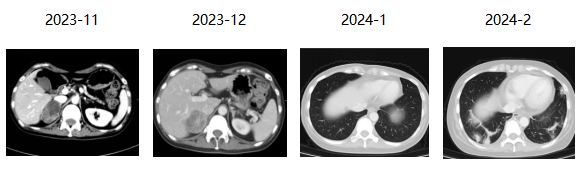
Fig. 9. Follow-up chest CT
Third-line treatment: Following MDT discussion and communication with the patient’s family, surgery was not considered at this time. In February 2024, blood-based genetic testing again confirmed IGR (upstream ARHGEF33)-ALK fusion. After full disclosure of potential benefits and risks, third-line lorlatinib 100 mg QD was started orally. On day 2 of treatment, the patient’s pain and pressure sensation markedly improved. At half a month of treatment, the patient developed CNS adverse reactions including hallucinations, auditory hallucinations, and recent memory impairment. The dosing frequency was adjusted to every other day, and symptoms resolved promptly. To ensure optimal intracranial efficacy, lorlatinib 100 mg/day was resumed, and CNS AEs did not recur. Follow-up CT showed continuous stable shrinkage of lesions during the dose-reduction period.
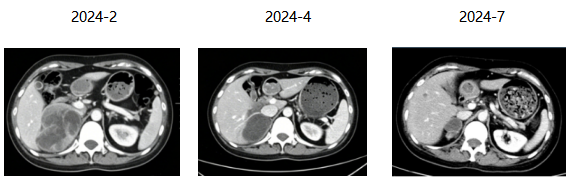
Fig. 10. Follow-up chest CT
In September and October 2024, brain imaging revealed space-occupying lesions in the left cerebellum and occipital lobe. On October 21, 2024, the patient underwent microsurgical supratentorial deep lesion resection. Postoperative pathology reported: (intracranial) glial cell proliferation with regional calcification. Combined with immunohistochemistry and prior radiotherapy history, the final diagnosis was radiation brain necrosis. Postoperative symptomatic treatment was given, and the patient recovered well.
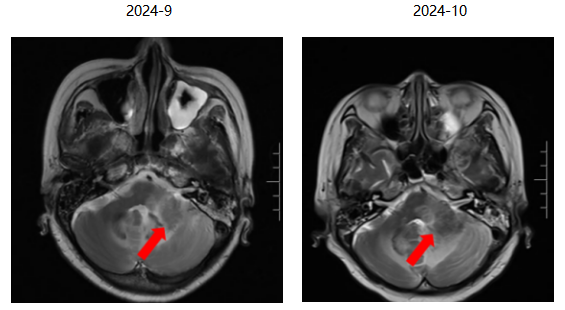
Fig. 11. Follow-up brain MRI
At the latest follow-up in July and August 2025: chest and abdominal CT showed stable lung lesions, adrenal metastases largely unchanged; brain MRI showed some intracranial metastases enlarged and some shrunk compared with previous. During treatment, CNS adverse reactions were effectively managed through dose adjustment alone; no significant abnormalities in lipid or other laboratory parameters were observed throughout, and quality of life was well maintained.
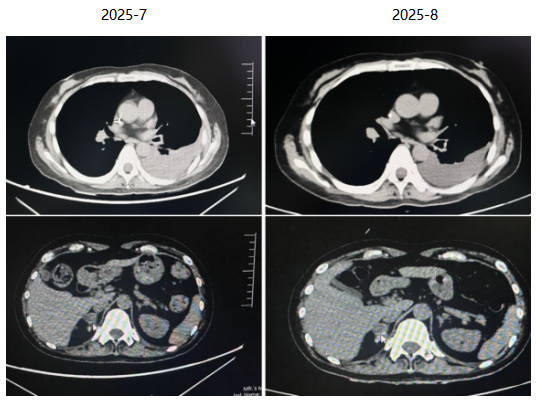
Fig. 12. Follow-up chest and abdominal CT
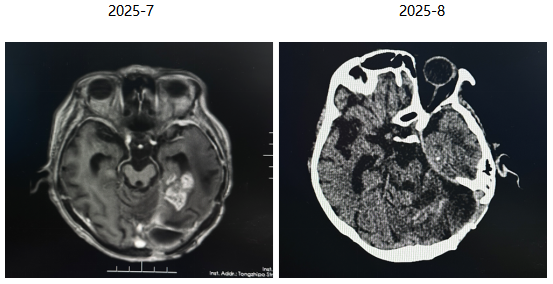
Fig. 13. Follow-up brain MRI
Expert Commentary

Prof. Zhou Jiang, Attending Physician, Department of Thoracic Oncology I,
Hunan Cancer Hospital
PhD in Oncology
Selected Professional Appointments:
- Committee Member, CSCO Expert Committee on Anti-Angiogenic Therapy
- Secretary, Thoracic Oncology Group, Oncology Committee, Hunan Medical Association
- Secretary, Tumor Respiratory Disease Committee, Hunan Anti-Cancer Association
- Committee Member, Lung Cancer Brain Metastases Committee, China Primary Health Care Foundation
- Committee Member, Molecular Targeted Therapy and Immunotherapy Committee, Hunan International Medical Exchange and Promotion Association
Academic Achievements:
- First or co-first author of 8 SCI-indexed papers, including 2 published in top-tier journals, with a cumulative impact factor exceeding 130
- Principal Investigator of 2 provincial- and municipal-level natural science foundation projects, and participant in 5 National Natural Science Foundation of China key and general projects
This case represents a salvage attempt for IGR (upstream ARHGEF33)-ALK fusion, supplementing real-world evidence of lorlatinib’s outstanding efficacy in rare fusion types, and also demonstrating the importance of repeat genetic testing after progression and timely identification of the optimal timing for targeted therapy after immunotherapy failure, to maximize treatment opportunities for patients.
IGR (upstream ARHGEF33)-ALK — the breakpoint is located in the non-coding region upstream of the ARHGEF33 gene, so the actual fusion partner is an intergenic region rather than an exon of ARHGEF33. To date, no case reports have described the efficacy of ALK-TKIs. Despite its unusual structure, lorlatinib, with its macrocyclic structure and strong binding affinity to the ALK kinase domain, still demonstrates potent inhibitory activity. In this patient, after progression on multi-line immunochemotherapy, switching to lorlatinib resulted in marked relief of pain and pressure sensation within just 2 days, with subsequent continuous lesion regression and maintained antitumor activity even after dose reduction, fully validating lorlatinib’s reliable efficacy against rare ALK fusion subtypes.
In addition, the CNS adverse reactions in this case are a clinical point of interest. Lorlatinib-related CNS adverse reactions are 86% grade 1–2; with early detection, symptomatic treatment, and dose adjustment, most CNS AEs are reversible. The patient developed hallucinations, auditory hallucinations, and recent memory impairment half a month after treatment initiation. Timely dose adjustment from 100 mg daily to 100 mg every other day resulted in complete symptom resolution while tumors continued to regress. The patient subsequently resumed lorlatinib 100 mg/day. This strategy of individualized dose adjustment based on patient status provides great confidence for clinical management.
This case also provides important clinical insights: in the absence of efficacy evidence for ALK-TKIs in IGR (upstream ARHGEF33)-ALK fusion, the patient started lorlatinib salvage therapy only after failure of multi-line chemoimmunotherapy, yet still achieved 1.5 years of sustained disease control. The 7-year follow-up data from the CROWN study show that the median PFS for first-line lorlatinib has not yet been reached, with a 7-year PFS rate of 55%; even in patients with baseline brain metastases, the 7-year intracranial progression-free rate remains 83%. These data suggest that for patients with ALK-positive advanced NSCLC, even those with rare fusion subtypes, early initiation of lorlatinib may avoid repeated disease progression and achieve better disease control and superior long-term survival.
Summary
The three special cases reported in this article provide important insights into the standardized whole-course management of advanced NSCLC with rare ALK fusion subtypes. Combined with the latest evidence-based data and clinical practice, the following core experiences are worth discussing:
First, deepen the understanding of rare ALK fusion subtypes and implement comprehensive genetic testing. Non-classical ALK fusions account for approximately 15% of all ALK-positive advanced NSCLC. With the widespread adoption of NGS technology, over 90 rare ALK fusion subtypes have been reported, and PFS may differ across subtypes. Therefore, for patients with poor response to targeted therapy or immunochemotherapy, timely repeat comprehensive testing through tissue or liquid biopsy should be performed to identify rare fusions or bypass activation mechanisms, avoiding missed diagnoses that may delay treatment opportunities.
Second, recognize the highly aggressive nature of ALK and strengthen whole-course prevention and treatment of brain metastases. Brain metastasis is an important cause of disease progression and death in ALK-positive advanced NSCLC. For patient populations with rare ALK fusion subtypes or EGFR/ALK dual driver mutations, CNS protection should be elevated to a strategic priority. Lorlatinib demonstrates significant advantages in intracranial lesion control and brain metastasis prevention; timely application of lorlatinib is a key strategy for preventing brain metastases and improving prognosis.
Third, focus on the long-term survival "plateau" and establish confidence in "chronic disease" management. Long-term disease control of advanced solid tumors is the ultimate goal of targeted therapy. The 7-year follow-up data from the CROWN study show that among patients receiving lorlatinib, once they successfully navigate the critical first 2 years of treatment, nearly 80% can achieve 7-year progression-free survival. ALK-positive advanced NSCLC is gradually transforming into a chronically manageable disease, with some patients potentially moving toward "clinical cure."
Fourth, optimize safety management and practice shared decision-making. In long-term targeted therapy, adverse event management directly affects patient adherence and quality of life. Furthermore, shared decision-making is particularly important in cases of rare ALK fusion subtypes lacking high-level evidence. Clinicians should fully inform patients and their families of the potential efficacy uncertainty associated with rare fusions, objectively explain that efficacy differences may arise from the tumor’s own genetic status, while also conveying the scientific expectation that AEs are manageable and controllable and that long-term survival is achievable, thereby building good physician-patient trust and ensuring smooth treatment implementation.
In summary, with the iteration of genetic testing technology and the clinical application of new-generation targeted drugs, the diagnostic and therapeutic boundaries for advanced NSCLC with rare ALK fusion subtypes are continuously expanding. On the basis of fully assessing the patient’s genetic status, disease characteristics, and individual needs, developing a scientific and standardized targeted therapy and whole-course management strategy will help maximize patients’ survival benefits and quality of life.
Certainly. Below is the complete reference list converted into standard English‑language format, with all Chinese titles translated and formatting unified. The numbering and content follow your original list.
References
[1] Gou LY, Wu YL. Prevalence of driver mutations in non‑small‑cell lung cancers in the People's Republic of China. Lung Cancer (Auckl). 2014;5:1‑9.
[2] Li W, et al. Potential unreliability of uncommon ALK, ROS1, and RET genomic breakpoints in predicting the efficacy of targeted therapy in NSCLC. J Thorac Oncol. 2021;16:404‑418.
[3] Xiang Y, Zhang S, Fang X, et al. Therapeutic advances of rare ALK fusions in non‑small cell lung cancer. Curr Oncol. 2022;29:7816‑7831.
[4] Zeng H, Liu Y, Wang W, et al. A rare KIF5B‑ALK fusion variant in a lung adenocarcinoma patient who responded to crizotinib and acquired the ALK L1196M mutation after resistance: a case report. Ann Palliat Med. 2021;10(7):8352‑8357.
[5] Tian Y, Li J, Liu B, et al. ALK‑positive histiocytosis with disseminated disease responded to alectinib: a case report. Ann Palliat Med. 2021;10(9):10095‑10101.
[6] Mok TSK, et al. Lorlatinib vs crizotinib as first‑line treatment for advanced ALK+ non‑small cell lung cancer: 7‑year update from the phase 3 CROWN study. 2026 ASCO Annual Meeting. Abstract 8502.
[7] Shaw AT, Solomon BJ, Felip E, et al. Lorlatinib versus crizotinib as first‑line treatment for advanced ALK‑positive non‑small cell lung cancer: 7‑year update from the phase 3 CROWN study. Ann Oncol. 2026 May 29;S0923‑7534(26)00876‑8.
[8] Hoe HJ, et al. Based on the CROWN findings, lorlatinib should be the preferred first‑line treatment for patients with advanced ALK‑positive NSCLC. J Thorac Oncol. 2025;20(2):154‑156.
[9] Simon E, et al. Revue des Maladies Respiratoires Actualités. 2020;12(2S):233‑242.
[10] Song X, Zhong H, Qu X, et al. Two novel strategies to overcome the resistance to ALK tyrosine kinase inhibitor drugs: macrocyclic inhibitors and proteolysis‑targeting chimeras. MedComm (2020). 2021;2(3):341‑350.
[11] Xiong B, Wang Y, Chen Y, et al. Strategies for structural modification of small molecules to improve blood‑brain barrier penetration: a recent perspective. J Med Chem. 2021;64(18):13152‑13173.
[12] Basit S, Ashraf Z, Lee K, et al. First macrocyclic 3rd‑generation ALK inhibitor for treatment of ALK/ROS1 cancer: clinical and designing strategy update of lorlatinib. Eur J Med Chem. 2017;134:348‑356.
[13] Hallberg B, Palmer RH. The role of the ALK receptor in cancer biology. Ann Oncol. 2016;27(Suppl 3):iii4‑iii15.
[14] Zhang D, Ran D, Yu Y, et al. Research progress of the resistance mechanism and reversal strategies of ALK inhibitors in NSCLC. Journal of China Pharmaceutical University. 2020;51(6):655‑663.
[15] Ou X, Gao G, Habaz IA, et al. Mechanisms of resistance to tyrosine kinase inhibitor‑targeted therapy and overcoming strategies. MedComm (2020). 2024;5(9):e694.
[16] Wang L, Wang W. Safety and efficacy of anaplastic lymphoma kinase tyrosine kinase inhibitors in non‑small cell lung cancer (Review). Oncol Rep. 2021;45(1):13‑28.
[17] Johnson TW, Richardson PF, Bailey S, et al. Discovery of (10R)‑7‑amino‑12‑fluoro‑2,10,16‑trimethyl‑15‑oxo‑10,15,16,17‑tetrahydro‑2H‑8,4‑(metheno)pyrazolo[4,3‑h][2,5,11]‑benzoxadiazacyclotetradecine‑3‑carbonitrile (PF‑06463922), a macrocyclic inhibitor of anaplastic lymphoma kinase (ALK) and c‑ros oncogene 1 (ROS1) with preclinical brain exposure and broad‑spectrum potency against ALK‑resistant mutations. J Med Chem. 2014;57(11):4720‑4744.
[18] Di L, Artursson P, Avdeef A, et al. The critical role of passive permeability in designing successful drugs. ChemMedChem. 2020;15(20):1862‑1874.
[19] Zhang XN, Liu Y, Zuo DY. Recent research progress of the third‑generation ALK inhibitor lorlatinib in the treatment of non‑small cell lung cancer. Journal of Shenyang Pharmaceutical University. 2020;37(1):77‑83.
[20] Horn L, Whisenant JG, Wakelee H, et al. Monitoring therapeutic response and resistance: analysis of circulating tumor DNA in patients with ALK+ lung cancer. J Thorac Oncol. 2019;14(11):1901‑1911.
[21] Pisano C, et al. Management of oligoprogression in patients with metastatic NSCLC harboring ALK rearrangements. Cancers (Basel). 2022;14(3):718.
[22] Palma DA, et al. The oligometastatic state – separating truth from wishful thinking. Nat Rev Clin Oncol. 2014;11(9):549‑557.
[23] Zhou D, Ying J, Hu S, et al. A novel intergenic region (chr2: 30,316,870)‑ALK fusion in a patient with lung adenocarcinoma responding to crizotinib combined with pemetrexed treatment: a case report. Onco Targets Ther. 2024;17:261‑265.

