


Multiple studies presented at the WCLC 2025 demonstrate that the third-generation ALK tyrosine kinase inhibitor (TKI) lorlatinib has achieved breakthrough progress in treating ALK-positive non-small cell lung cancer (NSCLC), offering new hope for patients to achieve long-term survival.
Unprecedented Survival Data Ushers in a New Treatment Era
Five-year follow-up results from the CROWN study show that the 5-year progression-free survival (PFS) rate for first-line lorlatinib treatment reached 60%, setting a new record for the longest PFS in targeted therapy for advanced NSCLC. Dr. Narjust Florez of Dana-Farber Cancer Institute, Harvard Medical School, noted that if the annual decline rate remains around 2%, the 10-year PFS rate could stabilize at approximately 50%, with median PFS potentially exceeding 10 years. Research presented at the 2024 ISPOR EU Conference predicted that the median PFS for first-line lorlatinib treatment could reach 8–10 years, with analysis in a Chinese population projecting a median PFS of 10.1 years.
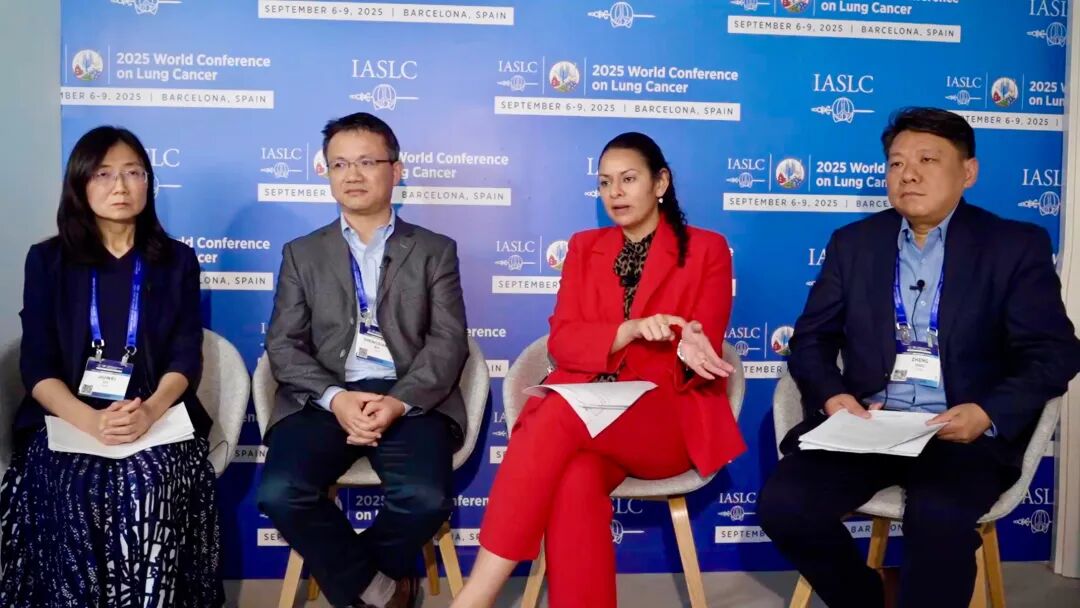
Dr. Florez emphasized that 2024 U.S. lung cancer statistics indicate only 8% of stage IV lung cancer patients survive beyond 5 years, whereas the 5-year PFS rate for lorlatinib-treated patients is 60%—a nearly tenfold difference highlighting its significant clinical value. Dr. Shengxiang Ren of Shanghai Pulmonary Hospital, Tongji University, added that the CROWN study is a landmark clinical trial, suggesting that ALK-positive advanced NSCLC may be "curable" through targeted therapy.
Major Breakthrough in Prevention and Treatment of Brain Metastases
Dr. Zheng Zhao of Shaanxi Cancer Hospital pointed out that brain metastasis is a key factor affecting the quality of life and survival of ALK-positive NSCLC patients. Clinical data show that over 50% of ALK-positive lung cancer patients develop brain metastases during their disease course. The CROWN study revealed that among baseline non-brain metastasis patients receiving first-line lorlatinib treatment, the 5-year intracranial progression-free rate was as high as 96%, with only 4 out of 114 baseline non-brain metastasis patients developing brain metastases. In the Asian subgroup, the 5-year cumulative incidence of brain metastases in the baseline non-brain metastasis population was 0%.
Dr. Jiuwei Cui of The First Hospital of Jilin University explained the mechanism: lorlatinib's small molecular weight, optimized lipophilicity, and resistance to efflux mediated by P-glycoprotein and BCRP allow it to efficiently cross the blood-brain barrier and achieve effective therapeutic concentrations intracranially. For patients with baseline brain metastases, the intracranial objective response rate (ORR) reached 92%, effectively controlling and clearing intracranial lesions.
Treatment Strategy Shifts Toward "Using the Best Drug First"
Dr. Zhao believes traditional sequential strategies have limitations. Real-world evidence suggests that approximately 40% of patients cannot proceed to second-line treatment after first-line failure due to disease progression, adverse events, or intolerance. Data from the CROWN study show that first-line use of lorlatinib provides the greatest overall benefit.
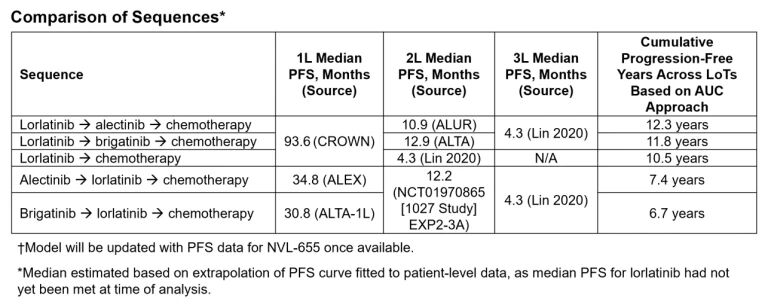
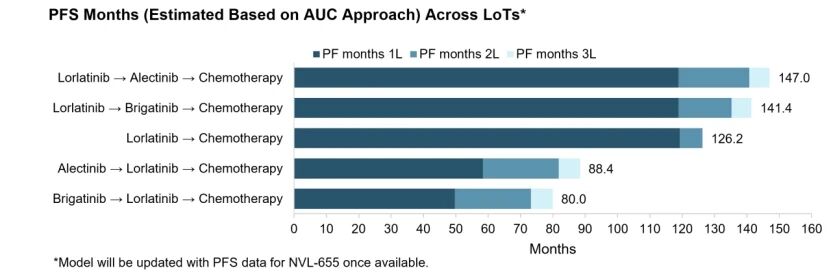
Dr. Zhao cited a modeling study (Abstract #: P3.12.19) presented at WCLC, indicating that a first-line lorlatinib sequential treatment strategy yielded the longest overall PFS, reaching 12.3 years—approximately 5 years longer than the cumulative PFS achieved with first-line second-generation ALK-TKI regimens. Dr. Cui referenced a survey on clinician preferences (Abstract #: EP.12.10), which showed that most clinicians believe lorlatinib has the best efficacy and central nervous system anti-tumor activity as a first-line treatment.
Entering a New Era of Chronic Disease Management
Dr. Cui emphasized that with improved treatment efficacy, ALK-positive NSCLC is entering a new stage of chronic disease management. It is essential to move beyond the traditional disease-centered model and place patients within a holistic life-cycle management framework. Through comprehensive patient education, dynamic symptom monitoring, ctDNA analysis, and exploratory biomarker assessment, more precise molecular subtyping and personalized interventions can be achieved.
Dr. Ren discussed resistance mechanisms and management strategies, noting that for NSCLC patients with ALK fusion genes, combining local therapy might achieve a cancer-free state. Upon resistance development, if other targetable mutations are found, switching to other targeted drugs may successfully achieve re-response. Dr. Florez summarized from mechanistic and clinical perspectives that lorlatinib, as a third-generation ALK-TKI, broadly covers ALK resistance mutations.
Future Outlook: Precision and Personalized Treatment
Dr. Zhao predicts multiple breakthroughs in ALK-positive NSCLC treatment over the next 5 years. As ALK-TKI treatment strategies move further forward, the application of lorlatinib in adjuvant/neoadjuvant settings may expand. Novel therapies like ADCs, bispecific antibodies, PROTACs, and CAR-T will play important roles in treating patients with resistant disease.
Dr. Ren mentioned that perioperative targeted therapy might be the most significant future direction, an area urgently requiring more clinical research and drug development investment. Dr. Cui proposed that combination therapy is very important but requires balancing efficacy and toxicity, such as combining ALK inhibitors with other agents. Dr. Florez emphasized that re-biopsy after resistance is crucial for developing new drugs, and future efforts need to identify optimal patient populations and explore vaccines and next-generation targeted drugs.
Multiple experts agreed that biomarker-guided individualized treatment, along with research focusing on resistance mechanisms and innovative drug development, will be the core mission moving forward.
Reference:
[1]Solomon BJ, et al. Lorlatinib Versus Crizotinib in Patients With Advanced ALK-Positive Non-Small Cell Lung Cancer: 5-Year Outcomes From the Phase III CROWN Study. J Clin Oncol. 2024 Oct 10;42(29):3400-3409.
[2]Williams T, et al. Modelling Challenges for Cancer Drugs With Unprecedented Outcomes: Lorlatinib in the First-Line Setting of ALK+ aNSCLCas a Case Study. 2024 ISPOR EU.
[3]Siegel RL, et al. Cancer statistics, 2024. CA Cancer J Clin. 2024;74(1):12-49.
[4]Preeshagul I, et al. EP12.02-11 Sequencing Patterns and Treatment Effectiveness in ALK-positive aNSCLC Following First-Line Alectinib or Brigatinib[J]. Journal of Thoracic Oncology, 2023,18(11, Supplement):S678-S679.
[5]Hoe HJ, et al. Based on the CROWN Findings, Lorlatinib Should Be the Preferred First-Line Treatment for Patients With Advanced ALK-Positive NSCLC. J Thorac Oncol. 2025 Feb;20(2):154-156.
[6]Wu YL, Kim HR, Soo RA, et al. First-Line Lorlatinib Versus Crizotinib in Asian Patients With Advanced ALK-Positive NSCLC: Five-Year Outcomes From the CROWN Study[J]. J Thorac Oncol. 2025 Feb 28:S1556-0864(25)00097-8.
[7]LeH, et al. Optimizing Treatment Sequencing to Maximize Survival in ALK+ Advanced Non-Small Cell Lung Cancer: A Modeling Study. 2025 WCLC. P3.12.19.
[8]Pang KH, et al. Clinical Investigators’ (CIs) Preferences for First-Line Therapy of ALK-Positive Metastatic Non-Small Cell Lung Cancer. 2025 WCLC. EP.12.10.
[9]Wu YL, et al. Alectinib in Resected ALK-Positive Non-Small-Cell Lung Cancer[J]. N Engl J Med. 2024 Apr 11;390(14):1265-1276.

