


"Since direct anastomosis isn't possible, we will reconstruct a blood pathway."
Facing a critically ill patient with severe lower extremity ischemia and tissue on the brink of necrosis due to a penetrating injury, amputation might seem like the "standard answer." However, the Orthopedic Trauma Team at Xijing Hospital chose a more challenging and innovative path—the "bridging blood vessel transplantation technique." This technology not only successfully saved the patient's life but also miraculously preserved a lower extremity that was almost deemed unsalvageable.
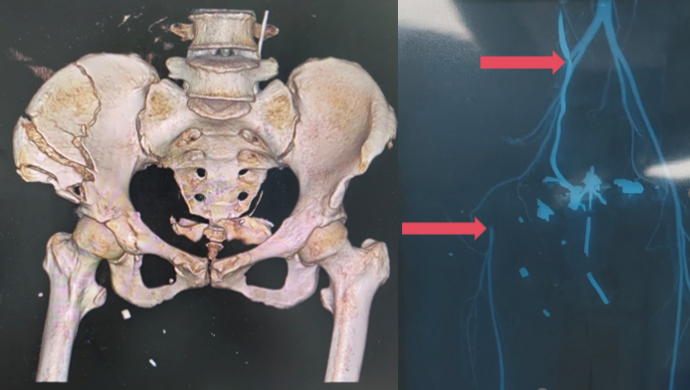
Few weeks ago, the Department of Orthopedics at Xijing Hospital admitted a "special" patient. Ms. Yang, 50 years old, was impaled by a heavy steel pipe in a traffic accident, causing extensive laceration to her right lower abdomen, groin area, and perineum, combined with an open pelvic fracture. More critically, her right external iliac artery and common femoral artery were severely damaged, blood supply to the right lower extremity was interrupted, the extremity showed ischemic signs like pallor, coldness, and absence of pulse, was nearing necrosis, and her vital signs were extremely unstable. Faced with such severe multiple injuries, following traditional treatment logic, amputation is often the helpless but necessary choice to save the patient's life.
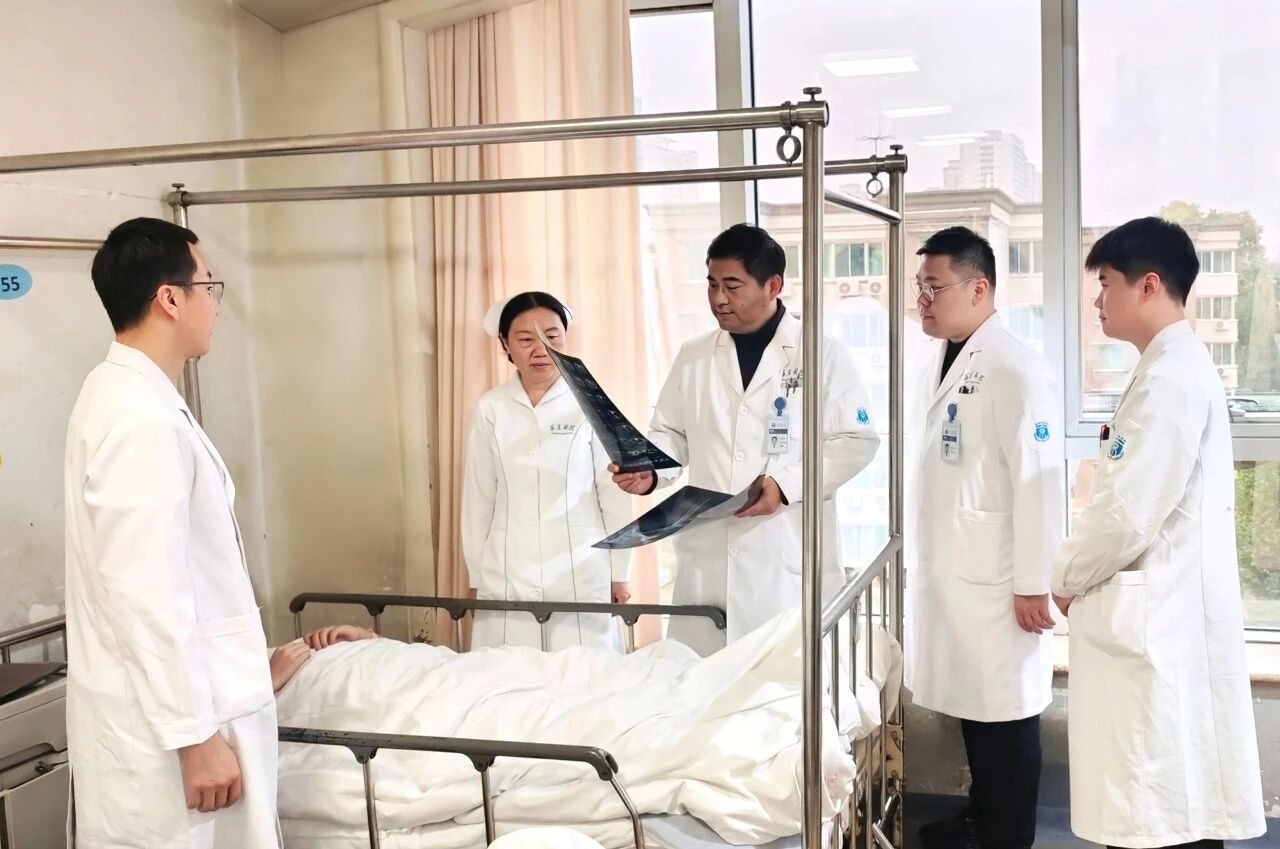
"I have elderly parents and children at home to care for, I can't lose my leg..." Upon learning that amputation might be necessary, she struggled to accept it. After several discussions, she ultimately expressed hope to save the lower extremity. The Orthopedic Trauma Team quickly organized a multi-disciplinary consultation involving Anesthesiology, Interventional Radiology, Intensive Care Medicine, and the Blood Transfusion Department to discuss salvage strategies for the lower extremity. After collective discussion and assessment, it was concluded that due to the severe destruction of the injured blood vessels and the high location of the defective segment, conventional vascular anastomosis surgery was no longer feasible.
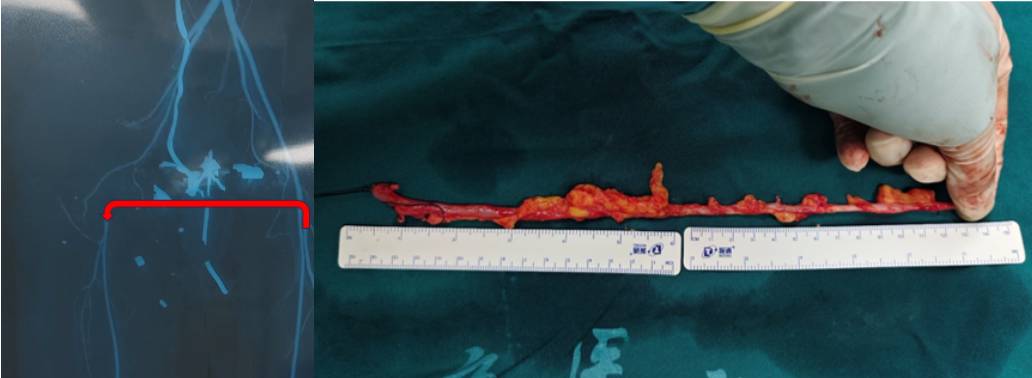
"Since direct anastomosis isn't possible, we will reconstruct a blood pathway." After multiple rounds of discussion, Dr. Junjun Fan from Orthopedics and the surgical team decided to perform lower extremity salvage using the "bridging blood vessel transplantation technique." The core of this technique involves harvesting a relatively less crucial blood vessel from the patient's own body (such as the great saphenous vein) to serve as a "bridge," routing a blood vessel from the healthy thigh across the lower abdomen to create a blood supply channel for the injured lower extremity.
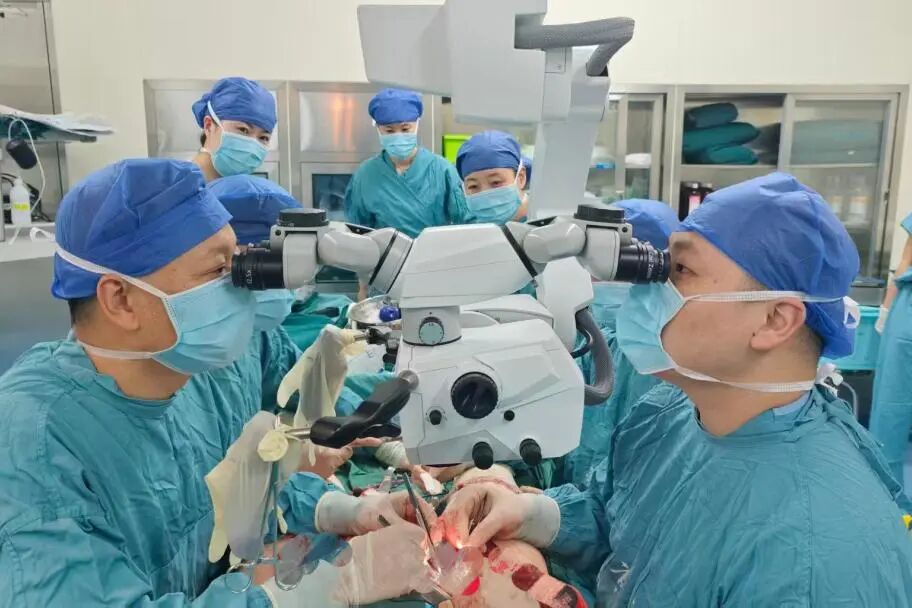
Under the high magnification of the surgical microscope, the surgical team used extremely fine sutures to precisely anastomose both ends of the transplanted vessel to the healthy arteries. The process required not only overcoming the technical challenges of vascular anastomosis but also simultaneously managing the pelvic fracture and multiple soft tissue lacerations, posing a severe test to the team's technical expertise and collaboration.
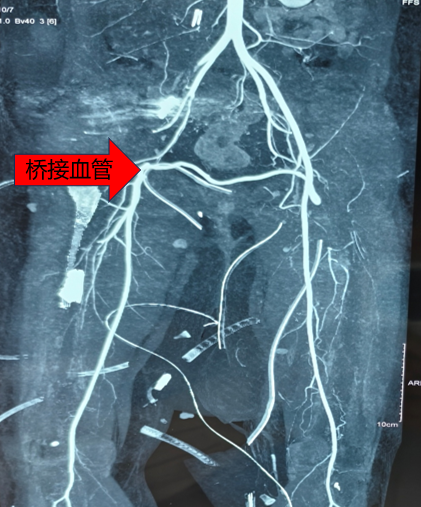
Under the guidance of Dr. Long Bi, Deputy Chief Physician, the surgical team underwent hours of meticulous operation. As the vascular clamps were released, fresh blood flowed into the right lower extremity through the reconstructed "bridge of life," and the dorsalis pedis pulse returned, successfully salvaging the lower extremity. Postoperatively, under the close monitoring and rehabilitation guidance of the ICU and nursing teams, the blood supply to Ms. Yang's right lower extremity gradually stabilized, its color and temperature returned to normal, and the wounds healed well. She has now begun early functional exercises, showing significant improvement in her quality of life.
"Thank you to the Xijing Orthopedics surgical team; you have given me a new lease on life," the patient said emotionally upon discharge. The success of this lower extremity salvage surgery is an important achievement under the hospital's Orthopedic Trauma Center multi-disciplinary collaboration model and demonstrates its technical prowess in the field of severe lower extremity trauma treatment.
"This vascular transplantation is not just a technical innovation; it embodies, more importantly, a people-oriented, life-first humanitarian care. We aim not only to save lives but also to protect the dignity of our patients' lives," explained Dr. Junjun Fan. The successful implementation of this surgery has accumulated valuable experience for the treatment of such severe lower extremity traumas and will promote the continuous development of microsurgical techniques. Moving forward, the hospital will continue to uphold both technological innovation and humanistic care, bringing new hope to more critically ill patients.

