


The 2025 European Society for Medical Oncology (ESMO) Congress was held in Berlin, Germany, presenting the latest clinical research advances and academic achievements in oncology to global experts, scholars, and practitioners.
On October 19th at 16:50 local time, the OptiTROP-Lung04 study—led by Dr. Li Zhang from Sun Yat-sen University Cancer Center—was presented as an oral presentation. The study, "OptiTROP-Lung04: Sacituzumab tirumotecan (sac-TMT) plus platinum-based chemotherapy versus chemotherapy in EGFR-mutant non-small cell lung cancer (NSCLC) after EGFR-TKI progression," was simultaneously published in the New England Journal of Medicine (NEJM).
Superior to Chemotherapy! OptiTROP-Lung04 Offers New Option for EGFR-TKI Resistance
The OptiTROP-Lung04 study is a randomized, open-label, multicenter Phase III trial evaluating sac-TMT monotherapy versus pemetrexed plus platinum chemotherapy in patients with EGFR-mutant, locally advanced or metastatic non-squamous NSCLC who had progressed on prior EGFR-TKI therapy.
Patients were randomized 1:1 to receive either sac-TMT monotherapy (5 mg/kg Q2W) or chemotherapy (pemetrexed 500 mg/m² plus carboplatin AUC5 or cisplatin 75 mg/m² Q3W for 4 cycles, followed by pemetrexed maintenance).
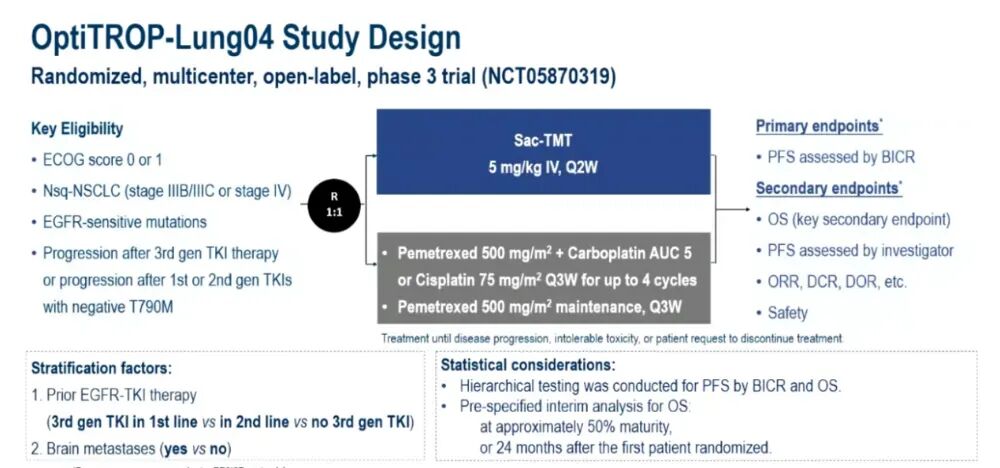
Figure 1: OptiTROP-Lung04 Research Design
The primary endpoint was progression-free survival (PFS) assessed by a Blinded Independent Review Committee (BIRC). Overall survival (OS) was a secondary endpoint.
Efficacy Results
A total of 376 patients were randomized (sac-TMT, n=188; chemotherapy, n=188). The median age was 59.5 years; 39.6% were male; 79.3% had an ECOG performance status of 1; and 94.7% had received prior third-generation EGFR-TKI therapy. At a median follow-up of 18.9 months, 21.3% of patients in the sac-TMT group remained on treatment versus 1.6% in the chemotherapy group.
Compared to chemotherapy, sac-TMT demonstrated highly statistically significant and clinically meaningful improvements in both PFS and OS:
-
PFS (BIRC-assessed): Median PFS was 8.3 months (95% CI 6.7-9.9) with sac-TMT versus 4.3 months (95% CI 4.2-5.5) with chemotherapy (HR=0.49; 95% CI 0.39-0.62; P<0.0001).
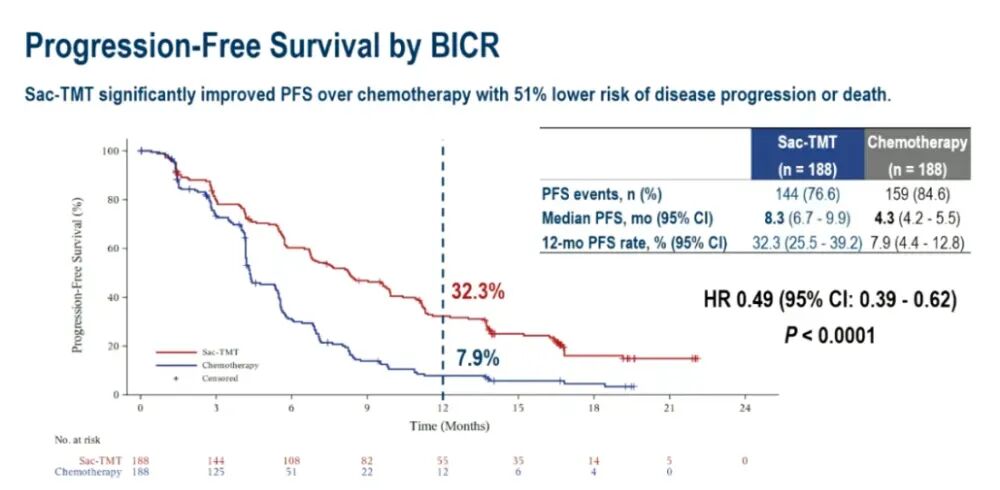
Figure 2: Primary Study Outcome: PFS
-
OS: Median OS was Not Reached (95% CI 21.5-NR) with sac-TMT versus 17.4 months (95% CI 15.7-20.4) with chemotherapy (HR=0.60; 95% CI 0.44-0.82; P=0.0006).
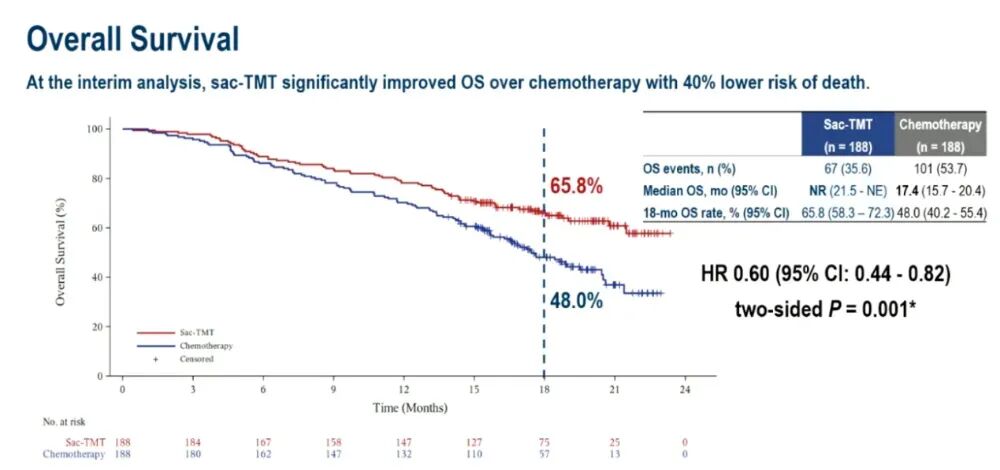
Figure 3: Primary Study Outcome: OS
-
Objective Response Rate (ORR, BIRC-assessed): ORR was 60.6% (95% CI 53.3-67.7) with sac-TMT versus 43.1% (95% CI 35.9-50.5) with chemotherapy.
-
Median Duration of Response (DoR, BIRC-assessed): Median DoR was 8.3 months (95% CI 6.2-10.0) with sac-TMT versus 4.2 months (95% CI 3.0-4.4) with chemotherapy.
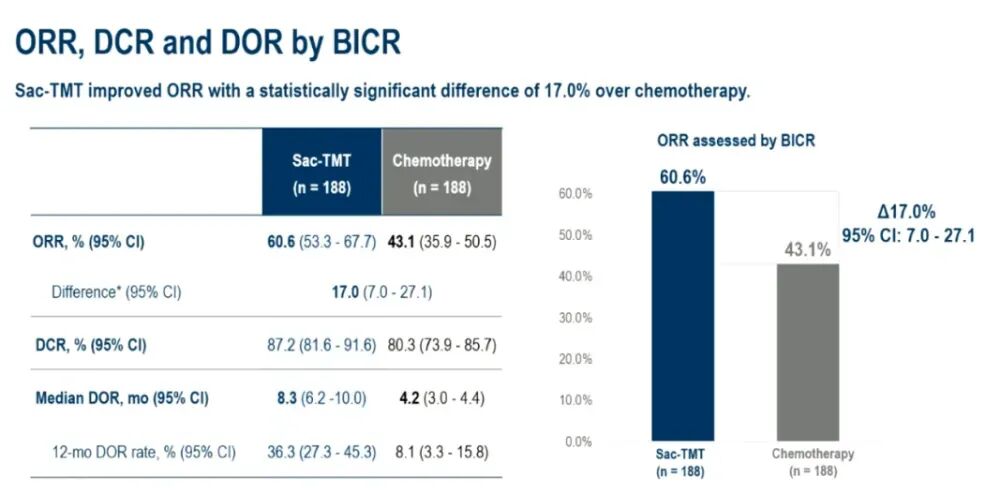
Figure 4. Primary Study Outcome: ORR and DOR
Safety Profile
Regarding safety, the incidence of Grade ≥3 treatment-related adverse events (TRAEs) was 58.0% in the sac-TMT group and 53.8% in the chemotherapy group. The incidence of treatment-related serious adverse events was 9.0% and 17.6%, respectively. No drug-related interstitial lung disease/pneumonitis was reported in either group.
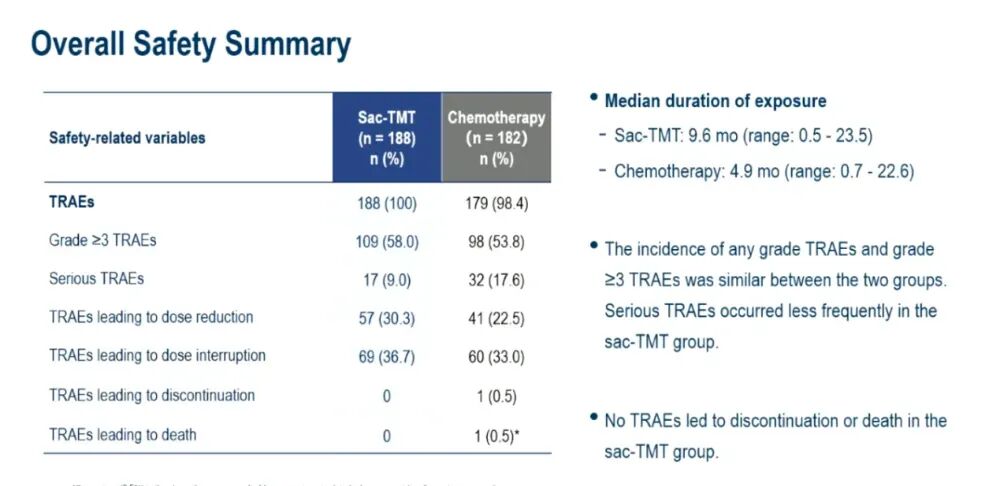
Figure 5. Data of Safety
Dr. Zhang stated in the presentation: "The results of the OptiTROP-Lung04 study demonstrate that sac-TMT monotherapy, challenging the standard platinum-doublet chemotherapy in the second-line setting, achieved statistically significant positive results for both key clinical endpoints of PFS and OS. As the first global regimen to demonstrate dual PFS and OS benefit, it heralds a new ADC era in the second-line treatment of EGFR-mutant NSCLC."
Furthermore, based on the OptiTROP-Lung04 results, on September 30, 2025, China's National Medical Products Administration (NMPA) officially approved sacituzumab tirumotecan for the treatment of adult patients with EGFR mutation-positive, locally advanced or metastatic non-squamous NSCLC who have progressed on prior EGFR-TKI therapy. This marks the first ADC drug globally to receive regulatory approval in this EGFR-TKI pretreated population.
Reference:
-
Li Zhang et al.Sacituzumab tirumotecan (sac-TMT) vs platinum-based chemotherapy in EGFR-mutated (EGFRm) non-small cell lung cancer (NSCLC) following progression on EGFR-TKIs: results from the randomized, multi-center phase III OptiTROP-Lung04 study2025ESMO,LBA5.

