


From March 25 to 28, 2026, the world’s premier academic event in the lung cancer field, the European Lung Cancer Congress 2026 (ELCC 2026), was held in Copenhagen, Denmark. At 4:30 p.m. local time on March 26, Prof. Saumil Ghandi of Houston, USA, delivered a major presentation in the ELCC presidential symposium, reporting a secondary analysis of the NorthStar phase II randomized clinical trial. The analysis focused on predictors of benefit from local consolidative therapy (LCT) and patterns of failure in metastatic EGFR-mutant non-small cell lung cancer (NSCLC), providing high-level evidence to identify patients most likely to benefit from osimertinib plus LCT and to understand patterns of radiotherapy failure.
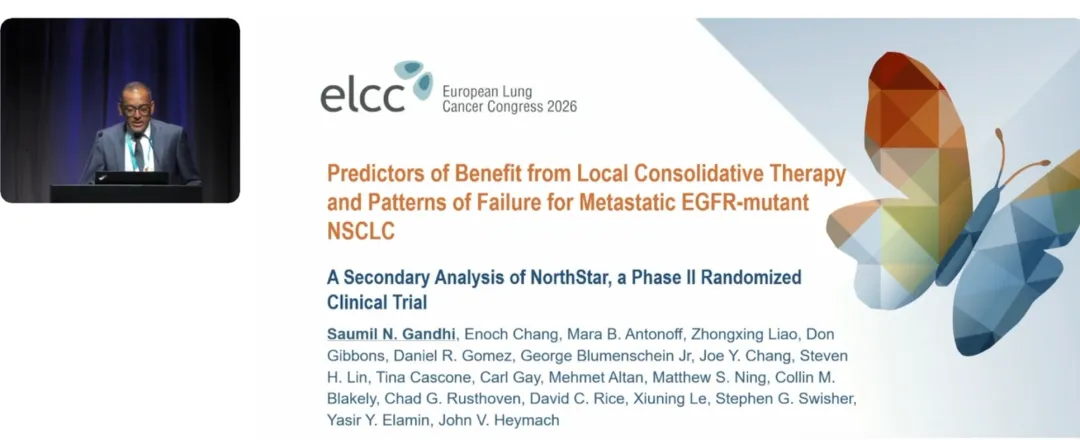
Study focus: NorthStar secondary analysis identifies patients most likely to benefit from LCT
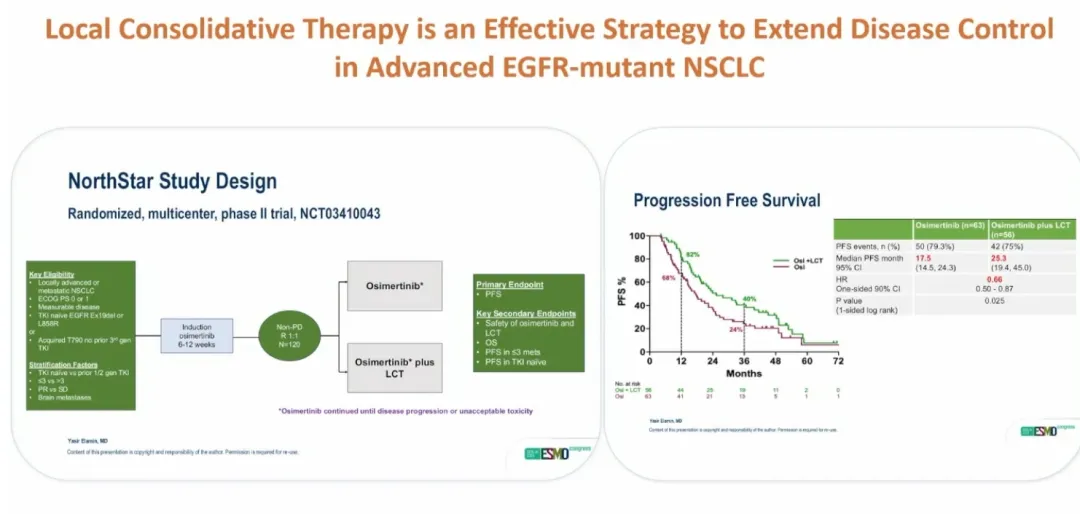
The previously reported NorthStar study had already shown that adding local consolidative therapy (radiotherapy or surgery) to osimertinib significantly prolonged progression-free survival in patients with metastatic EGFR-mutant NSCLC (PFS: 25.4 vs 17.5 months; HR=0.66, 90% CI: 0.50-0.87; p=0.025). The secondary analysis presented at this meeting focused on radiotherapy dosimetry, patterns of treatment failure, and predictors of benefit from LCT, with the aim of guiding more precise patient selection in clinical practice.
Study Design
This secondary analysis was based on the population enrolled in the NorthStar phase II randomized controlled trial. A total of 119 patients with metastatic EGFR-mutant NSCLC whose disease had not progressed after 6 to 12 weeks of induction treatment with osimertinib were included. These patients were randomized into two groups: 63 received osimertinib alone and 56 received osimertinib plus local consolidative therapy.
Within the combination group, the methods of local consolidative therapy were diverse: radiotherapy alone accounted for the highest proportion at 59% (33/56), radiotherapy plus surgery for 11% (6/56), and surgery alone for 30% (17/56). The radiotherapy regimens mainly included 52.5 Gy in 15 fractions, 50 Gy in 4 fractions, 60 Gy in 15 fractions, and 45 Gy in 15 fractions. In addition, 76% of patients continued oral osimertinib during radiotherapy, maintaining treatment continuity and synergy.
The study used a Cox proportional hazards model to systematically evaluate a variety of factors associated with PFS and also conducted a detailed analysis of patterns of failure after treatment, thereby providing a comprehensive reference for clinical practice.
Key efficacy results: greatest benefit in patients with cleared intrathoracic lymph nodes and no pleural effusion
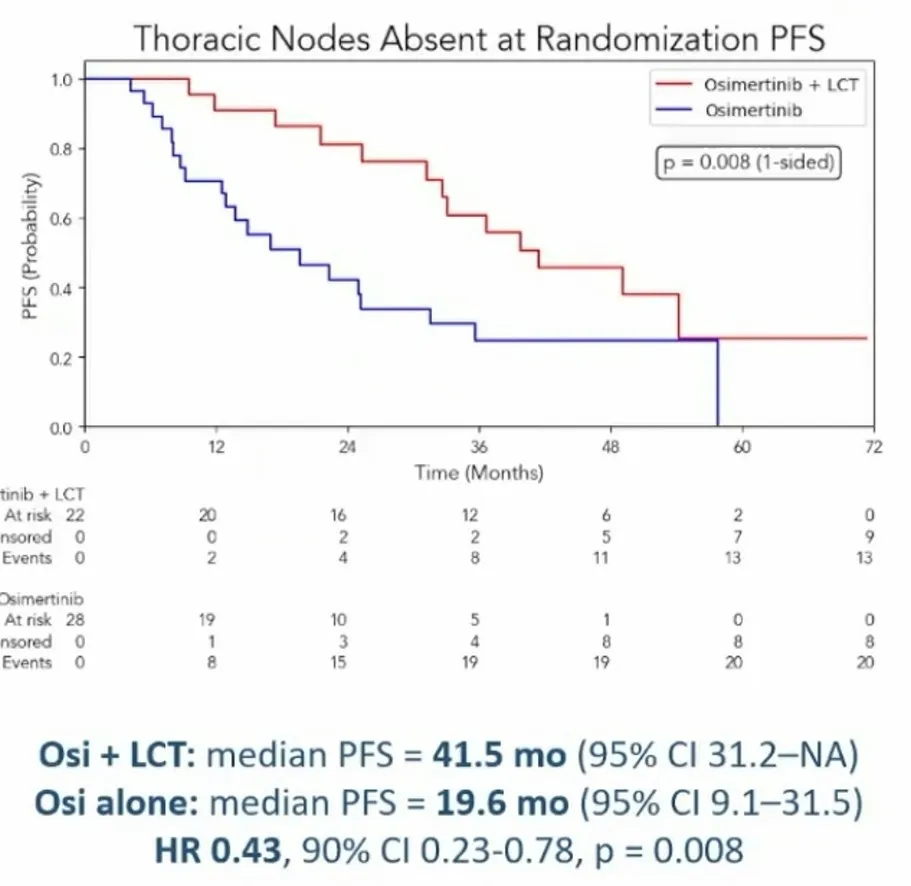
1. Best-benefit group: no residual intrathoracic lymph node involvement after induction
Patients with no residual intrathoracic lymph node involvement on diagnostic CT after osimertinib induction derived the most significant benefit from combination treatment. In these patients, median PFS reached 41.5 months with osimertinib plus local consolidative therapy, compared with only 19.6 months with osimertinib alone, a statistically significant difference (HR=0.43, 90% CI: 0.23-0.78; p=0.008).
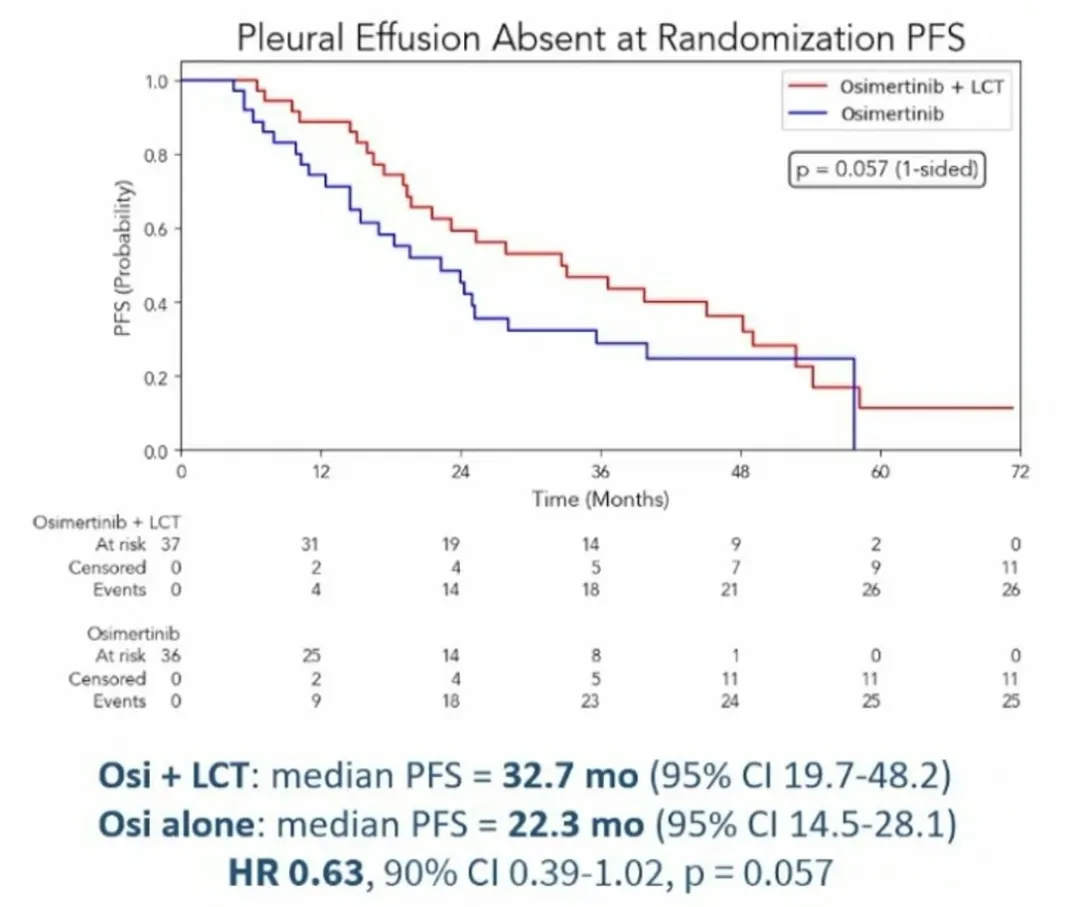
2. Second-best group: no pleural effusion after induction
Similarly, patients without persistent pleural effusion after induction with osimertinib also showed a clear trend toward benefit from local consolidative therapy. Their median PFS was 32.7 months, higher than the 22.3 months seen with osimertinib alone (HR=0.63, 90% CI: 0.39-1.02; p=0.057).
3. No clear-benefit group
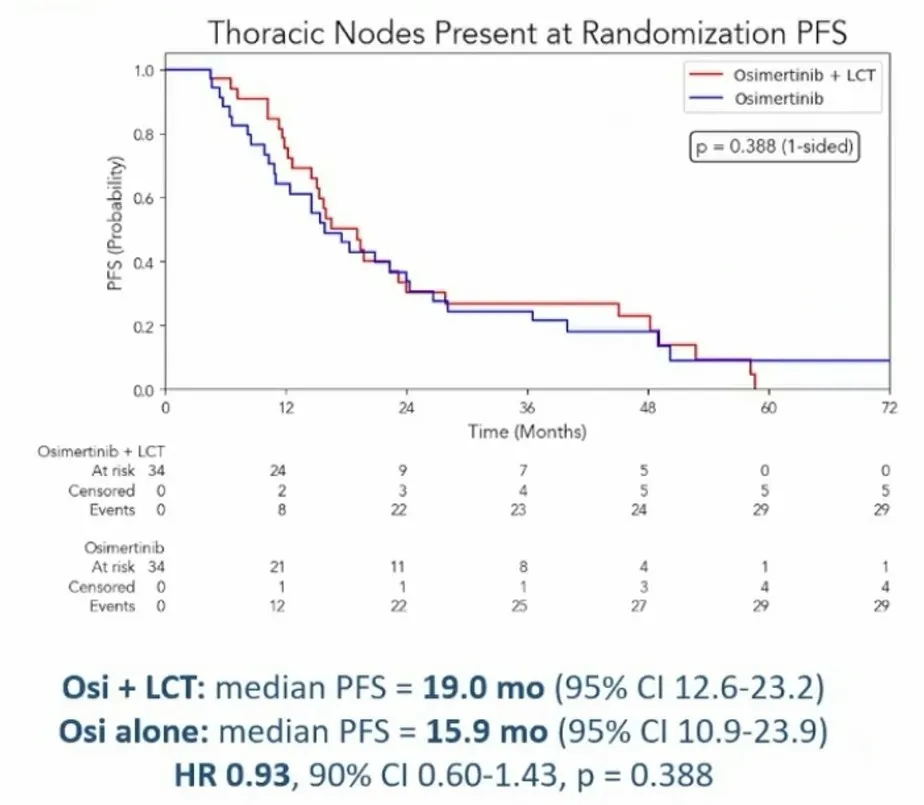
Importantly, not all patients benefited from combination treatment. Among those who still had persistent positive intrathoracic lymph nodes after osimertinib induction, there was no obvious difference in median PFS between combination therapy and monotherapy, at 19.0 months and 15.9 months, respectively (HR=0.93, 90% CI: 0.60-1.43; p=0.39).
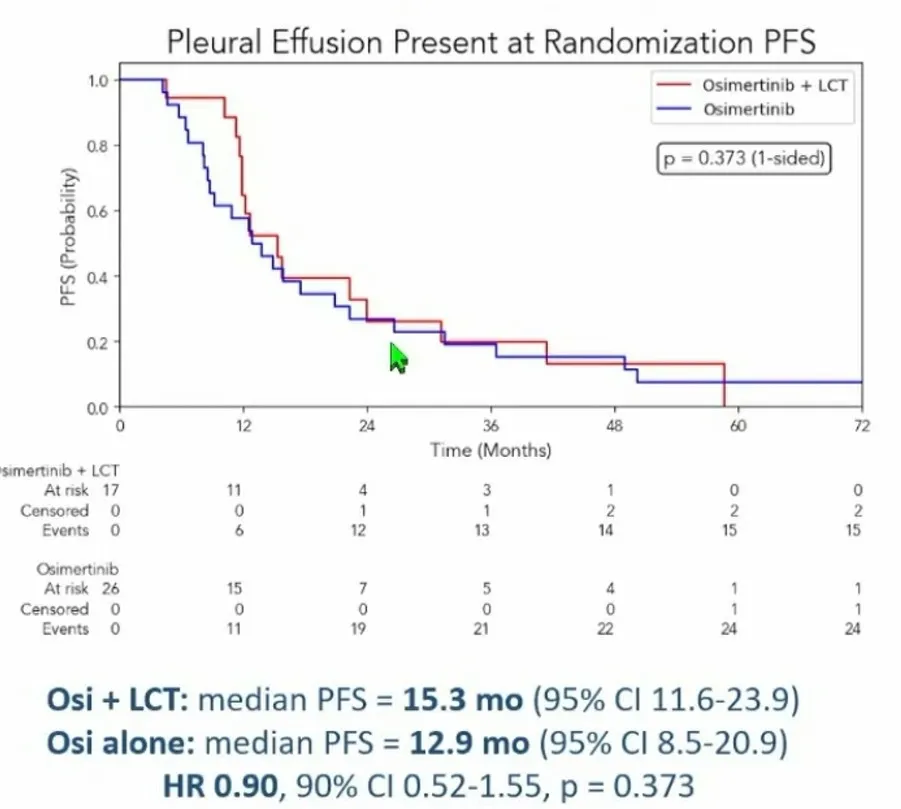
Likewise, in patients with persistent pleural effusion, median PFS did not differ statistically between the two strategies, at 15.3 months and 12.9 months, respectively (HR=0.90, 90% CI: 0.52-1.55; p=0.37). These findings provide clear criteria for selecting the most appropriate treatment population in clinical practice.
Patterns of treatment failure: predominantly new distant metastases, with very low in-field recurrence after radiotherapy
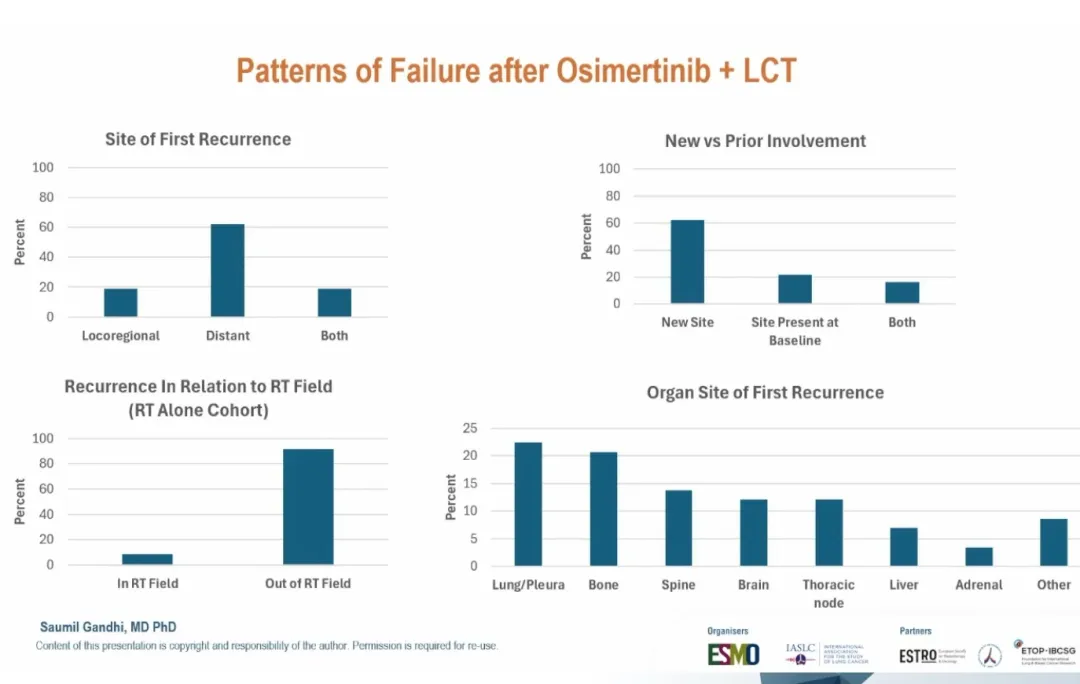
Among the 37 patients who relapsed after receiving local consolidative therapy, the types of recurrence showed a clear pattern. Only 7 cases (19%) were locoregional recurrences, 23 cases (62%) were distant metastases, and another 7 cases (19%) had both locoregional recurrence and distant metastases. In addition, 62% of recurrences occurred at entirely new metastatic sites, indicating that distant spread was the main cause of failure after local consolidative therapy.
Further analysis of the subgroup that received radiotherapy showed that among the 24 patients who relapsed, only 2 cases (8%) were in-field recurrences, while the remaining 22 cases (92%) were out-of-field failures. These data indicate that local consolidative therapy achieved good control of lesions within the radiation field, and that future optimization should focus on strengthening systemic treatment to reduce the occurrence of distant metastases.
Study conclusion: precision stratification may reshape local treatment strategies for advanced EGFR-mutant lung cancer
Based on the full results of this secondary analysis, Prof. Saumil Ghandi emphasized in the presentation that osimertinib plus local consolidative therapy, compared with osimertinib alone, can significantly prolong PFS in patients with metastatic EGFR-mutant NSCLC, further strengthening this conclusion.
Clearance of intrathoracic lymph node involvement and absence of pleural effusion after induction with osimertinib were identified as potential predictors of significant benefit from local consolidative therapy and may serve as key standards for clinical patient selection.
At the same time, treatment failure after local consolidative therapy was mainly characterized by new distant metastases and out-of-field recurrence. This suggests that future clinical treatment should build on precise local consolidation while further optimizing systemic control strategies, so as to improve long-term survival outcomes even more.
Reference:
[1] Saumil Ghandi, et al. Predictors of benefit from local consolidative therapy and patterns of failure for metastatic EGFR-mutant NSCLC: A secondary analysis of NorthStar, a phase II randomized clinical trial. 2026 ELCC, LBA3.

