


A Controversial Medical Technology Has Led to the Birth of Eight "Three-Parent Babies" in the UK Over Five Years
On July 16 local time, The New England Journal of Medicine (NEJM) published a new research report by a British-Australian team, revealing that eight babies have been born using the "three-parent baby" technique. The oldest is over two years old, and the youngest is less than five months. So far, none of them have shown symptoms of inherited diseases.
This technology was approved in the UK ten years ago. Back then, the UK became the first country to legislate and give the green light to this assisted reproductive technology. In order to overcome genetic defects, babies born through this method inevitably inherit DNA from three individuals: the two biological parents and a healthy female donor.
Because the babies have DNA from three people at the genetic level, the technique is commonly referred to as the "three-parent baby" technology.
The research has attracted widespread attention in the field of reproductive medicine. Some comments describe it as the world's first clinically evaluated and successful application of the technique resulting in the birth of multiple healthy children—marking a milestone in genetic medicine. However, some experts have also raised concerns about ethical issues, as well as the safety and effectiveness of the procedure.
"Reconstructed" Embryos to Eliminate Deadly Diseases
According to the latest NEJM article, the eight babies (four boys and four girls, including one pair of identical twins) were born to mothers whose egg cells carried key mitochondrial DNA mutations that could cause disease.
Mitochondrial DNA mutations are maternally inherited, meaning that if the mother has a mutation, her children are highly likely to be affected.
Over 200 diseases are currently known to be associated with mitochondrial mutations. These can affect multiple systems in the body and, in severe cases, lead to disability or death. For example, women with Leigh syndrome may have 25% of their mitochondria carrying pathogenic genes. Even if they successfully give birth, their children may fail to develop properly. As the condition progresses, damage may occur to the heart and lungs, eventually resulting in multi-organ failure and death.
According to data from the Key Laboratory of Gamete and Reproductive Tract Abnormalities under China's National Health Commission, mitochondrial diseases occur in approximately 1 in 5,000 people and currently lack effective treatments.
In 2010, UK researchers first proposed mitochondrial replacement therapy (MRT), and various treatment protocols have since been developed. The NEJM study applied a method called pronuclear transfer:The mother’s egg with defective mitochondria and a healthy donor’s egg were both fertilized in vitro with the father's sperm.From the mother’s fertilized egg, the pronuclei (which contain the nuclear DNA) were extracted.From the donor’s fertilized egg, the pronuclei were removed, leaving behind the healthy cytoplasm and mitochondria.The mother's pronuclei were then inserted into the donor's enucleated egg to form a reconstituted embryo, which was implanted into the mother’s uterus.
In this process, the genetic contribution from the donor accounts for about 0.1% of the embryo's total DNA, as it does not involve nuclear DNA.
Promising Early Outcomes
The British-Australian research team found that in five of the eight infants, the mitochondrial mutation rate was undetectable, while the remaining three had rates of 5%, 12%, and 16%, all below the threshold for causing mitochondrial diseases.
All babies had normal Apgar scores at birth and developed as expected. At around 18 months of age, five were in excellent health. The other three experienced fever, urinary tract infections, transient seizures, and hyperlipidemia—all of which improved with treatment. Researchers believe these may be linked to factors such as maternal health during pregnancy or the inherent risks of assisted reproductive technologies.
The research team stated that 22 families have undergone treatment using this method. The women involved suffered from conditions caused by mitochondrial defects, including myopathy, encephalopathy, lactic acidosis, stroke, and optic atrophy. In addition to the eight children already born, one woman is currently pregnant. The team plans to closely monitor these children for at least five years.
Future plans include further reducing mitochondrial mutation rates in newborns and refining the technique—for example, using frozen donor eggs instead of fresh ones to shorten waiting times and benefit more families.
Growing Global Adoption
Following the publication of this top-tier study, some British families expressed renewed hope.
Kat Kitto's younger daughter, now 14, suffers from a mitochondrial disease. She cannot speak, relies on a feeding tube, and uses a wheelchair. Her elder daughter Lily, 16, was also found to carry mitochondrial mutations that could be passed to the next generation.
“This might be the only way to break the genetic curse,” Lily told the media. “I will be able to have my own children, and they and our family will have a healthy future.”
As assisted reproductive technologies advance, some women with mitochondrial mutations can use preimplantation genetic testing to select embryos with mutation rates below disease thresholds. However, for women with very high mutation loads, it is almost impossible to find a viable embryo.
According to Dr. Wu-Liang Hu, a renowned pediatric professor in Taiwan, the clinical recommendation for such women is usually not to conceive or to use donated eggs for IVF.
The "three-parent baby" technique offers these women a new path forward.In June 2008, the UK Parliament began discussions to amend the Human Fertilisation and Embryology Act. By 2012, the country had commissioned an ethics panel to gather public input and build consensus. In 2015, after a parliamentary vote, the UK became the first country in the world to legally approve and regulate the use of this technology.
The UK strictly regulates the application of the technique:
Case-by-case approval
Limited to a small number of licensed institutions
Only the pronuclear transfer method is permitted
Mandatory long-term follow-up of three-parent babies
At the time, the move sparked significant controversy. Many conservative MPs openly opposed the law, claiming that the technique closely resembled cloning and could push science toward a dangerous line, potentially enabling human cloning.
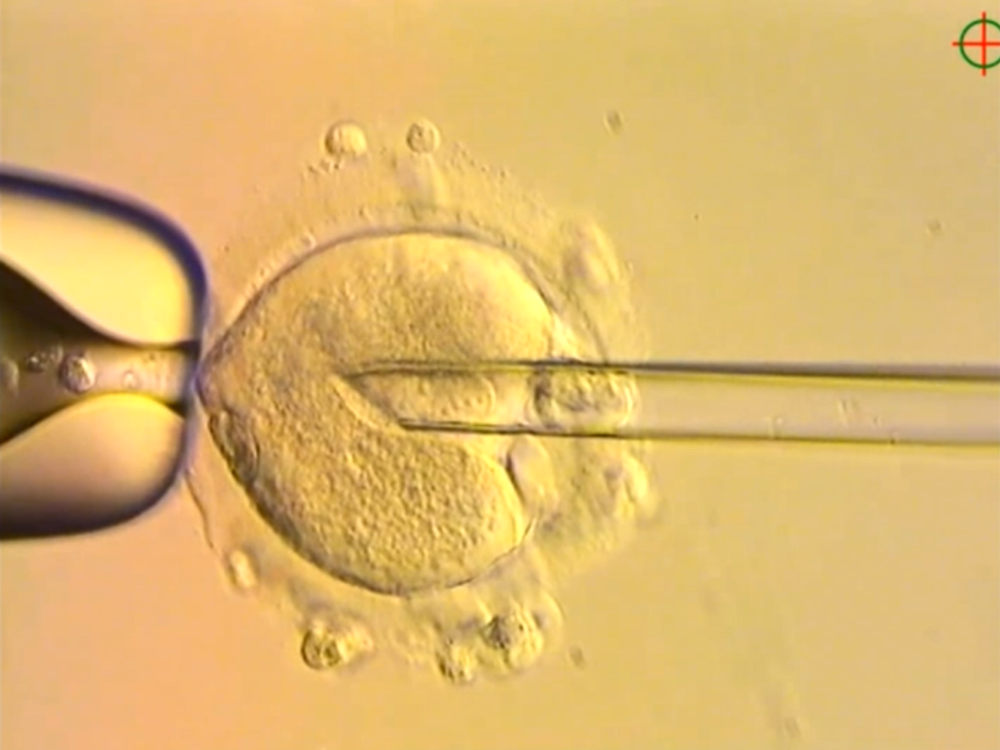
The research team demonstrates pronuclear transfer. / Image source: BBC
Safety and Ethical Concerns Remain
The safety and efficacy of the technique have long been questioned.
Shoukhrat Mitalipov, Director of the Center for Embryonic Cell and Gene Therapy at Oregon Health & Science University, published a paper in Nature pointing out that some versions of the three-parent technique can fail, potentially making children more susceptible to new diseases.
His research found conflicts between donor mitochondrial DNA and the recipient’s native mitochondrial environment. Additionally, a “reversion” phenomenon was observed: over time, the proportion of the mother's mutated mitochondrial DNA increased, potentially reestablishing the risk of disease.
Patrick O’Farrell, a molecular biologist at the University of California, San Francisco, explained that some mitochondrial genomes replicate much faster than others. “The disease-carrying genome is like a hyper-replicating bully,” he said.
To mitigate these risks, Mitalipov recommended more sophisticated matching between donors and recipients.
A July 19 article by Fudan University’s Institute of Medical Genetics emphasized that mitochondrial replacement therapy is fundamentally different from the controversial "gene-edited baby" incident, as no nuclear DNA is altered. The article called for global regulation, scientific caution, and responsible innovation, rather than suppressing the technology's potential.
The First Three-Parent Baby Was Born in 2016
In 2016, Dr. Zhang Jin from the New Hope Fertility Center in the U.S., working with Dr. Taosheng Huang, then a professor of genetics and pediatrics at the Cincinnati Children’s Hospital, successfully delivered the world’s first three-parent baby. That child is now over 8 years old. The project was recognized as one of the Top 10 Scientific Achievements of 2016.
Currently, countries such as the UK, Mexico, Ukraine, and Greece have reported births using this technique. Even Australia, once cautious, has allowed experimental applications. The U.S. National Academy of Medicine has published clear guidelines and accumulated strong primate data supporting the method's safety and efficacy.
Fudan University’s Institute concluded that mitochondrial replacement therapy offers real and safe potential for the global population affected by mitochondrial diseases. With continued monitoring and evolving bioethics, this may become a valuable tool for treating these rare but devastating conditions.

