


The phase 3 ENGOT-OV43/GOG-3036/KEYLYNK-001 trial results have been published in The Lancet Oncology. The study addressed an area of high unmet clinical need, examining first-line treatment for patients with advanced epithelial ovarian cancer without BRCA mutations.
Article Key Points
- Phase 3 trial at 224 gynecologic oncology centers in 22 countries; 1,367 patients randomized 1:1:1
- All participants were women; median age 61 years (IQR 52-68)
- Interim analysis, CPS>=10: median PFS 23.7 vs 15.2 months, HR 0.63 (95% CI 0.49-0.80; p<0.0001)
- Interim analysis, ITT: median PFS 22.1 vs 14.6 months, HR 0.68 (95% CI 0.58-0.81; p<0.0001)
- Final analysis, ITT: median PFS 22.2 vs 14.6 months, HR 0.71 (95% CI 0.61-0.84)
- Pembrolizumab monotherapy did not significantly improve PFS in CPS>=10 (HR 0.95; p=0.33); ITT not formally tested
- Grade 3 or higher treatment-related adverse events: 66% combination, 56% pembrolizumab, 51% placebo
- Treatment-related deaths: 4 in the combination arm, 1 in the pembrolizumab arm
- Evidence status: randomized phase 3 trial, peer-reviewed; endpoints limited to PFS at the reported analyses
Fig.1. Cover of the Original Article Screenshot
Research Background
The PARP inhibitor olaparib has been used for first-line maintenance therapy in patients with BRCA-mutated advanced ovarian cancer. This study aimed to evaluate the efficacy and safety of pembrolizumab combined with chemotherapy, followed by maintenance with pembrolizumab plus olaparib, with or without bevacizumab, as first-line treatment for BRCA1/2 wild-type advanced epithelial ovarian cancer.
Study Design
This was a randomized, double-blind, active-control, placebo-controlled phase 3 trial conducted at 224 gynecologic oncology centers in 22 countries. Eligibility criteria included age 18 years or older, histologically confirmed stage III-IV epithelial ovarian cancer, primary peritoneal cancer, or fallopian tube cancer without BRCA mutation; no prior anti-PD-1, anti-PD-L1, or anti-PD-L2 therapy, no prior therapy targeting other stimulatory or co-inhibitory T cell receptors, and no prior PARP inhibitor; ECOG performance status of 0 or 1; and evaluable disease by RECIST criteria.
After one chemotherapy induction cycle, participants were randomized 1:1:1 to three arms: pembrolizumab-olaparib (pembrolizumab plus chemotherapy, then maintenance pembrolizumab plus olaparib), pembrolizumab alone (pembrolizumab plus chemotherapy, then maintenance pembrolizumab plus placebo), or placebo (placebo plus chemotherapy, then placebo maintenance). Use of bevacizumab was at investigator discretion. Randomization was stratified by PD-L1 combined positive score (CPS below 10 vs at least 10), planned bevacizumab use, and surgical status.
The planned regimen was intravenous pembrolizumab 200 mg, or matched placebo, every 3 weeks for up to 35 cycles; carboplatin plus paclitaxel, or docetaxel, per local standard of care for 5 cycles; maintenance as oral olaparib 300 mg, or matched placebo, twice daily until discontinuation or a maximum of 2 years. The primary endpoint was progression-free survival (PFS), analyzed with a hierarchical testing strategy, first in the CPS of at least 10 population and then in the intention-to-treat (ITT) population.
Study Results
Between Jan 30, 2019 and Aug 6, 2021, 2,547 patients were assessed for eligibility and 1,367 were randomized (ITT population): 455 to pembrolizumab-olaparib, 458 to pembrolizumab, and 454 to placebo. All participants were women, and the median age was 61 years (IQR 52-68).
At the first interim analysis (Jan 9, 2023; median follow-up 30.1 months, IQR 23.9-37.0), the pembrolizumab-olaparib arm significantly improved median PFS versus placebo: in the CPS of at least 10 population, 23.7 vs 15.2 months, HR 0.63 (95% CI 0.49-0.80; p<0.0001); in the ITT population, 22.1 vs 14.6 months, HR 0.68 (95% CI 0.58-0.81; p<0.0001).
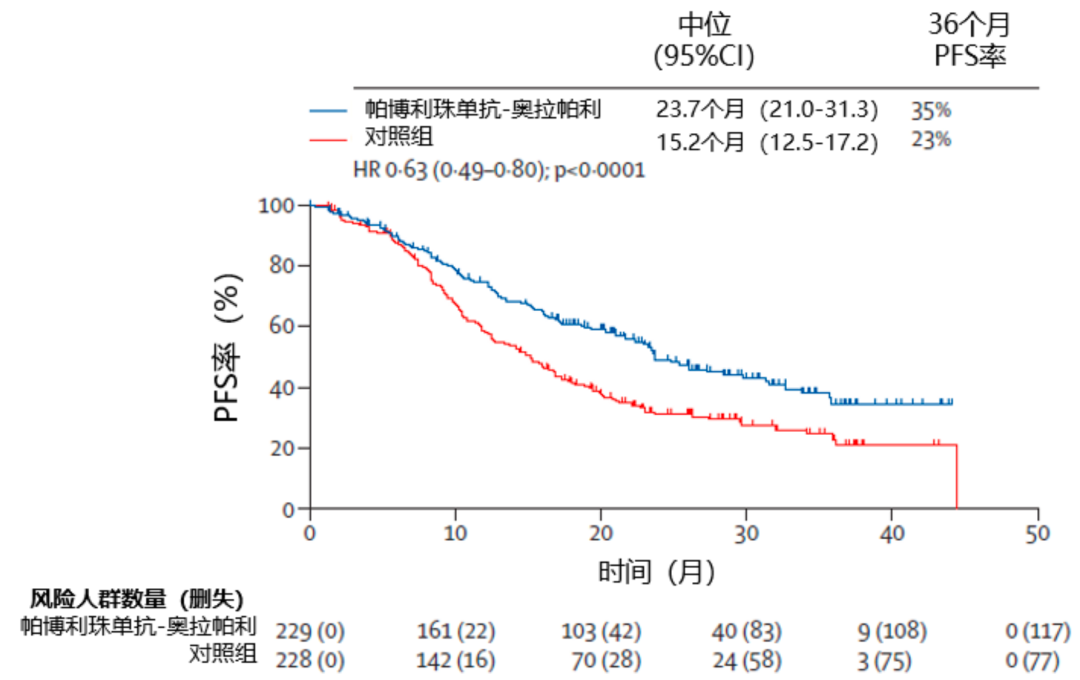
Fig. 2. Progression-free Survival at Interim Analysis
At the final analysis (Aug 26, 2024; median follow-up 49.6 months, IQR 43.4-56.5), the median PFS benefit was maintained: 23.9 vs 15.2 months in the CPS of at least 10 population, HR 0.66 (95% CI 0.53-0.83); and 22.2 vs 14.6 months in the ITT population, HR 0.71 (95% CI 0.61-0.84).

Fig.3. Progression-free Survival at Final Analysis
For pembrolizumab monotherapy versus placebo, no significant difference was observed in the CPS of at least 10 population (HR 0.95, 95% CI 0.77-1.19; p=0.33); progression-free survival in the ITT population was therefore not formally tested.
In terms of safety, grade 3 or higher treatment-related adverse events occurred in 297 of 452 participants (66%) in the pembrolizumab-olaparib arm, 255 of 456 (56%) in the pembrolizumab arm, and 232 of 454 (51%) in the placebo arm. The most common were neutropenia (102 [23%], 78 [17%], and 89 [20%] respectively), anemia (100 [22%], 59 [13%], and 48 [11%]), and decreased neutrophil count (66 [15%], 66 [15%], and 68 [15%]). Serious treatment-related adverse events were reported in 110 participants (24%) in the pembrolizumab-olaparib arm, 96 (21%) in the pembrolizumab arm, and 39 (9%) in the placebo arm, most commonly febrile neutropenia (19 [4%], 16 [4%], and 9 [2%] respectively). Treatment-related adverse events leading to death occurred in 4 participants (1%) in the pembrolizumab-olaparib arm (intracerebral hemorrhage, sclerosing cholangitis, hemophagocytic lymphohistiocytosis, and colitis) and 1 (<1%) in the pembrolizumab arm (gastrointestinal hemorrhage).
Study Conclusions
Pembrolizumab combined with chemotherapy, followed by maintenance with pembrolizumab-olaparib, showed statistically significant and clinically meaningful improvement in progression-free survival compared with chemotherapy alone, suggesting the regimen may have potential value for patients with newly diagnosed BRCA wild-type stage III-IV epithelial ovarian cancer.
Reference
Vergote I, Cibula D, Powell M, et al. Chemotherapy with or without pembrolizumab followed by maintenance pembrolizumab with or without olaparib as first-line treatment of patients with advanced BRCA non-mutated epithelial ovarian cancer (ENGOT-OV43/GOG-3036/KEYLYNK-001): a randomised, double-blind, placebo-controlled, phase 3 trial. Lancet Oncol. 2026 Sep 7:S1470-2045(26)00223-8. doi: 10.1016/S1470-2045(26)00223-8.

