


In 2013, Kanghong Pharma’s independently developed Conbercept ophthalmic injection was first approved for marketing, breaking the long‑standing monopoly of imported drugs in China’s anti‑VEGF (vascular endothelial growth factor) ophthalmic treatment space. Today, building on Conbercept’s success, Kanghong has set its sights on more cutting‑edge technological directions—gene therapy. In the first quarter of this year, the company launched Southwest China’s first Sino‑US dual‑certified gene therapy manufacturing facility, with related pipelines advancing steadily.
From pioneer of a domestically produced anti‑VEGF ophthalmic drug to the launch of Southwest China’s first Sino‑US dual‑certified gene therapy plant in Q1, Kanghong has completed a deep leap from traditional pharmaceuticals to frontier biotechnology over more than a decade.
At the inaugural 2026 China Pharmaceutical Innovation Conference (CPIC), Yao Chuangxin conducted an exclusive interview with Kanghong Pharma’s Vice President Jinqun Yin, covering the development stage and commercial prospects of gene therapy, strategies for balancing traditional advantages with emerging technologies, and the inflection point for Chinese innovative drugs moving toward FIC/BIC.
Gene Therapy: The Next Stop in Ophthalmic Innovation
Kanghong has deepened its presence in the ophthalmology field for over a decade and has grown into one of China’s leading ophthalmic pharmaceutical companies. In Yin’s view, this also makes it incumbent upon Kanghong to follow the world’s most cutting‑edge technological directions in ophthalmology—and one of the most watched paths in recent years is gene therapy.
“In recent years, what’s been hot in ophthalmology is gene therapy R&D,” Yin explained. Kanghong maintains close collaboration with the University of Massachusetts and top U.S. expert teams, while also integrating domestic talent, and has achieved a leading position in ophthalmic gene therapy in China. In Q1 this year, Kanghong launched the first Sino‑US dual‑certified gene therapy manufacturing facility in Southwest China, marking the company’s expansion in this arena from R&D to manufacturing.
Regarding the current stage of gene therapy development, Yin acknowledged that it is a path of progress with ups and downs. “Globally, gene therapy R&D was quite hot a few years ago, but it also experienced some setbacks along the way, with companies entering and exiting continuously.” He believes this reflects a gradual deepening of human understanding of gene therapy as a technological path. “R&D itself is a process of advancing through twists and turns.”
Specifically for Kanghong’s own pipeline, gene therapy programs such as KH631 and KH658 have already entered Phase I and II clinical studies, with existing data encouraging the team and expected to advance to Phase III in the near future. In Yin’s view, the value space for gene therapy lies precisely in areas where traditional Chinese medicines, chemical drugs, and even biologics have limited efficacy—especially rare diseases and those caused by gene deletions or genetic inheritance. “I think gene therapy should have its place.” However, he also emphasized that the long‑term safety of gene therapy remains a key concern requiring ongoing validation by R&D institutions worldwide.
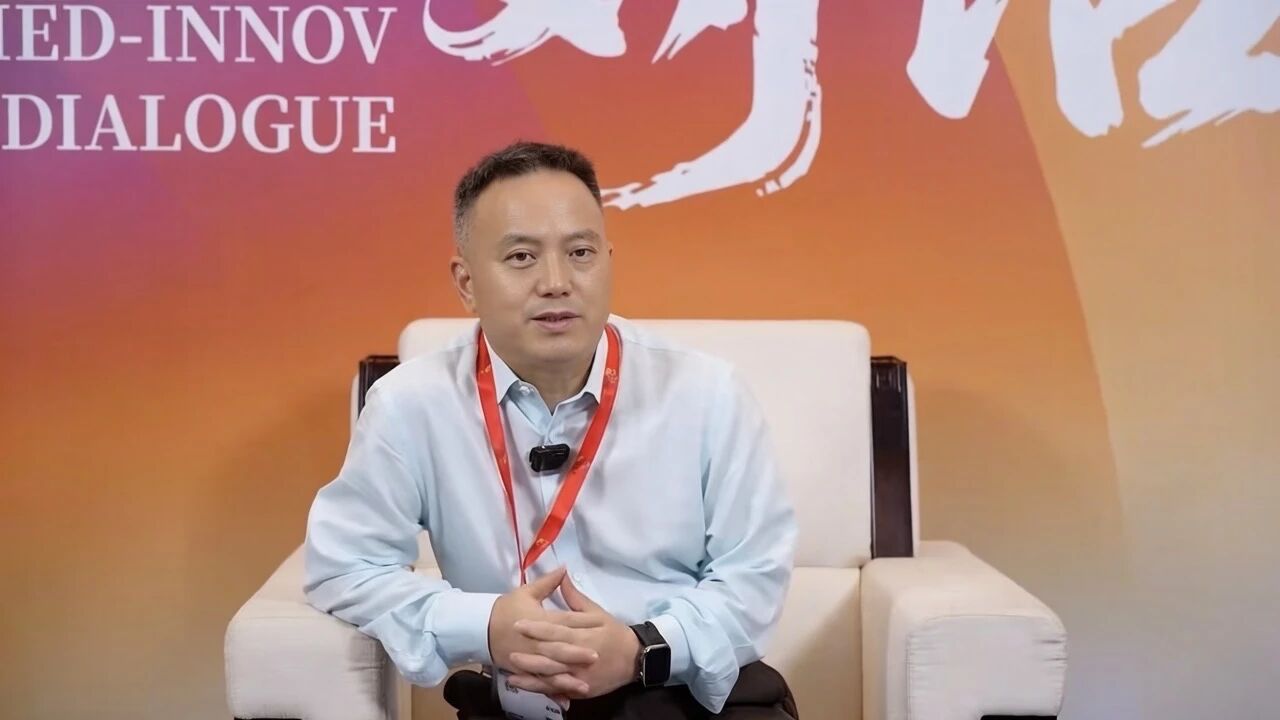 Fig.1. Jinqun Yin, Vice President of Chengdu Kanghong Pharmaceutical Group
Traditional Strengths and Emerging Pipelines: Not a Trade‑Off, But a Dynamic Balance
Beyond ophthalmic gene therapy, Kanghong is simultaneously building innovative pipelines in dual‑toxin ADCs, small molecules, and other emerging technology platforms. As a well‑established pharmaceutical company with years of deep industry experience, how to balance deep cultivation of traditional strengths with investment in emerging technology platforms is a question Yin has repeatedly considered—and his answer is “the two can proceed in parallel without conflict.”
“We must continue to deepen our traditional strengths,” Yin noted. Conbercept and Shuganjieyu capsules were just added to the new edition of China’s National Essential Medicines List in July, which itself reflects that the products’ efficacy and safety have received substantial clinical validation, expert recognition, and patient benefit. “We have no reason not to continue.”
At the same time, Kanghong’s innovation cannot rest on its existing foundation. Yin introduced that Kanghong’s ADC products feature a dual‑toxin design, and the company has already established its own technological characteristics and a leading position in this subfield, representing another representative of Kanghong’s innovation pipeline. “We hope to demonstrate our traditional strengths in neuropsychiatry, ophthalmology, oncology, and other fields, while continuing to deepen and develop emerging technologies.”
In Yin’s view, traditional strengths and emerging pipelines are not contradictory—they represent “different stages, different emphases, different intensities” of dynamic choices, closely related to corporate strategy, industry development stage, and industrial cycles. “It’s not a fixed answer, not a fixed ratio, but a dynamic balance—an optimization of strategy.”
The FIC/BIC Inflection Point: A Long Road Ahead for Chinese Pharma Innovation, But Confidence Remains
From a macro perspective on the global pharmaceutical competition landscape, China’s innovative drug development strategy is transitioning from fast‑follow to first‑in‑class and best‑in‑class. In Yin’s view, achieving this transformation requires long‑term accumulation. “About ten years ago, when I spoke with the media, I said that Chinese pharmaceutical innovation would probably need about a decade of sustained effort before spring would gradually arrive.”
Yin spent sixteen years working at multinational pharmaceutical companies and has been involved in top‑level decision‑making at Kanghong for over a decade. This dual perspective gives him firsthand insight into industry changes. He noted that last year, the scale of China’s innovative drug out‑licensing (BD) transactions had already reached a considerable level, which itself reflects the leap in China’s pharmaceutical innovation capabilities; and the quantity and quality of new drug approvals in China, compared with the FDA, are “at least competitive,” having developed to become the second largest globally—a result of national industrial policy support, entrepreneurial investment, and scientific effort working together.
However, Yin also candidly addressed current shortcomings: China’s pharmaceutical innovation still has substantial work to do in basic research and foundational theory. “Can we discover groundbreaking targets, entirely novel targets, and achieve breakthrough therapies? I think this area is still somewhat thin.” He stated that China’s strength lies more in efficiency improvements “from 1 to 10,” but the capacity for source innovation still needs strengthening.
At the same time, China has natural advantages in big data management capabilities and patient population size, enabling the country to obtain more valuable clinical data in a shorter time with scientific, efficient, and rigorous methods—which is highly meaningful for drug R&D. Yin mentioned that the FDA has recently signaled increased scrutiny of Chinese clinical research. “This is precisely because the speed of Chinese pharmaceutical innovation at various stages has made them feel pressure.” In his view, this is precisely the advantage China needs to continue leveraging.
“Overall, Chinese pharmaceutical innovation has a long road ahead, but we should have the confidence and capability to reach a world‑leading position,” Yin concluded.
Closing Remarks
From the domestic pioneer of anti‑VEGF ophthalmic drugs to a player in frontier areas such as gene therapy and dual‑toxin ADCs, Kanghong’s journey over the past decade is, in some ways, a microcosm of the transformation path for Chinese innovative pharmaceutical companies: neither abandoning the traditional strengths built over many years nor shying away from the uncertainties of embracing new technologies.
The “dynamic balance” and “strategy optimization” Yin spoke of reflect a company’s clear grasp of its own rhythm: knowing what to hold onto, what to break through, and making the right choices at the right time. For Kanghong, the launch of Southwest China’s Sino‑US dual‑certified gene therapy manufacturing facility and the advancement of pipelines like KH631 and KH658 toward Phase III may be just a few milestones along the way. But it is precisely these concrete and solid steps that form the footnote to what Yin calls “confidence”—not an empty judgment about trends, but confidence built on more than a decade of industrial chain accumulation.

