


Reversible airflow limitation is a hallmark of asthma. However, in a subset of patients, lung function does not recover effectively despite standard anti-asthma therapy, with post-bronchodilator FEV1/FVC remaining below 0.7 (or below the lower limit of normal). This is referred to as persistent airflow limitation (PAL).
According to a meta-analysis, the prevalence of PAL is 16% in mild-to-moderate asthma and 54% in severe asthma. Airway remodeling is currently considered a major driver of PAL in asthma, and accumulating evidence indicates that patients with PAL experience accelerated lung function decline and elevated risks of exacerbation and mortality.
At the recently concluded European Respiratory Society (ERS) 2026 Annual Congress, the KALOS/LOGOS study series released further data. One post-hoc subgroup analysis, stratified by PAL status, suggested that triple therapy may provide consistent clinical benefit in patients with asthma, regardless of PAL status, further supporting the efficacy of budesonide-glycopyrronium-formoterol (BGF) in a broad population of patients with uncontrolled asthma. This article reviews the key findings of that analysis.
 Prof. Alberto Papi presenting the KALOS/LOGOS PAL efficacy-consistency poster at ERS 2026
PAL Asthma Carries a Worse Prognosis—Can Triple Therapy Deliver Equivalent Benefit?
Epidemiologic data suggest that the prevalence of PAL in asthma patients in China reaches 26.2%, substantially higher than the 16.2%-18.8% reported in developed countries. Compared with general asthma, PAL patients have longer disease duration, higher smoking prevalence, more severe small-airway dysfunction, elevated exacerbation risk, and overall worse prognosis. Standard ICS plus bronchodilator therapy often fails to fully control the disease. In one study of moderate-to-severe asthma patients (n=386) receiving 12 weeks of standard budesonide/formoterol therapy, 29% still had PAL after treatment. For treatment escalation, high-dose ICS-LABA is a consideration, but for most patients, increasing the ICS dose provides no additional benefit and increases adverse-event risk. Triple therapy combining agents with different mechanisms is therefore an attractive escalation option.
KALOS and LOGOS are twin multicenter, double-blind, double-dummy, parallel-group, randomized, phase 3 trials evaluating BGF triple therapy (budesonide/glycopyrronium/formoterol) versus ICS-LABA dual therapy (budesonide/formoterol) in patients aged 12-80 years whose asthma remained inadequately controlled on medium-to-high dose ICS-LABA.
Both triple-therapy arms used Aerosphere co-suspension delivery technology, administered as two inhalations twice daily:
- BGF 28.8 group: budesonide 160 μg/glycopyrronium 14.4 μg/formoterol fumarate 4.8 μg per actuation
- BGF 14.4 group: budesonide 160 μg/glycopyrronium 7.2 μg/formoterol fumarate 4.8 μg per actuation
The two control arms were:
- BFFA: budesonide/formoterol 160/4.8 μg via Aerosphere co-suspension delivery technology
- BFFS: budesonide/formoterol 160/4.5 μg via Symbicort standard suspension formulation
BFFA and BFFS were pooled as BFFCombined for analysis.
Notably, KALOS/LOGOS enrolled patients on regular medium-to-high dose ICS-LABA for at least 4 weeks with inadequate control and an Asthma Control Questionnaire score (ACQ-7) ≥1.5; patients were not required to have PAL or a recent exacerbation history. Of the 4,304 patients in the efficacy and safety analysis set, more than 40% had not experienced a severe asthma exacerbation in the previous year, broadening the generalizability of the findings.
The KALOS/LOGOS main results, published in The Lancet Respiratory Medicine in April 2026, showed that for lung function, BGF 28.8 versus BFFS significantly improved morning pre-dose trough FEV1 from baseline at week 24, with a least-squares (LS) mean difference of 91 mL (95% CI 60-121; P<0.001), and FEV1 AUC0-3 improved by 105 mL (95% CI 75-134; P<0.001). For severe exacerbations, BGF 28.8 reduced the rate by 18% versus BFFS (RR 0.82; 95% CI 0.71-0.94; P=0.0043).
These main-trial results have established the efficacy of BGF 28.8 in the overall population of patients with uncontrolled asthma. The question of whether this benefit differs by patient subgroup—especially whether patients with coexisting PAL, who have airway remodeling and a worse prognosis, can still benefit from triple therapy—was addressed in a separate KALOS/LOGOS post-hoc analysis presented at this year’s ERS congress.
Triple Therapy Delivers Consistent Benefit Regardless of PAL Status
In this analysis, PAL status was defined based on baseline lung function: post-salbutamol FEV1/FVC <70% at both the second visit (21+2 days before randomization) and the third visit (14±2 days before randomization). Patients were stratified into PAL and non-PAL groups. After stratification by PAL status:
Lung Function (Fig. 1)
In the PAL group, BGF 28.8 versus BFFCombined produced LS mean differences from baseline in morning pre-dose trough FEV1 of 92 mL (95% CI 67-116) at week 24, and in FEV1 AUC0-3 of 115 mL (95% CI 92-138).
In the non-PAL group, the corresponding LS mean differences were 57 mL (95% CI 27-87) for trough FEV1 and 54 mL (95% CI 26-82) for FEV1 AUC0-3.
These findings indicate that BGF 28.8 versus BFFCombined provided lung function benefit in both PAL and non-PAL patients, with numerically greater benefit observed in the PAL group.
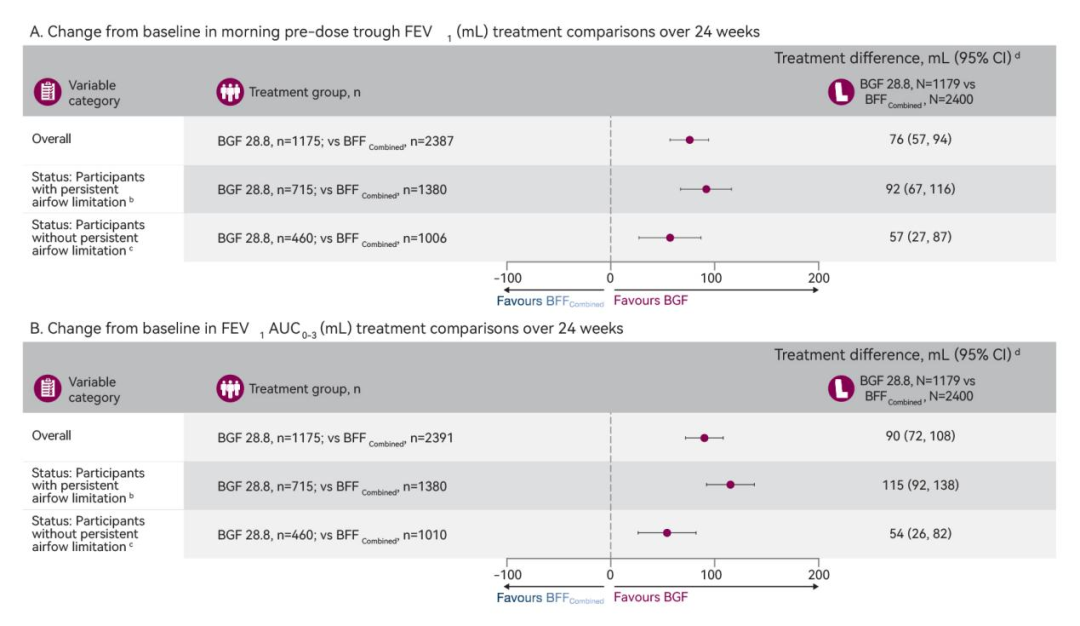 Fig. 1. Directionally consistent lung function improvement with BGF 28.8 versus BFFCombined in PAL and non-PAL patients
Notes: a. All observed data were included in the analysis, unless participants discontinued the study early due to asthma treatment or prohibited medications potentially affecting efficacy, in which case treatment failure was imputed. b. PAL was defined as post-salbutamol FEV1/FVC <70% at both visits 2 and 3. c. Defined as post-salbutamol FEV1/FVC ≥70% at both visits 2 and 3. d. Analysis used a repeated-measures analysis of covariance (ANCOVA) model. The model included study, treatment, visit, subgroup, prior ICS dose (medium vs high dose), and treatment×visit, treatment×subgroup, subgroup×visit, and treatment×subgroup×visit interactions as categorical covariates, with baseline morning pre-dose trough FEV1 and reversibility percentage as continuous covariates.
Exacerbations (Fig. 2)
In the PAL group, BGF 28.8 reduced severe asthma exacerbation risk versus BFFCombined by 14% (RR 0.86, 95% CI 0.74-1.00); in the non-PAL group, the reduction was 16% (RR 0.84, 95% CI 0.69-1.02). These findings suggest that BGF 28.8 may provide exacerbation benefit in PAL patients despite their heavier disease burden and worse prognosis.
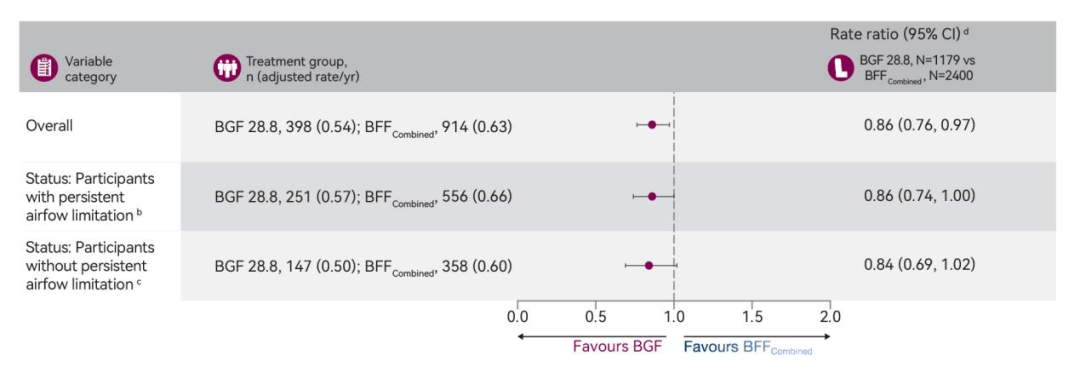 Fig. 2. Severe exacerbation risk reduction with BGF 28.8 versus BFFCombined in PAL and non-PAL patients
Notes: d. RR was analyzed using a negative binomial regression model. The model included treatment, subgroup, treatment×subgroup interaction, region, study, prior ICS dose (medium vs high dose), and baseline severe asthma exacerbation history (0, 1, ≥2) as categorical covariates, and baseline morning pre-dose trough FEV1 and reversibility percentage as continuous covariates.
Symptom Control (Fig. 3)
In both PAL and non-PAL groups, the proportion of ACQ-7 responders at week 24 was numerically higher with BGF 28.8 than with BFFCombined.
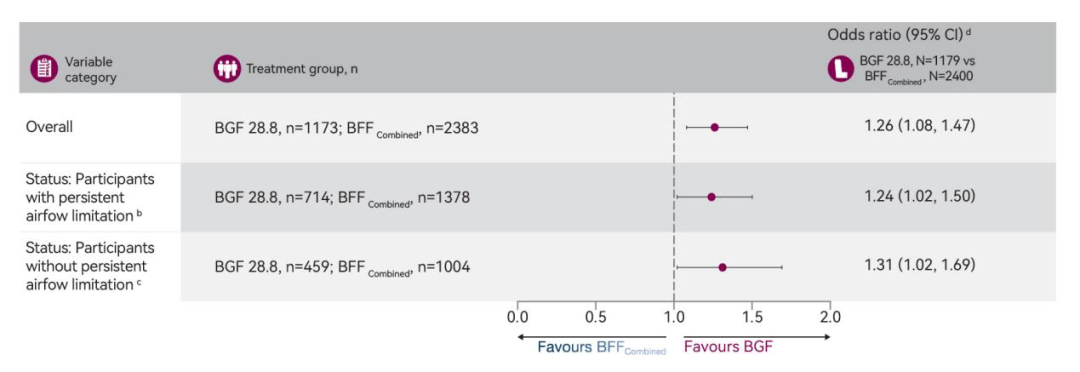 Fig. 3. ACQ-7 responder proportions with BGF 28.8 versus BFFCombined in PAL and non-PAL patients
Notes: d. OR was analyzed using a logistic regression model comparing treatment groups. The model included study, treatment, and prior ICS dose (medium vs high dose) as categorical covariates, and baseline ACQ-7 score, baseline morning pre-dose trough FEV1, and reversibility percentage as continuous covariates, with a treatment×subgroup interaction term.
Based on these findings, BGF 28.8 was associated with greater lung function and symptom improvement than BFF in both PAL and non-PAL asthma patients, with numerically greater benefit in PAL patients. The findings support the efficacy of BGF triple therapy across PAL-status subgroups.
In addition, subgroup analyses from the KALOS/LOGOS program presented at the American Thoracic Society (ATS) 2026 Annual Congress in May showed that, regardless of baseline severe exacerbation history (0 or ≥1), baseline lung function severity (mild/moderate defined as pre-bronchodilator FEV1 percent predicted [FEV1%] >55%; severe defined as FEV1% ≤55%), prior ICS dose (medium or high), and airway reversibility (<20% or ≥20%), BGF 28.8 versus BFFCombined improved morning pre-dose trough FEV1 at week 24 across all subgroups (Fig. 4).
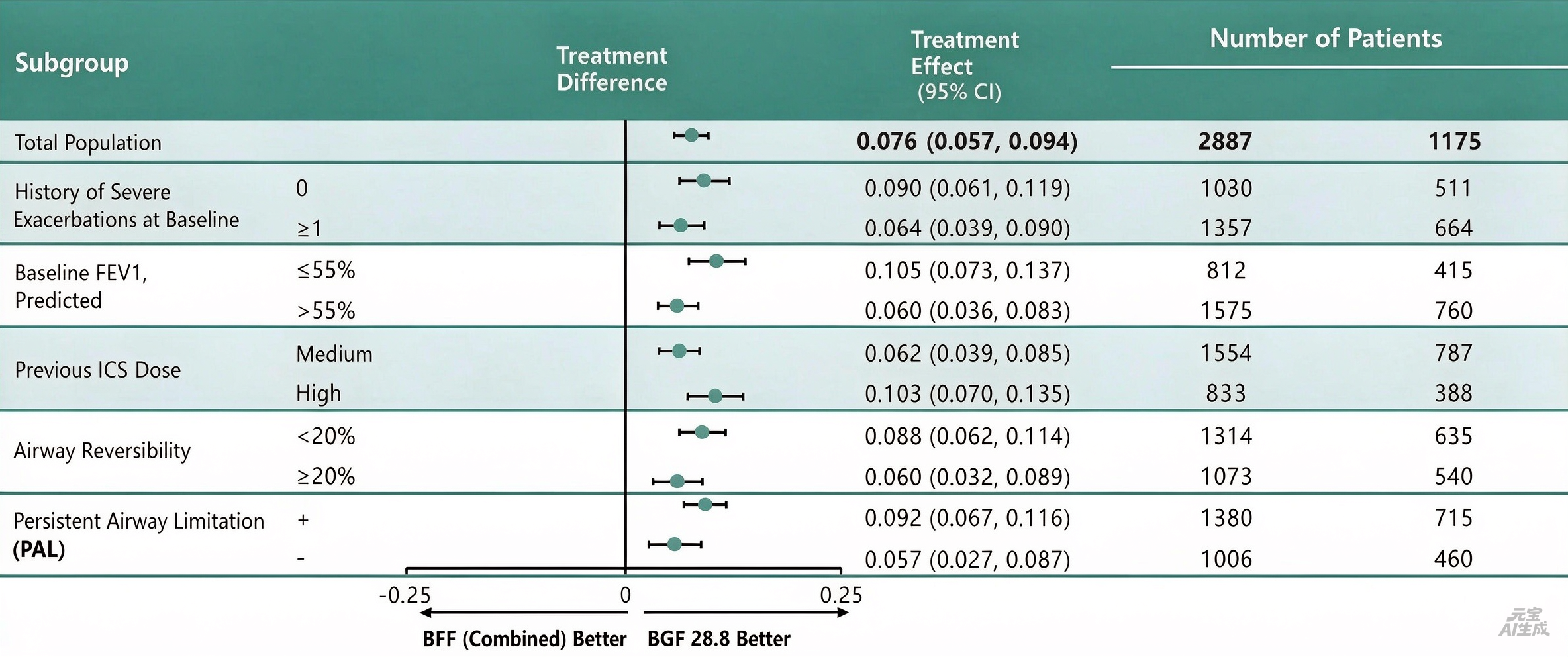 Fig. 4. BGF 28.8 versus ICS-LABA improved lung function across all subgroups
Mechanistically, the BGF triple regimen combines three mechanisms: ICS provides potent local anti-inflammatory action, controlling airway inflammation and reducing airway hyperresponsiveness; LABA activates β2 receptors to relax airway smooth muscle and relieve bronchospasm; and LAMA inhibits cholinergic-receptor-mediated airway contraction, complementing LABA’s bronchodilator effect.
Conclusion
The KALOS/LOGOS subgroup analysis presented at this year’s ERS congress indicates that BGF fixed-dose triple therapy may provide consistent lung function benefit in patients with uncontrolled asthma, regardless of PAL status. Earlier analyses also showed robust and consistent clinical benefit with BGF fixed-dose triple therapy regardless of severe exacerbation history, lung function severity, prior ICS dose, and airway reversibility.
In summary, PAL appears to be more a prognostic marker of disease severity and airway remodeling than a dividing line determining response to BGF fixed-dose triple therapy, with efficacy unaffected by these baseline factors and benefit appearing generalizable. Clinical decision-making should therefore focus on overall exacerbation risk and symptom control needs in asthma patients. For eligible patients with uncontrolled asthma, early initiation of fixed-dose triple therapy may shift management from reactive response to proactive intervention, with potential to improve long-term prognosis.
A separate KALOS/LOGOS analysis presented at ERS 2026—on clinical important deterioration (CID)—will be covered in a forthcoming article.
References
[1] Huang Hailun, Zhao Haijin. [Research Progress on Pathogenesis and Treatment of Persistent Airflow Limitation in Asthma]. Chinese Journal of Tuberculosis and Respiratory Diseases. 2025;48(3):277-281.
[2] Zhang L, He L, Gong J, et al. Risk factors associated with irreversible airway obstruction in asthma: a systematic review and meta-analysis. Biomed Res Int. 2016;2016:9868704.
[3] Çolak Y, et al. Type-2 inflammation and lung function decline in chronic airway disease in the general population. Thorax. 2024;79(4):349-358.
[4] Kole TM, et al. Predictors and associations of the persistent airflow limitation phenotype in asthma: a post-hoc analysis of the ATLANTIS study. Lancet Respir Med. 2023;11(1):55-64.
[5] Huang S, et al. Asthma, airflow limitation and mortality risk in the general population. Eur Respir J. 2015;45(2):338-346.
[6] Huang K, Yang T, Xu J, et al. Prevalence, risk factors, and management of asthma in China: a national cross-sectional study. Lancet. 2019;394(10196):407-418.
[7] Tashkin DP, Moore GE, Trudo F, et al. Assessment of Consistency of Fixed Airflow Obstruction Status during Budesonide/Formoterol Treatment and Its Effects on Treatment Outcomes in Patients with Asthma. J Allergy Clin Immunol Pract. 2016;4(4):705-712.
[8] Chinese Thoracic Society. [Guideline for the Prevention and Treatment of Bronchial Asthma (2024 Edition)]. Chinese Journal of Tuberculosis and Respiratory Diseases. 2025;48(3):208-248.
[9] Papi A, Wise RA, Jackson DJ, et al. Budesonide-glycopyrronium-formoterol fumarate dihydrate in uncontrolled asthma (KALOS and LOGOS): twin multicentre, double-blind, double-dummy, parallel-group, randomised, phase 3 trials. Lancet Respir Med. 2026;14(4):350-362. DOI:10.1016/S2213-2600(25)00457-6.
[10] Papi A, Wise R, Jackson D, et al. Budesonide/glycopyrronium/formoterol fumarate dihydrate effects on lung function and asthma exacerbations by persistent airflow limitation status: post hoc analyses of KALOS and LOGOS studies. ERS Congress 2026. Poster Board #P3853.
[11] Patel M, Wise RA, Papi A, et al. Budesonide/Glycopyrrolate/Formoterol Fumarate Effects on Lung Function and Exacerbations by Baseline Asthma Characteristics in Inadequately Controlled Asthma. ATS 2026. Poster Board #P1395.

