


From October 23 to 27, 2026, the European Society for Medical Oncology (ESMO) Annual Congress was held in Madrid, Spain. At the meeting, izalontamab brengitecan (BL-B01D1/iza-bren), an innovative EGFR×HER3 bispecific antibody-drug conjugate (BsADC) independently developed by Sichuan Baili Tianheng Biopharmaceutical and described as world-first-in-class and new-concept, made a striking debut with its pivotal phase 3 PANKU-Breast01 data, disclosing in full for the first time worldwide the prespecified interim analysis results in the form of a late-breaking abstract (LBA)[1].
The results showed that, in patients with unresectable locally advanced or metastatic HR+/HER2- breast cancer who had received prior endocrine therapy and one to two lines of chemotherapy, izalontamab brengitecan (iza-bren) achieved a median progression-free survival (mPFS) of 8.2 months, doubling that of physician's choice of chemotherapy (TPC) at 4.0 months, with a 59% reduction in the risk of disease progression or death. The confirmed objective response rate (cORR) doubled to 40.5%, and 77.9% of patients achieved shrinkage of target lesions[1]. Benefit was consistent across subgroups, and efficacy did not depend on HER2 expression. As the first bispecific ADC with a positive phase 3 primary endpoint in later-line HR+/HER2- advanced breast cancer, the enrolled population covered hard-to-treat patients with early high-risk disease, aggressive tumor biology and impaired performance status, closely matching clinical practice, and delivered a strong result.
As one of the landmark studies in the breast cancer field at this ESMO congress, the PANKU-Breast01 manuscript was published simultaneously in the leading international academic journal The Lancet (impact factor 109)[2]. In the more than 200 years since The Lancet was founded, izalontamab brengitecan (iza-bren) is the first Chinese innovative drug in breast cancer to appear in the main journal of The Lancet, and is expected to reshape the treatment landscape of HR+/HER2- advanced breast cancer and to usher breast cancer into a new era of bispecific ADC therapy.
 Fig.1.PANKU-Breast01 Study Published in Full in The Lancet
Article Key Points
- PANKU-Breast01, phase 3, n=383 at 72 centers in China: iza-bren versus physician’s choice chemotherapy
- Primary endpoint met: BICR median PFS 8.2 versus 4.0 months (HR 0.41, 95% CI 0.33-0.53, P<0.0001)
- Confirmed ORR 40.5% versus 20.2%; DCR 86.3% versus 63.7%; median DoR 6.9 versus 4.2 months
- Target lesion shrinkage in 77.9% versus 60.6%; median best shrinkage -37.4% versus -24.5%
- PFS benefit consistent across HER2 subgroups: IHC 0 HR 0.41, IHC 1+ HR 0.53, IHC 2+/ISH- HR 0.32
- OS not mature at the prespecified interim analysis (median follow-up 17.8 months)
- Grade 3 or higher TRAEs mainly hematologic; discontinuation for TRAEs 1.6%; ILD in 2 patients (1.1%)
- Evidence status: presented as LBA50 at ESMO 2026 and published simultaneously in The Lancet; peer reviewed
Expert Profile: Prof. Binghe Xu

- Academician of the Chinese Academy of Engineering; chief physician and doctoral and postdoctoral supervisor; tenured professor at Peking Union Medical College
- Director, National New Drug (Tumor Drug) Clinical Research Center, National Cancer Center, Chinese Academy of Medical Sciences
- Director, Beijing Key Laboratory for Innovative Breast Cancer Drug Research and Translation
- Formerly head of the Department of Medical Oncology, National Cancer Center, Chinese Academy of Medical Sciences
- Recipient as first contributor of the National Science and Technology Progress Award, second prize, the National Innovation and Entrepreneurship Award for Basic Research and Cutting-Edge Fields, and the Ho Leung Ho Lee Foundation Science and Technology Progress Award
Expert Profile: Prof. Bo Lan

- Chief physician and master’s supervisor, Department of Medical Oncology, National Cancer Center, Chinese Academy of Medical Sciences; MD
- Selected for the Beijing Association for Science and Technology Young Talent Program
- Secretary-general, Breast Cancer Quality Control Expert Committee, Beijing Oncology Quality Control Center
- Member, Young Breast Cancer Group, Oncology Branch, Chinese Medical Association
- Member, Internal Medicine Professional Committee, Beijing Breast Disease Prevention and Treatment Society
- Beijing Health Science Popularization Expert
Study Design and Population
PANKU-Breast01 was an open-label, multicenter, randomized phase 3 study conducted at 72 centers in China. Eligible patients had unresectable locally advanced, recurrent or metastatic HR+/HER2- breast cancer with progression after at least one line of chemotherapy in the advanced setting, and had received endocrine therapy, a CDK4/6 inhibitor and a taxane. ECOG performance status was 0 or 1, and RECIST v1.1 measurable disease was required. Patients were randomized 1:1 to iza-bren at 2.5 mg/kg on days 1 and 8 of each 3-week cycle, or to physician’s choice chemotherapy with eribulin, capecitabine, gemcitabine or vinorelbine. Randomization was stratified by prior chemotherapy lines, central nervous system metastases and HER2 expression status (IHC 0 versus IHC 1+ versus IHC 2+/ISH-). The primary endpoint was PFS assessed by blinded independent central review (BICR), and the key secondary endpoint was overall survival (OS).
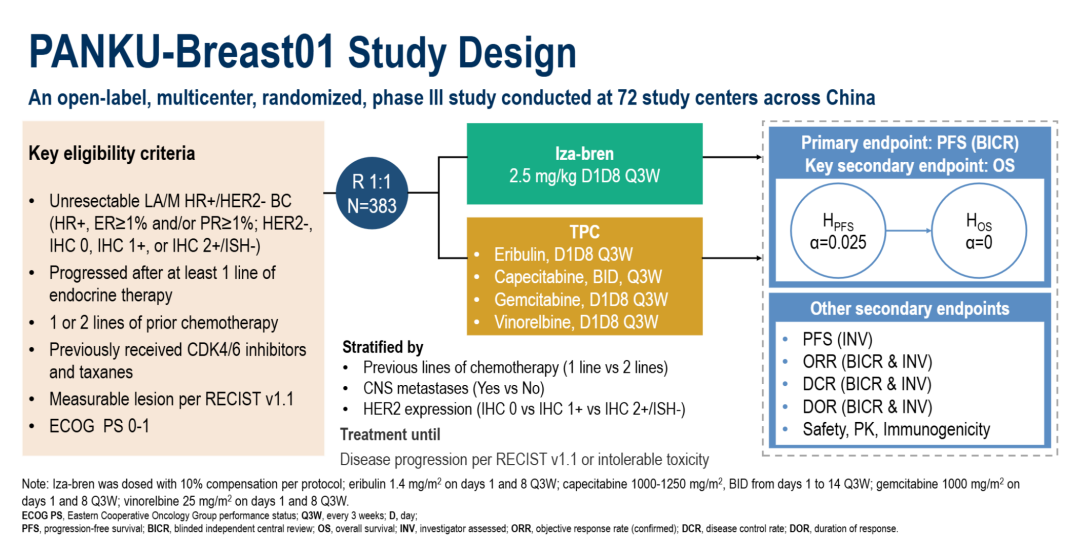 Fig.1. PANKU-Breast01 Study Design
As of July 21, 2026, 560 patients had been screened and 383 were randomized, with 190 assigned to iza-bren and 193 to physician’s choice chemotherapy.
Baseline characteristics were broadly balanced and reflective of a difficult population. All patients had received a CDK4/6 inhibitor, about 71% had received one prior line of chemotherapy in the advanced setting and nearly 30% had received two, approximately 80% had received (neo)adjuvant therapy including an anthracycline, more than 70% had liver metastases at baseline, and 64.2% had an ECOG performance status of 1.
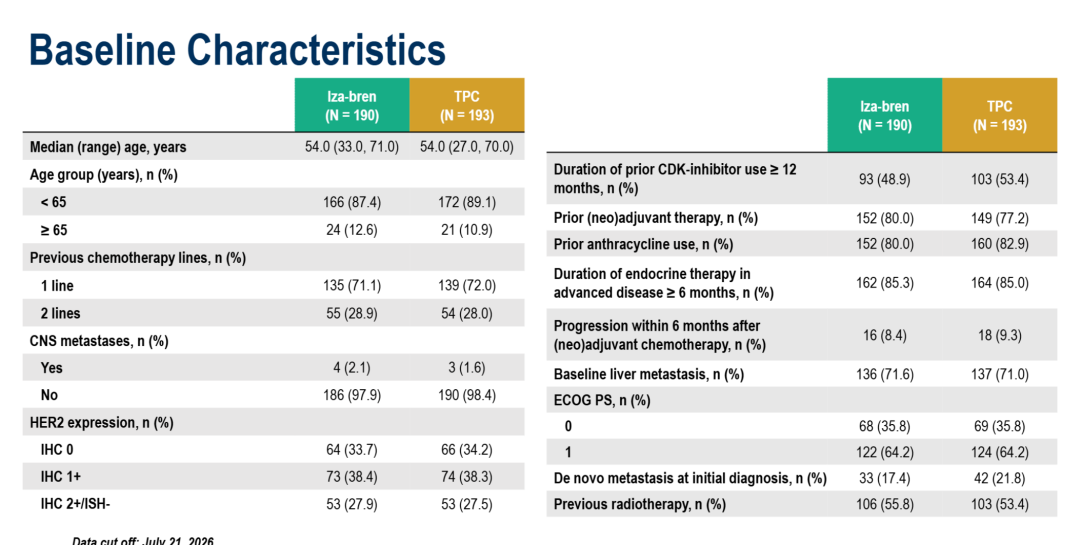 Fig.2. Baseline Characteristics of the PANKU-Breast01 Population
Efficacy: PFS and Response
The study met its primary endpoint. Median PFS by BICR assessment was 8.2 months with iza-bren versus 4.0 months with physician’s choice chemotherapy, a 59% reduction in the risk of disease progression or death (HR 0.41, 95% CI 0.33-0.53, P<0.0001). The curves separated early, within the first three months of follow-up, and the separation was maintained at later time points. The 6-month PFS rate was 62.8% versus 24.2%, the 9-month rate 41.8% versus 14.4%, and the 12-month rate 26.5% versus 9.2%.
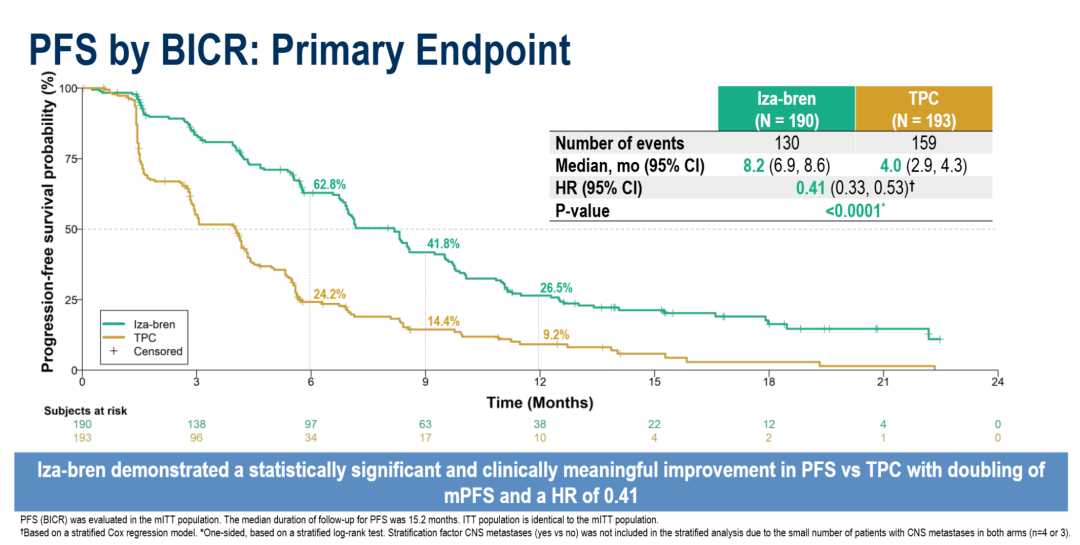 Fig.3. Primary Endpoint: Progression-free Survival by Blinded Independent Central Review
Confirmed ORR by BICR assessment was 40.5% with iza-bren versus 20.2% with physician’s choice chemotherapy, and DCR was 86.3% versus 63.7%. Target lesions shrank in 77.9% of patients in the iza-bren group versus 60.6% in the comparator group, with median best shrinkage of -37.4% versus -24.5%. Median DoR was 6.9 months versus 4.2 months. Median follow-up was 17.8 months, and OS was not yet mature at the prespecified interim analysis.
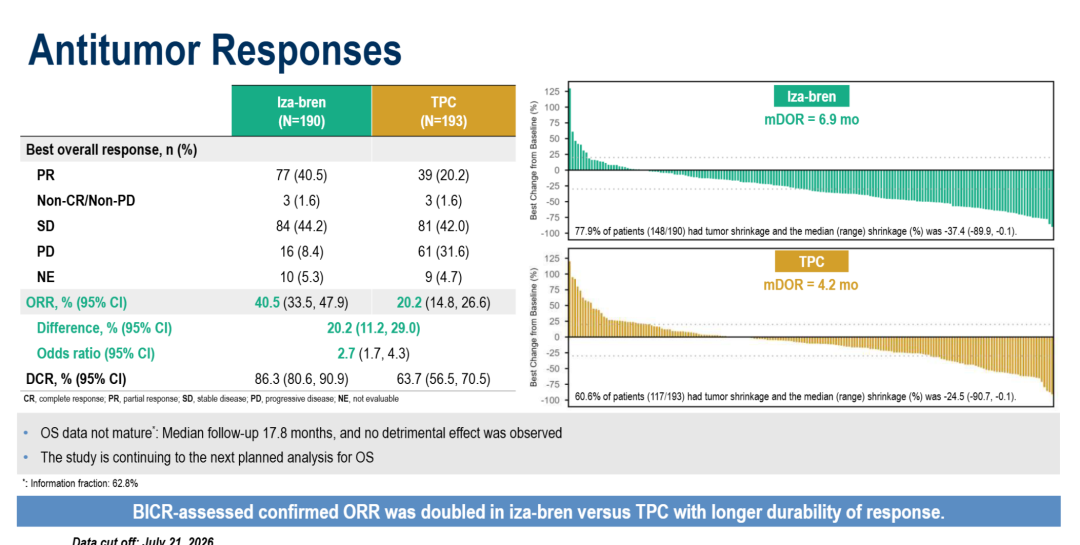 Fig. 4. Antitumor Response, Median Duration of Response and OS Maturity
Efficacy Across HER2 Expression Levels
Subgroup analyses showed consistent and significant PFS benefit across all prespecified subgroups. Hazard ratios were 0.41 (95% CI 0.28-0.62) for IHC 0, 0.53 (95% CI 0.36-0.76) for IHC 1+ and 0.32 (95% CI 0.19-0.53) for IHC 2+/ISH-, with no significant difference in benefit across HER2 expression levels.
This finding addresses a practical question in HR+/HER2- disease, where treatment selection has historically been stratified by HER2 expression, with IHC 0, IHC 1+ and IHC 2+/ISH- regarded as distinct populations. In PANKU-Breast01, HER2 expression was a prespecified randomization stratification factor and all strata were enrolled, so the subgroup analysis was built into the design rather than derived post hoc.
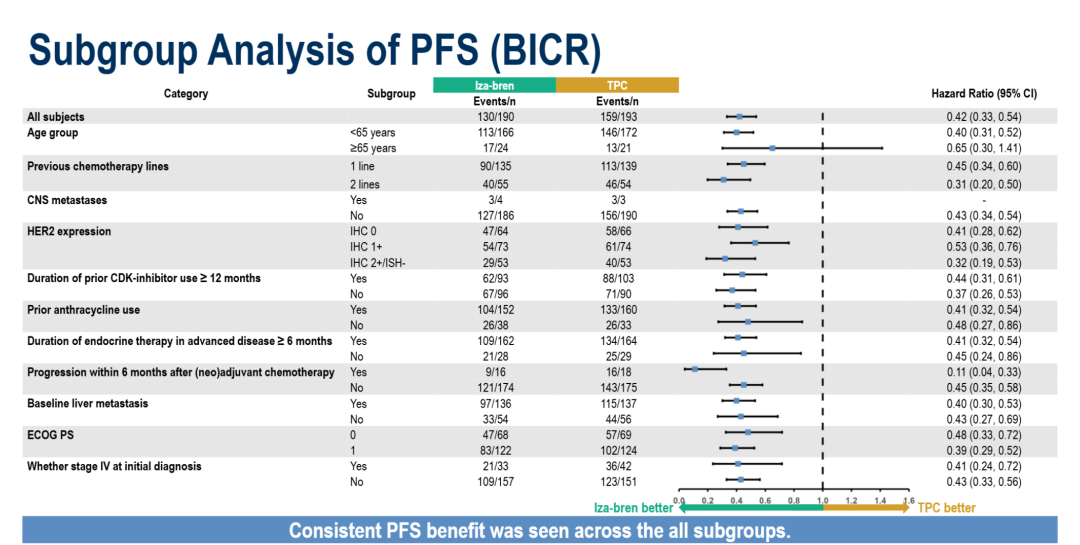 Fig.5. Progression-free Survival Subgroup Analysis by HER2 Expression Status
The adverse event profile was consistent with earlier experience with iza-bren, with no new safety signal identified. Adverse events were mainly hematologic and were manageable with standard supportive care, and discontinuation due to treatment-related adverse events (TRAEs) occurred in only 1.6% of patients. Median number of treatment cycles was longer in the iza-bren group (10 versus 6) and median treatment duration was 7.3 months versus 4.3 months, which is consistent with tolerability of longer treatment.
Non-hematologic adverse events were mostly low grade. Patient-reported events such as oral mucositis, diarrhea and nausea occurred at low rates, supporting continued use over time. Interstitial lung disease (ILD) related to treatment occurred in 2 patients (1.1%), lower than has been reported for ADCs carrying a DXd payload.
Mechanism and Prior Evidence
Iza-bren is a bispecific antibody-drug conjugate that binds EGFR and HER3 simultaneously. Both receptors belong to the ERBB family and are involved in tumor growth signaling and treatment resistance, and the two can form heterodimers that drive proliferation and survival. Binding both targets is intended to increase internalization efficiency and to reduce the risk of acquired resistance arising from target heterogeneity or dynamic loss, and the construct pairs a cleavable linker with the Ed-04 payload. In an earlier phase 1b study in HER2-negative locally advanced or metastatic breast cancer, iza-bren showed a confirmed ORR of 37.3% and median PFS of 7.0 months.
Phase 3 PANKU-Breast02, presented at the 2026 ASCO Annual Meeting, reported positive PFS and OS results in triple-negative breast cancer, and the global multicenter phase 3 IZABRIGHT-Breast01 study is evaluating iza-bren as first-line therapy in advanced triple-negative breast cancer not eligible for PD-(L)1 inhibitors.
On Oct 21, 2026, the Center for Drug Evaluation of the National Medical Products Administration published information indicating that the marketing application for iza-bren in HR+/HER2- breast cancer has been accepted, for patients with unresectable locally advanced, recurrent or metastatic HR+/HER2- breast cancer whose disease has progressed after at least one line of chemotherapy.
Reference
[1]Lan B, et al. PANKU-Breast01: Randomized Phase III Study of Izalontamab Brengitecan (iza-bren) in Previously Treated Unresectable Locally Advanced or Metastatic (LA/M) Hormone Receptor-Positive/HER2-negative (HR+/HER2-) Breast Cancer (BC). 2026 ESMO.LBA50.
[2]Xu BH, et al. Izalontamab brengitecan for HR+/HER2- breast cancer in China (PANKU-Breast01): a randomised, phase 3 trial. Lancet, 2026. Epub ahead of print.
[3]Lloyd MR, et al. Mechanisms of Resistance to CDK4/6 Blockade in Advanced Hormone Receptor-Positive, HER2-Negative Breast Cancer and Emerging Therapeutic Opportunities. Clin Cancer Res. 2022;28(5):821-830.
[4]André F, et al. Alpelisib for PIK3CA-Mutated, Hormone Receptor-Positive Advanced Breast Cancer. N Engl J Med. 2019;380(20):1929-1940.
[5]Rugo HS, et al. Overall survival with sacituzumab govitecan in hormone receptor-positive and human epidermal growth factor receptor 2-negative metastatic breast cancer (TROPiCS-02): a randomised, open-label, multicentre, phase 3 trial. Lancet. 2023;402(10412):1423-1433.
[6]Xu B, et al. Sacituzumab govitecan in HR+HER2- metastatic breast cancer: the randomized phase 3 EVER-132-002 trial. Nat Med. 2024;30(12):3709-3716.
[7]Bardia A, et al. Datopotamab Deruxtecan Versus Chemotherapy in Previously Treated Inoperable/Metastatic Hormone Receptor-Positive Human Epidermal Growth Factor Receptor 2-Negative Breast Cancer: Primary Results From TROPION-Breast01. J Clin Oncol. 2025;43(3):285-296.
[8]Papa F, et al. Long road towards effective HER3 targeting in breast cancer. Cancer Treat Rev. 2024;129:102786.
[9]Zhang J, et al. Safety and antitumor activity of the first-in-class EGFR-HER3 bispecific antibody-drug conjugate iza-bren (BL-B01D1) in patients with pretreated locally advanced or metastatic breast cancer: a phase Ib study. Ann Oncol. Published online September 11, 2026.
[10]Wu J, et al. Izalontamab brengitecan (iza-bren) versus physician's choice of chemotherapy in patients with unresectable locally advanced or metastatic triple-negative breast cancer (TNBC): a randomized phase III study[J]. J Clin Oncol, 2026, 44(17_suppl): LBA1003.

