


Although the TOPAZ‑1 (durvalumab) and KEYNOTE‑966 (pembrolizumab) phase 3 trials confirmed that immune checkpoint inhibitors (ICIs) combined with gemcitabine‑cisplatin (GC) extend survival in advanced biliary tract cancer (BTC), the absolute survival benefit remains modest at only 1.3–1.8 months — leaving a substantial unmet clinical need. The emergence of bispecific antibodies offers new possibilities for improving patient outcomes. Ivonescimab is a domestically developed PD‑1/VEGF bispecific antibody with synergistic potential through its dual mechanism of action, which may further amplify antitumor immune responses.
Recently, a multicenter, open‑label phase 2 trial led by Prof. Ying Jie’er’s team at Zhejiang Cancer Hospital was published in the Journal of Hepatology. This study is the first to evaluate the efficacy and safety of ivonescimab plus GC as first‑line therapy for advanced BTC, and the first to use exploratory proteomics to identify MAP2K7 as a potential resistance biomarker.
 Fig.1.Screenshot of the Study
BTC First‑Line Therapy: From the “1.0 Era”to the “Bispecific Era”
Study Design: This was a multicenter, open‑label, phase 2 study conducted at 7 hospitals in China.
l Inclusion criteria: The study enrolled 30 patients with previously untreated unresectable locally advanced or metastatic BTC, including intrahepatic cholangiocarcinoma (19 cases, 63.3%), gallbladder cancer (10 cases, 33.3%), and extrahepatic cholangiocarcinoma (1 case, 3.3%).
l Baseline characteristics: 83.3% had metastatic disease; median age was 64.9 years; 66.7% were female; 80% had an ECOG performance status of 1.
l Treatment regimen: Patients received ivonescimab (20 mg/kg or 30 mg/kg) plus gemcitabine (1000 mg/m²) and cisplatin (25 mg/m²) every 3 weeks for up to 8 cycles, followed by ivonescimab maintenance until disease progression or unacceptable toxicity.
l Primary endpoints: Investigator‑assessed objective response rate (ORR) and safety.
Substantial Benefit: 16.8‑Month Median OS Sets a New Survival Record
Data cutoff was May 20, 2025, with a median follow‑up of 23.8 months.
1. Efficacy “Step‑Change”: ORR Doubled, All Patients Had Tumor Control
Table 1: Overall Efficacy
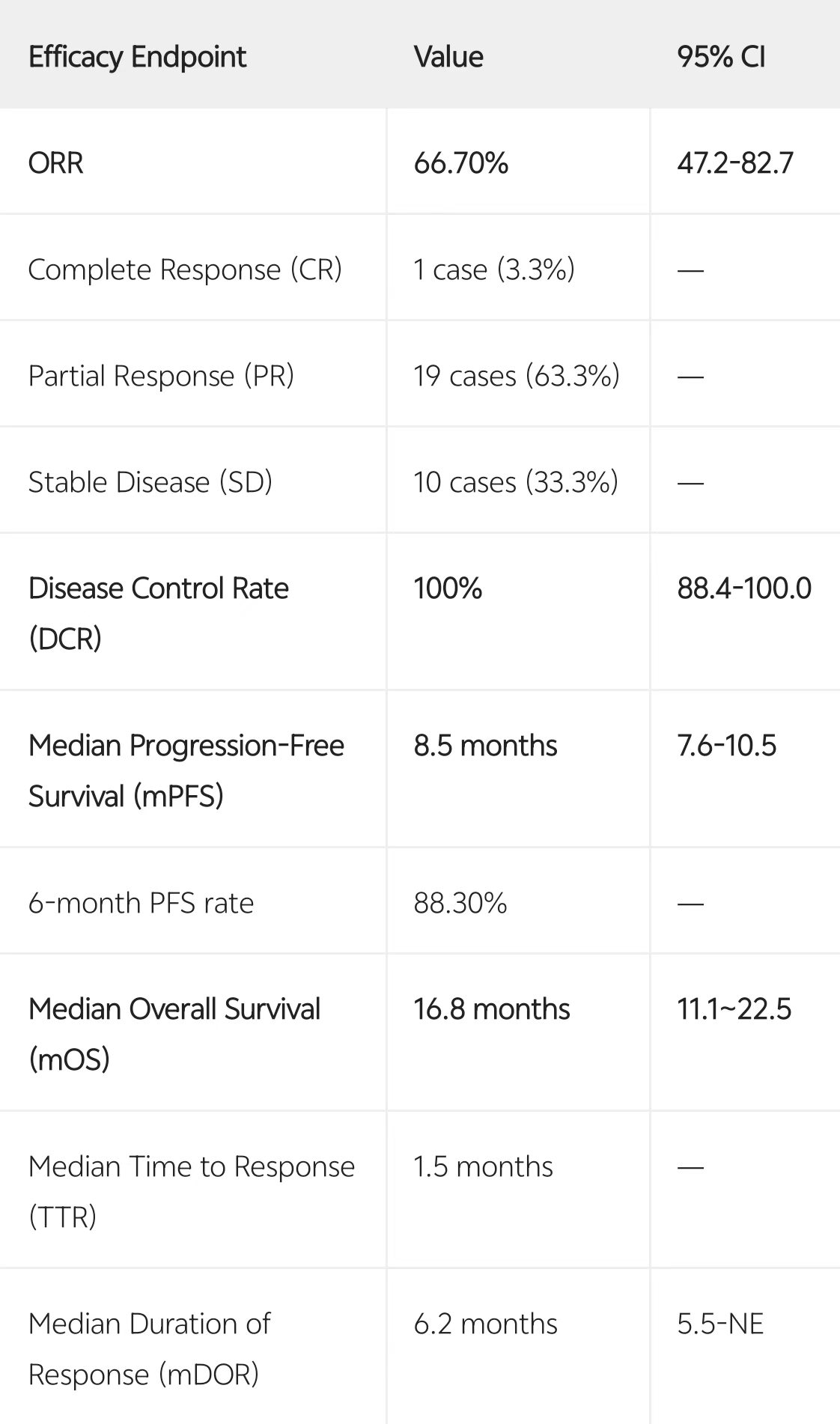
These efficacy data suggest that the dual‑target synergy of “tumor immunotherapy + anti‑angiogenesis” has substantial potential in first‑line BTC treatment.
2. Subgroup Analysis: Both Intrahepatic Cholangiocarcinoma and Gallbladder Cancer Showed Significant Benefit
Table 2: Subgroup Analysis Data
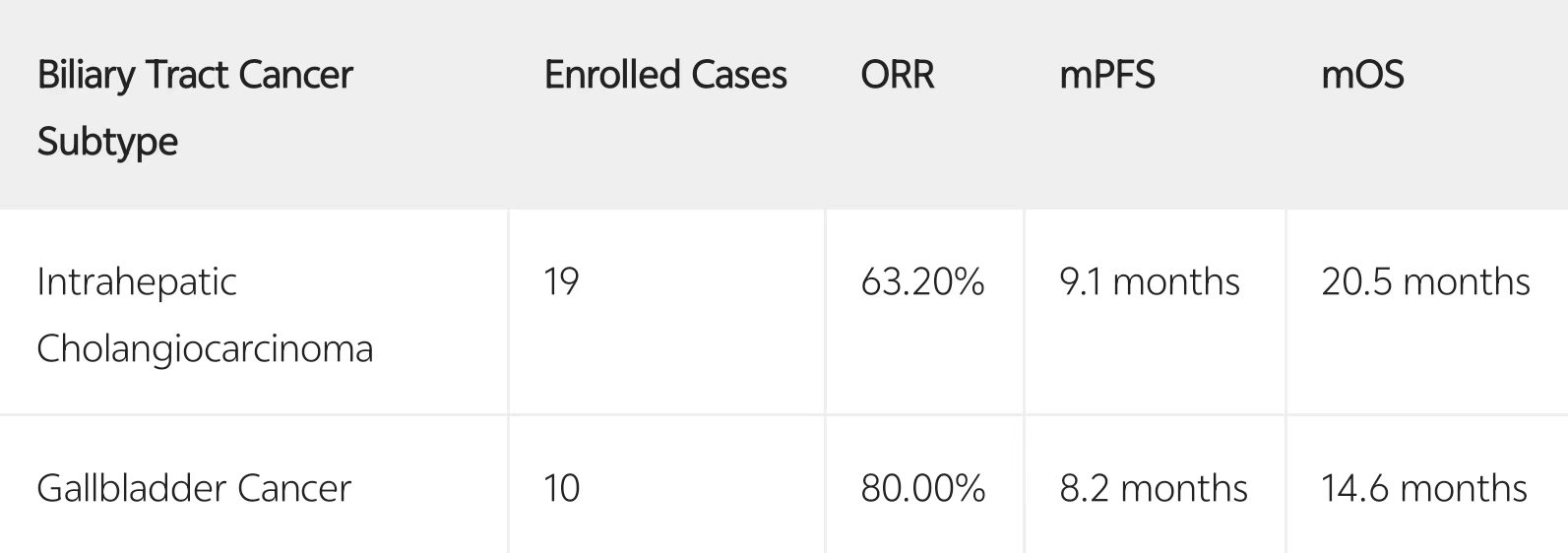
Particularly noteworthy is that gallbladder cancer has long been a subtype with poor prognosis and limited treatment options within BTC. In the TOPAZ‑1 and KEYNOTE‑966 studies, the gallbladder cancer subgroup showed limited benefit (HR 0.94 and 0.96, respectively). In contrast, this study reported an ORR of 80.0% in this subgroup. Although the sample size is limited, this signal suggests that the ivonescimab combination may have a unique advantage in gallbladder cancer — a historically challenging subtype — warranting further validation in phase 3 studies.
In terms of treatment duration, 3 patients continued therapy for over 2 years while maintaining partial response. One patient with gallbladder cancer and multiple liver metastases had a baseline target lesion tumor burden of 116.7 mm; by week 96, the tumor had shrunk by nearly 70%.
3. Safety Profile: Hematologic Toxicity Predominant, No Permanent Discontinuations, No Deaths
As a first‑line regimen, safety is equally as important as efficacy.
Table 3: Summary of Treatment-Related Adverse Events (TRAEs)
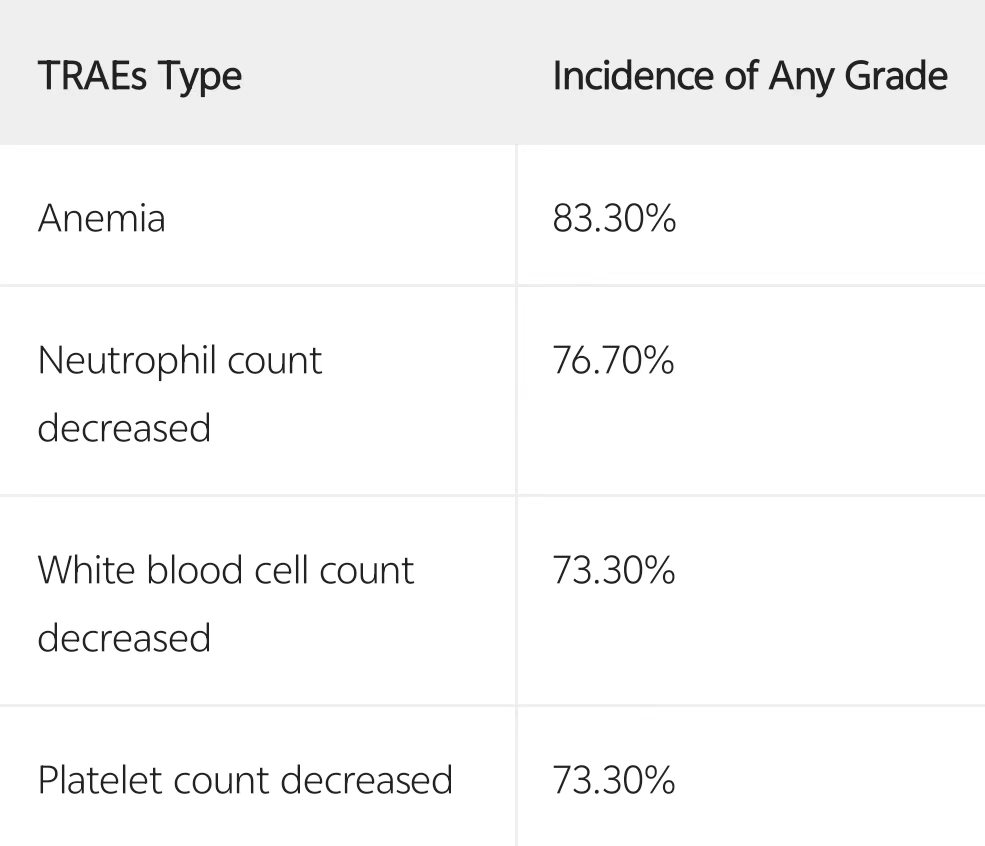
All patients experienced treatment‑related adverse events (TRAEs), predominantly chemotherapy‑related hematologic toxicity, which was generally manageable.
Table 4: Summary of Immune-Related Adverse Events (irAEs)
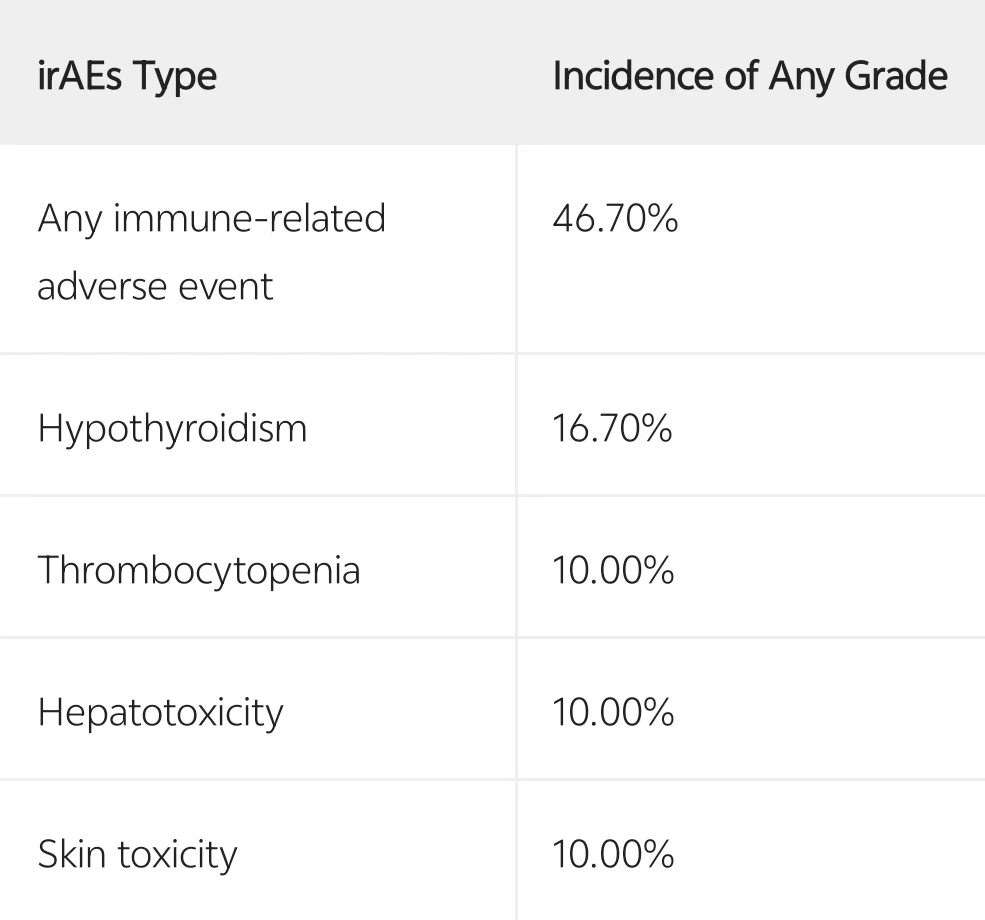
The incidence of immune‑related adverse events (irAEs) was 46.7%, with grade 3‑4 irAEs occurring in 30.0% of patients.
Notably, no patient discontinued ivonescimab due to TRAEs or irAEs, and no treatment‑related deaths occurred. The overall safety profile was consistent with previous studies of ivonescimab combination therapy, with no new safety signals identified.
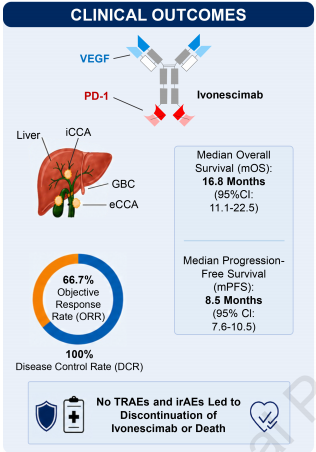 Fig. 2. Research Results
4. MAP2K7 Identified as a Potential Resistance Biomarker
A key feature of this study was the discovery, through proteomic analysis, of MAP2K7 as a resistance‑associated biomarker. The research team conducted exploratory proteomic analysis on pre‑treatment tumor specimens and found that MAP2K7 was significantly upregulated in non‑responders, and its high expression was closely correlated with shorter median PFS.
MAP2K7 is a dual‑specificity kinase of the MAPK family. Previous studies have suggested its association with tumor progression, metastasis, and treatment resistance, but its role in tumor immune regulation has remained unclear. Further functional validation experiments showed that knockdown of MAP2K7 enhanced ivonescimab‑mediated T‑cell activation and cytotoxicity, and this enhancement could be partially reversed by re‑expression of PD‑L1.
This suggests that tumor‑intrinsic MAP2K7 may mediate immune resistance through remodeling of the tumor immune microenvironment, rather than directly affecting tumor cell proliferation or drug sensitivity. The clinical value of this finding lies in the potential for MAP2K7 to serve as a candidate biomarker for identifying patients most likely to benefit from ivonescimab, while also offering a potential combination target for overcoming resistance.
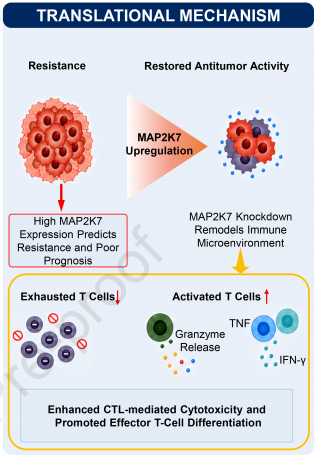 Fig.3. Mechanism of Action of MAP2K7
Clinical Implications and Future Directions
First, the efficacy data are impressive but require cautious interpretation. This was a single‑arm, small‑sample, early‑stage study without independent central imaging review, introducing potential selection bias — for example, no early deaths were observed in this study, whereas the IMbrave151 trial reported early mortality rates of 5.1% and 10.8% in the experimental and control arms, respectively. The reliability of ORR as a surrogate endpoint for anti‑angiogenic agents is also uncertain. Therefore, these results require confirmation in phase 3 randomized controlled trials.
Second, the high ORR in the gallbladder cancer subgroup has clinical significance. Gallbladder cancer has poor chemosensitivity and a dismal prognosis, making it a recognized clinical challenge. The 80% ORR observed in the 10 GBC patients in this study suggests that PD‑1/VEGF bispecific antibody combined with chemotherapy may offer a particular advantage in GBC. Furthermore, approximately one‑third of patients in this study achieved tumor shrinkage of >50%, with a median time to response of only 1.5 months. For patients with potentially resectable locally advanced BTC, this regimen’s high response rate and rapid tumor‑shrinkage characteristics may provide a new option for conversion therapy.
Third, the MAP2K7 biomarker offers a new therapeutic direction. For patients who respond poorly to ivonescimab, combination with MAP2K7 inhibitors may represent a new direction for precision therapy. However, this analysis was post‑hoc and exploratory, with only 15 evaluable samples; the conclusions require validation in larger prospective studies.
Conclusion
Current standard first‑line immunotherapy plus chemotherapy provides only modest survival benefits in biliary tract cancer. This study demonstrated that ivonescimab plus chemotherapy achieved an ORR of 66.7%, a DCR of 100%, and a median OS of 16.8 months, with particularly pronounced benefit in the gallbladder cancer subgroup — bringing new therapeutic insights to the field. The identification of MAP2K7 as a resistance‑associated candidate biomarker fills a gap in predictive markers for BTC. Although limited by its single‑arm, small‑sample design, the ongoing phase 3 study is expected to validate these findings and may reshape the first‑line treatment landscape for BTC, facilitating stratified and individualized patient care.
References:
[1] Xu Q, Zhou S, Zhang C, et al. Ivonescimab plus gemcitabine and cisplatin as first‑line therapy for advanced biliary tract cancer: a multicenter, open‑label phase 2 trial. J Hepatol. 2026 Jul 6:S0168‑8278(26)02682‑6.

