


A groundbreaking study led by Prof. Sun Yingxian from the First Hospital of China Medical University, published in Nature Medicine, has revealed that intensive blood pressure (BP) management in hypertensive patients can significantly reduce the risk of dementia. The China Rural Hypertension Control Project (CRHCP) trial, the largest of its kind globally, provides robust evidence linking strict BP control to cognitive protection, offering new hope for dementia prevention worldwide.
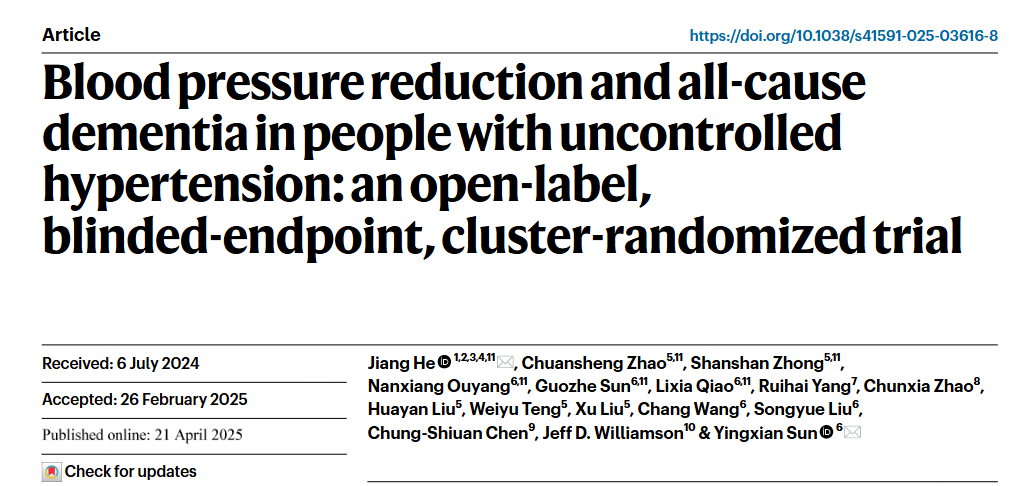
Figure 1. Study screenshot
Study Design and Key Findings
Intensive intervention group (n=17,407): Target BP ≤130/80 mmHg using a combination of lifestyle modifications and up to three antihypertensive drugs (ACEIs, CCBs, diuretics).
Usual care group (n=16,588): Standard BP management with a less strict target (typically ≤140/90 mmHg).
Over 48 months of follow-up, the intensive group achieved a 22.0 mmHg lower systolic BP (SBP) and 9.3 mmHg lower diastolic BP (DBP) compared to usual care.
Critically, they also experienced:
15% reduced risk of all-cause dementia (RR=0.85, 95% CI: 0.76–0.95, P=0.0035).
16% lower risk of clinical non-dementia cognitive impairment (CIND) (RR=0.84, P<0.0001).
14% reduction in the composite outcome of dementia or CIND (RR=0.84, P<0.0001).
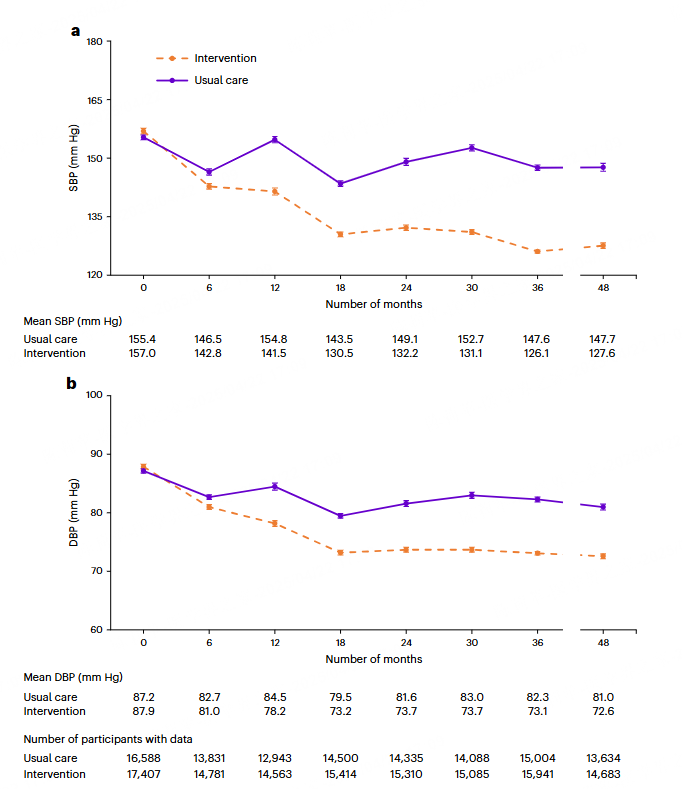
Figure 2. Systolic and diastolic blood pressure (SBP/DBP) in the intervention group versus routine care group during the 48-month follow-up period
Mechanisms and Clinical Implications
Global Significance and Practice Implications
Guideline Updates: The results align with recent international guidelines (e.g., ACC/AHA 2017) advocating lower BP targets for high-risk populations.
Pharmacological Strategies: Intensive therapy relied on affordable generic drugs (ACEIs/CCBs/diuretics), making it scalable in low-resource settings.
Early Intervention: Subgroup analysis showed the greatest benefits in patients aged <75 years and those without preexisting cardiovascular disease, emphasizing the importance of early BP control.
Expert Commentary
Limitations and Future Directions
Long-term effects: Extending follow-up to assess durability of cognitive benefits.
Subtype-specific impacts: Whether intensive BP control differs in preventing Alzheimer’s vs. vascular dementia.
Combined interventions: Synergies between BP management and lifestyle modifications (e.g., diet, exercise).

