


Liver transplantation (LT) is the most curative-intent treatment for early-stage hepatocellular carcinoma (HCC), but eligibility has long been constrained by the Milan criteria, and many patients are already outside the transplantable range at diagnosis. Conventional downstaging with locoregional therapy achieves success in only about 48% of cases, and efficacy has plateaued. Immune checkpoint inhibitors (ICIs) have shown considerable tumor-shrinking potential, but the tension between their immune-activating effect and posttransplant immunosuppression, particularly the risk of acute rejection, has remained unresolved.
Recently, Prof. Meiqing Wang of the First Affiliated Hospital of Zhejiang University School of Medicine, Prof. Kang He of Renji Hospital affiliated to Shanghai Jiao Tong University School of Medicine, Prof. Qi Ling and Prof. Shusen Zheng of the First Affiliated Hospital of Zhejiang University School of Medicine, and Prof. Qiang Xia of Renji Hospital, together with colleagues, published a multicenter retrospective matched cohort study in JAMA Oncology, completed jointly by 8 high-volume liver transplant centers in China (annual LT volume >55). The study is the first large-sample systematic answer to a key question: in HCC patients beyond Milan criteria, does pretransplant ICI-based multimodal therapy translate into posttransplant survival benefit?
 Fig.1. Study Design
Article Key Points
- Multicenter retrospective matched cohort, 8 high-volume Chinese LT centers (annual LT >55)
- 879 HCC patients beyond Milan criteria screened (2019-2024); 727 analyzed; 416 in 1:1 PSM
- ICI-based multimodal downstaging independently associated with improved posttransplant OS (HR 0.72) and RFS (HR 0.65)
- Recurrence risk reduced 41% (sHR 0.65, 95% CI 0.48-0.87)
- pCR rate 8.7% in ICI group vs 2.9% in non-ICI group (P=0.04)
- Downstaging to within Milan: 87.5% ICI vs 78.4% non-ICI (P=0.04)
- 90-day acute rejection: 16.3% ICI vs 8.2% non-ICI (P=0.01), 3 rejection-related deaths in ICI arm
- Shorter ICI-to-LT washout interval (<=90 days) correlated with higher rejection risk
- Evidence status: multicenter retrospective matched cohort; not randomized; bias control via PSM and sensitivity analyses
OS and RFS as Co-Primary Endpoints, Anchored to Post-Transplant Hard Outcomes
The study enrolled HCC patients aged >=18 years who were beyond Milan criteria at initial diagnosis and who received LT between January 2019 and December 2024. Of 879 patients screened, 152 were excluded for missing exposure classification or endpoint data, mixed hepatocellular-cholangiocarcinoma, split transplant, acute-on-chronic liver failure or multiorgan dysfunction, autograft, retransplant, or domino transplant, leaving 727 patients for analysis, of whom 244 received ICI-based multimodal therapy before transplant (ICI group) and 483 did not (non-ICI group).
The investigators used propensity score matching (PSM) with 1:1 nearest-neighbor matching to balance variables including age, sex, liver disease etiology, cirrhosis, Model for End-Stage Liver Disease (MELD) score, alpha-fetoprotein (AFP) concentration, maximum tumor diameter, tumor number, macrovascular invasion, treatment era, and transplant center, producing 208 matched pairs (416 patients).
In treatment exposure, 131 (63.0%) ICI group patients received triple therapy combining ICI, locoregional therapy (LRT), and targeted therapy; 61 (29.3%) received dual therapy; 16 (7.7%) received ICI monotherapy. The median number of ICI cycles was 3, and the median interval from last ICI dose to LT was 58.2 days. In the non-ICI group, 182 (87.5%) received LRT only.
Primary endpoints were overall survival (OS) and recurrence-free survival (RFS). Secondary endpoints included posttransplant recurrence, acute rejection within 90 days, perioperative outcomes, and posttransplant tumor response. Data analysis was completed in February 2026.
87.5% Successfully Downstaged to Within Milan Criteria, Transplant Eligibility Significantly Expanded
1. Pretransplant tumor response: immune downstaging significantly improved the “qualification rate”
On pretransplant RECIST-based imaging, the ICI group achieved a radiological tumor response rate of 71.2% (148/208), significantly higher than the non-ICI group’s 48.1% (100/208, P<0.001). The proportions downstaged to within Milan criteria were 87.5% (182 cases) and 78.4% (163 cases, P=0.04), respectively.
Of greater interest is the pathological evidence. Complete pathology review of the transplanted liver explants showed a complete pathological response (pCR) rate of 8.7% (18 cases) in the ICI group, compared with 2.9% (6 cases) in the non-ICI group (P=0.04). Major pathological response rates were 27.9% (58 cases) and 16.8% (35 cases, P=0.01), respectively. This means that the immune-combination strategy not only shrank tumors on imaging but also deepened tumor inactivation at the pathological level.
1. Perioperative outcomes: no increased surgical burden
Operative time was similar between groups (6.5 vs 6.0 hours, P=0.15); intraoperative blood loss was actually lower in the ICI group (median 0.8 L vs 1.0 L, P=0.015). Postoperative early complication rates were 19.2% and 25.5% (P=0.13). Both groups used a calcineurin-inhibitor-based immunosuppressive regimen combined with an mTOR inhibitor, suggesting that ICI exposure did not appreciably increase surgical or postoperative recovery difficulty.
1. Efficacy analysis
In the matched cohort, with a median follow-up of 2.02 years, the survival curves separated early after transplant.
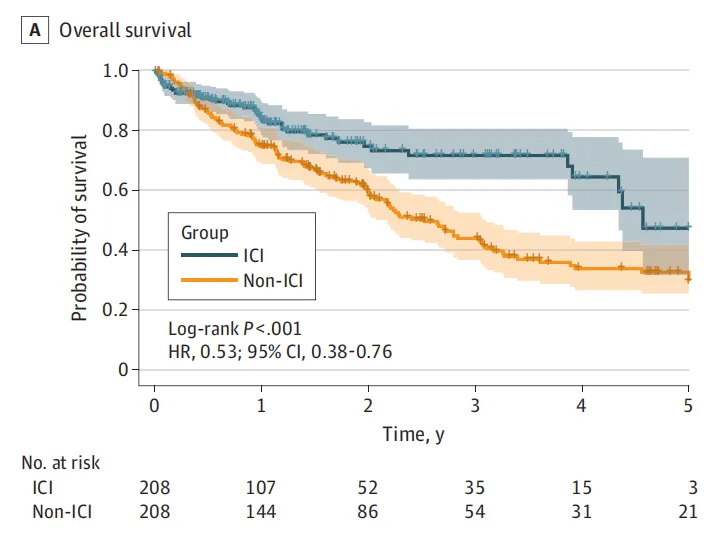 Fig.2. Matched-cohort OS Curves (Log-rank P<0.001, HR 0.53)
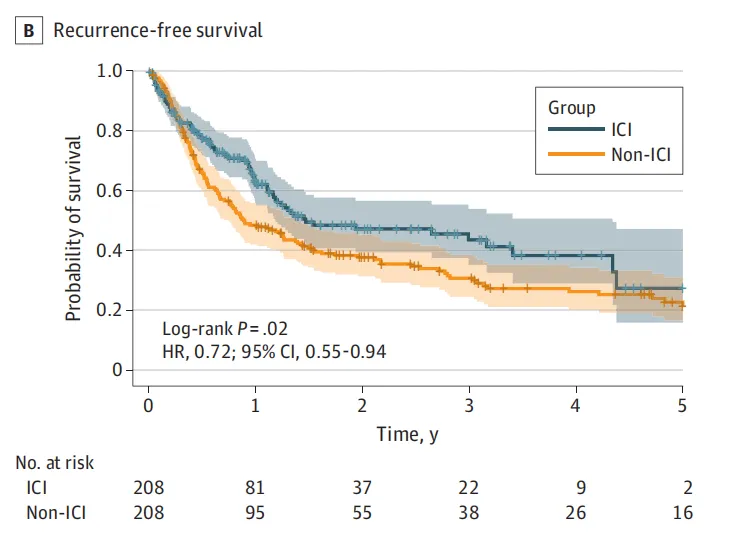 Fig.3. Matched-cohort RFS Curves (Log-rank P=0.02, HR 0.72)
Primary endpoints:
The ICI group achieved a median OS of 4.57 years (95% CI 4.34-not reached), compared with 2.53 years (95% CI 2.17-3.10) in the non-ICI group (P<0.001). One-year OS rates were 83.9% and 74.6% (P=0.003), and 3-year OS rates were 71.6% and 43.9% (P<0.001), a 27.7-percentage-point gap. RFS also showed benefit: median RFS 1.47 vs 0.89 years (P=0.02), 1-year RFS 62.8% vs 48.4% (P=0.01), 3-year RFS 43.5% vs 30.7% (P=0.03).
After multivariate Cox adjustment, ICI-based multimodal strategy remained independently associated with improved prognosis: HR for OS 0.72 (95% CI 0.55-0.94) and HR for RFS 0.65 (95% CI 0.43-0.92). Because non-recurrence mortality represents a competing event, the investigators further used a competing-risk model: the subdistribution HR for posttransplant recurrence in the ICI group was 0.59 (95% CI 0.44-0.80), and the Fine-Gray model gave consistent results (sHR 0.65, 95% CI 0.48-0.87), corresponding to a relative reduction in recurrence risk of approximately 41%.
Subgroup analyses showed that the direction of benefit was consistent across most subgroups, and was particularly pronounced in male patients and those with higher tumor burden. In high-risk subgroups (AFP >400 ng/mL, maximum tumor diameter >8 cm, macrovascular invasion), the Kaplan-Meier curve separation was more marked, suggesting that the more aggressive the tumor biology, the greater the “downstaging dividend” of immune multimodal therapy may be. There was an interaction between sex and treatment strategy (interaction P=0.01 for both OS and RFS); the same benefit was not observed in female patients, which the investigators suggested may relate to sex differences in HCC incidence, tumor microenvironment, and immune response, but they noted this conclusion is hypothesis-generating only.
Additional analyses further supported the robustness of the findings: in all 727 patients, overlap-weighted Cox and Fine-Gray analyses gave OS HR 0.73 (95% CI 0.53-0.99), RFS HR 0.64 (95% CI 0.50-0.82), and recurrence sHR 0.51 (95% CI 0.32-0.81). Sensitivity analyses excluding early posttransplant exposure factors and exact matching on LT year to control for era effects all yielded directionally consistent results, effectively ruling out confounding from evolving perioperative management and transplant center experience.
Safety Analysis
The balance between immune activation and transplant tolerance is the most critical safety focus of this study. Acute rejection within 90 days occurred in 16.3% (34/208) of the ICI group, significantly higher than 8.2% (17/208) in the non-ICI group (P=0.01), an absolute risk difference of 8.17 percentage points.
The great majority of rejection events were manageable per institutional protocol with glucocorticoid-based therapy, supplemented by maintenance immunosuppression adjustment and selective use of antithymocyte globulin. Caution is warranted, however: all 3 rejection-related deaths occurred in the ICI group, indicating that although severe rejection was uncommon, it was lethal when it occurred.
Washout interval is a key controllable variable: among patients who experienced acute rejection, the proportion with an interval from last ICI dose to LT <=90 days was significantly higher than in those without rejection, suggesting that a shorter washout interval correlates with higher rejection risk. The optimal cut-off, however, remains to be established by prospective studies.
Study Highlights
First, this is the largest multicenter matched cohort to date on “pretransplant ICI downstaging for HCC beyond Milan criteria,” and is the first to confirm, with confounding controlled, that this strategy is independently associated with improved posttransplant OS, RFS, and a reduced recurrence risk. Second, the study provides a complete evidence chain spanning imaging, pathology, and posttransplant hard endpoints; the increases in pCR and MPR rates offer a biological explanation for the survival benefit, more complete elimination of microscopic residual disease at the time of transplant. Third, the study did not avoid the safety cost; it quantified acute rejection risk and identified washout interval as an actionable lever.
Conclusion
This 8-center Chinese study showed that in HCC patients initially beyond Milan criteria, an ICI-based multimodal pretransplant strategy significantly improved pathological response rates, posttransplant survival, and reduced recurrence risk, although acute rejection rates rose. Immune downstaging is becoming a key element in broadening liver transplant eligibility for HCC.
Reference
[1] Ong M, He K, Wang MF, et al. Immune Checkpoint Inhibitor-Based Downstaging Therapy for Hepatocellular Carcinoma. JAMA Oncol. Published online October 1, 2026.

