


Obesity has become a major public health challenge in China, with the overall prevalence of overweight/obesity among adults now exceeding 50% and trending toward younger age groups (1). As a chronic, relapsing metabolic disease, obesity is a risk factor for type 2 diabetes, cardiovascular disease, and other conditions, and its disease burden continues to grow. Safe, effective, and adherence-friendly treatment options are increasingly needed. Glucagon-like peptide-1 receptor agonists (GLP-1RAs) are currently a mainstay of pharmacotherapy for obesity, but their predominantly injectable formulations have, to some extent, limited patient willingness to initiate treatment and long-term adherence. In this context, oral small-molecule GLP-1RAs have become an active area of development, combining robust efficacy with simplified dosing that may reshape the chronic-care landscape for obesity.
Recently, a Phase 2 study of HRS-7535 in Chinese adults with obesity, led by Prof. Yiming Mu of the First Medical Center of Chinese PLA General Hospital, was published in Nature Communications (2). The study validates the efficacy and safety of a domestically developed oral small-molecule GLP-1RA and provides high-quality evidence from a Chinese population, offering important guidance for subsequent clinical application.
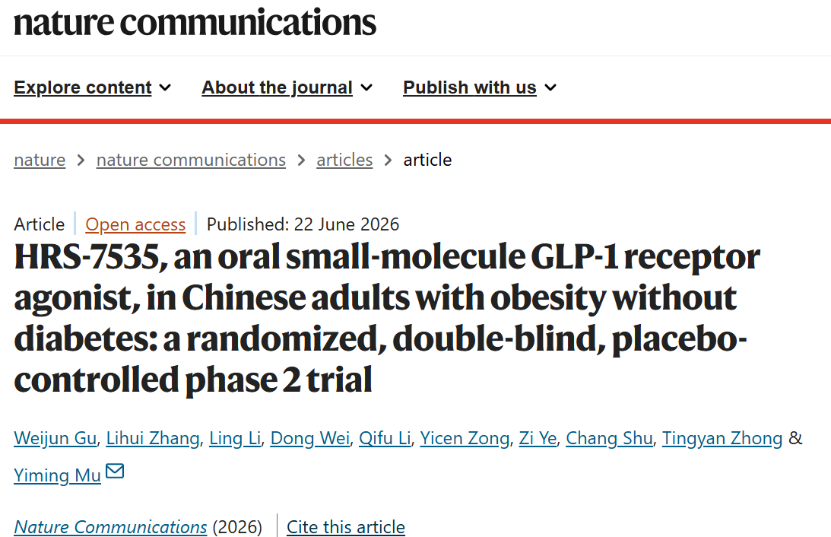
Fig. 1. Publication Page of the HRS-7535 Phase 2 Study in Nature Communications
Comment From Prof. Mu
Prof. Yiming Mu: “It is encouraging to see the Phase 2 results of HRS-7535 recognized by an international journal such as Nature Communications. As the leading principal investigator of the study, I am deeply encouraged. The data show that the domestically developed oral small-molecule GLP-1RA HRS-7535 produces significant weight-loss benefit, with up to 9.36% reduction at week 26 and a further increase to 9.46% at week 36, together with improvement across multiple metabolic parameters and a favorable safety profile. Critically, HRS-7535’s oral administration is unaffected by food or water intake, removing a key limitation of traditional injectable formulations and potentially substantially improving long-term adherence. This publication provides high-quality evidence for an oral small-molecule GLP-1RA in a Chinese obese population; the baseline characteristics of enrolled participants — including BMI — more closely reflect the Chinese obese population. We look forward to the steady progress of subsequent studies and to additional treatment options for the chronic management of obesity.”
Focus on the Local Population: Building a Solid Evidence Base
The study was a multicenter, double-blind, randomized, placebo-controlled Phase 2 trial that enrolled 235 Chinese adults aged 18-65 years with a body mass index (BMI) of 28.0-40.0 kg/m² and inadequate response to lifestyle intervention, all without diabetes (Fig. 2). The enrollment criteria closely match the characteristics of the Chinese obese population: compared with Western populations, Chinese adults with obesity tend to have lower overall BMI but higher body fat percentage, more prominent abdominal obesity, and higher comorbidity and complication risk (3). Evidence generated from a Chinese population carries more direct relevance to Chinese clinical practice.
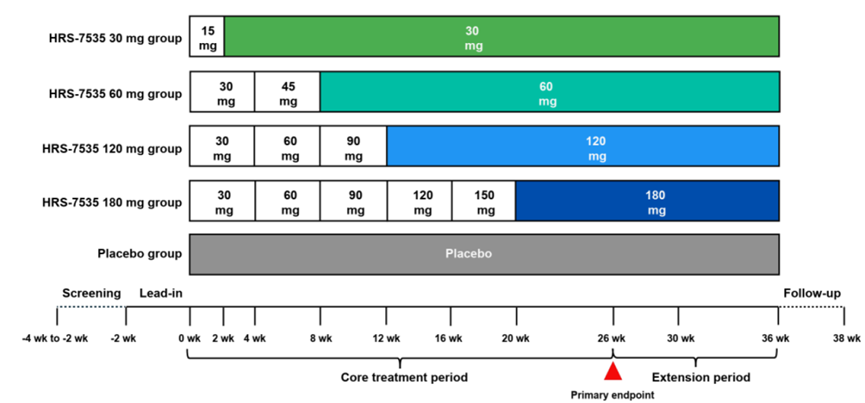
Fig. 2. Study Design
Participants were randomized 1:1:1:1:1 to placebo or to one of four target-dose groups of HRS-7535 (30 mg, 60 mg, 120 mg, or 180 mg), administered orally once daily. The total treatment course was 36 weeks, comprising a 26-week core treatment period and a 10-week extension period. The primary endpoint was the percentage change in body weight from baseline at week 26. Secondary endpoints included the proportions of participants achieving ≥5%, ≥10%, and ≥15% weight reduction from baseline at weeks 26 and 36; the percentage change in body weight from baseline at week 36; and changes from baseline at weeks 26 and 36 in body weight, waist circumference, body mass index (BMI), blood pressure, and glycated hemoglobin (HbA1c).
Up to 9.36% Weight Loss at Week 26, Rising to 9.46% at Week 36, With Multiple Metabolic Improvements
Mean participant age was 33.5 years, and 48.5% were female. Mean baseline body weight was 91.6 kg, mean BMI 32.5 kg/m², and mean waist circumference 104.0 cm (Fig. 3).
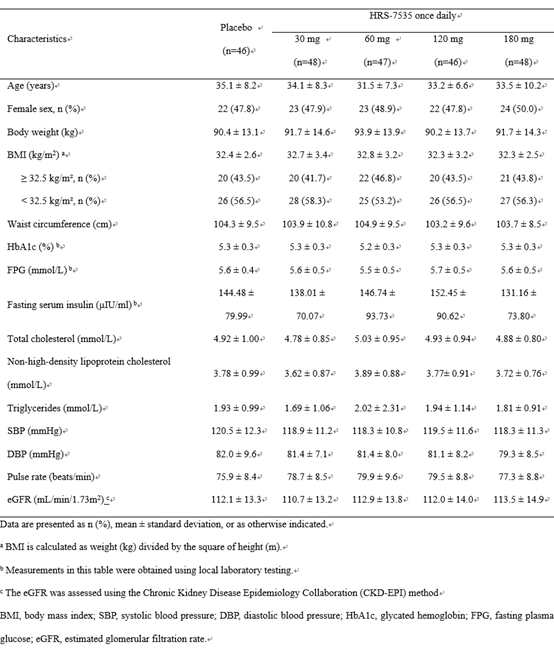
Fig. 3. Participant Baseline Characteristics
The results demonstrated sustained and substantial weight-loss potential for HRS-7535. At week 26, all HRS-7535 groups at 60 mg and above achieved significantly greater weight loss than placebo, with the largest reduction in the 180 mg group at 9.36%, a placebo-adjusted difference of 6.87% (P<0.0001). At week 36, the weight-loss effect in the 180 mg group was maintained, reaching 9.46%, compared with 1.39% in the placebo group (Fig. 4A, B). Sensitivity analyses using both multiple imputation based on the placebo group and a mixed-model for repeated measures (MMRM) with covariate adjustment produced consistent results for the 60 mg and above dose groups, further supporting the robustness of the primary endpoint. The 2026 American Diabetes Association (ADA) Professional Practice Committee for Obesity, in Pharmacologic Treatment of Obesity in Adults: Standards of Care in Overweight and Obesity, notes that a weight reduction of ≥5% is clinically meaningful, ≥10% improves multiple obesity-related complications, and ≥15% can improve conditions such as moderate-to-severe obstructive sleep apnea (OSA) or heart failure with preserved ejection fraction (HFpEF) (4). In the present study, the 180 mg group approached a 10% reduction, and the magnitude increased further at week 36 with no clear plateau, suggesting sustained weight-loss benefit and potential improvement of obesity-related complications at the higher doses of HRS-7535.
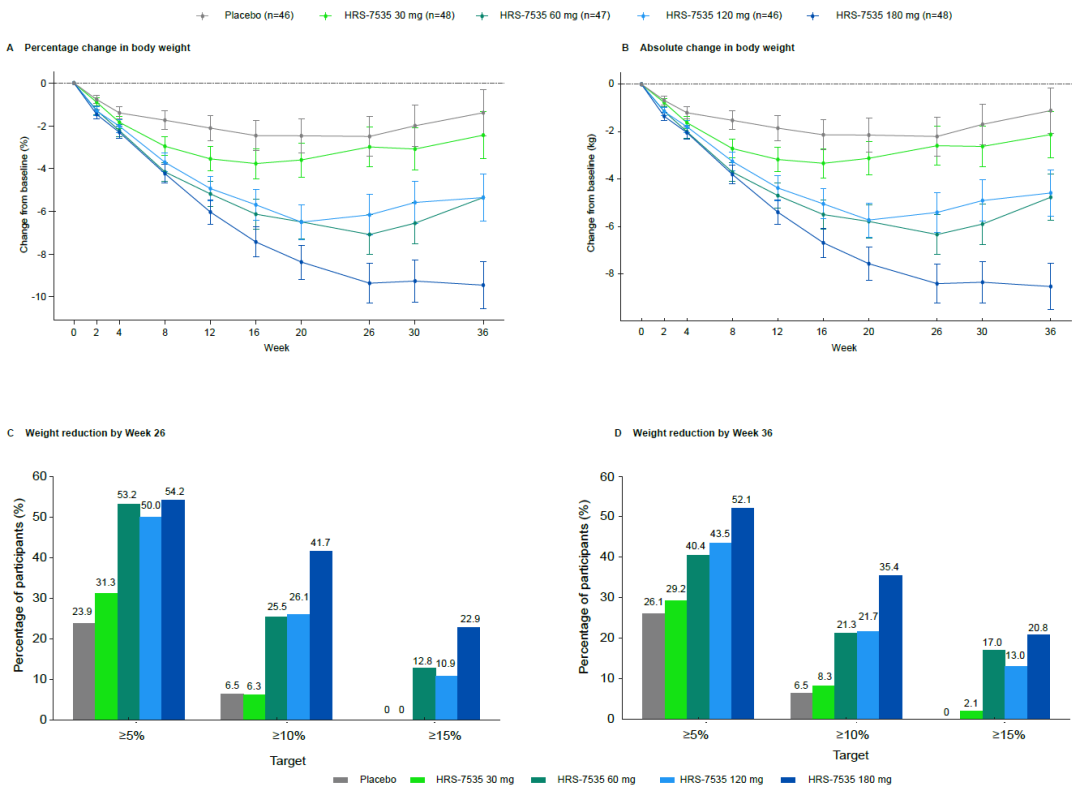
Fig. 4. Primary Results of the Study
Analysis of responder rates at weeks 26 and 36 showed that, in the 60 mg and above groups, the proportions achieving ≥5%, ≥10%, and ≥15% weight reduction were all higher than with placebo. At week 36, 35.4% of participants in the 180 mg group had achieved ≥10% weight loss, compared with 6.5% in the placebo group (Fig. 4C, D). Of greater clinical relevance, a post-hoc analysis showed that, after excluding participants with insufficient drug exposure, the 180 mg group achieved a 14.98% weight reduction at week 36 (Fig. 5), suggesting that sufficient and stable drug exposure is the key to achieving greater weight-loss benefit.
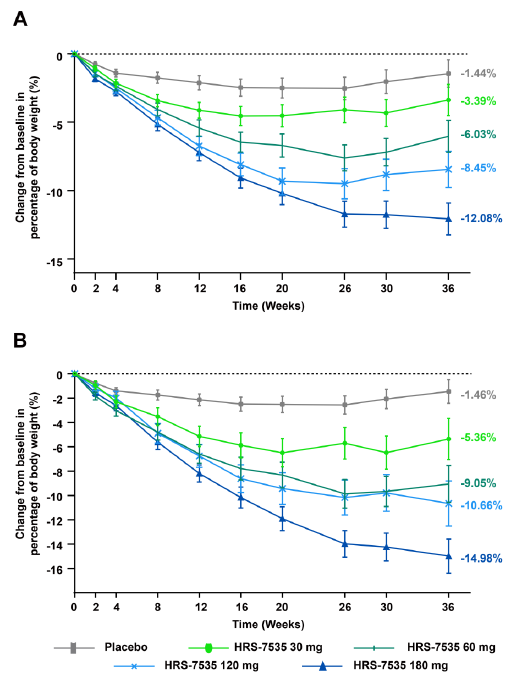
Fig. 5. Post-hoc analysis results.
In addition to weight loss, HRS-7535 produced concurrent improvements in BMI, waist circumference, HbA1c, blood pressure, and lipid profile. The enrolled population had baseline glucose levels within the normal range, yet improvements in metabolic parameters were still observed, suggesting that the drug’s modulation of metabolic homeostasis is not dependent on a hyperglycemic state and may have potential value for diabetes prevention in obese populations.
Safety and Convenience: The Core Advantages for Long-Term Weight Management
In this study, the overall safety profile of HRS-7535 was highly consistent with that of the GLP-1RA class, and no new safety signals were identified. The most common adverse events were gastrointestinal reactions such as nausea, vomiting, and diarrhea, mostly mild to moderate, concentrated during the dose-titration phase, and self-resolving with continued treatment. Although the incidence of gastrointestinal reactions was higher in the high-dose groups, the discontinuation rate due to adverse events across dose groups was only 2.1%-6.3%, markedly lower than reported for other GLP-1RA studies. The proportion of dose reductions during titration was only 3.4%, and the majority of affected participants were able to continue treatment after adjustment, confirming the favorable safety and tolerability of HRS-7535.
Only a small number of participants experienced transient amylase/lipase elevations, none of which progressed to acute pancreatitis. There were no serious hypoglycemic events, no liver-injury events, and no thyroid C-cell safety concerns. Notably, on hepatic safety — given that some oral small-molecule GLP-1RAs have previously been associated with transaminase abnormalities — the hepatic safety profile of HRS-7535 was particularly reassuring, adding confidence to its long-term use.
Beyond safety, the dosing convenience of HRS-7535 is a key differentiating advantage. As an oral small-molecule GLP-1RA, HRS-7535 is unaffected by food or water intake, requires once-daily oral dosing, and does not require strict fasting conditions or post-dose waiting times. The greater flexibility in administration is critical to long-term patient adherence.
Conclusion
This Phase 2 study confirms that the domestically developed oral small-molecule GLP-1RA HRS-7535 produces significant weight-loss efficacy, broad cardio-metabolic benefit, a favorable safety profile, and notable dosing convenience in a Chinese non-diabetic obese population, and may offer a new treatment option for the chronic management of obesity in China.
It is worth noting that HRS-7535’s exploration in metabolic disease extends beyond obesity. A separate Phase 2 study of HRS-7535 in patients with type 2 diabetes has been published in JAMA Network Open (5), demonstrating robust glycemic reduction and modest weight loss over 16 weeks of treatment. From type 2 diabetes to obesity, HRS-7535 has accumulated solid evidence in Chinese populations across two core areas of metabolic disease, reflecting its broad therapeutic potential. In addition, the GLP-1/GIP dual-receptor agonist ruipabotai, with its distinctive molecular structure of a GLP-1 backbone and measured introduction of GIP, has also shown strong weight loss and broad metabolic benefit alongside a favorable safety profile. Together, the two agents highlight a forward-looking, multi-pronged, differentiated pipeline strategy built around the GLP-1 target by domestic Chinese innovators, forming a rich product matrix spanning both injectable and oral formulations.
In summary, the successive publication of HRS-7535’s two Phase 2 studies in leading international journals is both a recognition of China’s innovative drug-development capability and a marker that the country is gradually establishing its own distinctive strengths in the development of innovative metabolic therapeutics, contributing high-quality Chinese evidence to the treatment of obesity and diabetes. We look forward to seeing this oral small-molecule GLP-1RA reach patients in the near future and support the prevention and control of metabolic disease in China.
About the Commenting Expert

Prof. Yiming Mu, First Medical Center of Chinese PLA General Hospital
Director, Weight Management Center, First Medical Center of Chinese PLA General Hospital; chief physician, professor, doctoral supervisor
President, Endocrinology and Metabolism Branch, Chinese Medical Doctor Association
Chair, 10th Committee of the Endocrinology Branch, Chinese Medical Association
Chair, Endocrinology Professional Committee, PLA Medical Association
Associate Editor, Chronic Diseases and Translational Medicine
Associate Editor, Chinese Journal of Internal Medicine
Associate Editor, Chinese Journal of Endocrinology and Metabolism
Associate Editor, Chinese Journal of Practical Internal Medicine
Associate Editor, Medical Journal of Chinese People’s Liberation Army
Has published more than 500 SCI-indexed papers, including as corresponding and/or first author in JAMA, BMJ (Lead Author and Guarantor), The Lancet Diabetes & Endocrinology, Nature Communications, and Stem Cell, and as co-author in The New England Journal of Medicine, BMJ, The Lancet, and JAMA.
Received the Outstanding Contribution Award from the Chinese Medical Association in 2012 and 2018. Named “National Famous Doctor — Outstanding Achievement” by People’s Daily Online in 2018. Recognized by The Doctor’s Daily in 2023 as one of the “Top Ten Medical Contribution Experts Driving the Field Forward.”
References
1. Peng W, et al. Lancet Reg Health West Pac. 2023 Jun 20;43:100809.
2. Gu, W, et al. Nat Commun (2026). https://doi.org/10.1038/s41467-026-73018-y
3. Wang, Z, et al. (2026). Clinical Obesity Among Chinese Adults: Prevalence, Multimorbidity Burden, and Associations with Physical Activity. MDPI, Basel, Switzerland. (Published: 19 March 2026).
4. American Diabetes Association Professional Practice Committee for Obesity; Pharmacologic Treatment of Obesity in Adults: Standards of Care in Overweight and Obesity. DOCM CARE 2026; doci250008. https://doi.org/10.2337/doci25-0008
5. Lixin Guo, et al. JAMA Network Open. 2026;9(6):e2615622. doi:10.1001/jamanetworkopen.2026.15622

