


On 9 July 2026, the clinical research results of HRS-4642 in combination with the AG regimen for treatment of KRAS G12D-mutant advanced pancreatic cancer, conducted by the team of Prof. Liwei Wang of the Department of Oncology, Renji Hospital, Shanghai Jiao Tong University School of Medicine, were published in Nature Medicine, titled “KRAS-G12D inhibitor HRS-4642 plus chemotherapy in advanced KRAS G12D-mutant pancreatic cancer: a phase 1b/2 trial.” This study represents a landmark systematic clinical research achievement in the field of KRAS G12D inhibitor combination chemotherapy, opening a new path for precision treatment of advanced pancreatic cancer.
Pancreatic cancer has long been known as the “king of cancers,” with extremely high mortality worldwide. The disease has an insidious onset and atypical early symptoms; more than 90% of patients are diagnosed at the advanced or metastatic stage, missing the window for radical surgery and presenting extremely difficult clinical treatment. Currently, albumin-bound paclitaxel plus gemcitabine (the AG regimen) is one of the core first-line standard of care for advanced pancreatic cancer, which can improve survival compared with traditional single-agent therapy, but clinical efficacy remains limited, with median effective treatment duration of only approximately 5 months. Long-term survival benefit in pancreatic cancer urgently needs improvement, and the field urgently needs precise, effective, and safe novel treatment strategies.
From a pathogenesis perspective, pancreatic cancer development is closely associated with gene mutations, with KRAS mutation detection rate as high as 90%, while KRAS G12D mutation accounts for approximately 40%, making it one of the core targets driving pancreatic cancer progression. For a long time, due to the special KRAS protein structure, the lack of effective drug binding sites, and its extremely high affinity for natural ligands, this target has been considered by the medical community as “undruggable,” and related targeted therapy development has long been stagnant. HRS-4642 used in this study is a novel, highly potent, highly selective, long-acting non-covalent KRAS G12D inhibitor, and is also a breakthrough innovative drug in the current pancreatic cancer targeted therapy field. In a prior Phase 1 study, HRS-4642 monotherapy showed therapeutic effect in pancreatic cancer, but the benefit remained limited. Prof. Wang’s team used preclinical animal models to explore combination regimens and found that HRS-4642 combined with the AG regimen produced more significant and synergistic therapeutic effects.
Based on these findings, Prof. Wang’s team took the lead in designing the Phase 1b/2 trial of HRS-4642 plus AG (NCT06520488), systematically evaluating the safety, clinical efficacy, and biomarker characteristics of HRS-4642 combined with the AG chemotherapy regimen in KRAS G12D-mutant advanced pancreatic ductal adenocarcinoma patients — a pioneering clinical exploration in this therapeutic combination field.
The clinical research data are remarkably encouraging, achieving a leap in efficacy. Results showed that, after first-line treatment with HRS-4642 plus AG in KRAS G12D-mutant advanced pancreatic cancer patients, the confirmed tumor response rate reached 63.3%, far exceeding the 23%-27% historical data for the AG regimen; the disease control rate reached 93.3%; median time to tumor progression extended to 13.1 months — more than double the previous 5.5 months; 1-year overall survival rate rose to 83.3%, a qualitative leap from the traditional regimen’s 35%.
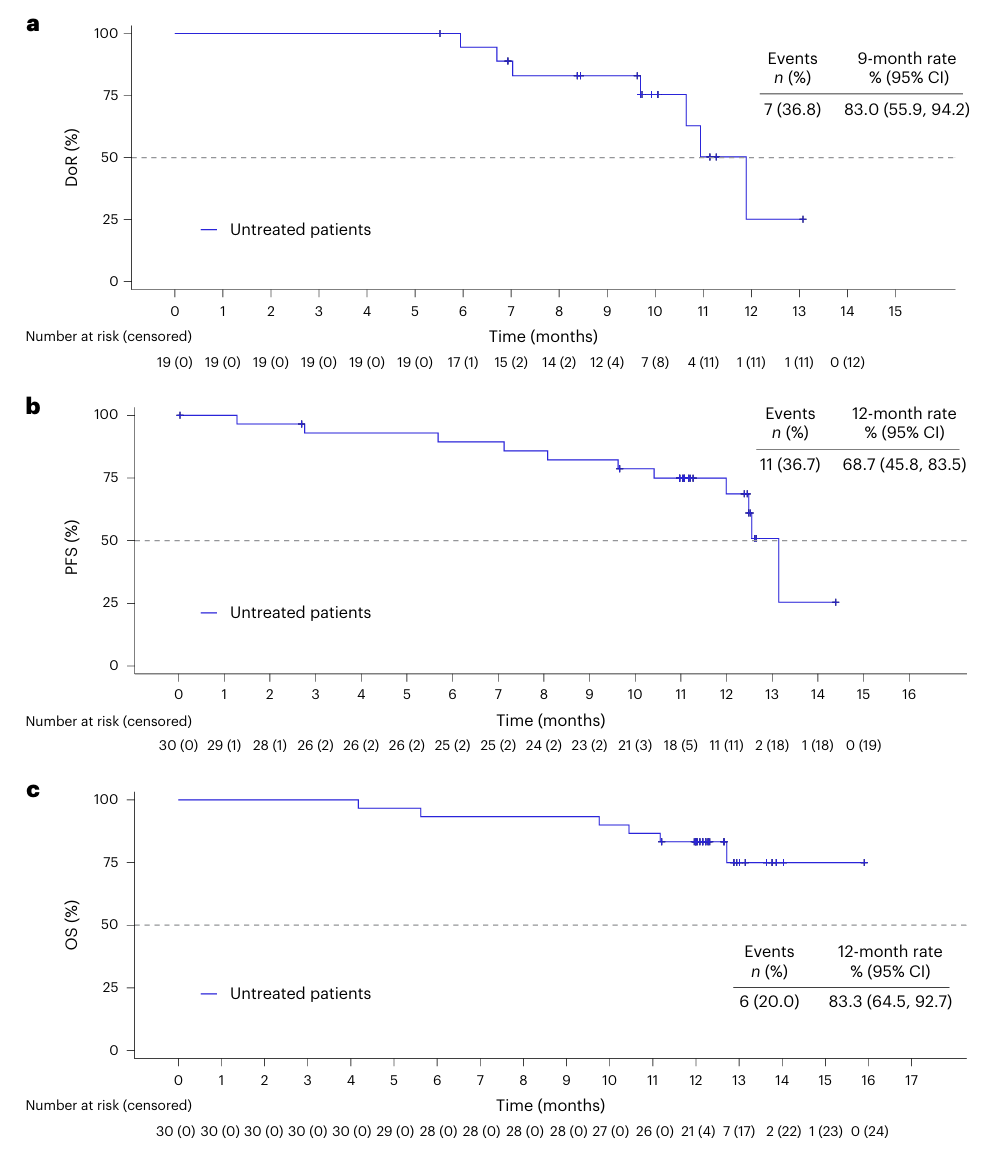 Fig.1.Kaplan-Meier Curves: Treatment-Naive Patients’(a) DoR; (b) PFS; (c) OS
In terms of safety, the combination regimen showed significant advantages and favorable tolerability. The most common adverse reactions in the study were manageable myelosuppression. Compared with several currently marketed oral KRAS inhibitors, the incidence of patient-reported adverse reactions such as rash, nausea, vomiting, and diarrhea was substantially reduced. Throughout the study, no treatment interruption or patient death due to drug-related adverse reactions occurred, demonstrating excellent safety. Additionally, exploratory biomarker analysis showed that, among patients with baseline circulating tumor DNA (ctDNA) positive for KRAS G12D, 88.9% achieved complete ctDNA clearance, providing an important basis for efficacy prediction and precision treatment.
It is worth noting that 90.3% of enrolled patients in this study had a baseline ECOG performance status of 1, representing a high-tumor-burden, generally weaker refractory patient population.
The excellent efficacy achieved in this high-risk population fully corroborates the clinical value of the HRS-4642 plus chemotherapy regimen. At the same time, the study confirmed that the combination regimen’s efficacy was significantly superior to HRS-4642 monotherapy, demonstrating a clear synergistic effect. Subsequent translational research further revealed that HRS-4642 plus chemotherapy can effectively promote tumor antigen presentation, enhance tumor microenvironment lymphocyte infiltration, and delay the emergence of targeted therapy resistance — mechanistically reinforcing the scientific basis and efficacy of the combination.
This milestone research achievement formally advances KRAS G12D-targeted therapy from the early concept-validation stage to a confirmatory clinical development stage as first-line treatment, precisely filling a major clinical gap in precision treatment of KRAS G12D-mutant advanced pancreatic cancer, and breaking through the treatment dilemma of an “undruggable” target. Currently, Prof. Wang’s team has launched a national randomized controlled Phase 3 registrational clinical study of HRS-4642 plus chemotherapy (NCT07232875), to fully confirm the long-term clinical efficacy and application value of this regimen.
The first author of the study is Associate Chief Physician Jiujie Cui of the Department of Oncology at Renji Hospital; the corresponding author is Chief Expert Prof. Liwei Wang of Renji Hospital. Looking ahead, as the Phase 3 study advances, this innovative targeted combination regimen is expected to reshape the first-line treatment landscape for KRAS G12D-mutant advanced pancreatic cancer, providing a novel, effective solution for the clinical treatment of the “king of cancers,” benefiting the broad population of patients with advanced pancreatic cancer.

