


Premature myocardial infarction (PMI) typically affects young to middle‑aged adults (males ≤45 years, females ≤55 years), and long‑term prognosis is influenced by multiple metabolic and inflammatory factors. Homocysteine (Hcy), a metabolite with pro‑inflammatory and pro‑thrombotic activity, has been shown to participate in the development and progression of atherosclerosis. However, the independent effect of Hcy on long‑term prognosis in PMI patients, as well as its interactions with other risk factors such as obesity and inflammatory markers, had not been systematically evaluated. A prospective cohort study from the team of Prof. Jing Gao at Tianjin Chest Hospital, China, presented at the European Society of Cardiology (ESC) Congress 2026, addressed this question. The results demonstrated that Hcy is not only an independent predictor of long‑term major adverse cardiovascular events (MACE) in PMI patients, but also exhibits significant interactions with obesity and inflammatory status, further amplifying the adverse prognostic impact of these risk factors.
Expert Profile: Prof. Jing Gao

• Chief Physician (Grade 2), Researcher, Deputy Director of Cardiovascular Research Institute, Tianjin Chest Hospital; Director of Biobank
• Doctoral Supervisor and Postdoctoral Co‑supervisor
• Member of the Atherosclerosis Group, Cardiovascular Medicine Branch, Chinese Medical Doctor Association; Deputy Leader of Beijing‑Tianjin‑Hebei Biospecimen Resource Collaboration Group; National Member of Biobank Branch, China Medical Biotechnology Association; Deputy Director of Basic Research Committee, Tianjin Medical Doctor Association Cardiovascular Medicine Branch; Council Member of Tianjin Heart Society; Member of Cardiovascular Disease Branch, Tianjin Medical Association
• Deputy Director of Cardiovascular Research Institute and Director of Biobank, Tianjin Chest Hospital
• Fellow of the American College of Cardiology (FACC); Fellow of the European Society of Cardiology (FESC)
• Editorial Board Member or Reviewer for Chinese Journal of Cardiology, Tianjin Medical Journal, and more than 20 SCI journals
• Has published over 120 academic papers; has led or participated in 27 national and provincial/ministerial research projects; has delivered more than 60 oral presentations at ACC, ESC, AHA, and TCT; first recipient of the Tianjin Science and Technology Progress Second Prize; has trained more than 65 master’s and doctoral students.
Study Design: Focusing on the Unique Population of Premature MI
The study enrolled 1,220 PMI patients (males ≤45 years, females ≤55 years) who underwent percutaneous coronary intervention (PCI) between January 2017 and December 2024. Using a baseline plasma homocysteine (Hcy) cut‑off of 15 μmol/L, patients were divided into an elevated Hcy group (≥15 μmol/L) and a normal group (<15 μmol/L). The primary endpoint was a composite of major adverse cardiovascular events (MACE), including cardiovascular death, rehospitalization for worsening heart failure, non‑fatal myocardial infarction, ischemic stroke, rehospitalization for unstable angina, and target lesion revascularization. The median follow‑up duration was 582 days (approximately 19 months), with a cumulative MACE incidence of 11.1% (136/1,220). The study also collected body mass index, D‑dimer, lipoprotein(a), high‑sensitivity C‑reactive protein (hs‑CRP), and other metabolic and inflammatory markers to assess the independent prognostic effect of Hcy and its interactions with these parameters. Dr. Yuhang Wang, a doctoral candidate on the research team, was responsible for the statistical analysis and cohort data management for this study.
Expert Profile: Dr. Yuhang Wang

• Doctoral Candidate, research interests include mechanisms of ischemia‑reperfusion injury, big‑data cohort analysis, and clinical prediction models
• (No doctoral/postdoctoral supervisory role reported)
• (No leadership role in professional group or medical association reported)
• (No hospital or laboratory leadership role reported)
• (No membership in international academic organization reported)
• (No editorial role reported)
• Has published 14 SCI papers (2 as first author); has presented at CSC2025, ACC 2024, ESC 2025, and ESC 2026; has participated in national and Tianjin municipal key R&D projects; recipient of awards in statistical modeling and academic conferences.
Key Findings: Independent Predictive Value of Hcy and a “Risk Multipliers” Effect
After full adjustment for traditional risk factors, elevated Hcy remained independently associated with MACE risk, with an adjusted hazard ratio (aHR) of 2.72 (95% CI: 1.87‑3.95, P<0.001), indicating that in PMI patients who had received standard PCI and secondary prevention therapy, elevated Hcy alone was associated with a nearly 3‑fold increase in MACE risk.
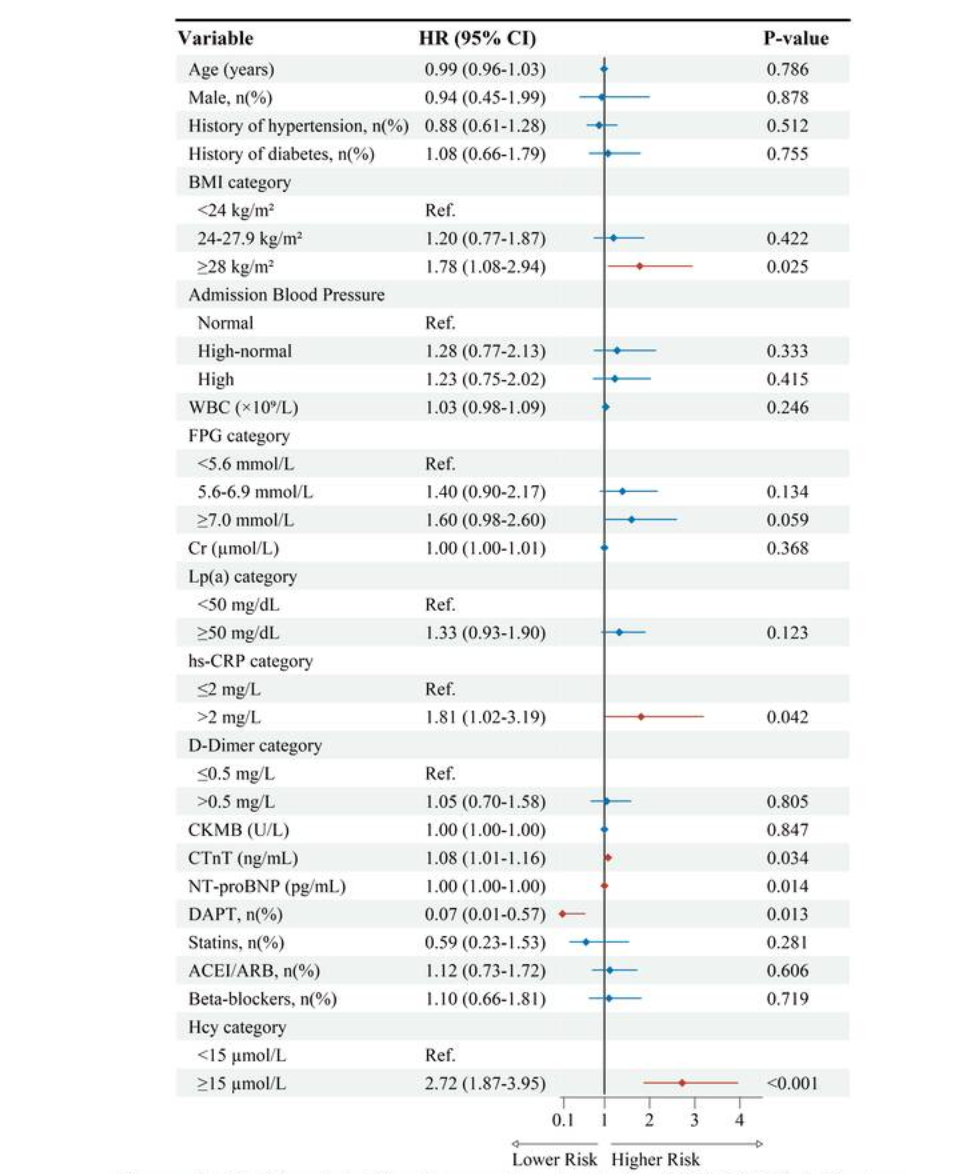 Fig.1. Multivariate Cox Regression Analysis of MACE Risk Factors
Of greater clinical significance was the observed “synergistic amplification” effect between Hcy and other metabolic/inflammatory risk factors. Multivariable Cox regression analysis showed that when elevated Hcy coexisted with elevated D‑dimer (>0.5 mg/L), elevated Lp(a), or elevated hs‑CRP (>2 mg/L), the risk of MACE increased significantly to 3.13‑ to 4.12‑fold compared with the normal Hcy group. When elevated Hcy coexisted with obesity (BMI ≥28 kg/m²), the risk further increased markedly to 6.54‑fold (aHR=6.54, 95% CI: 3.01‑14.20, P<0.001). Kaplan‑Meier survival curves visually confirmed this synergistic effect: subgroups with elevated Hcy plus other positive risk factors (Fig. 2A‑D) showed a sharp, step‑wise decline in MACE‑free survival (P<0.0001).
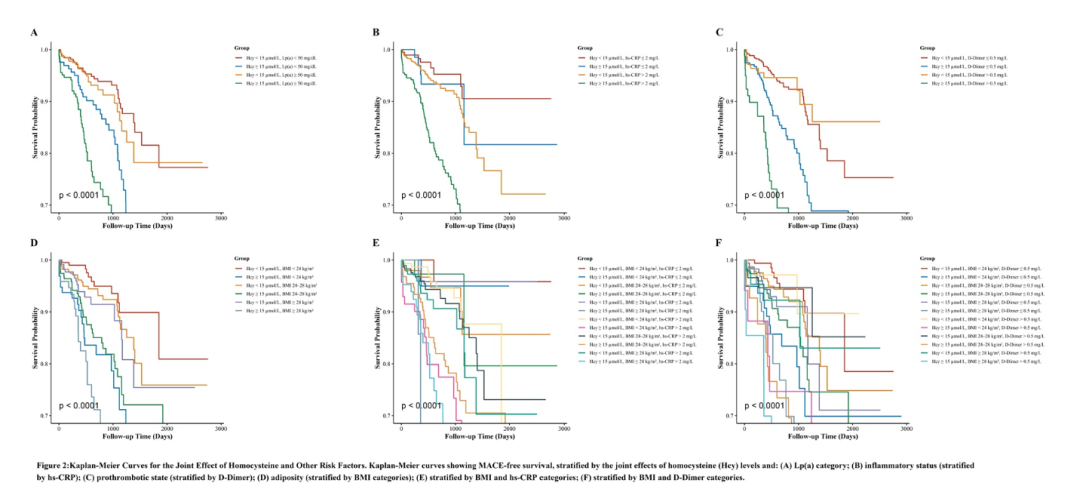 Fig.2.Kaplan-Meier survival curves illustrating the combined effects of homocysteine (Hcy) and other risk factors
Further three‑way interaction analysis revealed a non‑linear additive pattern of risk: patients with all three factors positive — high Hcy, obesity, and high D‑dimer — had a nearly 10‑fold increased MACE risk (aHR=9.91, 95% CI: 3.68‑26.66, P<0.001); while those with high Hcy, obesity, and high hs‑CRP all positive had a dramatically elevated risk of 17.5‑fold (aHR=17.51, 95% CI: 2.28‑134.52, P=0.006). The corresponding survival curves (Fig. 2E, F) also showed the steepest decline in the group with multiple combined risk factors. Although the latter group (high Hcy + obesity + high hs‑CRP) had a wider confidence interval, reflecting a relatively limited sample size in that specific subgroup, the effect size was substantial, and the statistical significance was highly consistent with the direction of the survival curve trend, suggesting the finding is reliable.
Conclusion
These findings have clear clinical translational value. First, the independent predictive effect of Hcy on MACE (aHR=2.72) approaches or exceeds that of certain traditional risk factors, suggesting that Hcy levels should be incorporated into routine risk assessment systems in secondary prevention for PMI patients, rather than being regarded as a “marginal” marker. Second, for PMI patients with elevated Hcy combined with obesity or elevated inflammatory markers, the risk is multiplied rather than merely additive, warranting more intensive follow‑up and more aggressive secondary prevention strategies. Third, Hcy is a modifiable metabolic target; folic acid and B‑vitamin supplementation can effectively lower its levels. Although previous large‑scale randomized controlled trials on the benefits of Hcy‑lowering therapy have shown mixed results, the high‑risk subgroup identified in this study (elevated Hcy + obesity + high hs‑CRP, with a 17.5‑fold increased risk) may represent the population most likely to benefit from Hcy‑lowering therapy, providing a precision‑oriented direction for future mechanism‑driven nutritional intervention strategies. In addition, the cut‑off of 15 μmol/L for risk stratification was validated in this population, offering a simple, low‑cost reference tool for clinical decision‑making.
Of course, this study has certain limitations. It is a single‑center design; although the sample size (1,220 cases) is relatively large in the field of premature MI, the number of cases in the three‑factor interaction subgroups was limited, resulting in wide confidence intervals for some effect estimates that require validation in larger samples. The median follow‑up of only 19 months is insufficient to assess the impact of Hcy on very long‑term prognosis. In addition, Hcy testing has not been standardized, and comparability across different laboratories needs improvement. Future multicenter studies are needed to further validate these findings, evaluate the benefit of Hcy‑lowering therapy in the high‑risk subgroups identified, and explore the combined risk stratification value of Hcy with other novel biomarkers to build more precise prognostic prediction models for PMI patients.

References:
[1] Gao J, Liu JY, Wang YH, et al. Homocysteine multiplies risks of adverse outcomes in premature myocardial infarction: synergistic effects with obesity and inflammation. Eur Heart J. 2026;44(Suppl 2). (ESC 2026 Abstract)

