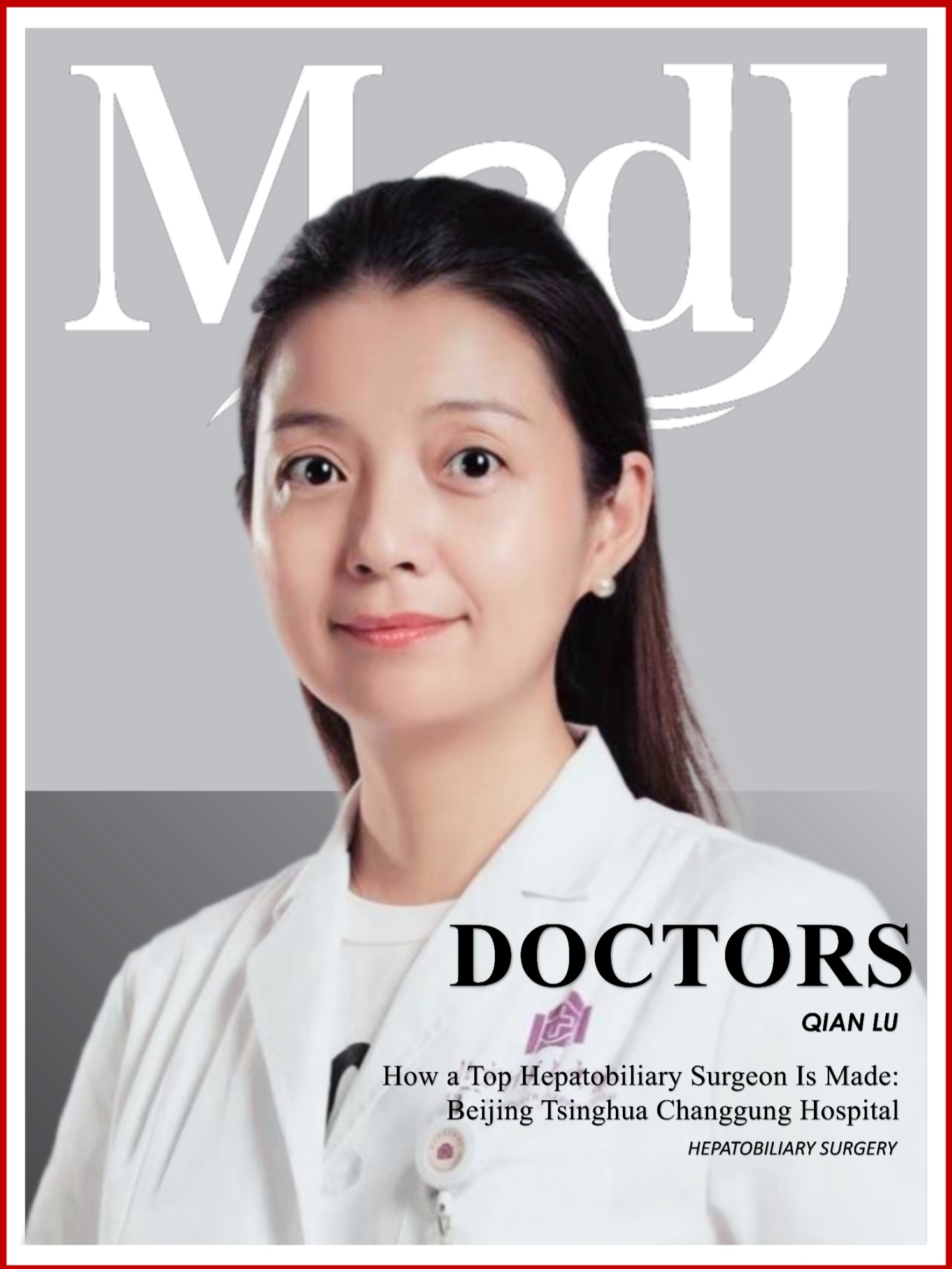
Prof. Qian Lu now performs one of the field's most difficult and highest-risk operations almost every week: liver transplantation.
Before becoming a lead transplant surgeon, however, she spent ten years in the surgical intensive care unit, managing patients after hepatobiliary operations and working to improve perioperative survival.
Today she is vice president of Beijing Tsinghua Changgung Hospital, director of the Organ Transplantation Center, and executive dean of the Institute of Hepatobiliary Medicine at Tsinghua University.
Drawn to the Jewel in the Surgical Crown
Prof. Lu says her choice of hepatobiliary surgery was deeply influenced by her upbringing on a hospital campus and by the many medical relatives around her. She entered the clinical medicine program of the Third Military Medical University and was later attracted by the strong tradition of hepatobiliary surgery at Southwest Hospital, founded by Academician Zhiqiang Huang.
During a university exchange, Academician Jiahong Dong suggested she choose hepatobiliary surgery. That advice helped her make up her mind to devote herself to the field.
For her, liver transplantation embodies the maxim she learned from older masters: perform operations that others cannot perform and treat diseases that others cannot treat. She still remembers a patient who, after receiving a transplant from her team, later became her own graduate student. Cases like that continue to give meaning to her work.
Ten Years of Training Outside the Spotlight
Prof. Lu entered a liver transplantation team in 1999 during the final stage of her seven-year medical program. On the advice of her mentor, she then rotated to the SICU to learn postoperative management of transplant patients, at a time when China was entering a new phase of liver transplantation and there were still no mature models to follow.
At that stage, most transplant recipients remained in the ICU for two weeks, and multidisciplinary collaborative management was necessary. Surgical technique, anesthesia, laboratory testing, and equipment were all less mature than they are today, so a strong postoperative management team was crucial.
Prof. Lu then spent ten years in critical care. By the time she returned to hepatobiliary surgery, some of her classmates could already perform simpler operations independently, while she had to start again from laparoscopic cholecystectomy. Yet that period gave her a deeper understanding: a surgeon must not only know how to operate, but must also view the patient as a whole, choose the right time to intervene, and anticipate the systemic impact of treatment.
Her ICU background later helped her manage severe and difficult transplant cases with greater calm. She can communicate effectively with intensivists, judge organ-support strategies better, and improve perioperative outcomes. Under her leadership, the organ transplantation center at Beijing Tsinghua Changgung Hospital has completed more than 800 liver transplants, with complex cases accounting for over 70% and perioperative survival above 97.3%.
Holding Multiple Roles
Prof. Lu now balances administrative, clinical, research, and teaching duties. She still insists on three clinic sessions per week and must enter the operating room whenever organs become available, which means she has almost no fixed weekends or regular surgery days.
Many of the patients referred to her team are among the most complicated in the country, and operations often last more than ten hours. At the same time, she focuses her research on liver cancer and chronic liver disease, two of the heaviest disease burdens in China.
Her team works to build an integrated diagnostic and therapeutic system for liver cancer. It has also joined major clinical research programs in Beijing and helped promote the establishment of a key laboratory on liver transplantation and bionic manufacturing, focused on transplantation science, oncology, organ regeneration, and engineering.
One of the team's most important goals is to address the central pain point in liver transplantation: the imbalance between supply and demand. Through work on expanding organ sources, prolonging preservation, and repairing marginal livers, Prof. Lu hopes to help more patients survive long enough to receive transplant treatment.