


The ESMO 2026 Annual Meeting was held Oct 23 to 27, 2026, in Madrid, Spain. In the early and advanced breast cancer session, Prof. Ying Fan of the National Cancer Center, Chinese Academy of Medical Sciences, presented late-breaking abstract LBA13, the phase 3 HORIZON-Breast06 study, on Oct 23 at 13:40 local time. The results were published simultaneously in JAMA.
Article Key Points
- HORIZON-Breast06, phase 3, n=551: trastuzumab rezetecan 6.4 mg/kg every 3 weeks vs physician’s choice chemotherapy
- Chemotherapy-naive population, BICR-assessed median PFS 16.6 vs 6.8 months (HR 0.25, 95% CI 0.19-0.33)
- Overall population, BICR-assessed median PFS 16.4 vs 6.8 months (HR 0.27, 95% CI 0.21-0.34)
- Both co-primary endpoints were met; PFS benefit was consistent across all prespecified subgroups
- ORR 75.5% vs 41.2% overall, 76.0% vs 43.3% in chemotherapy-naive, 73.1% vs 32.0% in previously treated
- OS remains immature; 12-month OS 90.6% vs 81.4% overall, presented as a descriptive analysis
- Grade 3 or higher TRAEs 84.1% vs 67.9%; hematologic toxicity predominated
- Interstitial lung disease was reported in 7 patients (2.5%) in the trastuzumab rezetecan arm
- Evidence status: presented as LBA13 at ESMO 2026 and published simultaneously in JAMA; peer reviewed
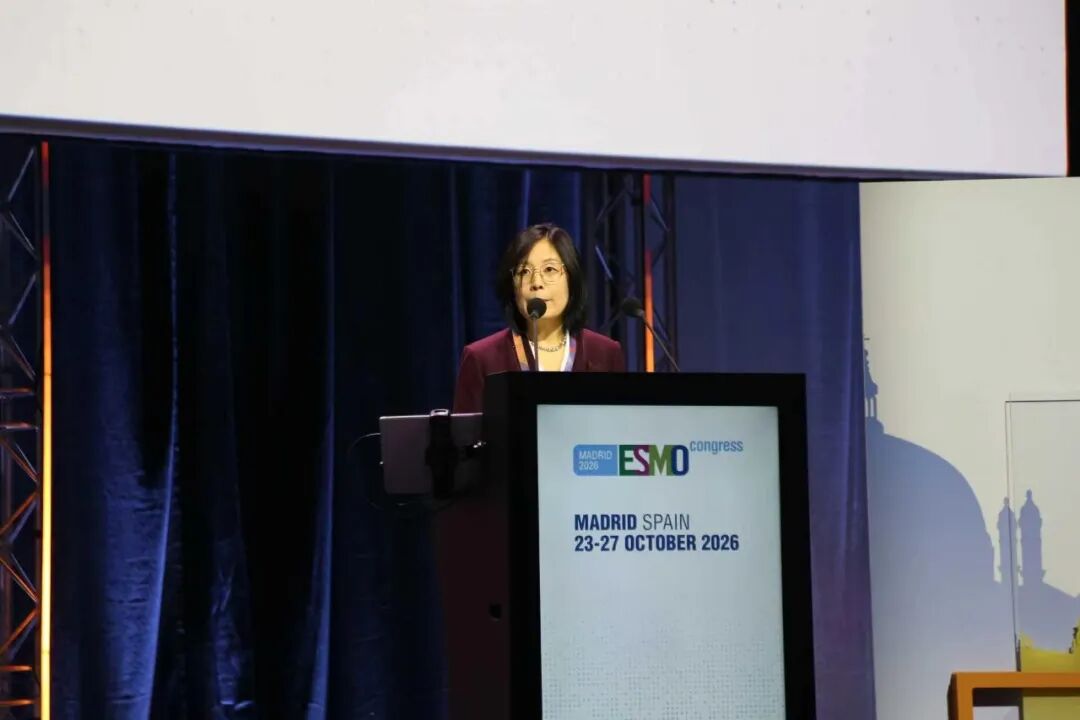 Fig 1. Prof. Ying Fan Presenting the HORIZON-Breast06 Results at the ESMO 2026 Meeting
The Population: A Large Group With Limited Options on Chemotherapy
HER2-low expression is defined as immunohistochemistry (IHC) 1+, or IHC 2+ with in situ hybridization (ISH) negative. HER2-low disease accounts for 45% to 55% of breast cancers, which makes it the single largest subgroup in the disease. Benefit from conventional treatment in this group has been limited.
Trastuzumab rezetecan (SHR-A1811) is a HER2-targeting antibody-drug conjugate (ADC) composed of trastuzumab, a cleavable tetrapeptide linker, and a topoisomerase I inhibitor payload. HORIZON-Breast06 is the phase 3 study evaluating this agent in HER2-low advanced breast cancer.
The Trial: Randomized Design and Population
The study enrolled patients with centrally confirmed HER2-low metastatic breast cancer who had received no more than one prior line of chemotherapy in the metastatic setting. Patients were randomized 1:1 to trastuzumab rezetecan at 6.4 mg/kg by intravenous infusion every 3 weeks, or to physician’s choice of chemotherapy (taxanes, eribulin, capecitabine, or gemcitabine).
The dual co-primary endpoints were progression-free survival (PFS) by blinded independent central review (BICR) in the chemotherapy-naive population and in the overall population. Key secondary endpoints included overall survival (OS) in the overall and chemotherapy-naive populations and PFS in the previously treated population.
Between June 30, 2023, and Aug 20, 2025, 730 patients underwent screening and 179 were excluded, leaving 551 who underwent randomization: 277 in the trastuzumab rezetecan arm and 274 in the chemotherapy arm, of whom 276 and 271, respectively, received treatment. The data cutoff was March 20, 2026, with a median follow-up of 18.0 months (95% CI 16.8-19.3). At the cutoff, 102 and 22 patients, respectively, were still on treatment.
Baseline characteristics were balanced between the arms. Chemotherapy-naive patients accounted for 81.5%, hormone receptor (HR)-positive patients for 73.0%, and prior CDK4/6 inhibitor therapy for 64.8%. The HR-positive subgroup included 201 patients in each arm, and the HR-negative subgroup 76 and 73 patients.
Efficacy: PFS Benefit Consistent Across Subgroups
In the chemotherapy-naive population, median PFS by BICR was 16.6 months (95% CI 14.0-19.4) with trastuzumab rezetecan versus 6.8 months (95% CI 5.7-7.0) with chemotherapy, a 75% reduction in the risk of disease progression or death (HR 0.25, 95% CI 0.19-0.33, P<0.001).
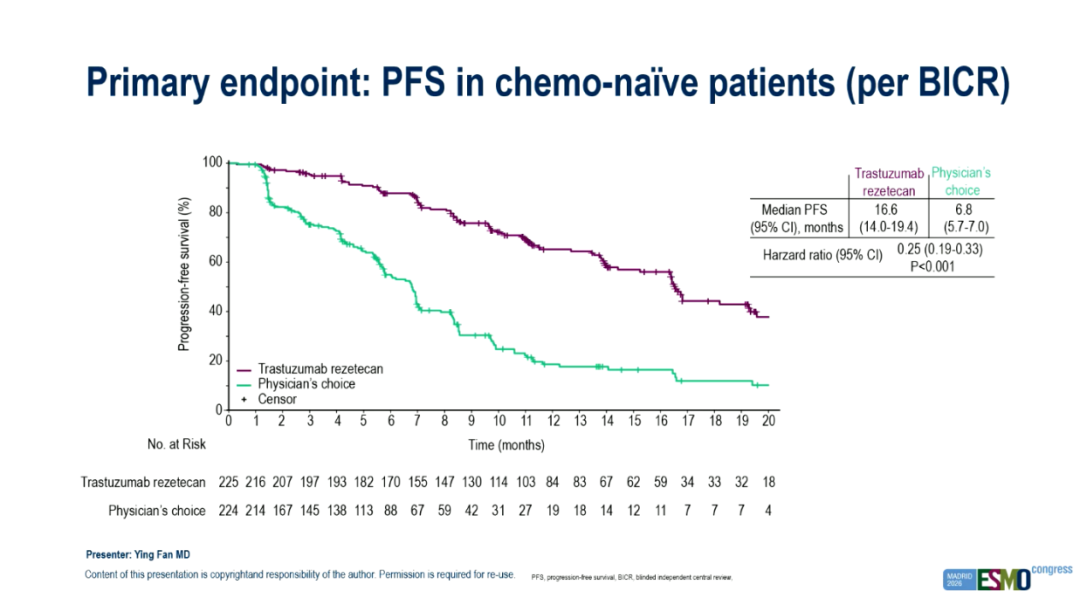 Fig.2. Progression-free Survival by Blinded Independent Central Review in the Chemotherapy-naive Population
In the overall population, median PFS by BICR was 16.4 months (95% CI 14.0-16.8) versus 6.8 months (95% CI 5.7-6.9), a 73% reduction in risk (HR 0.27, 95% CI 0.21-0.34, P<0.001). PFS events occurred in 130 patients (46.9%) and 185 patients (67.5%), respectively. Both co-primary endpoints were met.
In the previously treated population, median PFS was 13.9 months (95% CI 9.7-16.6) with trastuzumab rezetecan versus 5.6 months (95% CI 4.0-8.4) with chemotherapy, a 68% reduction in risk (HR 0.32, 95% CI 0.19-0.54).
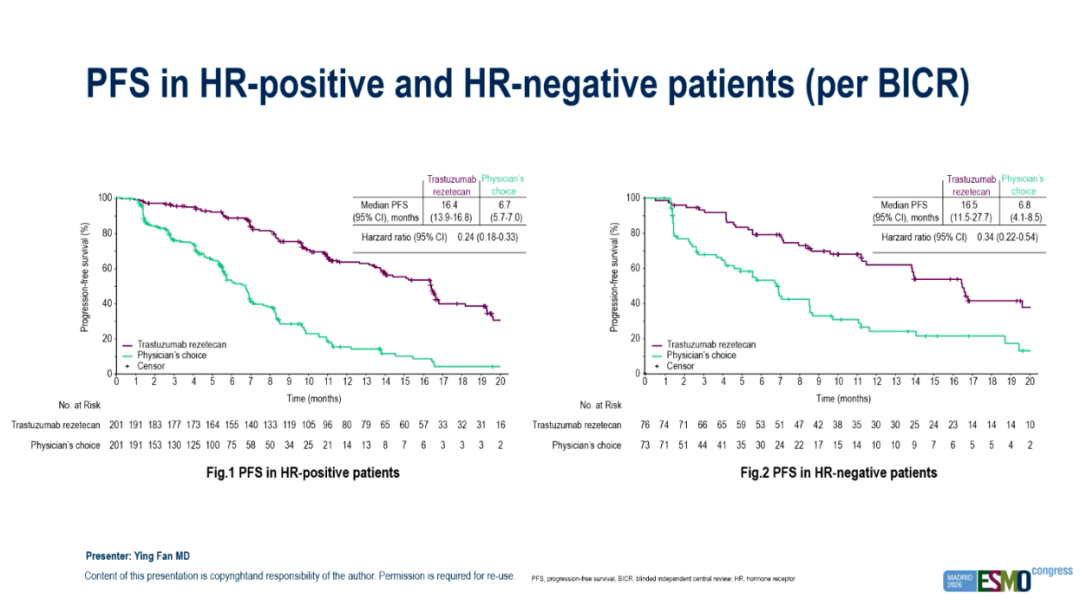 Fig.3. Progression-free Survival by Blinded Independent Central Review in the HR-positive and HR-negative Subgroups
Prespecified subgroup analysis showed consistent PFS benefit across populations, with all hazard ratios significantly below 1. In the HR-positive subgroup, median PFS was 16.4 months with trastuzumab rezetecan versus 6.7 months with chemotherapy (HR 0.24). In the HR-negative subgroup, the corresponding values were 18.5 months and 6.8 months (HR 0.34). Within the HR-negative subgroup, the advantage was also evident after stratification by PD-L1 status: objective response rate (ORR) was 95.2% versus 42.9% in PD-L1-positive patients and 70.9% versus 42.3% in patients with PD-L1-negative or unknown status.
Objective response rate
ORR favored trastuzumab rezetecan in each analysis population:
- Chemotherapy-naive population: 76.0% versus 43.3%
- Previously treated population: 73.1% versus 32.0%
- Overall population: 75.5% versus 41.2%
Clinical benefit rate and median duration of response were also more favorable in the trastuzumab rezetecan arm.
Overall Survival: Immature, With Descriptive Analysis
OS data are not yet mature and are presented as a descriptive analysis, with 143 OS events observed. Interim and final analyses are planned. In the overall population, 12-month OS was 90.6% versus 81.4%, a 33% reduction in the risk of death (HR 0.67, 95% CI 0.48-0.94). In the chemotherapy-naive population, 12-month OS was 92.0% versus 83.0%, a 38% reduction in the risk of death (HR 0.62, 95% CI 0.41-0.93).
Safety: Hematologic Toxicity Predominates, With Low ILD Incidence
The safety analysis included 276 patients in the trastuzumab rezetecan arm and 271 in the chemotherapy arm, with median treatment duration of 13.8 months (95% CI 11.9-16.3) and 5.6 months (95% CI 4.6-6.0), respectively. Grade 3 or higher treatment-related adverse events (TRAEs) occurred in 84.1% versus 67.9%.
Among TRAEs reported in more than 20% of patients, anemia occurred in 92.8% of the trastuzumab rezetecan arm (42.8% at grade 3 or higher) versus 59.0% with chemotherapy (4.8% at grade 3 or higher); decreased white blood cell count occurred in 88.4% (56.5% at grade 3 or higher) versus 84.5% (35.4% at grade 3 or higher). Other events included decreased neutrophil count, nausea, alopecia, and fatigue, with hematologic toxicity predominating. Interstitial lung disease (ILD), the safety event of greatest interest for HER2 ADCs, was reported in only 7 patients (2.5%) in the trastuzumab rezetecan arm.
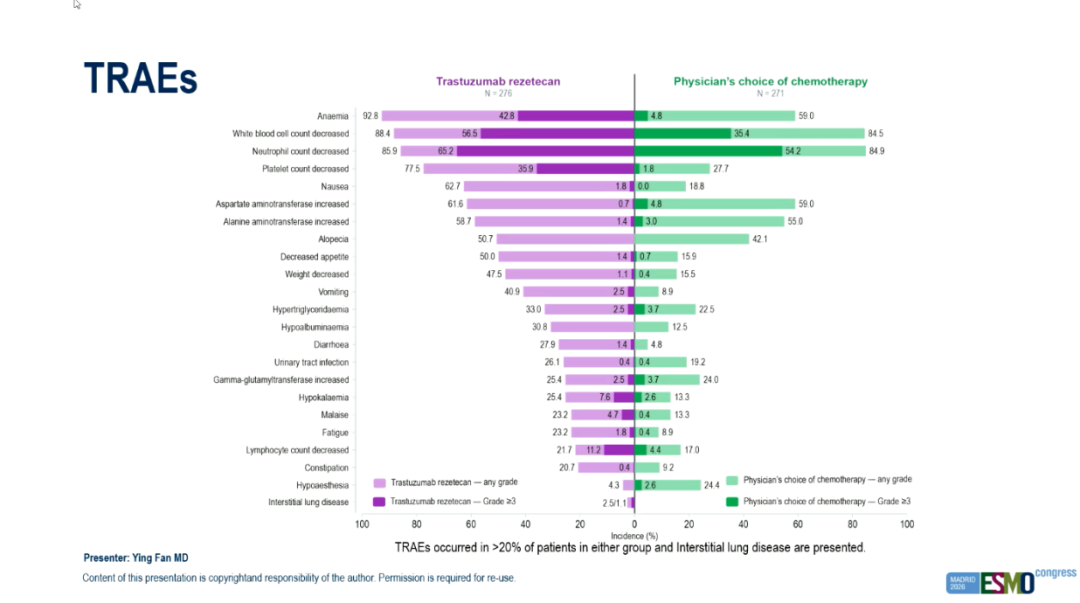 Fig.4. Treatment-related Adverse Events Reported in more than 20% of Patients in either Arm
Conclusions
Trastuzumab rezetecan showed superiority over chemotherapy on PFS, with the benefit maintained across prespecified subgroups, including HR-negative and HR-positive disease. Safety was manageable, with a low incidence of ILD. OS data remain immature and descriptive, with formal analyses planned.

