


On January 17 this year, A Cancer Journal for Clinicians released the Cancer Statistics 2024 report, one of the most striking data is that the overall five-year survival rate of cancer in the United States has increased to 69%. This is much higher than the overall 5-year survival rate of 43.7% of cancer in China.
Between one high and one low, it shows the objective gap between China and the United States in the field of cancer treatment. In fact, in the past decade, the rising trend of cancer mortality in China has been initially curbed, and the gap with developed countries is narrowing, reaching the international advanced level.
However, it must be admitted that there are still differences between China and the United States in cancer treatment. In this regard, industry insiders generally believe that the United States has a deep foundation in early screening, diagnosis and staging of cancer and comprehensive treatment, and another major reason is that the popularity of radiotherapy in the United States is higher than that in China.
In the United States, about 70% of cancer patients are treated with radiotherapy, while in China, only 20% to 30% of cancer patients receive radiotherapy, and radiotherapy has significant benefits for cancer treatment-the World Health Organization and the International Union against Cancer report that more than 70% of malignant tumors in the world need to be treated in different stages of disease development. About 40% of tumors can be cured by radiotherapy.
Many data show that radiotherapy, which is listed as the three major methods of cancer treatment with surgery and chemotherapy, has not been fully popularized in China, which is closely related to the high price, shortage and high cost of operation and maintenance of high-end radiotherapy equipment. In order to improve this situation, in 2019, China Tongfu, known as the "nuclear drug leader", jointly established China Nuclear Ankeri with the global radiotherapy giant and American Ankeri Company.
Only four years after its establishment, CNNC Ankeri has overcome difficulties all the way, constantly breaking through the technical bottleneck of high-end radiotherapy in China. Its launch of a number of high-end cancer treatment equipment promotes the development of China's radiotherapy industry towards precision and intelligence, greatly improves the clinical operability, reliability and comfort of radiotherapy equipment, and brings new changes to the domestic radiotherapy industry.
"We have two major goals, one is to reduce the cost of domestic production, so that more medical institutions can afford high-end radiotherapy equipment and benefit more patients.". The other is to assume social responsibility and provide comprehensive training, maintenance services and technical support for more primary hospitals. Speaking of enterprise development, Yi Zhongwei, CEO of China Nuclear Ankeri, said.
Focus on unmet clinical needs
When Ms. yuan, a 33-year-old breast cancer patient, went to the hospital for treatment, she found that there were only two radiotherapy equipment in the radiotherapy center of the hospital. She waited for 12 days from queuing to the first radiotherapy.
After Miss Wang, from Nantong City, Jiangsu Province, was diagnosed with nasopharyngeal cancer, because there was no local radiotherapy department or radiotherapy equipment, she could only bear more medical expenses and went to Shanghai for treatment.
Radiotherapy is difficult and waiting is long. The two radiotherapy experiences recorded by Health Times have become a difficult problem for many cancer patients and a microcosm of the radiotherapy industry in China.
According to the national cancer report released by the National Cancer Center in February this year, the number of new cases of malignant tumors in China in 2022 was 4.8247 million. From 2000 to 2018, the standardized incidence of malignant tumors in China increased by an average of 1.4% annually. Cancer remains a major public health problem in China.
In terms of cancer treatment, the World Health Organization released a statistical report in 2013 that about 67% of all malignant tumors can be cured, 37% of which are cured by surgery and chemotherapy, and 30% by radiotherapy.
However, in clinical practice, there is still a gap of nearly 40% between domestic patients receiving radiotherapy and developed countries such as the United States, and there are not a few patients who should receive radiotherapy but not radiotherapy.
Radiotherapy suffered such a cold reception, Yi Zhongwei saw it in his eyes.
Yi Zhongwei has more than 30 years of experience in the medical industry, especially a keen insight into medical equipment. He told the "medical community" that the domestic radiotherapy industry has long had the problem of "two major deficiencies, one concentration and one monopoly".
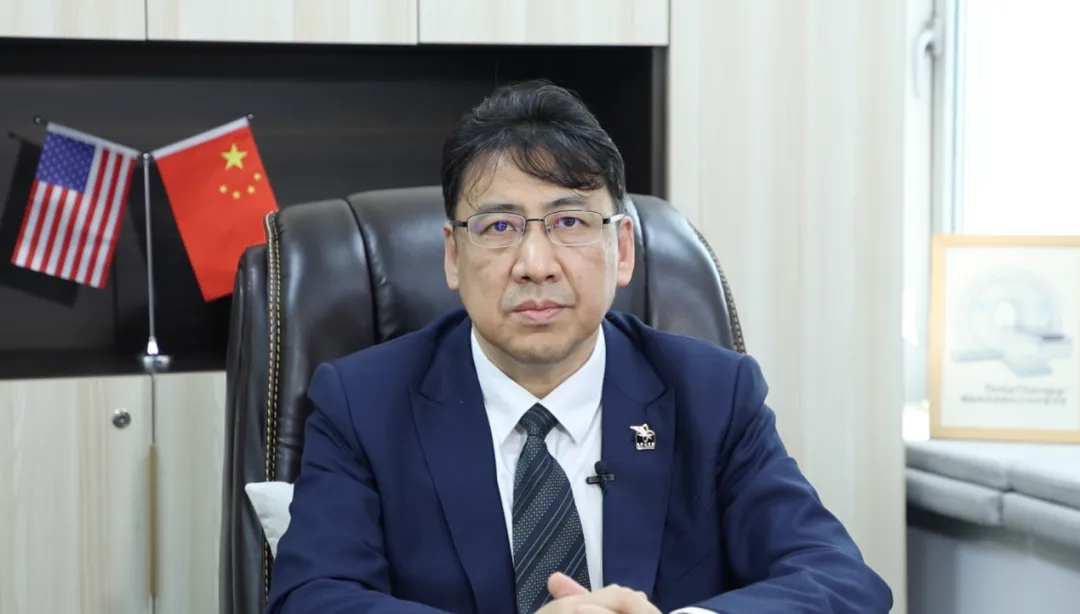
Fig.1 Yi Zhongwei/photo by the medical profession
"Two major deficiencies" refers to the serious shortage of radiotherapy equipment and radiotherapy professionals; "one concentration" is reflected in the fact that domestic radiotherapy equipment and talents are mainly concentrated in a few head hospitals; "one monopoly" refers to the fact that most of the core and high-end radiotherapy equipment are monopolized by imported brands.
As Yi Zhongwei said, radiotherapy department is a typical equipment-dependent department, so equipment hinders the development of radiotherapy discipline. At present, there are 12 radiotherapy equipment per million people in the United States, while only 2 in China, and more than 90% of the radiotherapy equipment in China is imported.
"In addition to these, the lack of awareness of radiotherapy is also a major contradiction." Yi Zhongwei found that the impression of radiotherapy in China is often mysterious and terrible: some people think that radiotherapy is to irradiate patients with radiation, and equate radiation with nuclear radiation; some people are influenced by movies and TV dramas, and the pictures of vomiting and skin ulceration after radiotherapy make people palpitate; there are even a small number of clinicians whose impression of radiotherapy stays at the primary stage.
In order to improve this situation and benefit more cancer patients, policy makers and industry leaders are making arduous efforts.
In March 2023, the National Health and Health Commission issued a catalogue on the licensing management of large-scale medical equipment allocation (2023), transferring the spiral tomotherapy system from Class A management to Class B management, and the approval process only needs to reach the provincial level. This means that the purchase threshold of radiotherapy equipment is lowered, the application process is simple, the collection cycle is accelerated, and it can sink to the third and fourth tier cities faster.
At the same time, as a new benchmark of domestic high-end radiotherapy, China Nuclear Ankeri is also constantly improving the "ceiling" of domestic radiotherapy equipment.
Since its establishment more than four years ago, China Nuclear Ankeri has launched a series of precise radiotherapy solutions tailored for China, and continued to tackle the "neck" technology of high-end radiotherapy equipment.
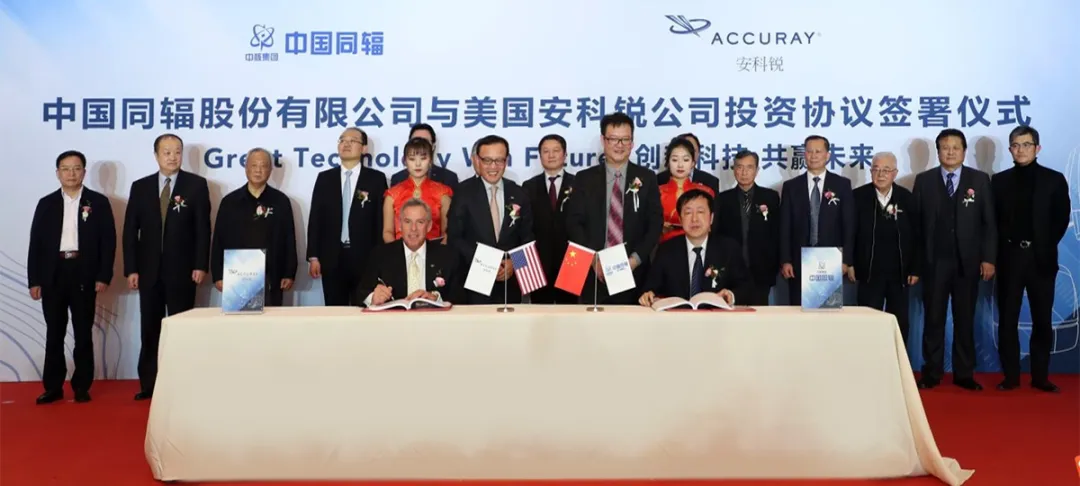
Fig.2 Signing ceremony of China Nuclear Ankeri
"In addition to introducing, absorbing and digesting the latest foreign technology, we still insist on reducing the cost of domestic production through independent research and development, so that more medical institutions can afford high-end radiotherapy equipment, but also according to the different needs of Chinese patients, different medical scenarios research and development of radiotherapy equipment in line with China's national conditions." Yi Zhongwei said.
"Star products" help radiotherapy enter the era of precision
At present, the mainstream radiotherapy equipment in the industry includes gamma knife, medical linear accelerator, CyberK NiFe (also known as "CyberKnife"), Tomo Therapy and proton heavy ion equipment.
The main characteristics of these equipment are large R & D investment, long cycle and high technical barriers. In 2023, under the age of four, China Nuclear Ankeri broke through these restrictions and launched "star products"-Tomo C and CT-TOMO technology, which became the focus of the domestic radiotherapy industry and led the precise treatment of cancer in China into a new situation.
What is TOMO? The "medical community" understands that it is a new concept of radiotherapy technology that formally entered the clinic in 2003. Generally speaking, it is a combination of medical linear accelerator and spiral CT, that is, the linear accelerator is placed on the slip ring frame of CT, and the fan-shaped X-ray beam is used for irradiation, which belongs to high-end radiotherapy equipment.
Reviewing the development history of radiotherapy, CT imaging and radiotherapy system are "relatively independent" for a long time, and the "incompatibility" between them will directly affect the effect of radiotherapy imaging, and ultimately affect the efficacy and quality of life of patients.
The logic behind it is that the size, location and shape of the tumor are constantly changing. Once the imaging effect of radiotherapy is limited, it is very likely that there will be problems such as inaccurate dose and inaccurate radiotherapy area in the process of radiotherapy, resulting in damage to normal organs.
"It's not difficult to kill tumors, but it's difficult to protect normal tissues while killing tumors." Yi Zhongwei introduced that in the past, only non-spiral CBCT three-dimensional images were available in radiotherapy imaging technology, so the industry has been pursuing more high-definition and accurate radiotherapy methods.
Last September, Tomo C successfully obtained the medical device registration certificate issued by the State Drug Administration, becoming the first domestic spiral tomotherapy product in the high-end medical field in China. This product improves the technical drawbacks of the traditional accelerator CBCT system, and has three unique advantages of "higher definition, more efficient and more accurate".
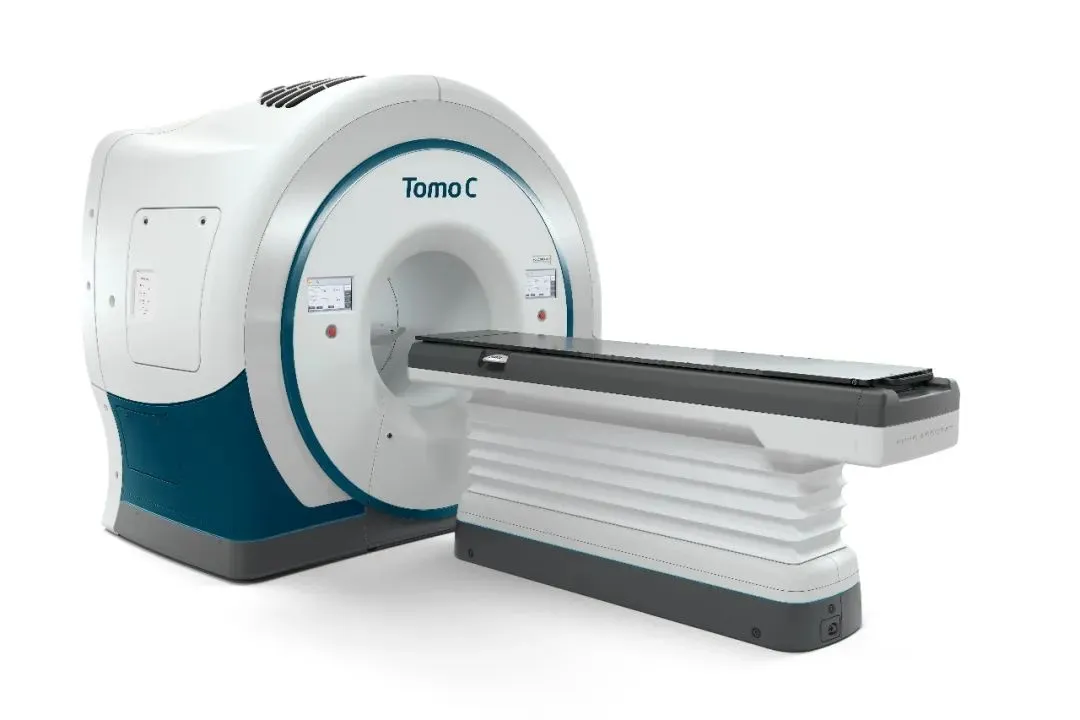
Fig.3 Tomo C
In addition to the approved Tomo C system, in February last year, China Nuclear Ankeri first introduced CT-TOMO technology. Yi Zhongwei told the "medical community" that the technology innovates the operation mode of "coaxial co-ring" to irradiate tumor lesions from different angles, and then achieves the maximum precise irradiation of the target area through spiral tomography technology.
Different from the traditional accelerator CBCT imaging system, CT-TOMO technology is the first time to introduce spiral tomographic CT in the high-end radiotherapy platform. The MV/KV dual-source imaging system uses fan-beam spiral tomographic scanning, which significantly reduces the scattering noise, provides clearer images and more accurate CT values for radiotherapy, and guides radiotherapy with more precise accuracy.
This means that with CT-TOMO technology, radiotherapy scientists and technicians will no longer have problems such as inaccurate dose and area when operating equipment in the future, but through the dynamic grating technology of spiral CT, to achieve precise and continuous aiming, and ultimately only irradiate the tumor part, so as to separate the normal tissue from the lesion to the maximum extent.
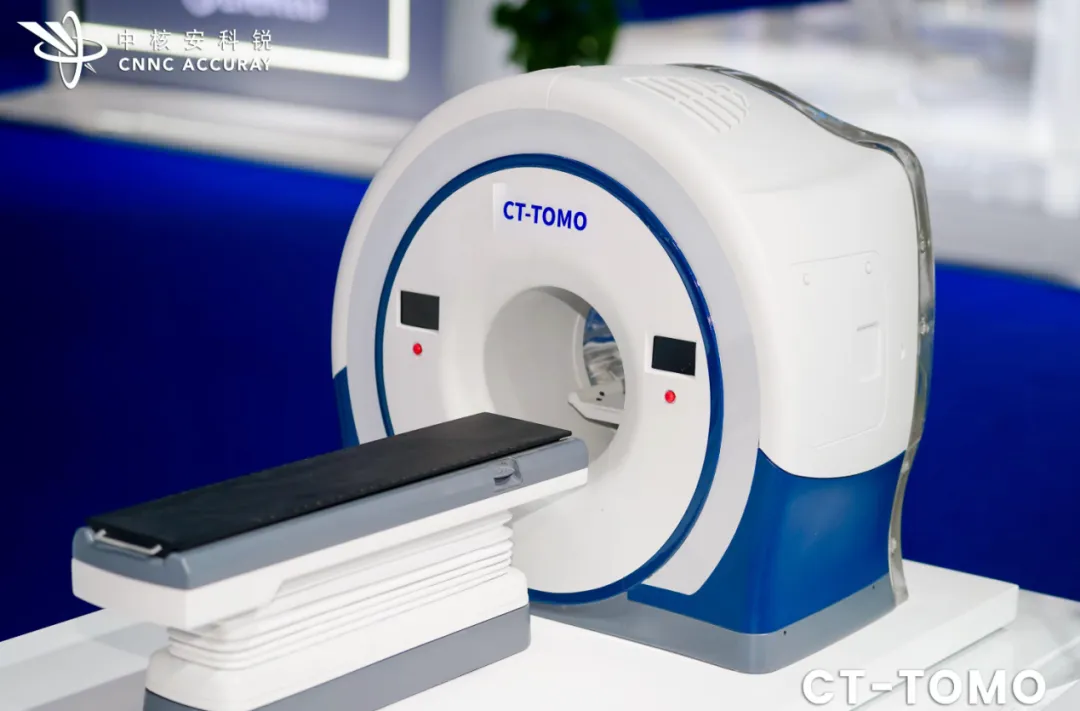
Fig.4 CT-TOMO
In addition, its unique 360-degree spiral tomotherapy mode can cover the maximum treatment range of 135 cm of the whole body, and the tumors in most parts of the patient's body can be irradiated at one time; the characteristics of fast speed, high precision and self-adaptation greatly improve the speed of diagnosis and radiotherapy; In theory, a device can complete the treatment of more than 100 patients every day, rewriting the historical problem of waiting for radiotherapy.
Yi Zhongwei is proud of the excellent performance of CT-TOMO technology. He said that the organic combination of the two leading technologies of spiral CT and TOMO radiotherapy platform has achieved the clinical effect of 1 + 1 > 2, provided a new and efficient solution for doctors, and also brought high-precision and individualized radiotherapy to patients.
CyberKnife is another major product of CNNC Ankeri. According to Yi Zhongwei, CyberKnife has obvious advantages in the treatment of irregular tumors and tumors in special parts. Its principle is that the linear accelerator is installed on the robot arm, through the intelligent robot control system, real-time tracking of the patient's tumors due to breathing, the treatment accuracy of irregular tumors reaches sub-millimeter level, and the damage to the surrounding normal tissues is less.
"It is a revolutionary and innovative product in all medical radiotherapy equipment." Yi Zhongwei also pointed out that CyberKnife belongs to the national Class A large-scale radiotherapy equipment, and its application is limited to a certain extent, so it is mainly concentrated in cancer hospitals above the provincial level and the top three general hospitals.
On February 8 this year, the National Health and Health Commission released the results of the allocation license of Class A large-scale medical equipment in 2023. In this allocation license, the number of X-ray stereotactic radiosurgery treatment systems (including CyberKnife) of China Nuclear Ankeri Company has obtained 9 allocation certificates, including many top third-class and first-class general hospitals and oncology hospitals in China. High-end precision radiotherapy technology is benefiting more cancer patients.
What are the highlights of the upcoming 2024 CMEF?
From April 11 to 14 this year, the 89th China International Medical Devices Exposition CMEF will be held in Shanghai National Convention and Exhibition Center. As an international stage for global medical device enterprises to show their innovative "hard power", CMEF often attracts thousands of enterprises from all over the world to participate in the exhibition, and a large number of "black technology" and new products will also appear.
China Nuclear Ankeri will participate in the CMEF with Tomo C, CyberKnife and Radiotherapy Collaborative Cloud Platform RIX +, China Nuclear Core Intelligence Platform ICS 2.0 and other heavy products, demonstrating its latest technological achievements in precision radiotherapy and digital intelligence construction in an all-round way.
"We will bring all high-end radiotherapy products and independent platforms to the market at this exhibition." Yi Zhongwei introduced that in addition to two trump card radiotherapy equipment, the booth will also comprehensively display one-stop intelligent radiotherapy solutions.
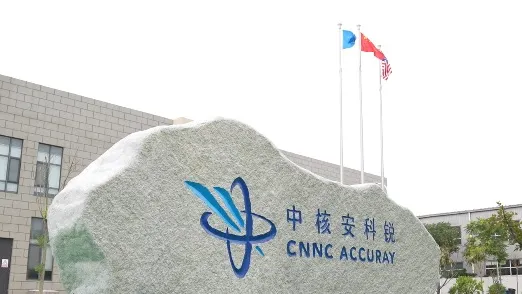
Fig.5 China Nuclear Ankeri
The "medical community" understands that platform and localization are the two key words of the exhibition.
Among them, "Ruizhiyun RIX +" is a digital application collaboration platform in the field of precise radiotherapy for cancer, which is based on China's local data, combined with dedicated 5G Internet of Things network, cloud platform and artificial intelligence technology research and development, to provide users with digital intelligent solutions such as remote collaboration, telemedicine services and intelligent target delineation.
The delineation of target volume and organs at risk in the process of radiotherapy is the core work of radiotherapy physicians, which consumes a lot of energy and tests the level of radiotherapy physicians. On the platform of "Ruizhiyun RIX +", artificial intelligence can achieve automatic, fast and high-quality delineation, thus improving the efficiency of diagnosis and treatment in departments.
Another major platform, ICS 2.0, will also shine brilliantly at this exhibition. China Core Intelligence ICS 2.0 is the second-generation data management system independently developed by China Nuclear Ankeri for the management characteristics of large-scale radiotherapy equipment in Chinese hospitals. It can use the latest Internet of Things and 5G technology to provide large data core technical support such as intelligent early warning prompt and precise intelligent quality control for hospitals.
"The platform has the advantages of digitalization, sharing, AI and customization, and has been successfully deployed in major hospitals, and has achieved good market feedback, becoming an indispensable intelligent management platform for hospitals." Yi Zhongwei said that at this year's CMEF exhibition, two digital platforms, ICS 2.0 and RIX +, are expected to be introduced by more hospitals.
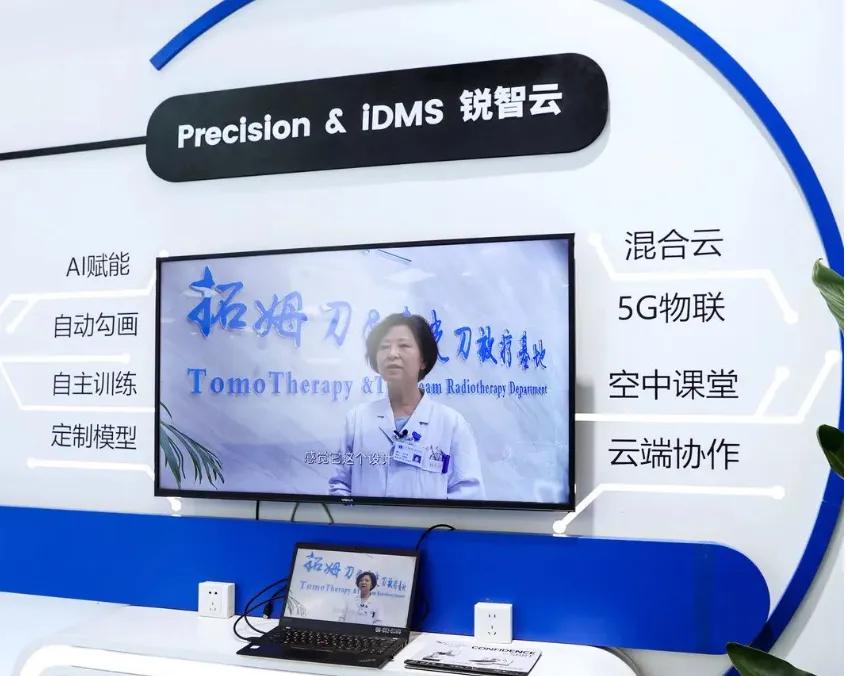
Fig.6 Precision & iDMS Smart Cloud
These high-end products and smart platforms can be quickly pushed to the Chinese market, which can not be separated from the localization strategy of China Nuclear Ankeri. Yi Zhongwei is soberly aware that policy-driven, market demand has built a grand blueprint for the domestic radiotherapy equipment industry, in the face of this blue sea, high-end technology to achieve self-control has become irresistible.
To this end, in addition to introducing the world's advanced high-end radiotherapy technology and radiotherapy equipment into China, China Nuclear Ankeri attaches great importance to the R & D investment of localized products, and regards technological innovation and R & D as its primary task.
At present, China Nuclear Ankeri has set up offices in Shanghai, Beijing and Tianjin, and set up a local R & D center in Tianjin to tackle the "neck jam" technology in the field of radiotherapy.
"In the next 2-3 years or so, the localization rate of the company will reach more than 60%, which is an important strategy we have formulated." Yi Zhongwei explained that only by increasing the localization process can costs be continuously reduced, so that more Chinese hospitals and patients can use the world's top precision radiotherapy services.
The talent side is also worth looking forward to. Yi Zhongwei revealed that through the establishment of training bases, China Nuclear Ankeri has cooperated with many medical institutions in China to break through the chain of production, teaching and research and accelerate the process of clinical transformation. It is reported that the project has trained more than 200 medical workers in cancer radiotherapy so far, contributing to the construction of healthy China.
If the introduction of high-end radiotherapy equipment into China is from 0 to 1, then accelerating the localization process is a long-term exploration from 1 to N. In the future, with the joint efforts of many parties, "Made in China" will catch up with and even surpass the world's advanced level in the field of precision radiotherapy.
In this regard, Yi Zhongwei and China Nuclear Ankeri, which is flowing with the blood of central enterprises, are full of confidence.

