


A patient with acute coronary syndrome (ACS) is successfully discharged after percutaneous coronary intervention (PCI), with a resting heart rate of 72 bpm—in current clinical practice, this is generally considered an adequate heart rate control. However, does this single‑point “snapshot” assessment based on a single resting heart rate sufficiently capture the patient’s full cardiovascular risk profile over the next decade?
Two large‑scale studies presented at the European Society of Cardiology Congress 2026 (ESC 2026) directly address this clinical uncertainty. One real‑world study, based on the Catalan health surveillance system and including 83,357 ACS patients with up to 10 years of follow‑up, revealed that the 10‑year cumulative incidence of new‑onset heart failure (iHF) after ACS was 33%—meaning that one in every three ACS patients surviving to discharge will be diagnosed with heart failure within the subsequent decade [1]. Another study, a secondary analysis of 5,428 chronic heart failure patients from five randomized controlled trials (BEST, GUIDE‑IT, HF‑ACTION, RELAX, TOPCAT), proposed a novel quantitative metric termed “cumulative resting heart rate burden.” The data showed that the cumulative effect of heart rate elevation—measured as “magnitude × time”—was superior to traditional single‑point or mean heart rate metrics in predicting adverse outcomes in heart failure patients [2].
This article provides a systematic review of both studies and discusses their integrated implications for the comprehensive management of heart failure.
New‑Onset Heart Failure After ACS: An Epidemiological Picture from Over 80,000 Cases with 10‑Year Follow‑up
A team led by Prof. Josep Comin‑Colet, Clinical Director of the Heart Disease Institute at Bellvitge University Hospital in Barcelona, Spain, used the Catalan health surveillance system to enroll 83,357 patients who were hospitalized for ACS and survived to discharge between 2011 and 2021. The median follow‑up was nearly 5 years, with a maximum of 10 years. Fine‑Gray competing‑risk models were used to estimate the cumulative incidence of iHF, which was defined at both the hospital and primary care levels (first HF diagnosis with a concomitant prescription for diuretics).
The results showed that the 10‑year cumulative incidence of iHF after ACS reached 33.0% (95% CI: 33%‑34%)—meaning one in three ACS survivors discharged alive progressed to heart failure within the following decade. Multivariable analysis identified independent predictors of iHF: each 1‑year increase in age was associated with a 3% higher risk (HR=1.03); Killip class II‑III increased risk by 116% (sHR=2.16); very low income level was associated with a 108% higher risk (sHR=2.08), with the effect size of socioeconomic factors being comparable to that of Killip class; and acute‑phase PCI was associated with a reduced risk of iHF (sHR=0.72).
Furthermore, the impact of iHF on long‑term prognosis was consistently associated with elevated risk across multiple endpoints (Figure 1). During the 10‑year follow‑up, all‑cause mortality in the iHF group reached 68%, versus 25% in the non‑iHF group (HR=3.44, 95% CI: 3.34‑3.54); the four‑point MACE rate was 80% and 48%, respectively (HR=2.75, 95% CI: 2.69‑2.81); and new‑onset atrial fibrillation occurred in 27% versus 9.2% (HR=3.76, 95% CI: 3.59‑3.94). In terms of healthcare resource utilization (Figure 2), iHF was significantly associated with increased use of unplanned hospitalizations (IRR=5.56, 95% CI: 5.37‑5.76) and long‑term care services (IRR=8.19, 95% CI: 7.91‑8.47); healthcare expenditure in the first year after ACS was nearly three times the pre‑ACS level.
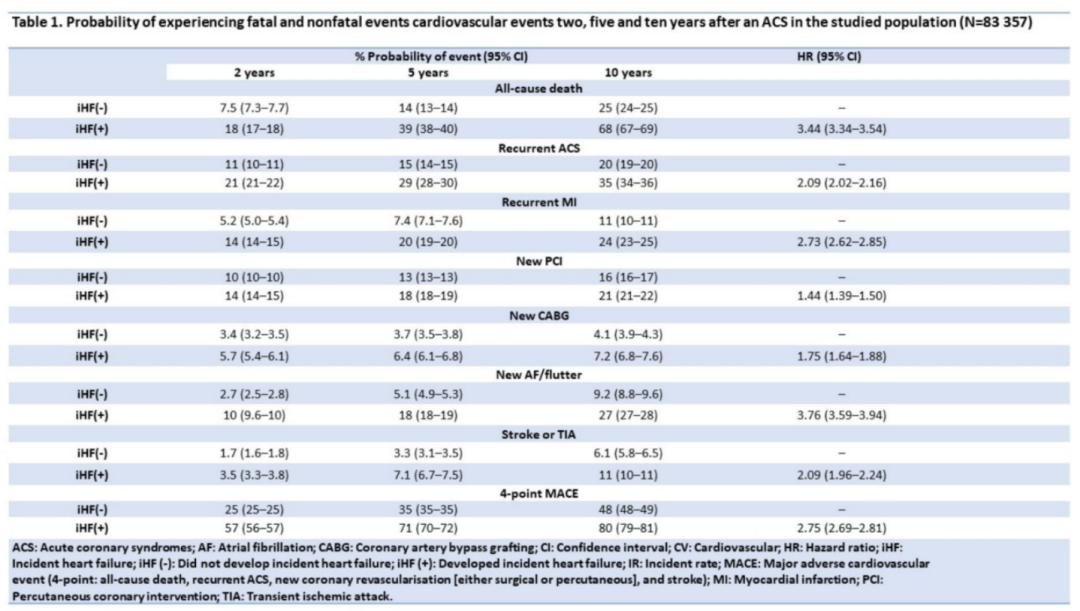 Fig. 1. Impact of iHF on Long‑term Prognosis Across Various Cardiovascular Events
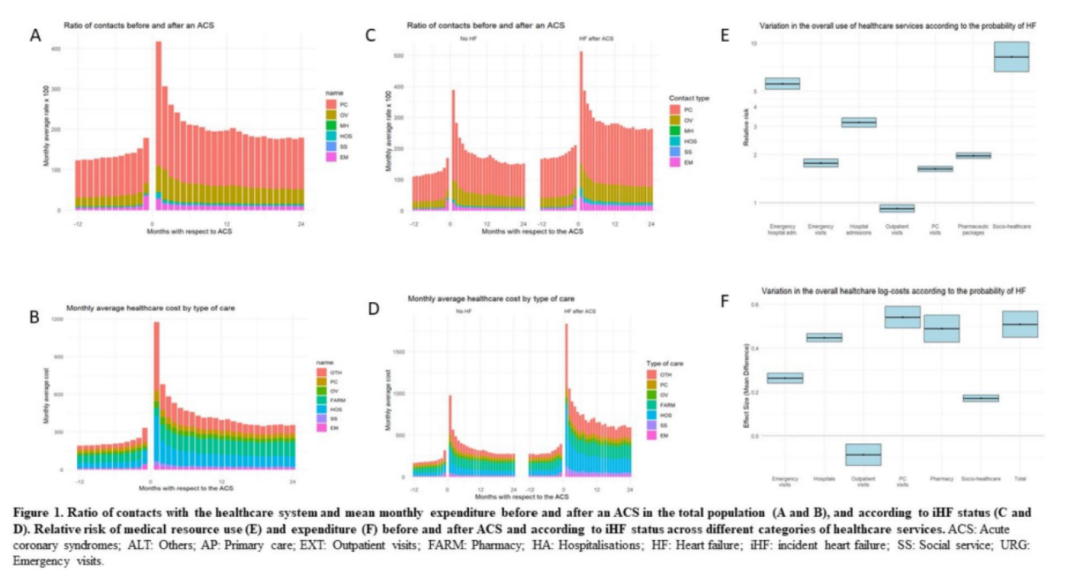 Fig. 2. Temporal Trends in Healthcare Service Utilization and Costs Before and After ACS, Stratified by Heart Failure Risk
A New Dimension in Heart Rate Management: Why “Cumulative Burden” Outperforms “Single Reading”
If the above study focused on the development of heart failure, another study presented at the same congress focused on the worsening of established heart failure. That study pooled data from 5,428 patients with chronic heart failure from five randomized controlled trials (BEST, GUIDE‑IT, HF‑ACTION, RELAX, TOPCAT) and introduced a novel metric called “cumulative resting heart rate burden.” Using a threshold of heart rate ≥70 bpm, it calculated the area under the curve exceeding that threshold divided by the total area under the curve during follow‑up, integrating both the magnitude and duration of heart rate elevation into a single composite dimension that quantifies the patient’s total exposure to abnormally elevated heart rate.
Multivariable Cox regression showed that for each unit increase in cumulative heart rate burden, the risk of MACE increased by 31% (HR=1.31, 95% CI: 1.24‑1.38), heart failure hospitalization by 34% (HR=1.34, 95% CI: 1.26‑1.43), and cardiovascular death by 17% (HR=1.17, 95% CI: 1.08‑1.27). These associations were consistent across both HFrEF and HFpEF subgroups.
In comparisons of predictive performance, the data showed that cumulative resting heart rate burden provided incremental predictive value superior to traditional heart rate metrics (Figure 3). When baseline heart rate, mean heart rate, standard deviation (SD) of heart rate, time in target range (TITRE), and cumulative resting heart rate burden were added separately to the baseline model, only cumulative burden consistently improved model discrimination (measured by C‑statistic) across all five endpoints: for MACE, the C‑statistic improved from 0.7443 to 0.7542; for HF hospitalization, from 0.7567 to 0.7669. Furthermore, its net reclassification improvement (NRI) and integrated discrimination improvement (IDI) reached statistical significance (for MACE, NRI=0.153, P<0.001; for HF hospitalization, NRI=0.165, P<0.001). In contrast, traditional heart rate metrics showed inconsistent improvement across endpoints, with some endpoints failing to reach statistical significance for NRI or IDI.
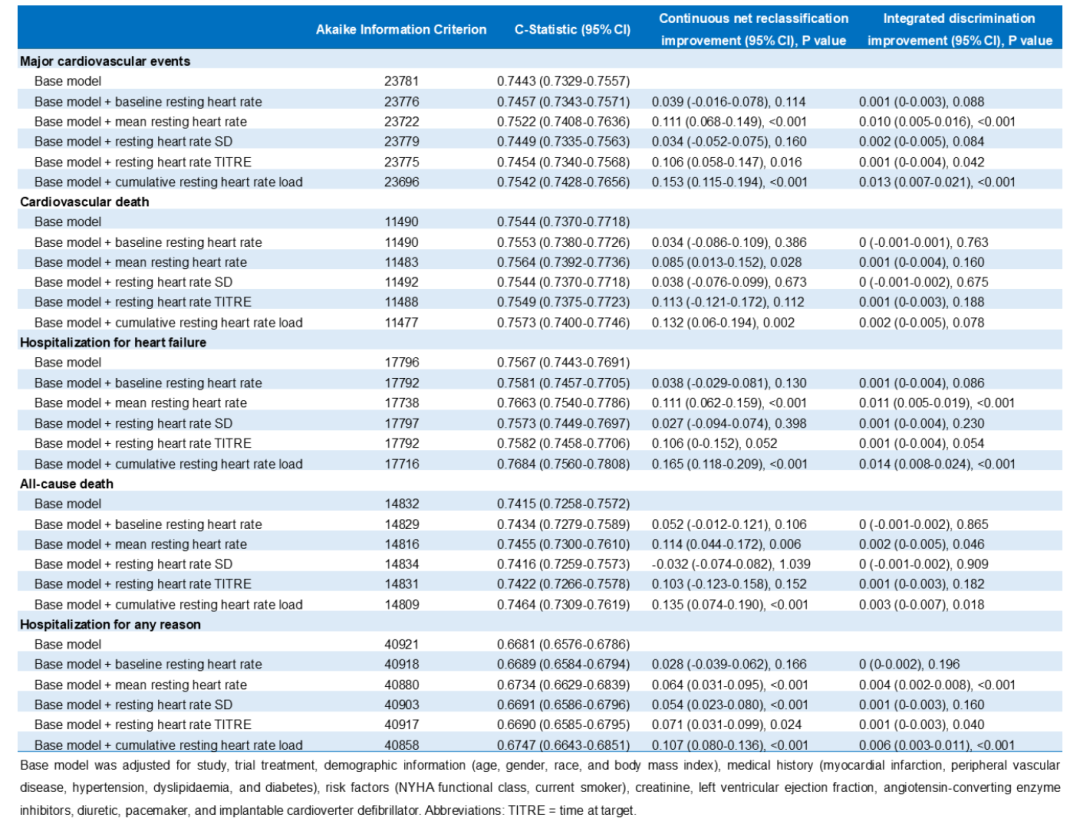 Fig. 3. Incremental Predictive Value of Cumulative Heart Rate Burden Versus Traditional Heart Rate Metrics for Adverse Outcomes
Conclusion
The findings from these two studies offer new perspectives for the comprehensive management of heart failure. For post‑ACS heart failure risk prevention, patients with Killip class II‑III, older age, and low income may constitute a relatively high‑risk group after discharge. Enhanced imaging and biomarker monitoring beyond routine follow‑up may facilitate early detection of heart failure. In the heart rate management of chronic heart failure, the predictive advantage of cumulative heart rate burden suggests that, in addition to single‑point heart rate measurements, dynamic monitoring of the temporal exposure pattern of heart rate may provide a more complete risk assessment. For patients whose mean heart rate is acceptable but who repeatedly exceed 70 bpm, clinicians should be aware that their cumulative burden may already be high.
Moreover, the optimal strategy for heart rate control merits reconsideration. Maintaining heart rate stably at a lower level over the long term to reduce cumulative burden may have greater clinical significance than simply achieving a single‑point target. This concept provides a new theoretical rationale for beta‑blocker dose titration and the frequency of heart rate monitoring.
Of course, when interpreting these findings, the limitations of each study should be noted. The post‑ACS heart failure study is observational in design and cannot fully exclude residual confounding; the diagnosis of iHF relied on electronic health records and prescription data, which may introduce classification bias; the study population was limited to the Catalonia region of Spain, and generalizability to other populations remains to be validated. The heart rate burden study is a retrospective secondary analysis; the calculation of cumulative burden depended on the visit intervals and measurement frequency of the original trials, and heterogeneity in monitoring density across trials may introduce bias. Furthermore, prospective interventional studies validating whether cumulative heart rate burden‑guided management improves outcomes are currently lacking. Therefore, these conclusions require further prospective validation.
References:
[1] Comin‑Colet J, Merono O, Vela E, et al. Ten‑year real‑world incidence and prognostic impact of new‑onset heart failure after acute coronary syndromes: a population‑based analysis of 83,357 patients. Eur J Heart Fail. 2026;28(Suppl 2). (ESC 2026 Abstract)
[2] Hao J, Wang J, Shi R, et al. Cumulative resting heart rate load and cardiovascular risk in patients with heart failure: a secondary analysis of five randomized clinical trials. Eur J Heart Fail. 2026;28(Suppl 2). (ESC 2026 Abstract)

