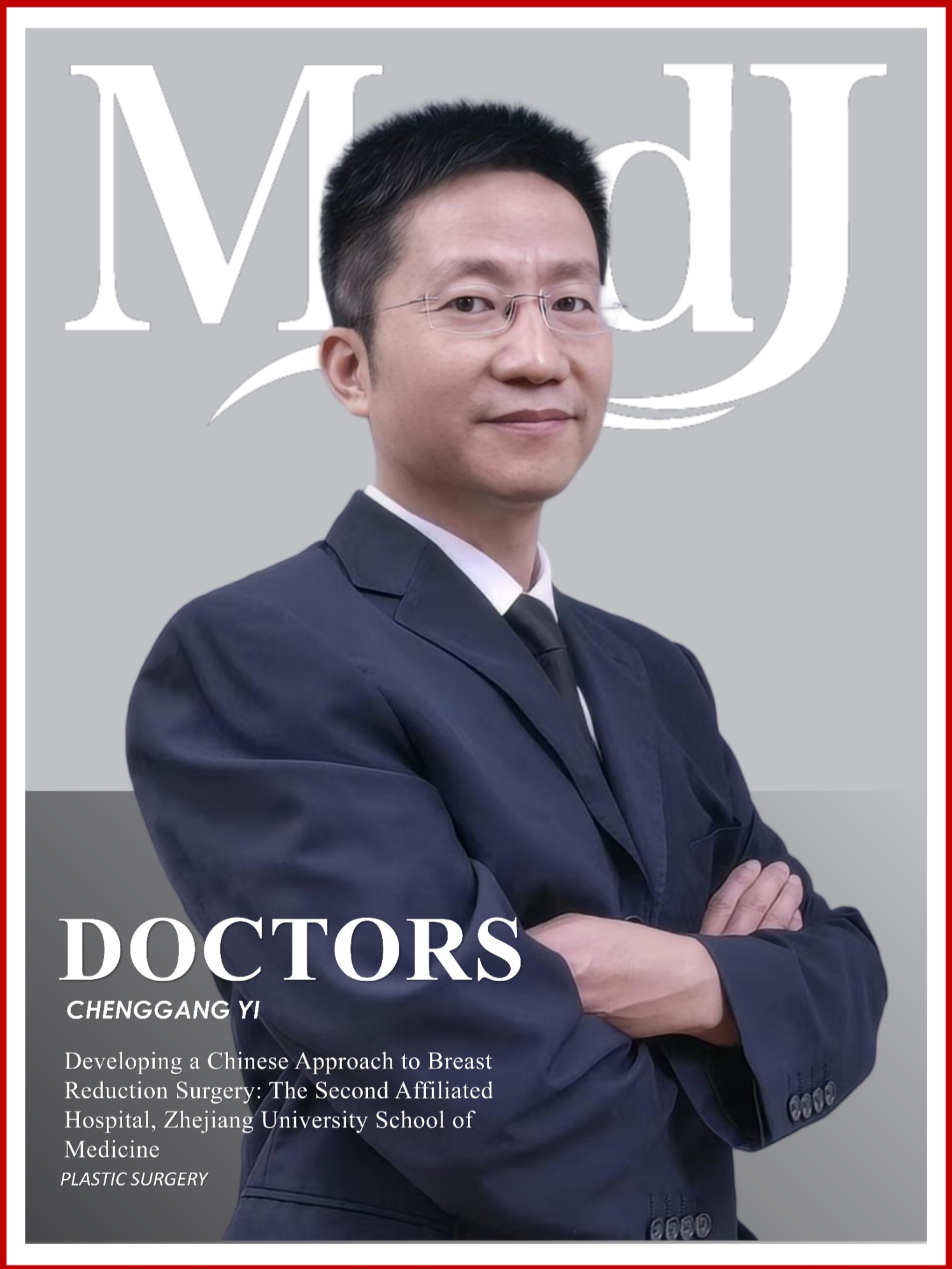
Prof. Chenggang Yi says that excessive breast size can itself be a disease, and increasing numbers of otherwise healthy people are entering plastic surgery clinics asking to have breast tissue reduced.
Breast reduction surgery removes excess glandular tissue, skin, and subcutaneous tissue, repositions the nipple-areola complex, and reshapes the breast to make it more symmetrical and visually balanced. For many years this operation was relatively neglected in China, and there was no mature path truly suited to Chinese patients.
A Waist Bent by the Weight of the Chest
Prof. Yi has treated teenage girls whose breasts grew so rapidly and so large that they stopped attending school and socializing. He has also seen women whose breasts enlarged after pregnancy and never shrank back, leaving them with shoulder grooves, chronic back pain, eczema beneath the breasts, inability to exercise, and severe psychological distress.
Clinically, breast hypertrophy can be diagnosed when one breast exceeds 350 milliliters in volume. In severe forms, especially giant breasts over 1,000 milliliters, the condition may seriously damage quality of life even though it does not directly increase breast cancer risk.
After returning from study at institutions including Harvard, Prof. Yi entered the field of breast plastic surgery and soon realized that simply copying Western methods did not work well for Chinese patients. Chinese women are often slimmer, and long-incision techniques can leave more prominent scars and greater risk of nipple-areola necrosis.
A Chinese Approach to Breast Reduction
Prof. Yi therefore spent more than a decade studying vascular supply in hypertrophic breasts. Using CT angiography, his team identified dominant vessels supplying the nipple-areola complex and showed that perfusion patterns are often complex and asymmetrical.
This work led to more individualized operative design, including use of 3D-printed vascular models before surgery. By July 2025, the team's studies had included 475 patients and nearly 1,000 breasts, and the department had performed over 1,500 reductions.
The improved planning allows larger resections while preserving blood supply. One patient had more than two kilograms of tissue removed in total, with minimal blood loss, and later returned to running with a sense of lightness she had never known before.
Prof. Yi also refined the closure technique for Chinese patients, who are more prone to visible scarring. He shortened the scar using a vertical lollipop incision and proposed a tension-reducing aesthetic closure that closes the wound layer by layer with absorbable sutures.
These steps make the operation longer and technically more demanding, but they reduce scar burden and improve overall satisfaction. According to Prof. Yi, no patient has ever regretted the operation; they regret only that they did not have it earlier.
Growing Demand and More Surgeons Joining the Field
Demand is rising for multiple reasons, including obesity, postpartum ptosis, and the loose skin that follows rapid weight loss. Men are also increasingly seeking surgery, often wanting not only a flatter chest but a more sculpted contour.
As Prof. Yi's reputation has grown, more difficult revision cases and very high-risk cases are being referred to him. At the same time, more doctors now come to his department for training, and discussion of reduction mammoplasty has become increasingly active at conferences.
He believes that as more surgeons participate, the discipline will keep developing and more patients will benefit. In that sense, what he calls a Chinese approach is not only a technical pathway but also part of the maturation of the field in China.