


The 2026 World Conference on Lung Cancer (WCLC), organized by the International Association for the Study of Lung Cancer (IASLC), was held September 12-15, 2026, in Seoul, Korea. At the meeting, Prof. Caicun Zhou of Tongji University Affiliated East Hospital presented the results of the phase 3 HARMONi-2 trial (NCT05499390) in an oral session. The trial evaluated the PD-1/VEGF bispecific antibody ivonescimab versus pembrolizumab monotherapy as first-line treatment in patients with PD-L1-positive advanced non-small cell lung cancer (NSCLC).
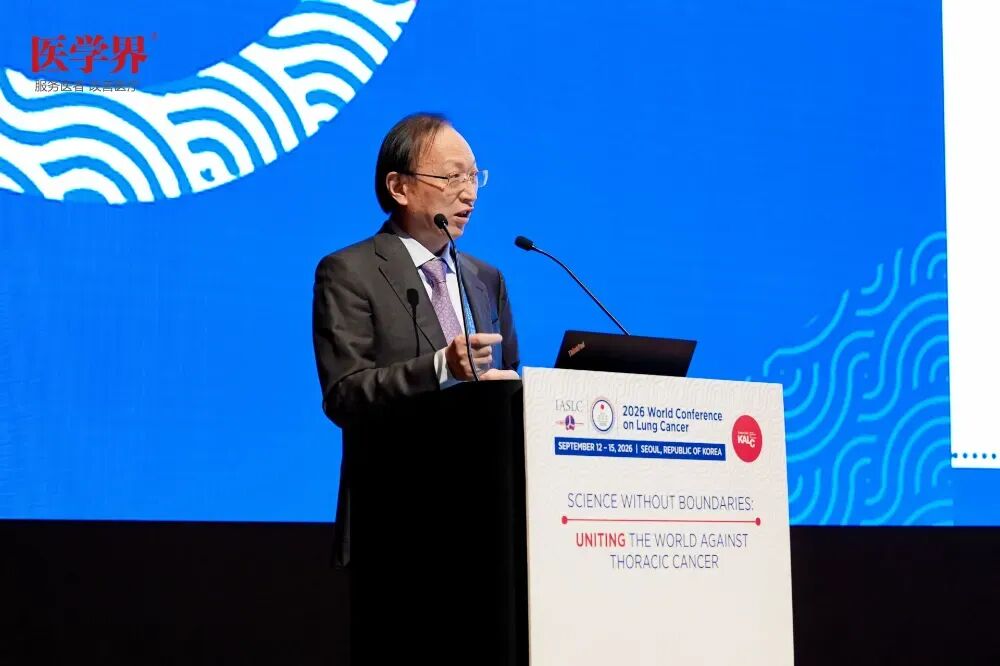 Fig.1. Prof.Caicun Zhou Delivering a Presentation
HARMONi-2 OS Data Release: Ivolucimab Reshapes the Treatment Landscape for NSCLC
Research Plan
HARMONi-2 is a multicenter, randomized, controlled phase 3 study. Treatment-naive patients with locally advanced or metastatic NSCLC, PD-L1 tumor proportion score (TPS) ≥1%, and no EGFR or ALK alterations were randomized 1:1 to receive ivonescimab 20 mg/kg or pembrolizumab 200 mg (fixed dose) every 3 weeks. The primary endpoint was progression-free survival (PFS) assessed by an Independent Radiology Review Committee (IRRC) per RECIST v1.1, with overall survival (OS) as a key secondary endpoint. The OS analysis plan included two pre-specified interim analyses and one final analysis. The current report describes the second interim analysis, with 232 pre-specified events and a corresponding one-sided α of 0.0139.
Between November 2022 and August 2023, a total of 398 Chinese patients were randomized to the ivonescimab arm (n=198) or the pembrolizumab arm (n=200). As of the data cutoff on August 20, 2026, 234 OS events had occurred, allowing a one-sided α of 0.0141 to be spent per the pre-specified O’Brien-Fleming α-spending function.
Efficacy Results
HARMONi-2 had previously met its primary endpoint: median PFS was 11.1 months in the ivonescimab arm versus 5.8 months in the pembrolizumab arm (HR 0.51, 95% CI 0.38-0.69, P<0.0001), a statistically significant difference.
At this meeting, the higher-value OS endpoint was reported. Median OS reached 30.8 months in the ivonescimab arm versus 22.6 months in the pembrolizumab arm (HR 0.73, 95% CI 0.57-0.95, P=0.009), representing a statistically significant and clinically meaningful survival benefit (Fig. 2).
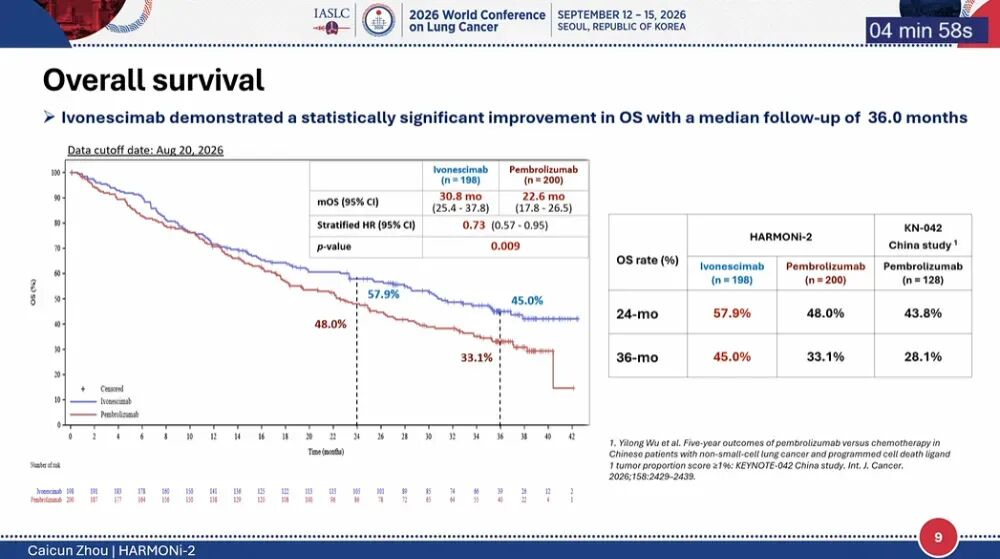 Fig.2. Overall Survival Data from the HARMONi-2 Study
Pre-specified subgroup analyses showed that the OS benefit was generally consistent across subgroups (Fig. 3):
- Squamous histology: HR 0.65 (95% CI 0.45-0.95).
- Non-squamous histology: HR 0.79 (95% CI 0.55-1.14).
- PD-L1 TPS 1%-49%: HR 0.85 (95% CI 0.61-1.18).
- PD-L1 TPS ≥50%: HR 0.58 (95% CI 0.38-0.89).
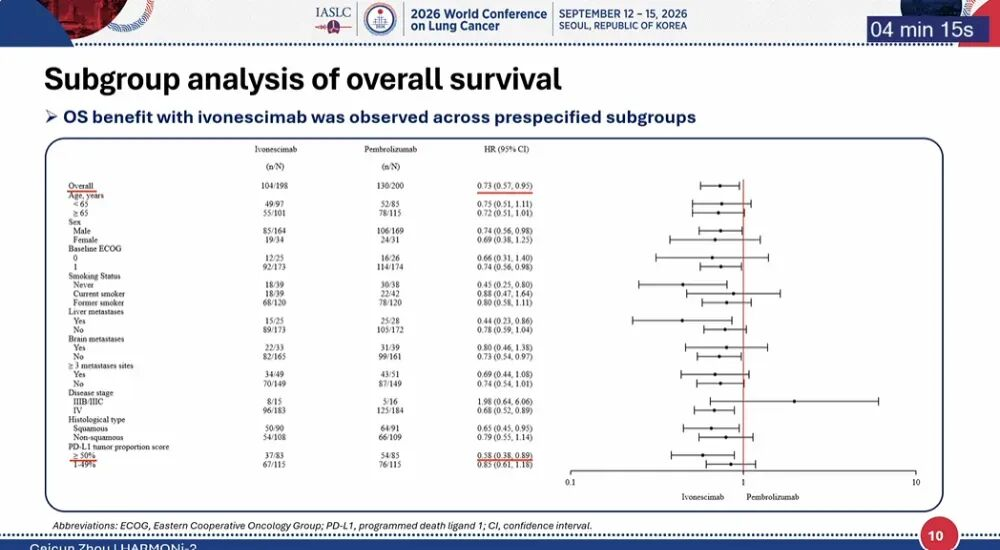 Fig.3. OS Benefit Data Across Subgroups
The pembrolizumab arm had a higher rate of subsequent anti-tumor therapy than the ivonescimab arm (Fig. 4).
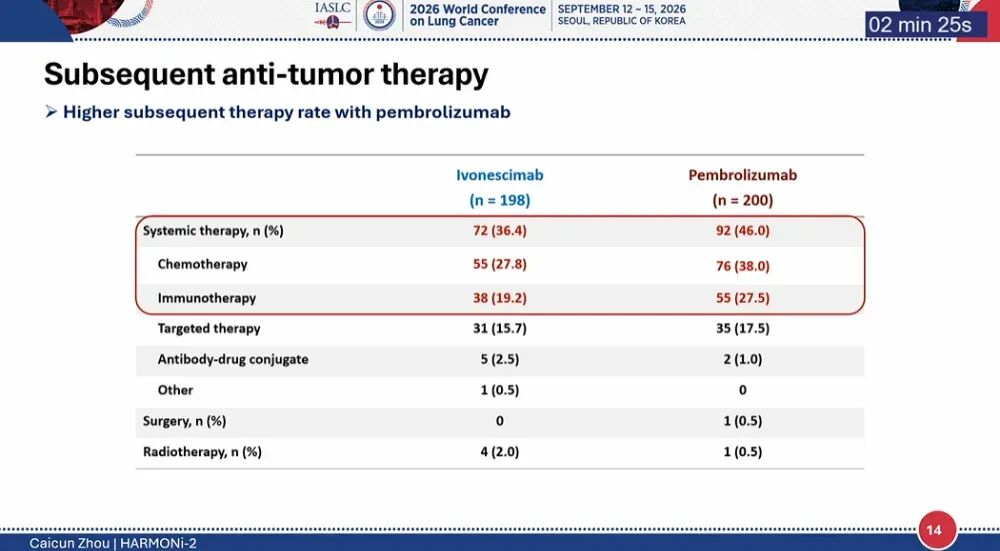 Fig.4. Subsequent Antitumor Treatment Rates in the Two Groups
Safety
The overall safety profiles of ivonescimab and pembrolizumab were broadly comparable: any-grade treatment-related adverse events (TRAEs) occurred in 93.4% versus 84.9% of patients, respectively; serious TRAEs in 29.9% versus 21.6%; and TRAEs leading to permanent treatment discontinuation in 4.1% versus 5.0% (Fig. 5). No new safety signals were observed with ivonescimab.
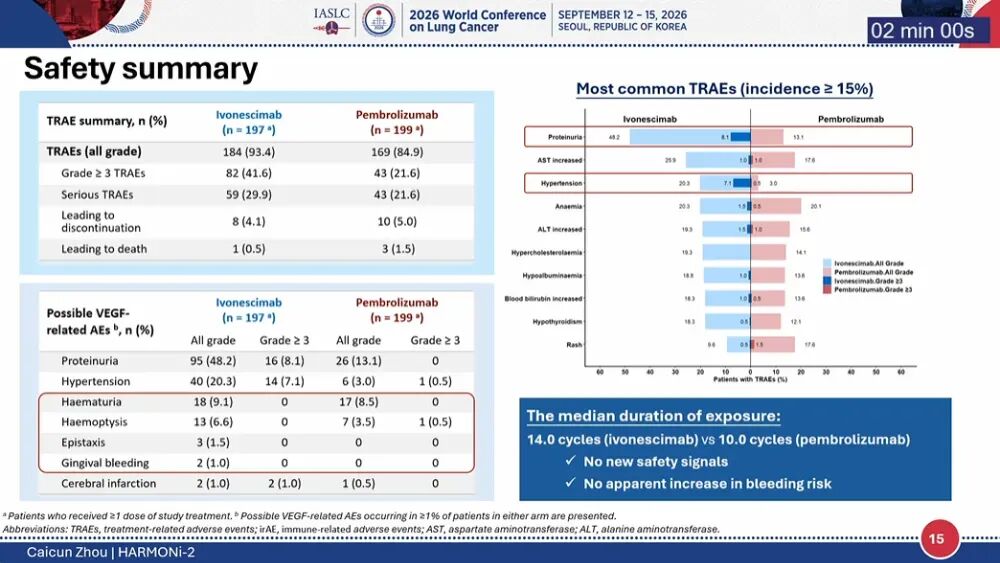 Fig. 5.Safety Data
Summary
In his presentation, Prof. Zhou noted that in this pre-specified interim analysis of HARMONi-2, ivonescimab significantly extended OS versus pembrolizumab in patients with PD-L1-positive advanced NSCLC, and the safety profile was consistent with the known safety profile of pembrolizumab. These findings support ivonescimab as a chemotherapy-free first-line treatment option and may help redefine the treatment standard for PD-L1-positive advanced NSCLC.
The findings are derived from a conference abstract presented at WCLC 2026 and have not yet been peer-reviewed.
This article is intended to provide scientific information to healthcare professionals and does not represent the editorial position of MedJ.
Reference
[1] Zhou C, et al. Overall Survival Analysis From HARMONi-2: Ivonescimab vs Pembrolizumab as First-Line Treatment for PD-L1-Positive NSCLC. 2026 WCLC.

