


Three consecutive livestream sessions of Great Wall Dialogues on October 16 brought Chinese and international cardiovascular experts together to discuss minimally invasive cardiac surgery, the translation of clinical needs into medical technologies, and artificial intelligence (AI) in imaging-based decision-making.
Jointly developed by the Great Wall Congress and MedJ, the series brings cardiovascular experts from different countries together for conversations over tea. The discussions reflect the theme of the 37th Great Wall Congress: “Grounded in Clinical Practice, Advancing Interdisciplinary Collaboration.”
Article Key Points
- Minimally invasive surgery and shared decision-making were central to the cardiac surgery discussion
- Clinically driven innovation requires rigorous trials, representative enrollment and collaboration
- AI discussions emphasized prospective, multicenter validation and monitoring of patient outcomes
- Six October 17 sessions address collaboration, intervention, prevention, integrated care, aging and arrhythmias

New Frontiers in Cardiac Surgery: Adapting to the Interventional Era
Speaker: Prof. Öztekin Oto, Dokuz Eylül University, Türkiye
Host: Xuanxuan Li
Oto recalled that he initially wanted to become a surgeon and chose cardiac surgery after becoming fascinated by its technical possibilities during medical school.
Among the most memorable experiences of his career was what he described as Türkiye’s first heart-lung transplant. The patient was a 6-year-old girl who could not walk before surgery and returned to normal daily life afterward.
As interventional techniques advance rapidly, Oto argued that cardiac surgery must respond by embracing minimally invasive approaches.
“Minimally invasive cardiac surgery is one of the most important and continually evolving directions in cardiac surgery,” he said.
He also described exploring minimally invasive cardiac procedures in awake patients, who could even speak during surgery.
For Oto, the heart team should bring together cardiologists, cardiac surgeons, nurses and other professionals. Patients should also participate in decisions, “because the patient is at the center.”
His advice to younger physicians was direct: “Learn minimally invasive techniques, endoscopic surgery and robotic techniques from the outset, and embrace AI.”

Aligning Innovation: From Clinical Needs to Practical Applications
Speakers: Prof. Ben He, Shanghai East Hospital; Prof. Roxana Mehran, Icahn School of Medicine at Mount Sinai, United States
Host: Yi Xu
This conversation centered on one question: How does an innovation move from addressing an unmet clinical need to changing practice?
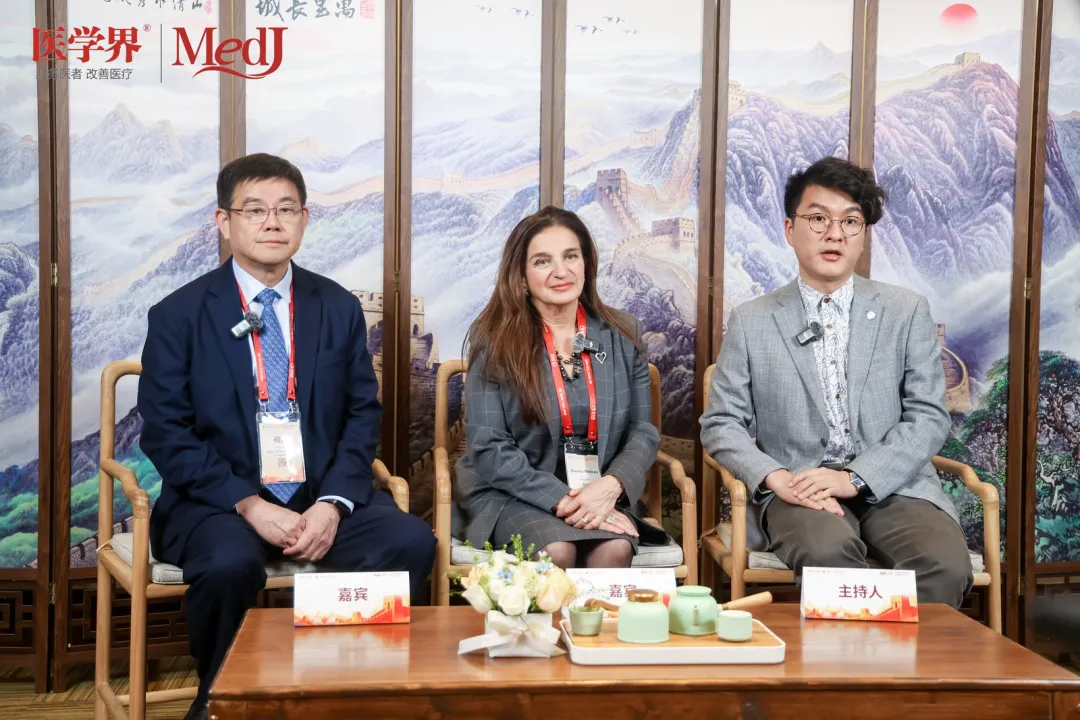
He began with his own clinical experience. More than a decade ago, left atrial appendage closure was not widely accepted. Yet he was treating many patients with atrial fibrillation who could not take long-term oral anticoagulants and needed another approach to stroke prevention.
He described a journey spanning more than a decade, from initial skepticism to annual procedure volumes now reaching tens of thousands. In his view, innovation begins with problems that clinicians cannot avoid. Translating Chinese innovations into practice requires collaboration between medicine and engineering, with continued refinement of device design to improve procedural safety and effectiveness.
Mehran approached the question from another perspective: innovation often begins by challenging established practice.
Recalling the origins of TWILIGHT, which compared ticagrelor monotherapy with dual antiplatelet therapy after percutaneous coronary intervention (PCI), she asked: “I did not understand: if we were using ticagrelor, why did we still need aspirin?”
Many initially considered the idea too bold. As Mehran described the findings, ticagrelor monotherapy maintained efficacy while reducing bleeding risk by nearly half compared with dual antiplatelet therapy. She emphasized that challenging established practice requires courage, rigorous randomized controlled trials and adequate sample sizes.
Innovation must also address whose needs the evidence represents. Mehran stressed the importance of including diverse populations in clinical trials.
“If only 20% of participants in a trial are women, how can you say the results apply to everyone?” she asked.
She also noted that patients care about more than low-density lipoprotein (LDL) cholesterol levels; quality of life matters too. In her view, an effective innovation ecosystem requires participation from academia, industry, regulators and patients, underpinned by trust and scientific integrity.
Closing with a call for international collaboration, Mehran invoked the Great Wall as a metaphor: “Let us build a ‘Great Wall’ against cardiovascular disease.”
He likewise expressed hope that platforms such as the Great Wall Congress would foster international cooperation and help bring Chinese innovations to a wider global audience.
Transforming Imaging: AI and Precision Decision-Making
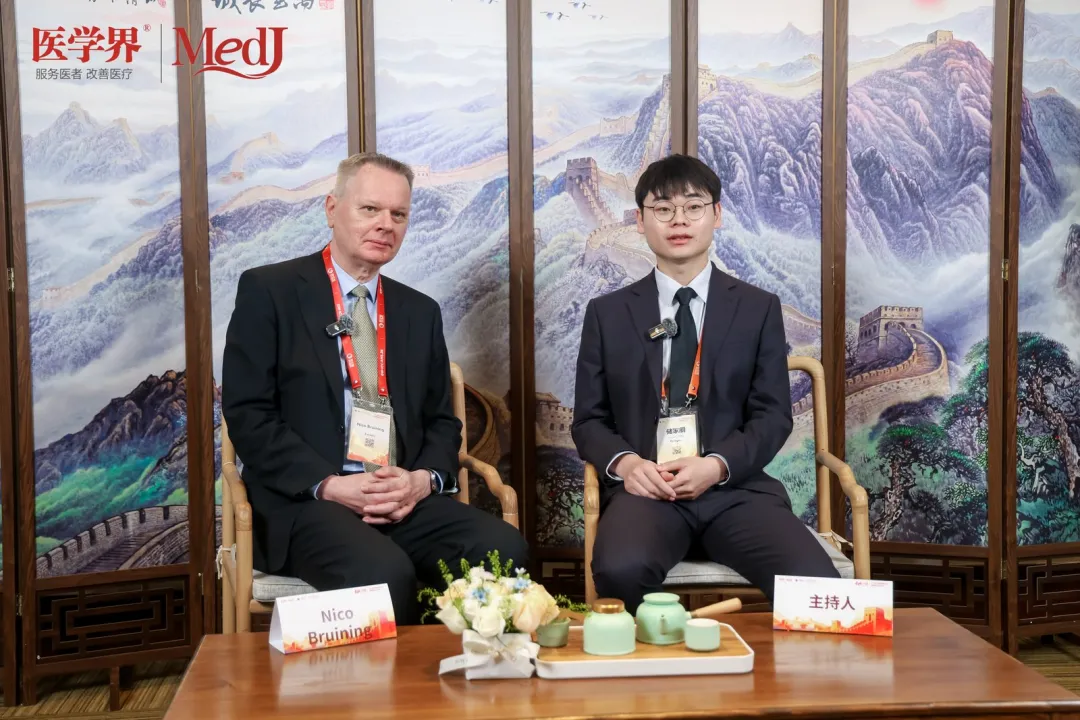
Speaker: Prof. Nico Bruining, Erasmus University Medical Center, the Netherlands
Host: Jiapeng Chu
“AI is not about replacing physicians, but about enabling them to become managers of data,” Bruining said at the outset.
He described how quantitative analyses that once took hours can now be completed automatically within minutes, giving physicians more time for patients.
“AI will not replace physicians, but physicians who do not use AI will be replaced,” he said.
Turning to implementation, Bruining emphasized the need for prospective and multicenter validation.
“AI tools developed in China should be tested in Europe, and European AI tools should also be tested in China,” he said.
When discussing the inclusion of AI in clinical guidelines, he stressed the importance of monitoring after implementation: “We need to see whether it actually improves patient outcomes.”
Looking ahead, Bruining outlined a model of more accessible care in which nurses could perform basic echocardiographic examinations in community settings with AI assistance, while more complex cases would be assessed through the integration of multiple imaging modalities.
Underlying that vision was a consistent goal: “The best healthcare means receiving the same quality of care, wherever you are.”
Today’s Livestreams: Six More Great Wall Dialogues
The three October 16 conversations connected minimally invasive cardiac surgery, clinically driven collaboration between medicine and engineering, and AI-assisted imaging. Together, they emphasized a shared priority: grounding interdisciplinary innovation in clinical needs to benefit patients.
Today, October 17, Great Wall Dialogues continues with six conversations:
- Collaboration and a Shared Roadmap: “Rooted in Asia, Connected to the World.”
- Transforming Intervention: Moving from wider adoption of interventional techniques toward greater precision.
- New Paths in Prevention: Examining infection as an underrecognized cardiovascular risk factor.
- Integrating Cardiovascular, Kidney and Metabolic Care: Moving from separate specialty treatment toward integrated management.
- Responding to Aging: Exploring the connections between mechanisms of aging and proactive approaches to health.
- Advances in Arrhythmia Care: Examining the transition from radiofrequency ablation to pulsed field ablation.
Follow the MedJ cardiovascular channel to watch the Great Wall Dialogues series.

