


Article Key Points
- Three Great Wall Dialogue sessions at the 37th GW-ICC 2026 (Oct 17): collaboration, translation, and HF
- AHS and GW-ICC will promote Asia-specific RCTs and youth training; China now shares experience globally
- Cardiac regeneration: PHGDH in amniotic fluid showed potential; broader micro-environment beyond cardiomyocytes is key
- Wu’s CTiD concept uses patient-specific iPSC-derived cardiomyocytes to predict drug response
- HF management: GDMT use rising in China; post-discharge adherence, titration, and multidisciplinary care remain gaps
- ICD risk stratification moving beyond LVEF to integrate biomarkers, imaging, and AI
- Tomaselli called for earlier intervention and closer collaboration with primary care
During the 37th Great Wall Cardiology Congress, the MedJ “Great Wall Dialogue” series featured several high-level academic conversations. On the morning of Oct 17, three dialogues addressed three dimensions: an Asia-focused collaboration blueprint, translational medicine exploring microscopic mechanisms, and life-course heart failure management. Top Chinese and international experts engaged in cross-border, in-depth discussions in an “Ask the Way Over Tea”format. The 37th Great Wall Congress carried the theme “Clinical Foundation, Cross-Disciplinary Integration,” and these three conversations offer a vivid embodiment of that theme.
Collaboration Blueprint: Rooted in Asia, Connected to the World
Prof. Mao Chen (Chair, 37th Great Wall Congress; West China Hospital, Sichuan University) and Prof. Ali Oto (President, Asian Heart Society [AHS]; Hacettepe University, Turkey). Moderator: Yi Zhou.
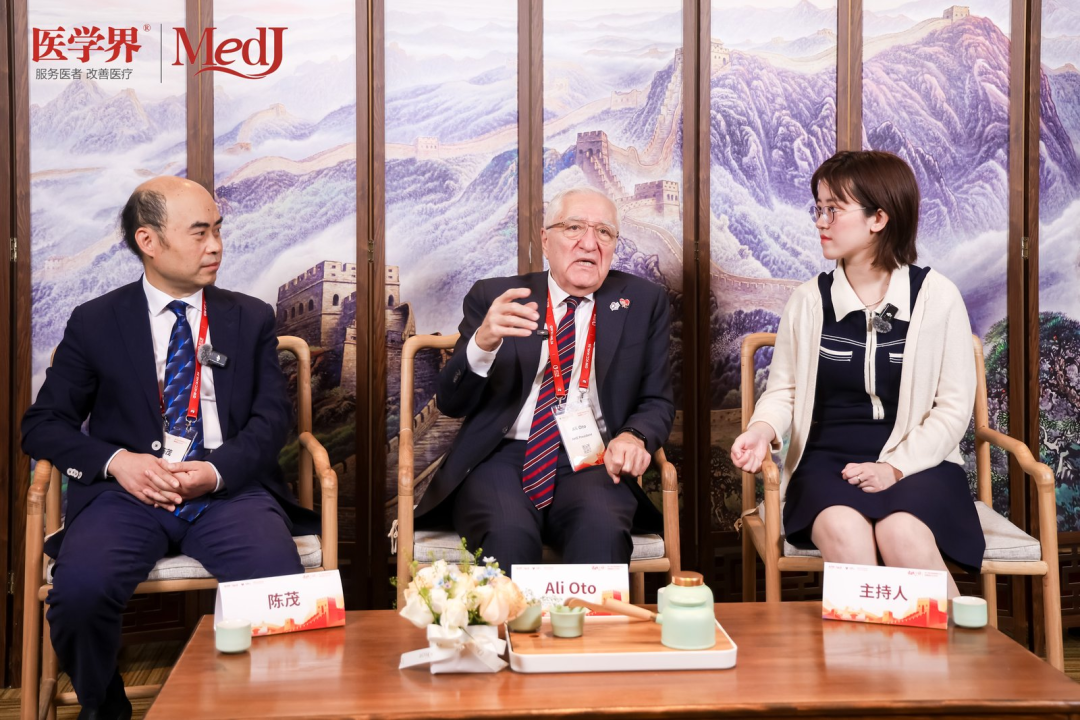
This chair dialogue first focused on the stark realities of cardiovascular care in Asia. Prof. Oto noted that Asia bears approximately 50% of the global cardiovascular disease burden and faces challenges from risk factors such as smoking and air pollution. He also pointed to substantial differences in healthcare resource allocation across Asian countries, emphasizing that “regional forces must be united to narrow these healthcare gaps.” In response, AHS is working to raise awareness among both the public and the medical community and is actively promoting randomized controlled trials in Asian populations to develop clinical standards tailored to Asian needs.
On China’s evolving role, Prof. Mao Chen noted that the Great Wall Congress has grown from a meeting of about 100 attendees in 1989 to a globally influential congress now drawing more than 20,000 participants. In the past, China’s cardiovascular community mainly learned from international peers; today, “with the development of China’s technologies, devices, and pharmaceuticals, we can, to a certain extent, share experience with our global counterparts,” he said. He noted that the Great Wall Congress has built an important international exchange platform that advances China’s cardiovascular work and contributes to the broader progress of the Asian region.
On young-talent development and primary-care training, both chairs said they would set up youth committees and mentoring programs to build platforms that help young Asian physicians reach the world. In closing, Prof. Oto stressed that the Great Wall Congress and AHS are not independent entities but a tightly coordinated academic community. Prof. Mao Chen invoked the Chinese saying “brothers working together can break through metal,” expressing the hope that both sides will continue to deepen this strategic partnership.
Translational Foundation: From the Laboratory to the Clinic
Prof. Chunyu Zeng (Army Medical Center [Daping Hospital]) and Prof. Joseph C. Wu (Stanford University, USA). Moderator: Zhuoyuan Xu.
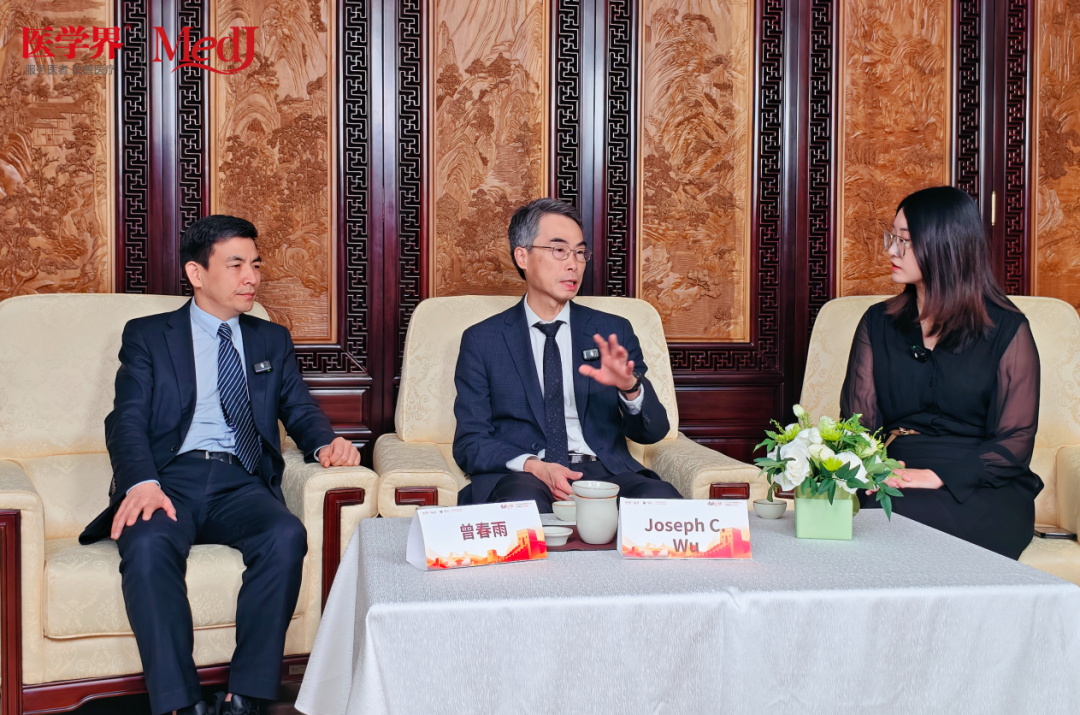
Translational medicine is the critical bridge between laboratory discovery and bedside practice. Prof. Zeng began from a difficulty in his own interventional practice: although procedures can save the acute-phase lives of myocardial infarction patients, long-term follow-up shows that some eventually progress to heart failure. This motivated him to shift his research focus toward cardiac regeneration.
In the course of his work, Prof. Zeng’s team identified a potential effect of the PHGDH protein in amniotic fluid on cardiac regeneration, but he acknowledged that cardiac regeneration research is still largely at a “blind men feeling the elephant” exploratory stage. He emphasized that prior research has often over-focused on cardiomyocytes themselves while overlooking the broader pathophysiologic environment: “Cardiac regeneration research cannot be limited to cardiomyocytes; we must broaden our perspective and look at the whole microenvironment.”
Prof. Joseph C. Wu shared his work in human induced pluripotent stem cells (iPSCs). He explained the choice of human-derived cells over conventional animal models: “Because the cell donor source is well defined, we can perform long-term tracking and develop a deep understanding of clinical phenotypes.” He proposed the “Clinical Trial in a Dish” (CTiD) concept, which uses patient-specific cardiomyocytes to predict drug response, serving as a complementary predictive tool alongside traditional drug development.
Looking ahead to the next decade, Prof. Wu not only anticipated the application of AI and gene-editing technologies but also offered concrete recommendations grounded in clinical reality. He argued that the most basic and efficient strategy for improving cardiovascular health is strengthening patient education. “Improving sleep, controlling diet, exercising regularly, and losing weight, and improving medication adherence in patients with chronic conditions such as hypertension and diabetes, these basic interventions serve as the cornerstone of cardiovascular health in the broader population, and the overall benefit is difficult to replace with any single drug therapy,” he said.
Heart Failure Breakthrough: From Evidence-Based Management to Precision Treatment
Prof. Jian Zhang (Fuwai Hospital, Chinese Academy of Medical Sciences) and Prof. Gordon Tomaselli (Johns Hopkins University School of Medicine, USA). Moderator: Anran Xin.
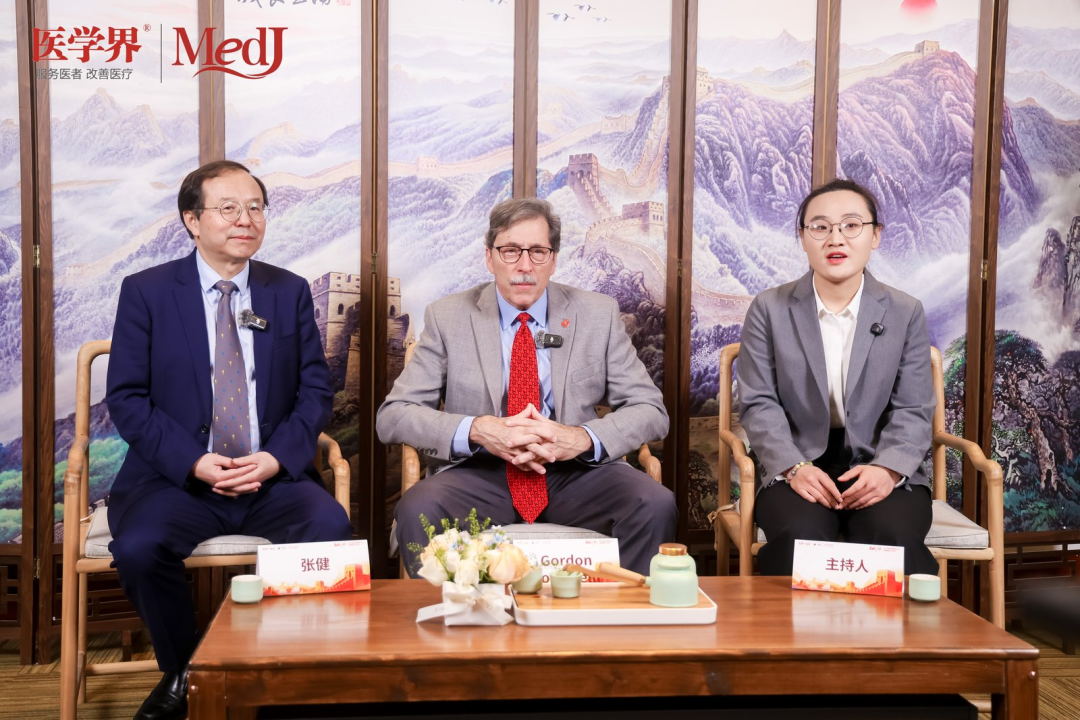
Heart failure management is undergoing a profound shift from evidence-based guidelines to precision treatment. Drawing on data from the China Heart Failure Registry, Prof. Jian Zhang noted that China has made substantial progress in standardized heart failure treatment in recent years, with increased use of guideline-directed medical therapy (GDMT). At the same time, he highlighted post-discharge challenges: “Heart failure is a chronic disease that cannot be managed only during hospitalization; we must adopt a life-course perspective and implement lifelong follow-up.” He noted that adherence, drug titration, and multidisciplinary care for out-of-hospital patients still have substantial gaps.
Prof. Gordon Tomaselli shared views on device therapy and sudden cardiac death prevention. He noted that left ventricular ejection fraction (LVEF) has long been used as the primary indicator for implantable cardioverter-defibrillator (ICD) placement, but this is no longer sufficient for current clinical needs. Future efforts should integrate biomarkers, imaging, and AI to precisely identify patients at high risk of sudden cardiac death and to enable individualized device therapy.
On the comprehensive prevention and treatment of heart failure, Prof. Tomaselli stressed that the line of intervention must shift earlier. Heart failure is a continuous process that requires early intervention, and this work cannot rely on cardiovascular specialists alone: “We need to work closely with primary care physicians to ensure that clinical guidelines are optimized and implemented at the primary care level.”
Closing Note
The three conversations span macro-level regional breakthroughs in Asia, micro-level laboratory inquiries, and bedside precision management. With a clinical foundation and cross-disciplinary integration, Chinese and international experts used the MedJ “Great Wall Dialogue” platform to converge insights and translate frontier ideas into benefit for every patient.

