


Recently, MedJ learned from Shanghai Changhai Hospital that a team led by Prof. Dongbao Zhao, honorary director of the Department of Rheumatology and Immunology, and Prof. Jie Gao, the department’s director, has successfully treated dozens of patients with refractory systemic lupus erythematosus (SLE) using CAR-NK cell therapy.
The results were published in The Lancet on November 13, marking the first systematic clinical application of this technology in SLE.
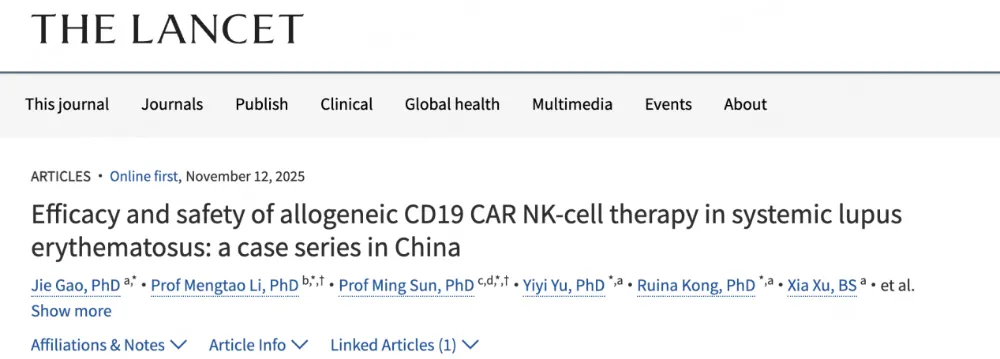
MedJ has learned that all patients have improved significantly and most have discontinued multiple immunosuppressants they had long used. An accompanying Lancet commentary said the study “marks an important step forward in the clinical translation of CAR cell therapy for autoimmune diseases.”
As a severe autoimmune disease, SLE affects millions worldwide. An abnormal immune system can damage the brain, heart and lungs, kidneys, skin, and blood system. Even outside acute flares, patients are long tormented by fatigue and drug adverse effects.
“The advent of cell therapy has brought the possibility of a cure to SLE, once considered an incurable disease,” Prof. Gao told MedJ. Notably, the therapy has already received implied clearance for clinical investigation (IND), and Phase I multicenter trials will be launched at Shanghai Changhai Hospital, Peking Union Medical College Hospital, and other centers to recruit more patients.
Improvement far exceeded expectations
Data show that the prevalence of SLE in the general population is about 0.03% to 0.07%, with a male-to-female ratio of 1:9. At present no drug can cure SLE. Clinical management mainly relies on regular use of corticosteroids, immunosuppressants, or biologics to control symptoms and induce and maintain remission as much as possible.
Prof. Gao told MedJ: “Once patients are in an active disease state, with proteinuria and lupus nephritis, encephalitis, and other complications, they need high-dose steroid pulse therapy. The starting dose is essentially 10 tablets a day, and children may need double that, followed by tapering as appropriate, often combined with biologics.”
Even so, more than half of patients remain trapped in alternating relapse and remission or persistent disease activity. Ms. Zhao, 24, was one of them.
Since 2018, Ms. Zhao had been a frequent patient at Changhai Hospital. She had tried every available treatment, yet the disease remained uncontrolled. What began with hair loss and joint pain progressed to pneumonia and lupus nephritis, and at one point she even developed severe heart failure and survived only after two plasma exchanges.
The disease itself was not the only problem. Long-term steroid use can also cause centripetal obesity, osteoporosis, cataracts, diabetes, and gastrointestinal ulcers. “For years the disease took away Ms. Zhao’s ability to study, work, and live normally, so when she learned there was a new therapy worth trying, she barely hesitated,” Prof. Gao said.
In August 2023, after a series of evaluations, Ms. Zhao received CAR-NK cell therapy at Changhai Hospital, becoming the first patient in this study and one of the first SLE patients in the world to receive this type of therapy.
At its core, SLE arises because effector B cells in the immune system become abnormal and produce autoantibodies against self-antigens. CAR-NK therapy harnesses the immune-killing capacity of natural killer cells. After being engineered ex vivo and reinfused, they can recognize and attack the abnormal B cells that drive SLE and rebuild a normal immune system.
Although the theory was clear, there was no global precedent for the actual efficacy and safety of the treatment.
“At first we were very worried,” Prof. Gao admitted. “We were extremely cautious and used the lowest dose in Ms. Zhao, giving it three times at one-week intervals.” After that, she said, “the degree of improvement far exceeded our expectations.”
Three months after CAR-NK cells were infused, Ms. Zhao’s hair loss and joint pain had completely resolved, her proteinuria turned negative, and her lupus nephritis continued to improve. Evaluation showed that the pathogenic B cells previously present in her body had almost disappeared and immune reconstitution had been achieved.
By six months, her steroid dose had been gradually reduced to 5 mg per day, and all other drugs had been stopped. Prof. Gao told MedJ: “The reason we did not stop steroids completely was caution. Judging from her clinical indicators, her health is now almost no different from that of a healthy person.”
In terms of safety, over more than two years of follow-up since treatment, Ms. Zhao has had no drug-related adverse events. “Her treatment outcome has given us tremendous confidence to carry out further studies,” Prof. Gao said.
27 patients treated to date
In fact, from steroids to immunosuppressants to biologics, SLE treatment has changed dramatically over the past several decades, and patients’ quality of life has improved markedly. What has long been missing, however, is the final step that would free them from the disease altogether.
The emergence of cell therapies represented by CAR-T and CAR-NK has for the first time made cure a possibility for SLE and other autoimmune diseases.
In August 2021, researchers at Friedrich-Alexander University Erlangen-Nurnberg in Germany published results in The New England Journal of Medicine, reporting the world’s first successful treatment of a 20-year-old woman with severe SLE using CAR-T therapy.
According to follow-up results released last year, all eight patients achieved immune reconstitution over 29 months of observation, and their SLE Disease Activity Index scores remained at 0.
The Rheumatology and Immunology team at Changhai Hospital was the first to focus on CAR-NK cells.
Prof. Gao told MedJ: “In principle, the mechanisms of the two therapies are similar. Previous studies show that T cells have stronger killing ability and have been widely used in hematologic malignancies. But accordingly, the safety risks of CAR-T therapy, including cytokine storm and infection, are also somewhat greater.”
“By contrast, NK cells are gentler, but safety is more controllable and treatment costs are relatively lower. For most autoimmune diseases that are not acutely fatal, we believe CAR-NK may be the more promising therapy and the one more likely to ultimately reach clinical practice,” Prof. Gao said.
After completing Ms. Zhao’s treatment, the Changhai Hospital team has, from late 2023 to the present, treated a total of 27 patients with refractory SLE using CAR-NK therapy. The longest disease course among them was 19 years. Before treatment, all had moderate to high lupus activity and at least one organ was damaged.
Results for the first 18 patients, published in The Lancet, showed:
With immunosuppressants discontinued, all patients had their disease controlled at six months after treatment, 13 remained in a low lupus disease-activity state, and 10 achieved complete clinical remission. Among the nine patients followed for more than one year, six achieved complete remission or low disease activity, and none relapsed.
Technically, one major challenge of CAR-NK is targeting. After expanding NK cells ex vivo, the CAR must be further engineered with specific antibody targets so that it can selectively recognize pathogenic B cells, achieve effective killing, and avoid safety risks such as off-target effects.
In addressing this issue, the study found that while 89% of patients achieved deep depletion of pathogenic B cells, reconstruction of a healthy immune system, and durable immune tolerance, no serious treatment-related side effects such as infection or neurotoxicity were observed in any patient. Only one patient had a brief low-grade fever, which improved quickly after timely intervention.
Notably, among the 27 patients, one also had systemic sclerosis. After CAR-NK therapy, Prof. Gao and her team found that both diseases improved simultaneously.
Based on this finding, Prof. Gao told MedJ that the team has also launched a study of CAR-NK for systemic sclerosis. Five patients have already been treated, all with positive results.
“Systemic sclerosis is also a major challenge in rheumatology and immunology. Patients’ skin and internal organs gradually become stiff and atrophic until the disease becomes life-threatening. We hope that as the research advances, this disease can also be addressed,” Prof. Gao said.
A new weapon against lupus
After publication of the study, Prof. Alberta Hoi, director of the Australian Lupus Research Centre, wrote in an accompanying Lancet commentary that the early remission rate reported in this study reached a level comparable to that of CAR-T therapy.
However, off-the-shelf CAR-NK therapy can deliver treatment more quickly and with lower safety risk, marking a key leap in the clinical translation of ready-made cell therapy for autoimmune diseases.
At present, because of the high technical threshold and the need for real-time manufacturing, autologous CAR-T therapies already on the market in China cost around one million yuan. “The CAR-NK therapy we are using can be mass-produced in advance and may reduce the cost to one-tenth,” Prof. Gao said.
But Prof. Hoi also pointed out a shortcoming of the study: lacking detailed dose-response analysis, the relationship between CAR-NK dose, infusion frequency, and clinical outcomes remains unclear. Larger studies are needed to verify efficacy and address unresolved clinical questions.
And that is exactly the Changhai Hospital team’s next plan.
It is understood that in September this year, the therapy’s IND received implied clearance from the National Medical Products Administration, and a large multicenter Phase I study will soon be launched nationwide to recruit more patients with refractory SLE. At the same time, Changhai Hospital formally established a Cell Therapy Center, bringing together multidisciplinary teams to move cell therapy into clinical practice.
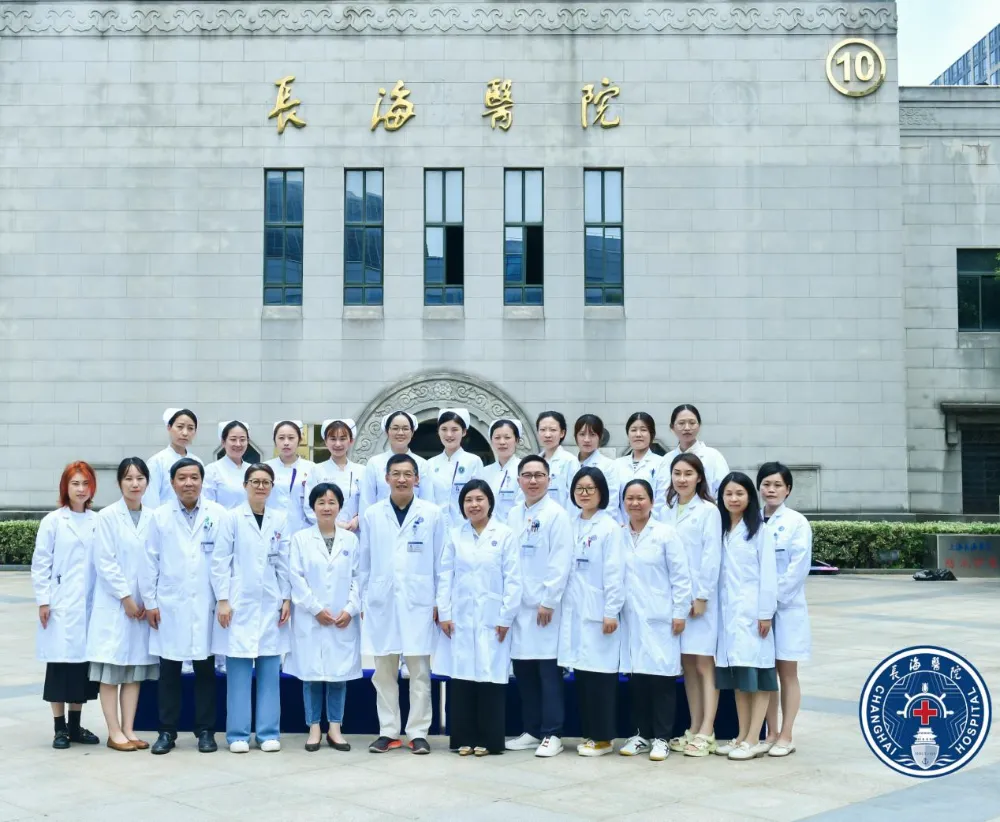
Prof. Gao told MedJ that although all patients improved significantly, not all achieved deep or complete clinical remission. “One reason is that SLE patients differ in disease duration, severity, and degree of organ damage, so their degree and speed of recovery after treatment also vary.”
“What are the optimal dose and frequency for SLE patients with different disease states? How long can the treatment effect last? If the disease relapses years later, can CAR-NK be used again to induce remission? Exploring the most effective individualized regimen for cell therapy is the question we will continue to tackle,” Prof. Gao said.
But whatever the remaining questions, with the advent of cell therapy, a cure for SLE and other autoimmune diseases no longer seems out of reach.
Prof. Gao told MedJ that when she first began clinical work, what puzzled her most was why doctors routinely screened hospitalized SLE patients for suicide risk. “I knew the disease was serious, but was it really necessary to that extent?”
“Later, as I met more and more patients, I gradually understood their suffering. Many have lost the ability to live normally and are repeatedly hospitalized. Even in stable periods, they constantly worry about relapse. Some patients develop changes in appearance and other side effects from long-term steroid use, and severe cases may then develop social phobia and depression. At times these sufferings are even more destructive than the organic damage caused by the disease itself.”
Prof. Gao said: “Today, through cell therapy, we may be able to help these patients out of their predicament. This is not merely ‘a study’; it is an exploration of a profound future transformation in the treatment of autoimmune diseases.”

