


The ESMO 2026 Annual Meeting was held Oct 23 to 27, 2026, in Madrid, Spain. On Oct 23, Prof. Lu Si of Peking University Cancer Hospital presented the extended follow-up results of the randomized, open-label, pivotal phase 2 MIZAR-003 trial (LBA55), which compared autologous tumor-infiltrating lymphocyte therapy (GC101 TIL) with physician’s choice chemotherapy in advanced melanoma.
This was the first randomized controlled study to evaluate an autologous TIL therapy against physician’s choice chemotherapy in advanced, anti-PD-1-refractory melanoma, and the update adds progression-free survival (PFS), objective response rate (ORR), subtype results, and safety data.
Article Key Points
- MIZAR-003, pivotal phase 2, n=101: GC101 TIL vs chemotherapy in anti-PD-1-refractory advanced melanoma
- Independent review median PFS 4.4 vs 1.6 months (HR 0.44, 95% CI 0.28-0.70), a 56% reduction in risk
- ORR 44.0% vs 8.2%; disease control rate 68.0% vs 40.8%
- Mucosal melanoma, n=16: PFS 4.8 vs 1.5 months (HR 0.23); acral, n=56: 4.4 vs 1.4 months (HR 0.41)
- Median OS not reached in the TIL arm vs 12.55 months with chemotherapy; OS data remain immature
- Nearly 60% of the chemotherapy arm crossed over to TIL; survival analysis still showed a trend favoring TIL
- Grade 3 or higher TRAEs 42.0% vs 30.6%, mainly lymphodepletion-related hematologic toxicity
- TIL-related AEs peaked around preconditioning, median duration 8 days; no treatment-related deaths
- Evidence status: LBA55 presented at ESMO 2026; full results have not yet been peer-reviewed
 Fig.1. Prof. Lu Si Presenting the MIZAR-003 Extended Follow-up Results at the ESMO 2026 Meeting
Background: Resistance After Checkpoint Inhibition
Immune checkpoint inhibitors and targeted therapies have improved outcomes in advanced melanoma, but a proportion of patients do not respond or eventually progress. For these previously treated patients, and in particular those with acral or mucosal melanoma, which are usually primary refractory to PD-1 inhibitors, treatment options are limited and outcomes are poor.
GC101 TIL is a cryopreserved autologous TIL product that uses an IL-2-free, reduced-toxicity regimen. The conventional lymphodepletion components are retained, hydroxychloroquine (HCQ) is used as an added component, and, on the basis of the mechanism by which HCQ upregulates tumor PD-L1, low-dose anti-PD-1 is added as a supporting strategy. The trial was designed around this regimen to compare GC101 TIL with chemotherapy in advanced melanoma.
Study Design
MIZAR-003 is an open-label, randomized, pivotal phase 2 study. The protocol planned for 98 patients, allowing for a 20% dropout rate, and 101 patients were ultimately randomized across 25 centers in China. The main analysis set comprised 99 patients: 50 in the GC101 TIL arm and 49 in the chemotherapy arm. The data cutoff was July 2, 2026, and median follow-up was 8.3 months, extended from 5.2 months at the earlier analysis.
Key inclusion criteria were histologically confirmed metastatic melanoma, failure of at least two prior lines of systemic therapy that had to include an anti-PD-1 agent, and resectable tumor tissue with at least one measurable target lesion.
The GC101 TIL workflow included tumor excision, tumor regression, optional bridging therapy, low-intensity lymphodepletion preconditioning with cyclophosphamide (CTX) and HCQ, TIL infusion, and anti-PD-1 support. The median infused TIL dose was approximately 43 billion cells. Anti-PD-1 support consisted of sintilimab 100 mg before infusion, then every 6 weeks for four doses. Patients in the chemotherapy arm received physician’s choice of chemotherapy, and eligible patients could cross over to GC101 TIL after progression.
The primary endpoint was PFS by independent review committee (IRC) assessment using RECIST v1.1. Secondary endpoints included investigator-assessed PFS, ORR, disease control rate (DCR), overall survival (OS), safety, and subgroup analysis by pathologic subtype.
Baseline characteristics were balanced between arms. More than 70% of enrolled patients had acral or mucosal melanoma, the most challenging subtypes.
Efficacy: PFS Benefit Across Subtypes
By IRC assessment, median PFS in the GC101 TIL arm was 4.37 months (95% CI 2.99-5.55) versus 1.61 months (95% CI 1.28-2.76) with chemotherapy, a 56% reduction in the risk of disease progression (HR 0.44, 95% CI 0.28-0.70, P=0.0004). In the earlier analysis, median PFS by IRC was 4.3 months; a sensitivity analysis gave 4.2 months versus 1.5 months.
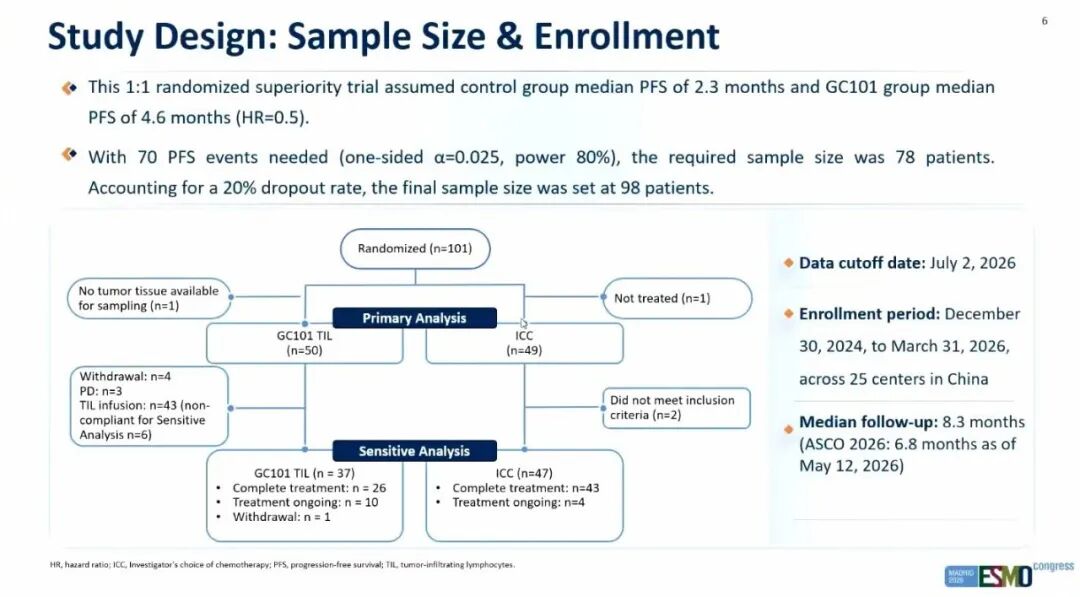 Fig.2. Progression-free Survival by Independent Review Committee in the Overall Population
Objective response rate was 44.0% in the GC101 TIL arm versus 8.2% with chemotherapy, and DCR was 68.0% versus 40.8%. In the sensitivity analysis, ORR was 40% versus 4%. With extended follow-up, the number of target lesions with complete response increased from one to four.
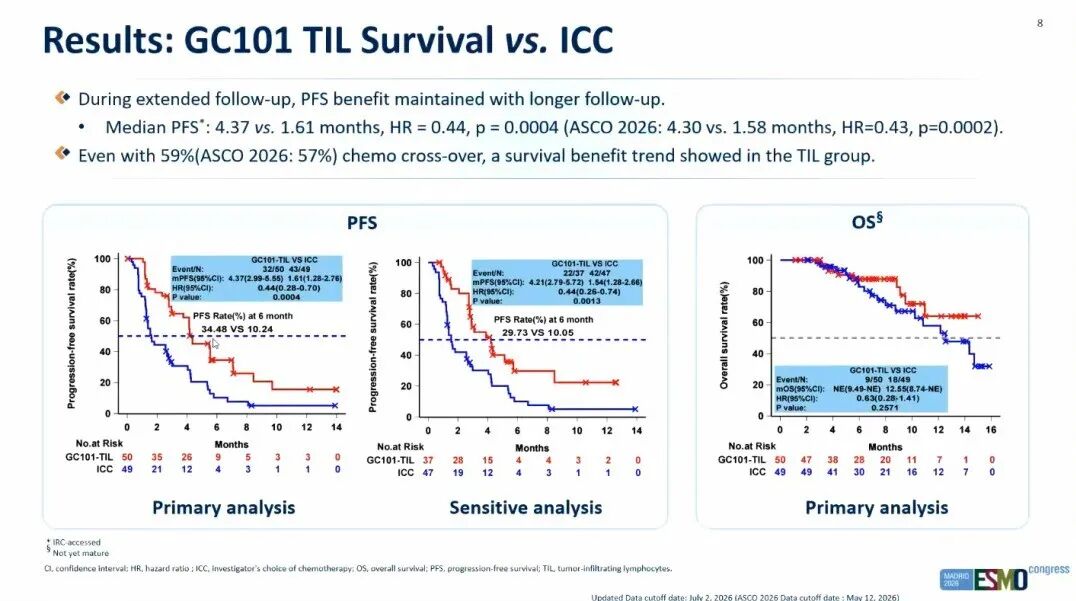 Fig.3. Progression-free Survival by Pathologic Subtype: Mucosal, Acral, and Cutaneous Melanoma
Subtype analysis showed a consistent benefit across all subgroups analyzed:
- Mucosal melanoma (6 in the GC101 TIL arm, 10 in the chemotherapy arm): median PFS 4.81 months versus 1.45 months (HR 0.23, 95% CI 0.06-0.88, P=0.0215), ORR 50.0% versus 0%, DCR 66.7% versus 22.2%
- Acral melanoma (31 in the GC101 TIL arm, 25 in the chemotherapy arm): median PFS 4.37 months versus 1.38 months (HR 0.41, 95% CI 0.22-0.77, P=0.0034), ORR 45.2% versus 7.7%, DCR 71.0% versus 30.8%
- Cutaneous melanoma: median PFS 4.1 months
Overall Survival
Median OS was not reached in the GC101 TIL arm, compared with 12.55 months (95% CI 8.74 to not reached) in the chemotherapy arm. The OS data remain immature and a trend toward benefit was observed, with confirmatory analyses still required. Although nearly 60% of patients in the chemotherapy arm crossed over to GC101 TIL, the survival analysis continued to show a survival benefit trend in the TIL arm.
Safety
During the extended follow-up period, from week 56 to week 64, no new safety signal was identified in either arm. Overall adverse event (AE) and treatment-related adverse event (TRAE) rates were higher in the GC101 TIL arm, and grade 3 or higher TRAEs were mainly hematologic toxicity related to lymphodepletion, occurring in 42.0% of patients (21/50) in the GC101 TIL arm versus 30.6% (15/49) in the chemotherapy arm. Within the extended follow-up window, the total number of AEs was lower in the TIL arm than in the chemotherapy arm.
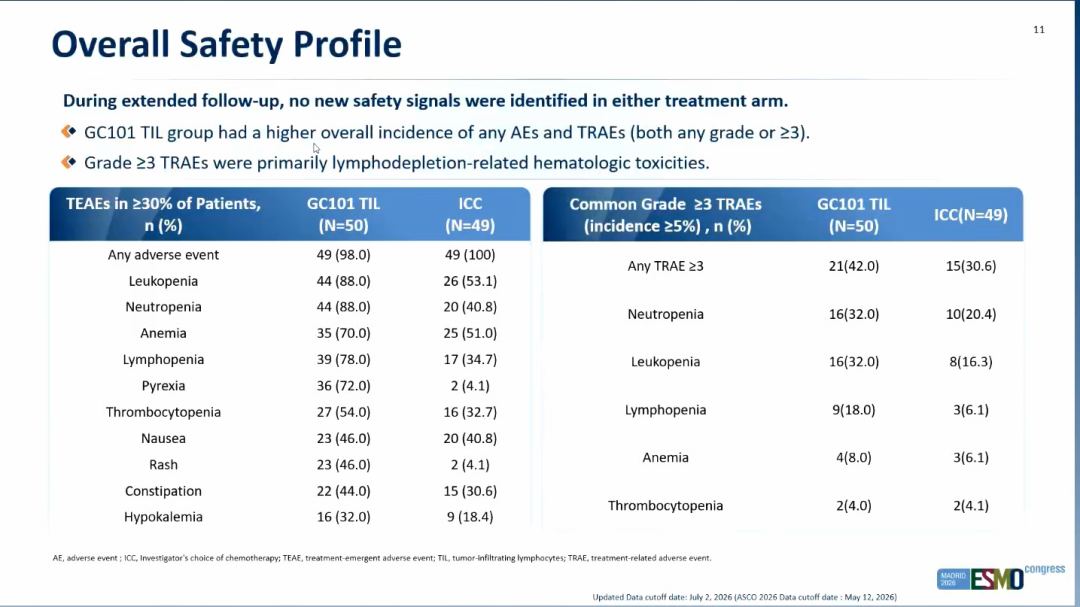 Fig. 4. Overall Safety Data Update
TIL-related AEs peaked during or immediately after preconditioning and were rapidly reversible, with a median duration of 8 days, whereas chemotherapy-related AEs persisted across the treatment cycle with a median duration of 13 days. Common TRAEs reported in at least 30% of patients were mainly hematologic, including anemia, thrombocytopenia, and neutropenia, and were generally manageable with growth factor support, treatment delay, and dose reduction, with most patients able to continue therapy.
Non-hematologic adverse events were mostly mild, with alopecia and fatigue the most common, occurring in 53.2% and 49.5% of the GC101 TIL arm, respectively. Adjudicated interstitial lung disease occurred in 2 patients (1.1%) in the GC101 TIL arm, all of grade 1 or 2. No treatment-related death and no requirement for intensive care unit management occurred during the trial.
Conclusions
In his summary, Prof. Lu noted that MIZAR-003 was the first randomized trial to establish the efficacy of TIL therapy in advanced anti-PD-1-refractory melanoma and that it met its primary endpoint. With a median follow-up of 8.3 months, PFS benefit was observed across all subtypes, and ORR reached 44%. Although OS data remain immature, a trend favoring TIL was seen despite crossover. The IL-2-free regimen produced no new safety signal and required no intensive care management, and the findings support further evaluation of GC101 TIL in phase 3 studies.
Reference
Lu Si, et al. Autologous Tumor-Infiltrating Lymphocytes (GC101 TIL) in Advanced Melanoma: Extended Follow-up of a Randomized, Open-Label, Pivotal Phase II Trial. 2026 ESMO. Abstract LBA55. Trial MIZAR-003, ClinicalTrials.gov identifier NCT06703398.

