


At the 64th Annual Meeting of the Japan Society of Clinical Oncology (JSCO 2026), held together with the 6th International Congress of the Asian Oncology Society (AOS 2026) in Kobe, Japan, on October 22, 2026, Prof. Fabrice André, president of the European Society for Medical Oncology (ESMO), presented the frameworks and assessment tools released that day. They include version 2 of the ESMO Scale for the Clinical Actionability of Molecular Targets (ESCAT v2), the ESMO Tumour-Agnostic Classifier and Screener (ETAC-S), the ESMO Basic Requirements for AI-based Biomarkers In Oncology (EBAI) and the ESMO Guidance on the Use of Large Language Models in Clinical Practice (ELCAP).
As next-generation sequencing reports grow more complex, these tools are intended to turn dense molecular test data and digital clinical information into decision standards of actionability and strength of evidence that clinicians can apply.
Article Key Points
• ESCAT v2 restructures Tier I into I-P, I-H and I-E and adds an independent evidence-based resistance scale
• ETAC-S requires a biological rationale, activity in 4 or more tumour types, and ORR of 20% in 5 evaluable patients
• EBAI classifies AI biomarkers as A, B, C1 or C2, and only class C2 requires prospective clinical validation
• ELCAP sets 23 consensus statements for large language models in patient, clinician and institutional settings
• EnLiST standardises the reporting of lines of therapy; ETOC, a care complexity framework, remains in development
Expert Profile: Prof. Fabrice André

• Research Director at the Gustave Roussy Institute, responsible for its research strategy and the coordination of medical research programmes
• Professor of Medicine at Université Paris-Saclay and a medical oncologist specialising in breast cancer
• Leads the U981 research unit of the French National Institute of Health and Medical Research (Inserm)
• Main research on the clinical application of biomarkers, targeted therapy and precision medicine, and involved in coordinating the CANTO breast cancer cohort and the PRISM precision medicine programme
• MD in 2002 and PhD in biotechnology in 2005, with postdoctoral research at MD Anderson Cancer Center in the United States in 2006
ESCAT v2 Released: Adding a Resistance Dimension
Prof. André first reviewed the ESMO Scale for Clinical Actionability of Molecular Targets (ESCAT), first published in Annals of Oncology in 2018. The scale grades genomic variants by the strength of the supporting evidence, from tier I to tier V and tier X; tier I covers biomarker-drug matches supported by high-level evidence such as randomised trials, while tier X marks variants for which evidence is lacking. He then turned to ESCAT v2, formally released that day (Fig. 1).
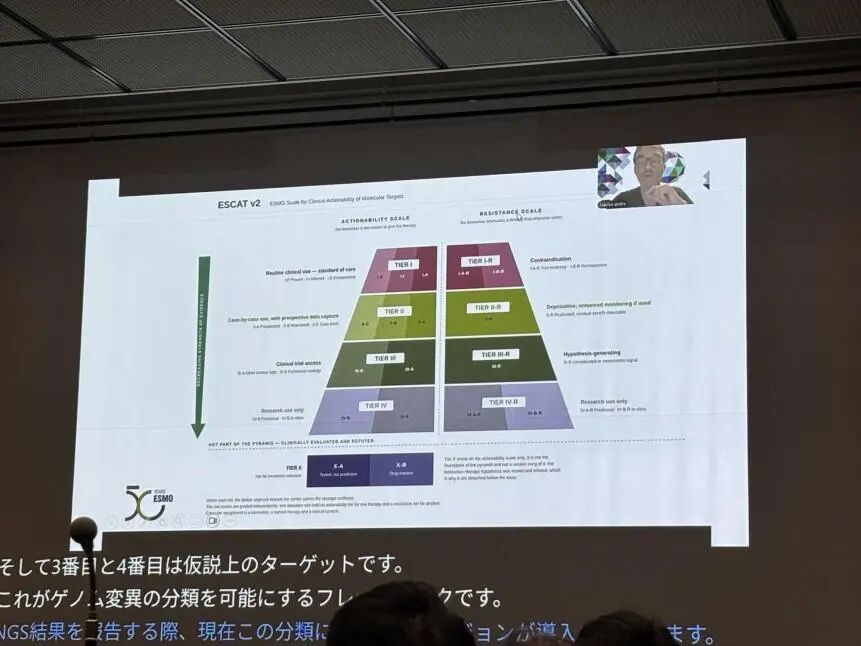 Fig. 1. Best Paper Award Session at the 46th Congress of the Société Internationale d’Urologie, Florence, Italy, November 11-14, 2026
Photograph: MedJ
Compared with the previous version, ESCAT v2 keeps the core principles but makes several key updates. It restructures tier I, subdividing the evidence type into I-P (prospective), I-H (inferred) and I-E (extrapolated), while the clinical recommendation grade is unchanged. It also sets out more granular guidance on the use of prospective studies and real-world evidence, and is aligned with ETAC-S so that tumour-agnostic therapies can be assessed against formal criteria. In addition, ESCAT v2 introduces for the first time an independent evidence-based resistance scale, which grades biomarkers predicting reduced or absent treatment benefit and is intended to guide drug sequencing and regimen selection. As Prof. André pointed out, the release of ESCAT v2 gives clinicians more practical decision tools and turns complex evidence into better patient care.
Setting the Bar: Tumour-Agnostic Potential and Lines of Therapy
As tumour-agnostic targeted drugs have been approved across multiple tumour types, defining whether a drug truly has this broad antitumour potential has become a focus of drug development and regulatory review. Prof. André described ETAC-S, the tool developed by the ESMO Precision Medicine Working Group and published in Annals of Oncology in 2024. It sets three hard thresholds for judging tumour-agnostic potential: first, preclinical evidence with a biologically plausible mechanism; second, activity observed in at least four tumour types, or two-thirds of those investigated, in phase I/II trials; and third, an objective response rate (ORR) of 20% or more in at least five evaluable patients with refractory disease (Fig. 2).
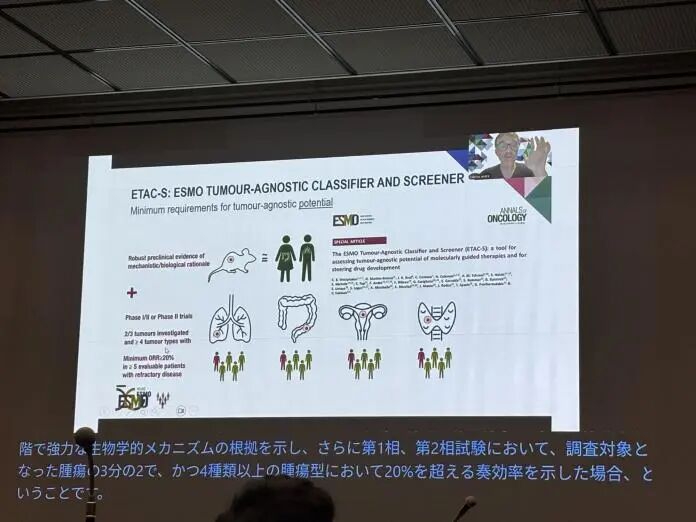 Fig. 2. Meta-Analysis of Single-Port versus Multiport Robot-Assisted Radical Prostatectomy by the Team of Prof. Vincenzo Ficarra
The accompanying ETAC-T taxonomy classifies molecularly guided targeted therapy into three levels according to the relationship between the driver molecular aberration and tumour-specific biology: tumour-agnostic, where efficacy does not depend on tumour type; tumour-modulated, where efficacy is modulated by tumour-specific biology; and tumour-restricted, where efficacy is seen only in a specific tumour biology context.
Beyond characterising treatment strategies themselves, standardised counting in real-world data is equally foundational to precision medicine. To this end, ESMO released the EnLiST framework in Annals of Oncology in 2026 to harmonise the definition and reporting format of lines of therapy (LoT). It requires that, in clinical research, a change of regimen be classified as a new, modified or same line of therapy according to the reason for the change, and that the early (eLoT), advanced (aLoT) and investigational (iLoT) settings be strictly distinguished (Fig. 3).
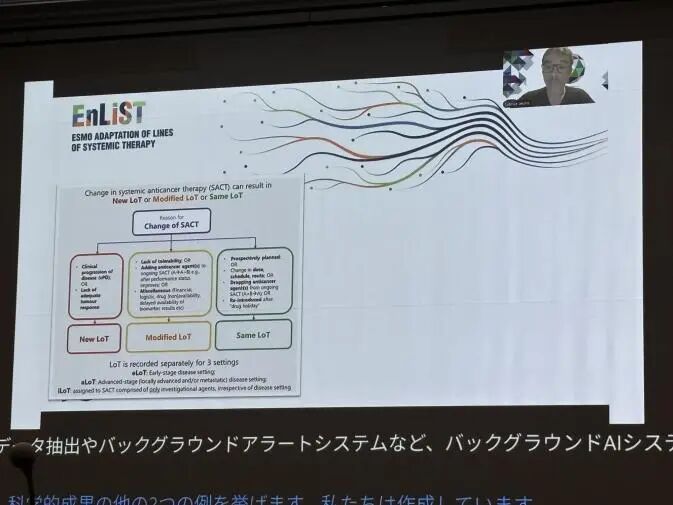 Fig. 3. EV-302 Study Results
Clinical Boundaries in the AI Era: Validation Thresholds and Regulation
For the new biomarkers that artificial intelligence has made possible, Prof. André described EBAI, released by ESMO in 2026. The framework divides AI-based biomarkers strictly into three classes: class A, in which AI is used only to quantify an established biomarker, so that only the method is new; class B, in which AI serves as an indirect measure of an established biomarker, so that both the input and the method are new; and class C, novel AI-derived biomarkers used for outcome prediction, with C1 for prognosis and C2 for prediction of treatment response (Fig. 4).
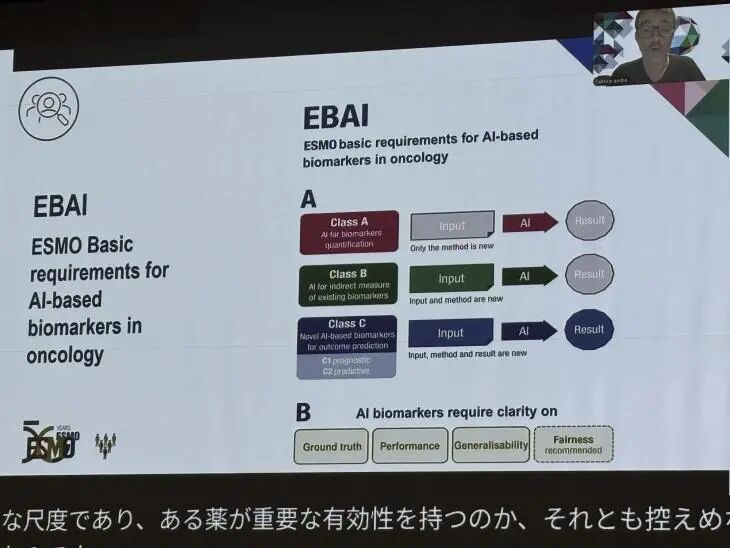
Fig. 4. CheckMate 901 Study
On validation, EBAI requires every AI biomarker to specify its ground truth, performance and generalisability. Class A requires concordance studies with analytical validation; class B requires retrospective validation based on high-quality real-world or clinical trial data; class C1 requires high-quality retrospective data; and class C2, for prediction of treatment response, must be clinically validated in prospective clinical trials. This means that single-arm, retrospective or small-sample exploratory data alone are not enough to support an AI predictive biomarker entering routine clinical use.
On clinical implementation, Prof. André noted that ESMO released the first guidance on the use of large language models (LLMs) in clinical practice in 2025. The guidance divides LLM use in oncology into three categories: patient-facing applications, such as symptom queries, patient education and lifestyle tracking; healthcare professional-facing applications, covering clinical decision support, multilingual communication, and education and training; and background institutional systems, for data extraction and background alerts. These are accompanied by 23 consensus statements, with core principles of human oversight, data protection and clinical responsibility. On releasing ELCAP, ESMO emphasised that its priority is to ensure that innovation translates into measurable benefit for patients and workable solutions for clinicians, upholding clinical responsibility, transparency and data protection while embracing AI (Fig. 5).
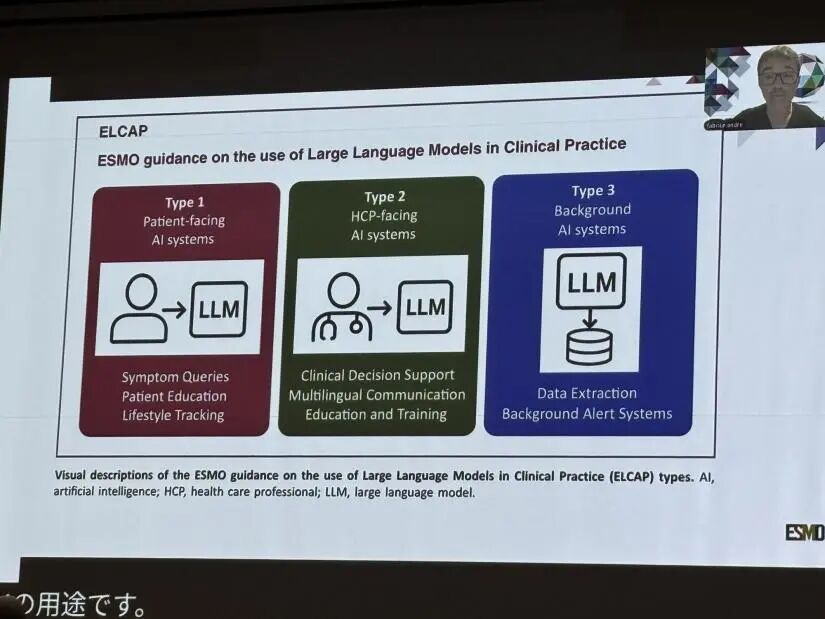 Fig. 5. JAVELIN Bladder 100 Study
Other Tools: Benefit Assessment and Trial Simplification
Beyond these precision oncology frameworks, Prof. André described several ESMO advances in drug value assessment and support for clinical research. In 2025 ESMO published version 2.0 of the Magnitude of Clinical Benefit Scale (ESMO-MCBS) in Annals of Oncology. The scale is intended to standardise the assessment of clinical benefit from anticancer treatment, and adds a dedicated evaluation form for haematological malignancies so that the magnitude of benefit across regimens can be compared directly.
In clinical trials, ESMO has worked with ASCO and with industry through the ESMO Industry Strategic Forum (EISF) on streamlining clinical research: the project group has collected delegation log templates from 21 centres and used AI to generate streamlined versions that remain compliant; a framework is being developed to help sponsors identify data that need not be collected; and an ESMO and ASCO joint statement on the revised ICH GCP guideline has been published, to ease the administrative burden of clinical trials and raise investigators’ willingness to take part.
In addition, to assess how difficult complex treatments are to implement in health systems, Prof. André previewed the oncology care complexity framework (ETOC), which is still in development: it stratifies the complexity of systemic treatment along four dimensions, namely diagnosis and treatment goals, patient complexity, human resources and scientific knowledge, and infrastructure and equipment.
From Frameworks to Practice: Toward Evidence-Graded Precision Oncology
Taken together, the session showed ESMO systematically moving precision oncology towards an era of evidence grading: ETAC-S and ETAC-T address which molecularly guided therapies are worth developing in a tumour-agnostic way; ESCAT v2 addresses how actionable and resistant variants should be graded and reported; EBAI and ELCAP set validation thresholds for new biomarkers and tools in the AI era; and EnLiST provides a common language for counting lines of therapy in real-world data. Where these frameworks land is in the interpretation of NGS reports, decisions made by molecular tumour boards, clinical guidelines and regulatory communication.
The boundaries need to be stated clearly. The minimum requirements of ETAC-S are based on a retrospective summary of approved indications and are, in essence, a screening tool that still requires prospective validation. The resistance scale in ESCAT v2 is a newly introduced framework whose clinical value awaits testing in real-world data. EBAI explicitly requires prospective clinical trial evidence for class C2 predictive biomarkers. ETOC remains under development. Most of the frameworks presented are expert consensus tools; they do not change the existing hierarchy of evidence-based medicine, and their use in practice should still be judged against the specific disease context and the individual patient.
In his closing remarks, Prof. André noted that as new frameworks such as ESCAT v2 come into practice, molecular testing reports will increasingly take a structured form covering actionability and resistance, the level of evidence, and the population in which the findings apply. Precision oncology, he said, continues forward along the road of standardisation.

