


Shihao He has been given two nicknames. One refers to his unusual academic leap from a junior-college-level medical program to elite medical training; the other is “He Five O’Clock”.
After graduating in 2013 from a junior-college-level medical institution, He passed the pathway examination that allowed him to enter bachelor’s degree study. He later entered the Department of Neurosurgery at Beijing Tiantan Hospital, Capital Medical University, where he completed master’s and doctoral training. He then went to Stanford University as a visiting scholar, before conducting postdoctoral research in the Department of Neurosurgery at Peking Union Medical College Hospital.
According to The Medical Community, He is now a postdoctoral researcher at Johns Hopkins University, where he continues to focus on moyamoya disease.
Behind this trajectory were years of demanding work. During his junior-college years, he studied under the restroom light until 5 a.m. While preparing for graduate school entrance examinations, he faced repeated uncertainty and setbacks. Still, he did not give up on medicine because of his starting point. He hoped to become part of the next generation of neurosurgery specialists.
“After ten years of work, a dream I once hardly dared to imagine has become the career I want to devote my life to,” He said. In the future, he hopes to contribute further to research on moyamoya disease.
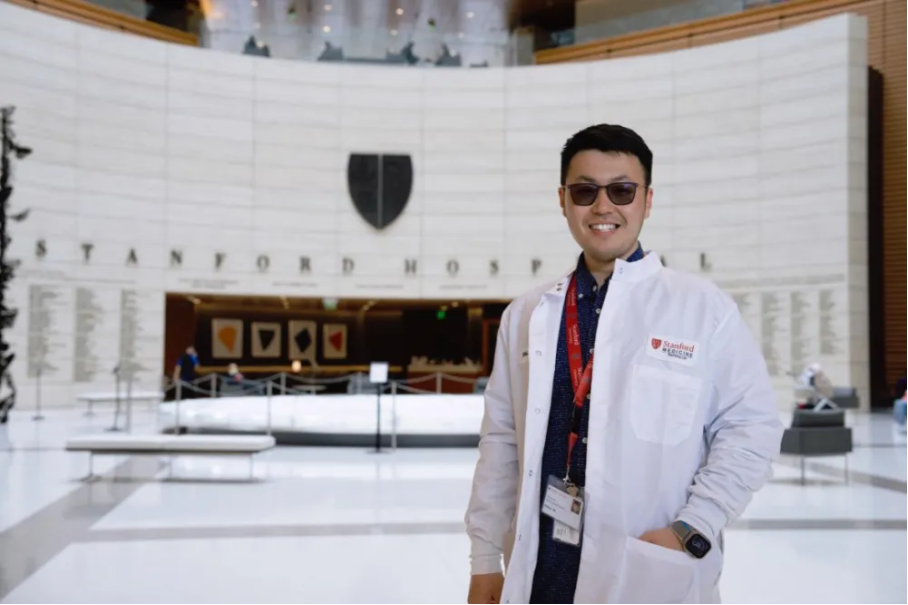
As China’s national college entrance examination results are released this year, his story has become worth revisiting. The following is Shihao He’s account.
From a Junior-College Background to Graduate Training at Beijing Tiantan Hospital
In high school, I was a typical underperforming student. I sat in the last row of the classroom, and my teachers mostly hoped I would not disrupt others. At the time, I liked playing video games and reading extracurricular books. My grades were usually at the bottom of the class. If I ranked second from the bottom, it was probably because someone else had missed the exam.
In the end, I scored a little over 400 on the national college entrance examination. I did not want to repeat the year, so I enrolled in the clinical medicine program at Shandong Medical College.
My decision to study medicine was influenced largely by my family. My father was a physician at an infectious disease hospital in Heze, Shandong, and my mother was a rural physician. I grew up near hospitals, so medicine felt familiar to me from an early age.
When I first entered the junior-college-level medical program, I developed a strong interest in medicine. I listened carefully in clinical case courses and practical training sessions. But to be honest, the overall academic atmosphere was not very strong. At first, I also went to internet cafes with classmates from time to time, partly because I wanted to fit in.
There were eight of us in the dormitory. One day, a roommate was playing video games, and many people were watching. I was previewing a pathology lesson. Some classmates said I was “putting on a show,” because they thought passing the exams was enough.
Another time, my roommates were watching horror movies at three or four in the morning. I could not sleep, so I turned on a small desk lamp to study. They felt I had disrupted the atmosphere, so they smashed my lamp and tore up my notebook.
The teasing and exclusion made me feel distressed and pressured. But in another sense, it also pushed me to prove myself. The only way out, as I saw it, was to pass the pathway examination into bachelor’s degree study. I began buying undergraduate medical textbooks and studying them in advance.
At that time, the dormitory power was cut after 10 p.m. I would take a small stool to the men’s restroom and read a more than 1,000-page internal medicine textbook. If there was no desk, I turned a washbasin upside down and used it as one. I kept studying until five in the morning. Two or three years passed that way. My classmates thought something was wrong with me, and that was how I got the nickname “He Five O’Clock”.
Those three years gave me a solid foundation in medicine. For the pathway examination, I applied to Taishan Medical University, now Shandong First Medical University. Only the top 100 candidates in the province would be admitted out of several thousand applicants, but I was confident. I eventually passed.
During my undergraduate clinical training, I encountered neurosurgery. I realized that the mechanisms behind many brain diseases were still not fully understood. That challenge drew me in. I began planning early for graduate school and set my sights on Beijing Tiantan Hospital, affiliated with Capital Medical University, a leading neurosurgery center in China.
The difficulty was obvious. At the time, only two or three students out of about 100 in my major would successfully enter graduate school. Most who did were admitted to medical schools in less central regions. Among previous students, Nankai University had been considered the ceiling. Tiantan Hospital was beyond what most people around me thought possible.
Many classmates did not understand my choice. They thought I was being unrealistic.
At first, I did not have much confidence either. Many universities in China, especially elite “Double First-Class” institutions, stated clearly in their admissions materials that they would not accept clinical medicine applicants whose first academic credential was from a junior-college-level program.
I used two different phones to repeatedly confirm with admissions staff that I was eligible before I dared to apply. I also put up a poster of a Tiantan neurosurgeon beside my dormitory bed to motivate myself.
To prepare for graduate school, I continued the same routine I had developed during my junior-college years. I often slept at three or four in the morning and got up at seven to study again. At times, I slept no more than three hours a day.
Long-term sleep deprivation affected my health. My liver function became very poor, and my transaminase level once exceeded 190, compared with a normal range of roughly 10 to 40. When I smelled food in the cafeteria, I felt nauseated and had to find a trash can to vomit.
After studying that way, I felt confident about the written examination, but I was very nervous about the interview. The other candidates had undergraduate backgrounds from leading universities such as Peking University and Lanzhou University. I worried that my junior-college background would make admission impossible. To give myself a chance, I answered in English during several parts of the interview, including my self-introduction, general surgery questions, and image interpretation. Looking back, that likely helped.
I still remember hearing my name when the 11th admitted student was announced. I immediately began to cry. Another student beside me handed me a tissue. I may have been the only person there who cried, because I had never dared to imagine that I could move step by step from a junior-college medical program in Shandong to study at Tiantan Hospital.
At Tiantan Neurosurgery, Choosing Moyamoya Disease as a Research Focus
After being admitted to Beijing Tiantan Hospital, I was not happy for long. Soon, I became anxious again.
My master’s supervisor was Professor Rong Wang, chief physician in neurosurgery at Beijing Tiantan Hospital and one of China’s leading specialists in the diagnosis and treatment of moyamoya disease. Under his guidance, I entered a new field.
Before arriving at the hospital, I worried that my supervisor might have concerns about my background. I was also afraid that I might not be able to handle the work and study ahead. So I did not attend my undergraduate graduation ceremony. I packed my bedding and clothes in advance, took the train alone from Tai’an to Beijing, and went to Tiantan Hospital early for clinical training.
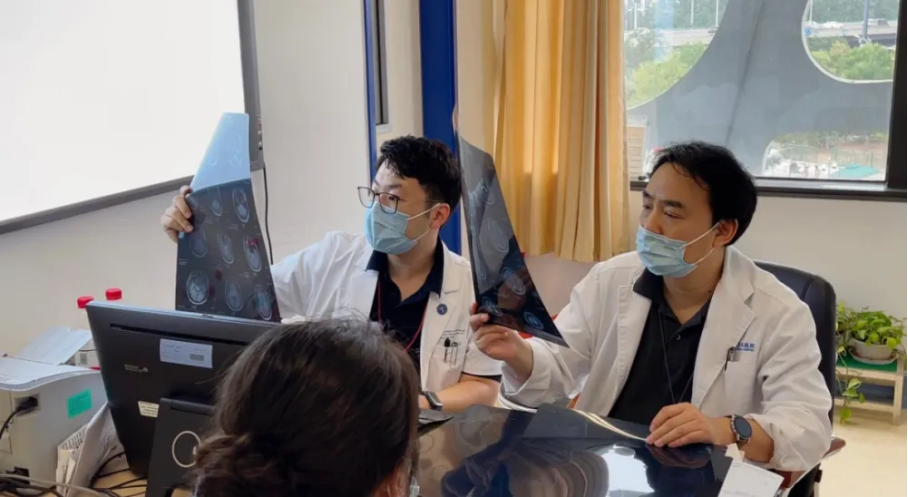
Fig. 1. Shihao He Attending Outpatient Clinic With Professor Rong Wang
At that time, my classmates were on summer break. I joined the group early for training. A senior colleague noticed my eagerness to learn and arranged for me to go to Chongqing to study brain network-related techniques.
The more I learned, the more I realized how little I knew. I spent nearly three months learning about moyamoya disease in advance and reading a large amount of literature. I also collected data from more than 100 cases.
Moyamoya disease, or MMD, is a rare, chronic, progressive ischemic cerebrovascular disease of unknown etiology. It is one of the important causes of cerebrovascular events in children and young and middle-aged adults in China. The annual incidence of pediatric ischemic stroke has been reported to be as high as 7.9 per 100,000, with moyamoya disease accounting for approximately 22% of such strokes.
At that time, there were fewer than five centers in China capable of performing surgery for moyamoya disease, and even fewer specialists conducting clinical and research work in the field. Because effective methods for early identification were limited, missed diagnosis and misdiagnosis were common concerns.
After deciding on my research direction, I spent six months downloading more than 3,000 papers related to moyamoya disease and studying them one by one. During the day, I participated in standardized clinical training, followed teachers on ward rounds, changed dressings, and observed or joined surgeries. Only at night could I read papers and work on research projects. Staying up late became routine.
After reading so much literature, I no longer felt lacking in confidence. Although the students around me came from Peking University, Peking Union Medical College, or eight-year programs at Capital Medical University, I felt I understood this field in greater depth. Later, I also led work within the research group to explore the pathogenesis of moyamoya disease.
Beyond gaps in diagnosis and treatment, outpatient experience with my supervisor also influenced my research direction. Once, a young man came to Professor Wang’s clinic with a file bag. He appeared to have residual right-sided motor deficits from a prior cerebral infarction. After the previous patient finished, he entered the room and said he had come to thank Professor Wang.
It turned out that, since primary school, he had often experienced right-sided muscle weakness after hyperventilation or fatigue. Sometimes he also had dizziness and transient visual blackout. He had not sought medical care until he developed hemiplegia and sensory disturbance on one side of the body, at which point his family took the symptoms seriously.
After suspending his studies, he sought medical help in many places. Professor Wang diagnosed him with moyamoya disease based on imaging findings and treated him with revascularization surgery and rehabilitation, after which his condition gradually improved. He had returned to thank my supervisor after being admitted to Beijing University of Technology.
It was then that I felt my research should not be too narrow. Some experts have said that Tiantan Hospital trains medical scientists. I remember that during the first two years of my master’s training, my research focused mainly on cognitive impairment and surgical risk assessment in moyamoya disease. Gradually, I began shifting toward disease mechanisms and better diagnostic and treatment strategies.
Declining Harvard and Mayo Clinic Offers, and Choosing Stanford for Further Training
After completing my first year of chief resident-style training, my experience managing patients and participating in surgeries further strengthened my decision to study moyamoya disease more deeply.
By my second year of graduate study, I had published four first-author SCI papers, with a combined impact factor of around 12 to 13. I then successfully pursued doctoral training under Professor Yuanli Zhao, a leading expert in cerebrovascular neurosurgery.
With advances in microsurgical neurosurgery, revascularization surgery can increase cerebral perfusion and reduce the risk of stroke and other cerebrovascular events.
However, patients with moyamoya disease are generally younger at onset than patients with atherosclerosis, and their cognitive impairment can progress over a much longer period. Without timely assessment and intervention, this can create a heavy burden for patients, families, and society.
At present, because the disease mechanism is not fully understood, no medication can stop disease progression. Open cranial revascularization surgery can only reduce the probability of stroke; it cannot cure moyamoya disease. From the third year of my master’s training, I wanted to further study its pathogenesis.
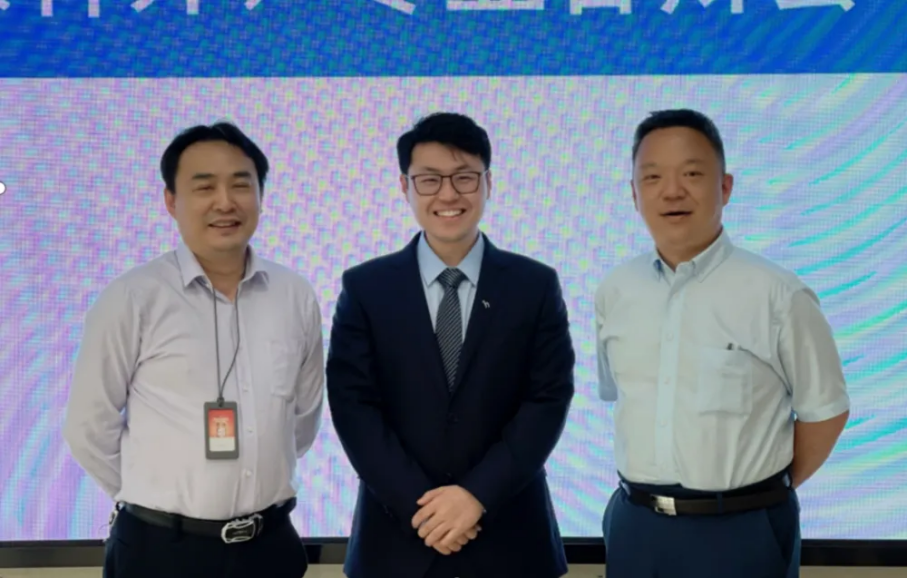
Fig. 2. Shihao He With His Master’s Supervisor, Professor Rong Wang, and Doctoral Supervisor, Professor Yuanli Zhao
Before discussing my research direction with Professor Zhao, I prepared a presentation on previous moyamoya research and my proposed research plan. I summarized 129 papers on genes and biological markers related to moyamoya disease and told Professor Zhao that I wanted to explore an underdeveloped direction. He supported the idea.
As the research progressed, I felt my work on moyamoya disease had reached a bottleneck and that I needed a breakthrough. In 2021, I decided to apply for overseas visiting scholar opportunities at Harvard, Johns Hopkins, Mayo Clinic, and Stanford. With an academic background that included seven SCI papers, I soon received visiting scholar invitations from the first three institutions.
The program at Massachusetts General Hospital, Harvard Medical School, focused on AI-based disease prediction models. Johns Hopkins and Mayo Clinic focused respectively on stem cell repair and clinical surgical risk. My own interest remained the pathogenesis of moyamoya disease, so I continued waiting for an interview invitation from Stanford.
While waiting, I joined a free clinic program in Yan’an as a doctoral student representative from Capital Medical University. Because I was away on the medical outreach trip, I missed Stanford’s interview invitation. Fortunately, the Stanford professor appreciated the fact that I had been volunteering in a mountainous area and gave me another opportunity.
In 2022, I published a paper using DNA methylation as an epigenetic entry point to study moyamoya disease. We proposed a framework of genetic susceptibility and environmental induction. We studied whole-genome DNA methylation profiles in patients with moyamoya disease and identified genes associated with disease development.
During the interview, the professors found that my research thinking was closely aligned with theirs, and that they were working on a similar project. My results had come out one month earlier and had already been published, so the interview went smoothly. I then declined the other offers.
For that day, I had worked for ten years. A dream I once hardly dared to imagine had finally become the career I wanted to devote my life to.
What Would He Say to Students Considering Medicine Today?
At the Gary K. Steinberg Laboratory in the Department of Neurosurgery at Stanford University School of Medicine, my daily life moved between the laboratory and the dormitory.
My strongest impression was that medical education there encouraged innovation. My classmates and I could interrupt professors during lectures and ask challenging questions, and the faculty encouraged students to raise meaningful questions. As for workload, working through the night was not unusual.
I also grew quickly through that learning process. To become an excellent neurosurgeon, one has to explore disease mechanisms, identify targets for drug therapy, and think about how clinical care can better restore human brain function.
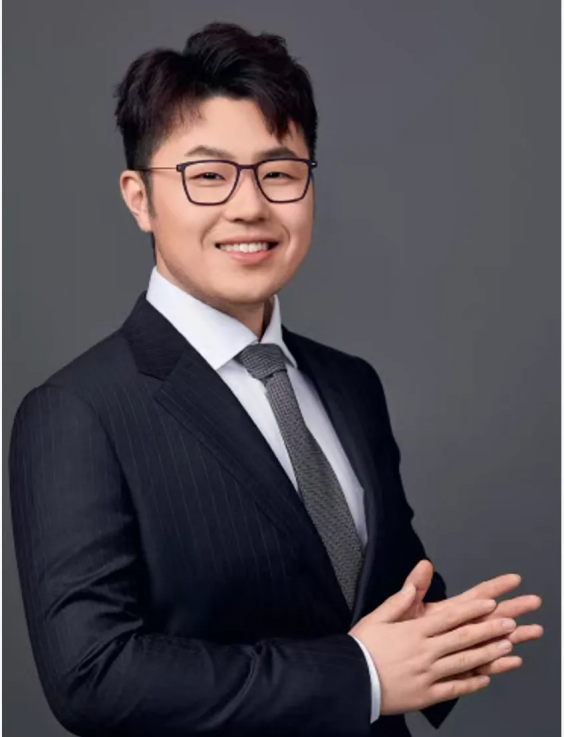
During these years of study and work in the United States, I have clearly felt that Chinese medical schools are becoming stronger.
One notable change is the increasing frequency and number of publications from Chinese institutions in top journals. Recently, Nature released the latest 2026 Nature Index, in which Zhejiang University surpassed Harvard University and ranked first among universities worldwide for the first time.
This reflects China’s growing emphasis on medical research and talent development. So if you are worried that studying medicine in China has no future, I do not think that concern is necessary.
Some people also worry about whether medicine still has a future in the age of AI.
At this year’s American Association of Neurological Surgeons annual meeting, I listened to Elon Musk speak about brain-computer interfaces and saw many types of surgical robots.
But I do not think AI will disrupt medicine as dramatically as some fear. Technology has always been beneficial to physicians and patients. The invention of the microscope was a major technological leap, but it did not replace doctors. AI can improve diagnostic accuracy and learning efficiency, but it does not yet represent a fundamental disruption to medicine.
Finally, I want to add one point. After going abroad, I realized that studying medicine overseas can be even more stressful and difficult.
In the United States, for example, students need to maintain a high GPA during four years of undergraduate study, accumulate hundreds of hours of clinical volunteering experience, publish papers, and obtain recommendation letters. Medical school acceptance rates are below 10% each year, and tuition can amount to several hundred thousand yuan annually when converted into RMB.
By comparison, in China, students who meet the admission threshold through the national college entrance examination can study clinical medicine, and tuition is relatively affordable. So if you truly love medicine, it is a path with a comparatively accessible entry point and one worth pursuing with full commitment.

