


The 2026 European Society for Medical Oncology (ESMO) Congress will take place in Madrid, Spain, from October 23 to 27. ESMO has released some research abstracts ahead of the meeting. The oncology channel of MedJ has compiled several studies of interest in breast cancer for readers.
Table 1. Late-Breaking Abstracts (LBAs)
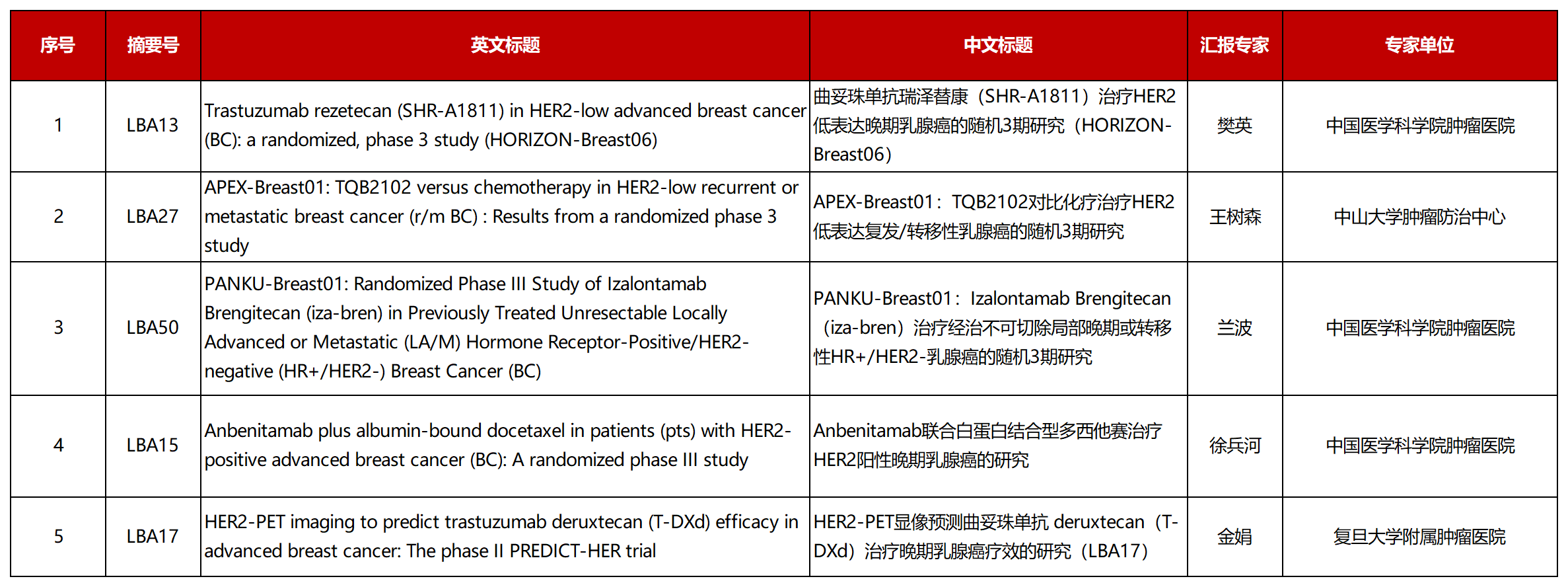
The late-breaking abstracts (LBAs) have not yet been released and will be presented during the congress. The MedJ oncology channel will provide focused coverage. Please stay tuned.
Article Key Points
- Sacituzumab tirumotecan maintained an overall survival benefit in previously treated metastatic TNBC.
- The SWITCH trial suggests payload-class cross-resistance may limit sequential ADC treatment.
- SYS6043 showed preliminary antitumor activity across three advanced breast cancer subtypes.
- Bulumtatug fuvedotin showed activity after prior topoisomerase I inhibitor-based ADC treatment in TNBC.
1. Abstract No. 4639RO
Final OS Analysis of Sacituzumab Tirumotecan Versus Chemotherapy in Previously Treated Locally Recurrent or Metastatic Triple-Negative Breast Cancer: Phase III OptiTROP-Breast01
Presenting Author: Man Li | The Second Affiliated Hospital of Dalian Medical University
Sacituzumab tirumotecan (sac-TMT) is a TROP2-directed antibody-drug conjugate (ADC) featuring a novel bifunctional linker and a belotecan-derived topoisomerase I inhibitor payload.
In the phase III OptiTROP-Breast01 trial, sac-TMT significantly improved progression-free survival (PFS) compared with physician's choice of chemotherapy in patients with previously treated locally recurrent or metastatic triple-negative breast cancer (TNBC). A prespecified interim analysis of overall survival (OS) also demonstrated a statistically significant benefit (HR = 0.53; 95% CI, 0.36–0.78; one-sided P = 0.0005).
This report presents the final OS results after extended follow-up.
The study enrolled patients with metastatic TNBC who had received at least two prior lines of systemic therapy, including at least one line in the metastatic setting. Patients were randomized 1:1 to receive sac-TMT or physician's choice of chemotherapy.
OS was a key secondary endpoint. A rank-preserving structural failure time (RPSFT) model was used to adjust for the impact of subsequent ADC treatment on OS. A sensitivity analysis censored patients when they initiated subsequent ADC therapy.
A total of 263 patients were randomized: 130 to the sac-TMT group and 133 to the chemotherapy group. As of September 17, 2025, the median follow-up was 29.4 months.
The significant OS benefit observed at the interim analysis was maintained at the final analysis. Median OS was 14.7 months (95% CI, 12.1–20.1) with sac-TMT versus 9.9 months (95% CI, 8.6–11.8) with chemotherapy (HR = 0.60; 95% CI, 0.45–0.80).
The survival benefit was sustained over time:
- 24-month OS rate: 33.8% versus 21.4%.
- 30-month OS rate: 26.8% versus 13.2%.
The OS benefit was generally consistent across prespecified subgroups, including patients previously treated with PD-1/PD-L1 inhibitors and those with HER2-low expression.
In the chemotherapy group, 27.8% of patients subsequently received ADC therapy. After adjustment for subsequent ADC treatment, median OS was 14.7 months with sac-TMT versus 9.4 months with chemotherapy, with an adjusted HR of 0.55 (95% CI, 0.39–0.73). The sensitivity analysis censoring patients at the initiation of subsequent ADC treatment yielded consistent results.
No new safety signals were observed.
After nearly 30 months of follow-up, sac-TMT continued to demonstrate the statistically significant OS benefit observed in the interim analysis. Compared with chemotherapy, sac-TMT provided a sustained survival benefit across several clinically relevant subgroups, and the benefit remained after adjustment for subsequent ADC treatment. These findings support the use of sac-TMT in previously treated metastatic TNBC.
2. Abstract No. 4RO
Target Switching With Conserved-Payload Novel ADCs in Patients With Metastatic Breast Cancer Following Prior ADC Therapy (SWITCH): A Prospective, Open-Label, Phase 2 Platform Trial
Presenting Author: Lei Fan | Fudan University Shanghai Cancer Center
ADC resistance is a major challenge in the treatment of metastatic breast cancer (MBC), and the optimal treatment sequence after disease progression remains unclear.
The SWITCH trial evaluated the efficacy and safety of a target- and payload-switching strategy using novel ADCs in patients with metastatic breast cancer whose disease had progressed after prior ADC treatment.
SWITCH is a prospective, open-label, phase II platform trial. Eligible patients had HER2-negative metastatic breast cancer and had experienced disease progression after receiving at least one prior ADC. Based on their previous treatment history, patients were randomized to one of four novel ADC cohorts:
- Cohort A: SHR-A1811
- Cohort B: SHR-A1921
- Cohort C: SHR-A2009
- Cohort D: SHR-A2102
All four agents use a topoisomerase I inhibitor (TOP1i) payload. The primary endpoint was investigator-assessed objective response rate (ORR).
Between October 21, 2024, and December 30, 2025, 58 patients with HER2-negative disease were screened, and 54 were randomized: 10 to Cohort A, 12 to Cohort B, 12 to Cohort C and 20 to Cohort D.
The study population was heavily pretreated, and most patients (94.4%) had previously received an ADC containing a TOP1i payload.Confirmed ORRs were low across all four cohorts:
- Cohort A: 0%
- Cohort B: 8.3%
- Cohort C: 0%
- Cohort D: 5%
Responses were observed only in patients who switched from disitamab vedotin (RC48), a microtubule inhibitor-based ADC, to a TOP1 inhibitor-based ADC. No responses were observed when patients received sequential ADCs with the same payload class, even when the antigen target was changed.
Treatment-related adverse events were consistent with the known safety profiles of the respective ADCs and were manageable.
In patients with metastatic breast cancer resistant to prior ADC therapy, switching to a novel ADC targeting a different antigen produced limited response rates. These findings suggest that cross-resistance between payload classes may be a major driver of ADC resistance. Subsequent ADC treatment strategies using payloads with different mechanisms of action may therefore be important for restoring treatment sensitivity.
3. Abstract No. 5RO
Safety and Efficacy of SYS6043, a Novel B7-H3-Targeting Antibody-Drug Conjugate, in Patients With Advanced Breast Cancer
Presenting Author: Hongxia Wang | Fudan University Shanghai Cancer Center
B7-H3 is highly expressed in multiple solid tumors and is associated with poor prognosis. SYS6043 is a novel B7-H3-targeting antibody-drug conjugate carrying a topoisomerase I inhibitor payload.
This report presents preliminary results from a phase I/II trial of SYS6043 in patients with advanced breast cancer (ChiCTR2400094683).
Eligible patients had advanced breast cancer that was refractory to standard treatment or had progressed after treatment. SYS6043 was administered intravenously using the following dosing regimens:
- 6.0 or 8.0 mg/kg every three weeks.
- 4.0 or 6.0 mg/kg every two weeks.
The primary endpoints were safety, tolerability and ORR.
As of March 31, 2026, a total of 137 patients had been enrolled:
- Hormone receptor-positive/HER2-negative breast cancer (HR+/HER2−): 82 patients.
- Triple-negative breast cancer (TNBC): 34 patients.
- HER2-positive breast cancer: 21 patients.
The median age was 54 years (range, 31–75), and 80.3% of patients had an Eastern Cooperative Oncology Group (ECOG) performance status score of 1. Bone metastases were present in 57.7% of patients, and liver metastases in 51.8%. A total of 45.3% had received at least three prior lines of treatment.
Treatment-related adverse events (TRAEs) occurred in 94.2% of patients, with grade 3 or higher TRAEs reported in 24.1%.
The most common grade 3 or higher TRAEs were:
- Neutropenia: 9.5%.
- Anemia: 5.8%.
- Leukopenia: 4.4%.
Efficacy Results by Breast Cancer Subtype
HR-positive/HER2-negative breast cancer
Among the 70 patients evaluable for efficacy, the ORR was 45.7% (95% CI, 33.7–58.1), and the disease control rate (DCR) was 94.3% (95% CI, 86.0–98.4). Median duration of response (DoR) was 7.0 months (95% CI, 2.7 months to not reached).
Triple-negative breast cancer
Among the 34 evaluable patients, the ORR was 70.6% (95% CI, 52.5–84.9), and the DCR was 94.1% (95% CI, 80.3–99.3). Median DoR had not been reached.
HER2-positive breast cancer
Among the 21 evaluable patients, the ORR was 71.4% (95% CI, 47.8–88.7), and the DCR was 90.5% (95% CI, 69.6–98.8). Median DoR had not been reached.
SYS6043 demonstrated a manageable safety profile and encouraging antitumor activity in patients with advanced breast cancer. These preliminary findings suggest that SYS6043 warrants further investigation as a potential treatment candidate.
4. Abstract No. 4640RO
Bulumtatug Fuvedotin (BFv, 9MW2821), a Nectin-4-Directed Antibody-Drug Conjugate (ADC), in Patients With Locally Advanced or Metastatic Triple-Negative Breast Cancer (la/mTNBC) Previously Treated With Topoisomerase I Inhibitor (TopI)-Based ADCs: Results From a Phase 2 Study
Presenting Author: Yanchun Meng | Fudan University Shanghai Cancer Center
Bulumtatug fuvedotin (BFv) is an ADC that delivers monomethyl auristatin E (MMAE) to Nectin-4-expressing cells. Nectin-4 is highly expressed in triple-negative breast cancer (TNBC).
For patients previously treated with topoisomerase I (TopI) inhibitor-based ADCs, switching to an ADC targeting Nectin-4 and carrying an MMAE payload represents a potential treatment strategy.
This report presents efficacy and safety data from Cohort A of the phase II BFv study (NCT06492005), which enrolled patients with locally advanced or metastatic TNBC (la/mTNBC) previously treated with TopI inhibitor-based ADCs.
BFv was administered intravenously at 1.25 mg/kg on Days 1 and 8 of each 21-day cycle.
The primary endpoint was ORR. Secondary endpoints included DoR, DCR, PFS, OS and safety.
As of April 10, 2026, 62 patients had been enrolled, of whom 60 were evaluable for efficacy. The median age was 50.5 years (range, 32–73). Liver metastases were present in 33% of patients, and 42% had received at least three prior lines of treatment.
All patients (100%) had previously received TopI inhibitor-based ADCs. Of these, 48% had received TROP2-targeting ADCs and 33% had received HER2-targeting ADCs. All patients had previously received taxane-based chemotherapy, and 35% had also received immune checkpoint inhibitors.
Efficacy Results
- ORR: 30.0% (95% CI, 18.85–43.21).
- DCR: 80.0% (95% CI, 67.67–89.22).
- Median PFS: 3.7 months (95% CI, 2.96–4.34).
- Median DoR: 8.7 months (95% CI, 2.79 months to not reached).
- OS: Data were immature at the time of analysis.
Treatment-related adverse events occurring in at least 20% of patients included elevations in aspartate aminotransferase (AST) and alanine aminotransferase (ALT), neutropenia, leukopenia, hypertriglyceridemia, rash, hypercholesterolemia, hyperglycemia, anemia, thrombocytopenia, fatigue and elevated gamma-glutamyl transferase (GGT).
Grade 3 or higher TRAEs occurring in at least 5% of patients included neutropenia, leukopenia and elevated AST.
BFv demonstrated encouraging antitumor activity and a manageable safety profile in patients with locally advanced or metastatic TNBC who had received multiple prior lines of therapy, including prior TopI inhibitor-based ADC treatment in all cases.
According to the source article, the first global confirmatory pivotal trial in this indication is currently underway.
The ESMO 2026 Congress will feature numerous developments in lung cancer research. The MedJ oncology channel will continue to provide coverage of further highlights during the congress. Please stay tuned.

