


Introduction
The 2026 China Clinical Oncology Annual New Advances Symposium (BOC) and Best of CSCO 2026 China recently concluded in Hohhot, Inner Mongolia. The meeting brought together leading oncology experts from across China to focus on original Chinese contributions and frontier developments. During the meeting, MedJ invited Prof. Xiuyu Cai of Sun Yat-sen University Cancer Center to share his insights on advances in head and neck cancer, covering radiotherapy de-escalation in nasopharyngeal carcinoma (NPC), breakthrough antibody-drug conjugates (ADCs), immunotherapy combination strategies, and the field’s evolution over the past six years.
Interview
Q1. What are the most pressing challenges in head and neck cancer today, and where do you see the most promising breakthroughs?
Prof. Cai:
At this year’s BOC meeting, we presented the progress of original Chinese clinical research in head and neck cancer over the past year. Looking back over the past several years, I have been struck by how the research focus in Chinese head and neck cancer has shifted from simply pursuing higher cure rates toward precision toxicity reduction and individualized treatment. With cure rates already showing significant gains, the central question for clinical practice is gradually shifting toward how to precisely reduce treatment toxicity for each patient. For tumors such as nasopharyngeal carcinoma, where long-term survival is expected, treatment goals should not be limited to extending survival; quality-of-life preservation and functional recovery are equally important — a fully patient-centered approach.
In this BOC presentation, two studies from Academician Ma Jun’s team at Sun Yat-sen University Cancer Center were landmark contributions. One, published in CA: A Cancer Journal for Clinicians, examined the feasibility of reducing the radiotherapy target volume after induction chemotherapy. Nasopharyngeal carcinoma is highly chemosensitive, and shrinking the radiation field significantly reduced toxicities that severely affect quality of life, including xerostomia and mucositis. The traditional approach favored large-field coverage and prophylactic irradiation; in the precision target-reduction strategy, long-term follow-up showed no significant increase in local recurrence, but significant reductions in severe mucositis, otitis media, and xerostomia.
Another study of note explored whether concurrent cisplatin — a drug with substantial impact on patient quality of life — can be omitted if immunotherapy protection is provided. The sequential approach studied by Prof. Chaosu Hu’s team at Fudan University Shanghai Cancer Center, together with the concurrent-cisplatin-omission approach at our center, both point in the same direction. This is not a simple downgrade of treatment intensity, but an intelligent and precision-based upgrade of treatment strategy. In the immunotherapy era, the overall treatment paradigm for head and neck cancer is undergoing profound change.
Q2. How are key targets such as HER2 and B7-H3 progressing toward clinical application?
Prof. Cai:
One of the most-watched advances in head and neck cancer at this BOC was the EGFR/HER3 dual-target ADC. The drug has already received domestic market approval, with its first indication being nasopharyngeal carcinoma. Clinical data show that in later-line patients, the objective response rate (ORR) increased from 27.0% with standard chemotherapy to 54.6%, an improvement closely linked to the EGFR/HER3 expression pattern in head and neck tumors. The drug is now an approved and clinically accessible ADC in NPC.
The B7-H3 ADC also shows promise. This target was first validated in prostate cancer and has substantial potential. Our center’s data in later-line head and neck cancer patients showed an ORR of 48.6% and a median progression-free survival of 4.8 months, and the efficacy appeared unrelated to B7-H3 expression levels — reminiscent of the imperfect predictive value of PD-L1 expression for PD-1/PD-L1 inhibitor efficacy.
For LAG-3 inhibitor combined with PD-1 inhibitor, the strategy has mature data in melanoma, but efficacy in later-line head and neck cancer patients has been less encouraging. Because LAG-3 biology is closely tied to T-cell exhaustion, larger confirmatory studies are still needed to define its drug-development value in head and neck cancer. In addition, TOP2 ADCs and the EGFR/c-MET bispecific antibody that I personally follow with interest are under active exploration. The EGFR/c-MET bispecific has already been approved for lung cancer, and because EGFR expression rates are high in head and neck cancer, peer-reviewed Phase 2 data suggest strong efficacy — though thromboembolic events and infusion-related reactions remain a concern. A subcutaneous formulation now in development may improve safety, and we look forward to the final Phase 3 global confirmatory readout.
Q3. The combination of senolytic drugs with immunotherapy in head and neck squamous cell carcinoma is an innovative direction. Could you briefly introduce it?
Prof. Cai:
This study was led by Prof. Song Fan’s team at Sun Yat-sen Memorial Hospital, with our center also participating. The study used senolytic agents — including dasatinib and selected traditional Chinese medicine components — to activate the immune microenvironment. In this neoadjuvant study, surgery was performed after induction therapy, and the results showed a major pathological response (pMR) rate of 33.3% and a pathological complete response (pCR) rate of 16.7%, comparable to current neoadjuvant immunotherapy data. The study also conducted in-depth translational and single-cell sequencing analyses, and was ultimately published in Nature Medicine. The findings suggest that senolytic agents, used as immune adjuvants, may have synergistic effects with PD-1 inhibitors — an area where further translational and mechanistic research is warranted.
Q4. What do the studies you have introduced mean for global practice, and what is the real clinical benefit for patients?
Prof. Cai:
In head and neck cancer, particularly nasopharyngeal carcinoma, China — through contributions such as Academician Ma Jun’s work on TNM staging and the updates of CSCO guidelines — has reached alignment with international standards. China is no longer simply a follower of international standards in head and neck cancer; in some directions, it now has the capacity to export its own treatment protocols, classification systems, and original drugs.
This is an important step forward this year, and it sends a clear global signal: in head and neck cancer, on one hand, the goal is cure; on the other hand, because of the special anatomy and dense neural distribution of the head and neck region — with profound impact on patients’psychological and social function — quality of life is particularly important. Rates of depression, suicide risk, and doctor-patient disputes are high in this population. Therefore, we must not only focus on disease control, but also place quality-of-life preservation on an equal footing.
Q5. Since 2020, you have led the annual head and neck cancer progress review. Looking back over six years, how would you assess the development of head and neck cancer in China?
Prof. Cai:
Over the past six years, under the guidance and support of Academician Ma Jun, Academician Zeng Musheng, Prof. Mai Haiqiang, Prof. Xia Liangping, Prof. Song Ming, Prof. Liu Zhigang, Prof. Shu Chenwei, Prof. Jin Ting, and many other colleagues, the head and neck cancer field has advanced substantially. Head and neck cancer was once a relatively under-attended “minor”tumor type. Compared with major tumor types such as lung, colorectal, and breast cancer, it attracted relatively limited industry investment.
Most large registration trials — including those for PD-1 inhibitors — were not initially conducted in head and neck cancer; the field more often borrowed experience from other tumor types. The GP regimen, which established the first-line standard for nasopharyngeal carcinoma, for example, originated in lung squamous cell carcinoma and was then adopted in NPC as the foundational chemotherapy backbone. PD-1 inhibitors first succeeded in melanoma and lung cancer before expanding to head and neck cancer.
As pharmaceutical companies tend toward “addition” — combination therapies and multi-specific antibodies — head and neck cancer, with its limited commercial return, has seen progress driven more by investigator-initiated studies, born of academic interest and patient needs. A large body of research has been characterized by “subtraction,” exploring target-volume reduction, chemotherapy de-escalation, and organ-function preservation. Therefore, although head and neck cancer is a “minor” tumor type, the research pathway is becoming increasingly refined.
The past six years have shown that head and neck cancer research has moved more substantially from the essence of medicine and patient needs. At the same time, the introduction of novel agents is reshaping the field — including the ADC drug approved this year, the bispecific and bispecific-plus-ADC studies at our center, and the EGFR/c-MET bispecific. Looking ahead, head and neck cancer still has substantial room to develop.
Conclusion
From improving cure rates to precision toxicity reduction, and from following international standards to exporting Chinese protocols, Prof. Cai’s interpretation of BOC clearly conveyed the deeper transformation underway in Chinese head and neck cancer research. Represented by nasopharyngeal carcinoma, Chinese researchers are using a series of “subtraction” studies to redefine treatment logic — protecting long-term patient quality of life to the greatest extent while preserving efficacy.
At the same time, the emergence of original agents such as ADCs and bispecific antibodies is opening new therapeutic windows for patients with recurrent and metastatic disease. As Prof. Cai noted, although head and neck cancer is a “minor” tumor type, it is now walking a refined, patient-centered path — an exploration model that carries far-reaching implications for upgrading the overall philosophy of cancer treatment.
About the Expert — Prof. Xiuyu Cai
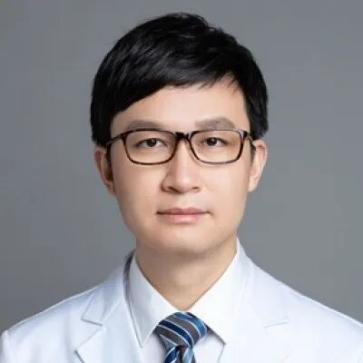
Sun Yat-sen University Cancer Center
Attending physician, chief physician, doctoral supervisor
Council member, CSCO Foundation; Council member, Chinese Society of Clinical Oncology (CSCO)
Young Top-notch Talent, Guangdong Special Support Program
Outstanding Youth Team, Guangdong Provincial Natural Science Foundation
Expert reviewer, National Health Commission (NHC) high-level talent program
Expert reviewer, National Natural Science Foundation of China
Expert reviewer, Ministry of Education doctoral dissertations
Chair, Immunotherapy Branch, Guangdong Health Care Association
Chair, Tumor Recurrence and Metastasis Committee, Guangzhou Anti-Cancer Association
Honorary Chair, Cancer Rehabilitation Committee, Guangzhou Anti-Cancer Association
First / co-first / corresponding-author publications in BMJ, Lancet Oncology, Nature Communications, European Journal of Cancer (EJC), International Journal of Cancer (IJC), and others
First-author paper cited as Category 2B evidence in National Comprehensive Cancer Network (NCCN) guidelines

