


The ESMO 2026 Annual Meeting was held Oct 23 to 27, 2026, in Madrid, Spain. Four late-breaking abstracts (LBA1 to LBA4) were presented, covering an individualized mRNA neoantigen vaccine in adjuvant melanoma, perioperative immunotherapy plus an antibody-drug conjugate (ADC) in muscle-invasive bladder cancer, a bispecific T-cell engager in first-line maintenance for extensive-stage small cell lung cancer, and intensified hormonal therapy in very high-risk localized prostate cancer.
Article Key Points
- INTerpath-001, n=1137: intismeran autogene plus pembrolizumab improved 24-month RFS to 82.2% versus 70.0% (HR 0.58)
- VOLGA, n=695: durvalumab plus enfortumab vedotin improved EFS (HR 0.51) and OS (HR 0.58) in cisplatin-ineligible MIBC
- VOLGA triplet arm improved EFS (HR 0.61) but OS did not reach statistical significance at interim analysis
- DeLLphi-305, n=563: tarlatamab plus durvalumab improved median OS to 21.1 versus 12.7 months (HR 0.42)
- DASL-HiCaP, n=1106: darolutamide plus ADT and radiotherapy improved 4-year metastasis-free survival (HR 0.42)
- INTerpath-001, VOLGA and DeLLphi-305 were accepted or published in The New England Journal of Medicine
- DASL-HiCaP was presented as a conference abstract; OS and prostate cancer-specific survival remain immature
INTerpath-001: Individualized mRNA Neoantigen Vaccine Plus Pembrolizumab in Adjuvant Melanoma
Prof. Georgina V. Long of the University of Sydney, Australia, reported the phase 3 INTerpath-001 study (NCT05933577), evaluating the individualized mRNA neoantigen therapy intismeran autogene (intismeran; V940/mRNA-4157) plus pembrolizumab versus placebo plus pembrolizumab as adjuvant treatment after surgical resection of high-risk melanoma.
Eligible patients had completely resected stage IIB/IIC (pathological or clinical) or III/IV cutaneous melanoma, with tumor material suitable for next-generation sequencing to design the individualized neoantigen set. Patients were randomized 2:1 to pembrolizumab 400 mg every 6 weeks for up to nine cycles plus intismeran 1 mg every 3 weeks for up to nine doses, or pembrolizumab plus placebo. Pembrolizumab was started at randomization and intismeran or placebo once manufacturing was complete. The primary endpoint was recurrence-free survival (RFS); secondary endpoints included distant metastasis-free survival (DMFS), overall survival (OS) and safety.
Of 1137 randomized patients (757 versus 380), 95.9% and 96.1% received at least one dose of intismeran or placebo. With median follow-up of 24.6 months as of June 30, 2026, the combination improved RFS (24-month RFS 82.2% versus 70.0%; HR 0.58, 95% CI 0.45-0.75; P<0.001) and DMFS (24-month 88.5% versus 80.2%; HR 0.62, 95% CI 0.45-0.85; P=0.002). Benefit was consistent across the IIB-IIIB and IIIC-IV subgroups and other subgroups, and no new safety signals were observed.
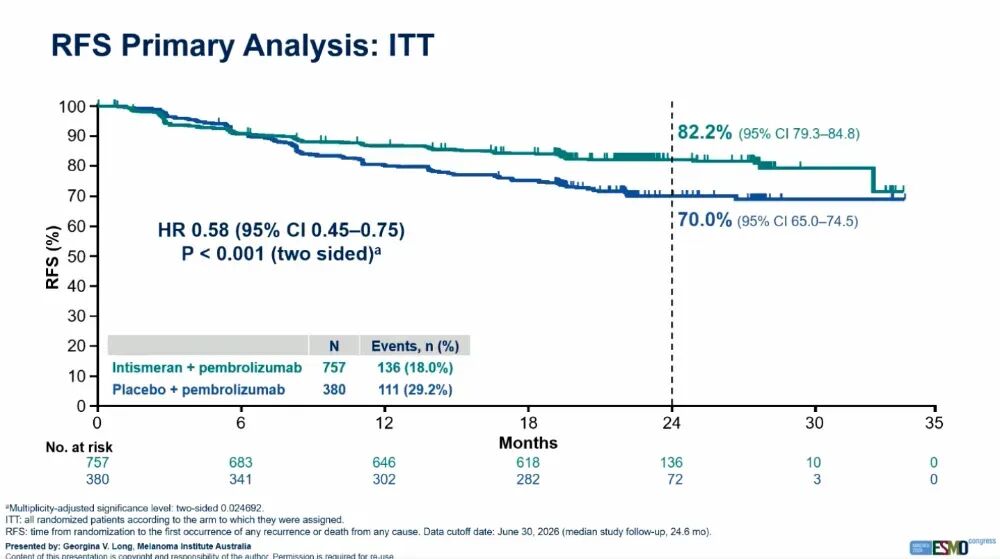 Fig.1. Progression-free Survival Results from the INTerpath-001 Study in Adjuvant Melanoma
Grade 3 or higher adverse events occurred in 23.6% of patients in the combination group versus 20.3% with placebo, and 6.5% discontinued both agents because of an adverse event versus 5.3%. The most common adverse events were pyrexia (52.2% versus 8.2%), injection site pain (51.0% versus 9.5%) and fatigue (38.5% versus 29.7%).
The investigators concluded that intismeran plus pembrolizumab significantly improved RFS and DMFS in stage IIB-IV melanoma with generally good tolerability, providing new evidence for the clinical translation of individualized neoantigen vaccines combined with checkpoint inhibitors.
VOLGA: Perioperative Durvalumab Plus Enfortumab Vedotin in Muscle-Invasive Bladder Cancer
Prof. Thomas B. Powles of Queen Mary University of London, UK, reported the prespecified interim analysis of the phase 3 VOLGA study (NCT04960709), evaluating perioperative durvalumab with or without tremelimumab plus neoadjuvant enfortumab vedotin (EV) followed by radical cystectomy (RC) and adjuvant immunotherapy, in a setting where standard treatment for muscle-invasive bladder cancer continues to evolve.
Patients with MIBC (cT2-T4aN0/1M0 or cT1N1M0) who were ineligible for or refused cisplatin and were planned for RC were randomized 1:1:1 to durvalumab plus EV, durvalumab plus tremelimumab plus EV, or control. The first two arms received perioperative immunotherapy, with or without tremelimumab (three neoadjuvant cycles of durvalumab, two cycles of tremelimumab; nine adjuvant cycles of durvalumab, one cycle of tremelimumab), and three cycles of neoadjuvant EV, followed by RC. Dual primary endpoints were event-free survival (EFS) for each experimental arm versus control, with OS as a key secondary endpoint.
The three arms randomized 233, 233 and 229 patients. RC was completed in 85%, 79% and 78%, and adjuvant treatment was completed in 55% and 42% of the two combination arms. With median EFS follow-up of 22.9 months, durvalumab plus EV significantly improved EFS (HR 0.51, 95% CI 0.38-0.67, P<0.0001; 24-month 64% versus 45%) and OS (HR 0.58, 95% CI 0.40-0.83, P=0.0027; 24-month 78% versus 69%). The triplet arm also improved EFS (HR 0.61, 95% CI 0.47-0.80, P=0.0004; 24-month 60% versus 45%), but OS did not reach statistical significance at this interim analysis and follow-up continues. Pathological complete response by local assessment was 45% (95% CI 38.6-51.7) with durvalumab plus EV versus 10% (95% CI 6.1-14.2) with control.
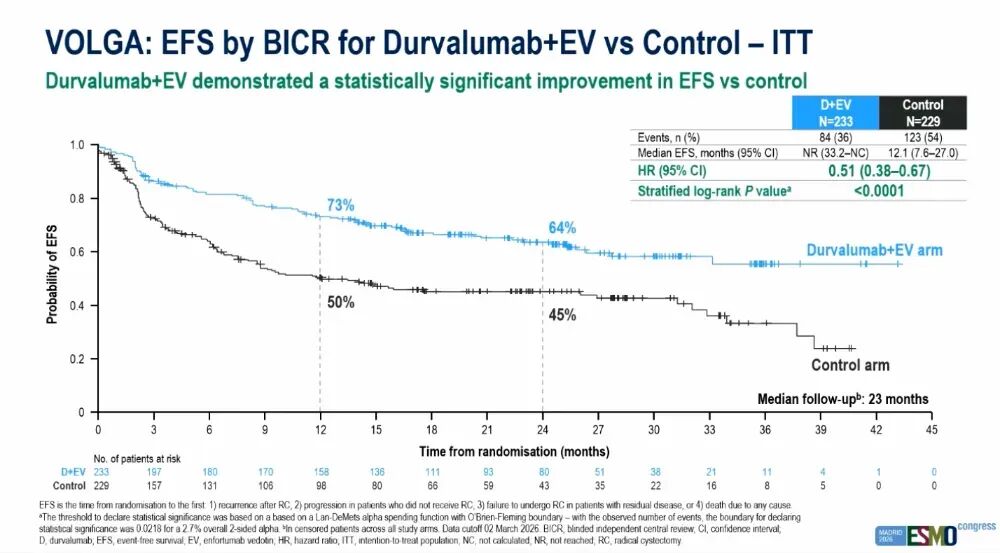 Fig.2. Event-free Survival in the Durvalumab Plus Enfortumab Vedotin Arm of VOLGA
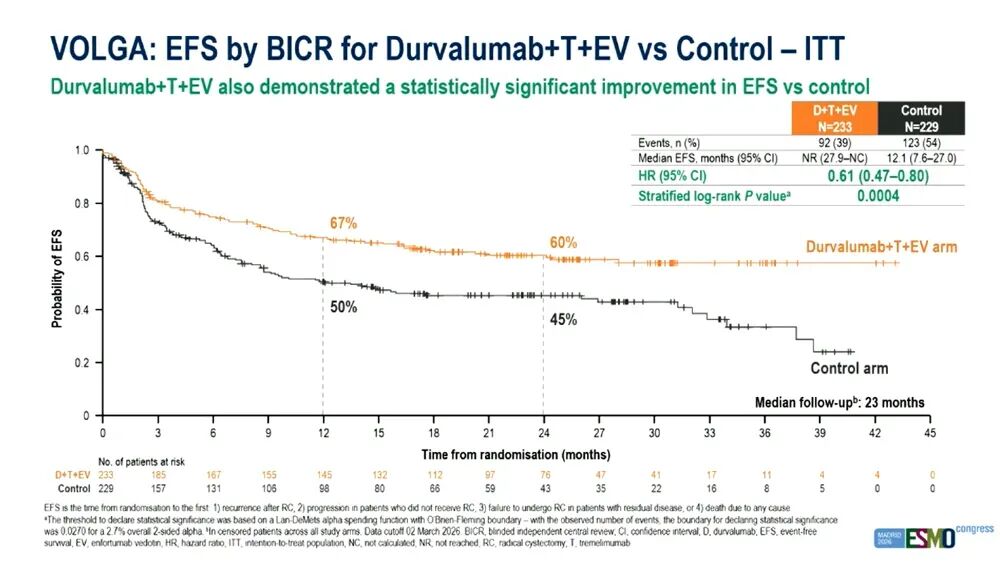 Fig.3. Event-free Survival in the Durvalumab, Tremelimumab and Enfortumab Vedotin Arm of VOLGA
Grade 3 or 4 treatment-related adverse events occurred in 30% and 42% of the two combination arms, consistent with the known profiles of the individual agents.
DeLLphi-305: Tarlatamab Plus Durvalumab as First-Line Maintenance in ES-SCLC
Dr. Jacob Sands of Dana-Farber Cancer Institute, Boston, reported the primary analysis of the phase 3 DeLLphi-305 study (NCT05361395), evaluating tarlatamab plus durvalumab versus durvalumab alone as maintenance therapy in patients with extensive-stage small cell lung cancer (ES-SCLC) who had not progressed after first-line durvalumab, platinum and etoposide.
A total of 563 patients without progression were randomized 1:1 to tarlatamab plus durvalumab (n=282) or durvalumab alone (n=281). Tarlatamab was given at 1 mg on day 1 of cycle 1, 10 mg on days 8 and 15, then 10 mg every 2 weeks; durvalumab 1500 mg every 4 weeks. The primary endpoint was OS, with investigator-assessed PFS as a key secondary endpoint and ORR and safety as other secondary endpoints.
With median follow-up of 15.9 and 16.1 months, the combination significantly improved OS (HR 0.42, 95% CI 0.32-0.54, P<0.001; median OS 21.1 versus 12.7 months), PFS (HR 0.34, 95% CI 0.28-0.42, P<0.001; median 7.4 versus 1.9 months) and ORR (26.4% versus 4.1%, P<0.001). The 12-month OS rate was 79.4% versus 53.3%.
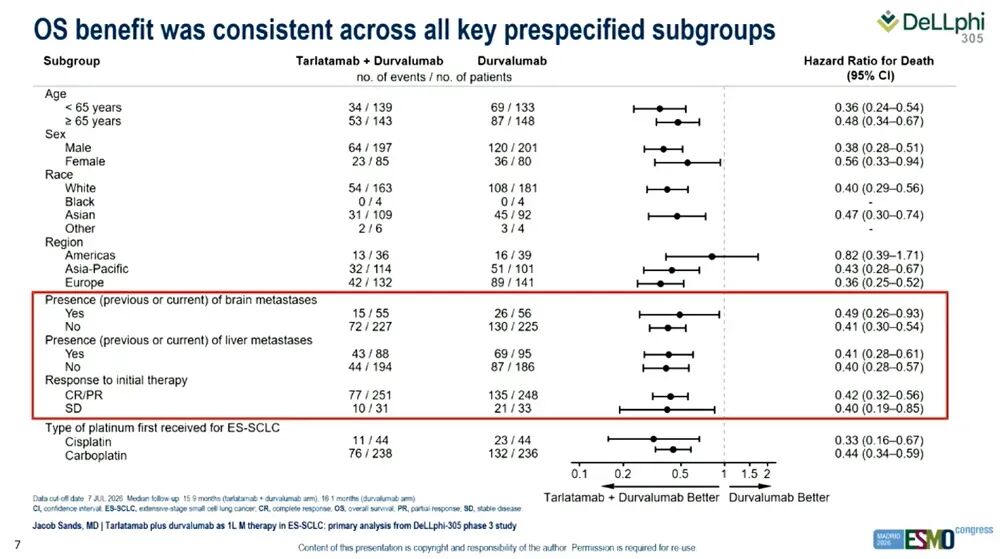 Fig.4. Overall Survival Subgroup Analysis in the DeLLphi-305 Study
Grade 3 or higher treatment-related adverse events occurred in 46.8% and 40.6%. Cytokine release syndrome and immune effector cell-associated neurotoxicity syndrome (CRS/ICANS) occurred in 49.6% and 1.1% of patients in the combination group, mostly at low grade, with no fatal events.
DASL-HiCaP: Darolutamide Plus ADT and Radiotherapy in Very High-Risk Prostate Cancer
Prof. Tamim Niazi of McGill University and the Jewish General Hospital, Montreal, reported the interim analysis of the DASL-HiCaP study (ANZUP1801; NCT04136353), evaluating the addition of darolutamide to standard androgen deprivation therapy (ADT) and radiotherapy in very high-risk localized or biochemically persistent or recurrent prostate cancer.
Patients received an LHRH analogue for 96 weeks together with radiotherapy to the prostate or prostate bed and pelvic lymph nodes, and were randomized 1:1 to darolutamide 600 mg twice daily or placebo twice daily for 96 weeks. The primary endpoint was metastasis-free survival based on conventional imaging (MFS-CI, an ICECaP surrogate endpoint for OS), assessed by CT and/or technetium bone scan, with secondary endpoints including PSA progression-free survival (PSA-PFS), prostate cancer-specific survival (PCSS) and OS. The protocol specified a single interim analysis after 87 MFS-CI events, with external disclosure permitted only if the two-sided stratified log-rank P value was below 0.012.
A total of 1106 patients were randomized. Median age was 71 years, 29% had pelvic nodal involvement on CT, 73% had a Gleason score of 9-10, and 15% had previously undergone radical prostatectomy. With median follow-up of 3.8 years, MFS-CI was significantly longer with darolutamide (4-year 95% versus 88%; HR 0.42, 95% CI 0.27-0.66, P=0.0001; 27 versus 63 events). PSA-PFS was also significantly improved (HR 0.47, 95% CI 0.33-0.67). PCSS and OS did not yet show a significant difference.
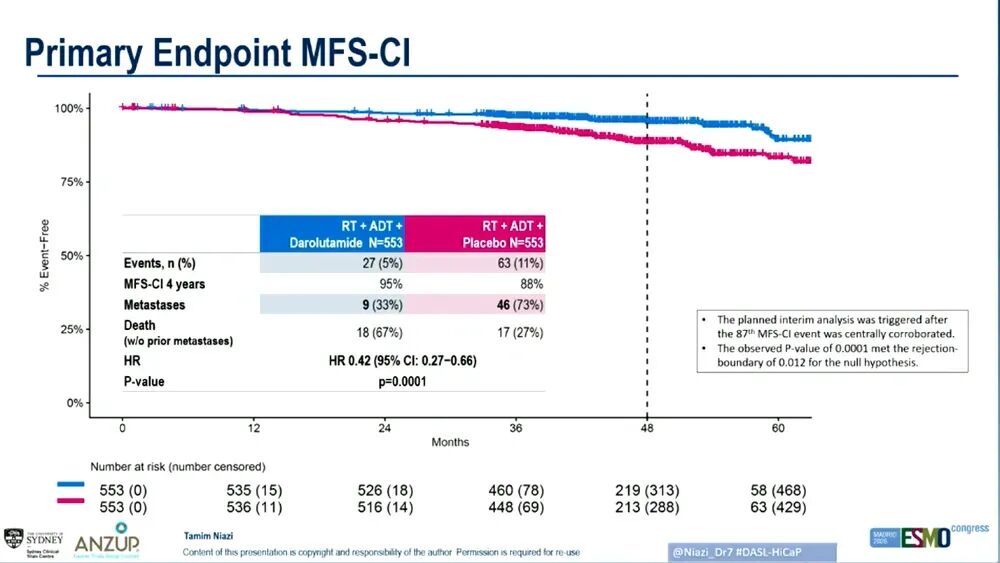 Fig.5. Primary Endpoint: Metastasis-free Survival by Conventional Imaging in DASL-HiCaP
Grade 3 or higher adverse events occurred in 43% of patients in the darolutamide group versus 36% with placebo. Rates of special-interest adverse events were similar between groups, including fatigue or asthenia (14% versus 10%).
The investigators concluded that adding darolutamide to ADT and radiotherapy significantly improved MFS-CI in very high-risk localized or biochemically persistent or recurrent prostate cancer, and that the good tolerability of darolutamide supports long-term use in this population, with follow-up ongoing.
Summary of the Four Studies
The four abstracts brought new evidence across four tumor types and across the disease course, from adjuvant treatment after resection to maintenance in advanced disease. INTerpath-001 established a new benchmark for adjuvant melanoma with an individualized mRNA neoantigen vaccine. VOLGA showed that perioperative durvalumab with neoadjuvant enfortumab vedotin improved both EFS and OS in patients ineligible for cisplatin. DeLLphi-305 established tarlatamab plus durvalumab in first-line maintenance for ES-SCLC, and DASL-HiCaP showed that intensified hormonal therapy with radiotherapy improves metastasis-free survival in very high-risk prostate cancer.
Reference
[1] G.V. Long, et al. INTerpath-001: Phase 3 study of intismeran autogene plus pembrolizumab vs pembrolizumab alone for adjuvant treatment of resected stage IIB-IV melanoma. 2026 ESMO. Abstract LBA1.
[2] T.B. Powles, et al. Perioperative durvalumab plus or minus tremelimumab plus neoadjuvant enfortumab vedotin in MIBC: Results from the phase 3 VOLGA trial. 2026 ESMO. Abstract LBA2.
[3] J. Sands, et al. Tarlatamab plus durvalumab vs durva as 1L maintenance therapy following durva, platinum, and etoposide in ES-SCLC: Primary analysis of the phase 3 DeLLphi-305 trial. 2026 ESMO. Abstract LBA3.
[4] T. Niazi, et al. Darolutamide with ADT and definitive or salvage locoregional RT for localised, very high-risk prostate cancer: Interim analysis of DASL-HiCaP. 2026 ESMO. Abstract LBA4.

