


On 13 July 2026, an operating room at Huashan Hospital, Fudan University, marked a key milestone for a frontier technology that has been in development for years.
BrainCo Medical (Shanghai) — full name: Boruikang Medical Technology (Shanghai) Co., Ltd. — has completed the world’s first commercial clinical implantation of its implantable BCI hand motor function compensation system, named NEO.
On the same day, the first clinical prescription for the product following its market launch was issued. The procedure came only four months after the product received a Class III medical device registration certificate from the National Medical Products Administration (NMPA) in March this year.
For the BCI industry, the milestone means more than the addition of one new medical device. It signals that a frontier technology long confined to scientific exploration and clinical research is now beginning to enter the real medical system.
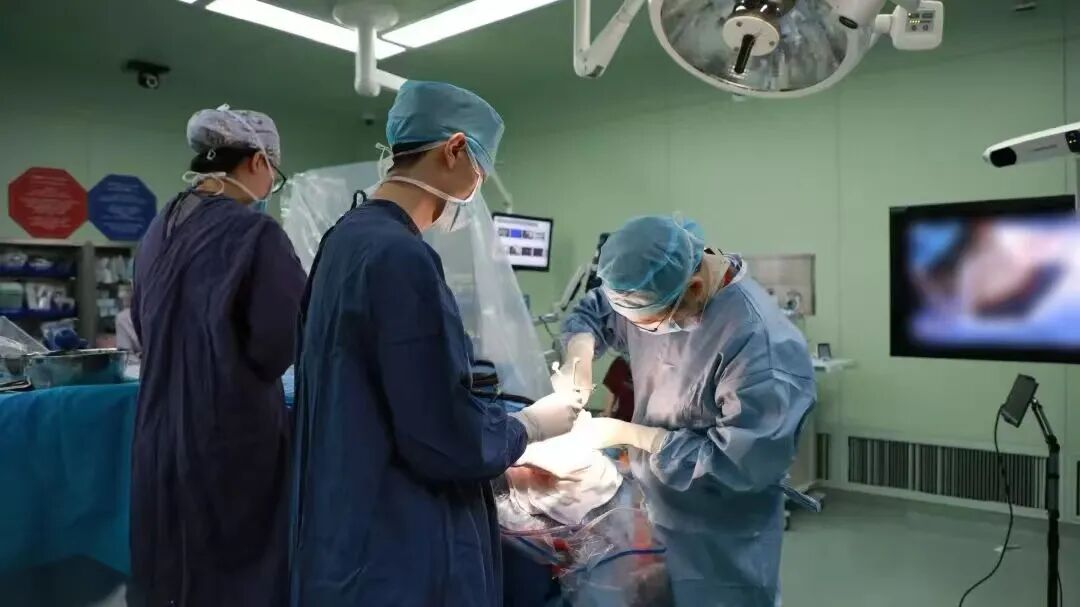
First Commercial Implant Performed at Huashan Hospital, Fudan University
From “Future Technology” to “Clinical Product”
Over the past several years, BCI has been viewed as an important direction in future medical technology. Whether through overseas company deployments or the investment of Chinese research institutions and innovative firms, the industry has been continuously exploring how to read brain signals, decode motor intent, and establish information connections between humans and machines.
For medical devices, however, a technological breakthrough is only the first step. To deliver real clinical value, an innovative technology must go through the full pipeline of research and development, validation, regulatory approval, hospital application, and patient benefit.
The significance of the NEO system lies precisely at this point.
In March this year, the NMPA approved the registration application for BrainCo Medical’s implantable BCI hand motor function compensation system. The product became the first invasive BCI medical device to receive market approval in China, and the first invasive BCI Class III medical device worldwide to receive formal marketing clearance.
The procedure performed at Huashan Hospital was not an exploratory implant from the research stage, but a commercial application built on product registration, hospital access, patient screening, and a complete clinical workflow.
The recipient of the surgery is a patient with long-standing hand-grasp dysfunction caused by spinal cord injury (SCI) following a motor vehicle accident. The NEO system uses implanted electrodes to capture movement-related brain signals, applies algorithms to interpret them, and converts the patient’s motor intent into control commands that assist an external device in performing hand motor function compensation. For some patients who have lost motor capability, this means a new information pathway is being established between the brain and external devices.
Three Routes in Parallel
The landing of NEO does not mean BCI has only one development path. The global BCI industry is in fact exploring several technology routes, each corresponding to a different clinical value proposition and commercialization pathway.
The industry has so far formed three main technology directions: invasive, semi-invasive, and non-invasive.
Semi-Invasive: First to Reach Medical Commercialization
The NEO system uses an epidural implantation approach. By placing electrodes on the dura mater to capture brain signals, the route may reduce surgical risk compared with devices that enter brain tissue directly, while preserving relatively good signal quality.
Its advantage lies in balancing signal accuracy, safety, and clinical feasibility, and this balance has made it the earlier route to achieve a medical device commercialization breakthrough. In addition to BrainCo, other Chinese companies are advancing similar directions. Companies such as Xinzhida (with its “Beijing-Brain No. 1” / Beinao-1) are conducting research and clinical translation around semi-invasive BCI, exploring applications in SCI, stroke rehabilitation, and related scenarios.
Invasive: A Future Direction Pursuing Higher Precision
Invasive BCI places electrodes directly into the cerebral cortex, which may allow access to more detailed neural signals. From a technical potential standpoint, this route may eventually support more complex motor control, language communication, and other function recovery. At the same time, the invasive route faces challenges including long-term implantation safety, electrode stability, infection risk, and surgical complexity.
In China, leading companies Brain-Hawk Technology, Stairmed (Jieti Medical), and BRAINN (Bolin BCI) are concentrating their efforts in this area. Stairmed has entered the National Innovative Medical Device Green Channel. Brain-Hawk’s flexible electrode arrays have initiated registration clinical trials. BRAINN’s invasive product has progressed to Phase 3 clinical trials. Although commercial deployment has not yet been achieved, these efforts place China among the global front-runners, laying the technical foundation for the next generation of higher-performance BCI.
Non-Invasive: Closer to Mass Application
The route with the fastest current deployment and the broadest reach. It requires no surgical implantation. Instead, devices such as head-mounted EEG caps and headbands collect signals from the scalp surface, offering advantages of zero trauma, low cost, ease of use, and faster regulatory review, allowing them to enter hospital rehabilitation departments and home rehabilitation settings quickly.
Companies such as BrainCo (consumer line), Aoyi Technology (AoYi Tech), and Xiangyu Medical have deep expertise in this area. Their products — including brain-controlled bionic hands, rehabilitation exoskeletons, attention-training headbands, and sleep-monitoring devices — have already entered thousands of medical institutions across China, with cumulative shipments reaching the hundred-thousand-unit level. They are widely deployed in stroke rehabilitation, limb function assistance, and consumer-level brain health management, and have become an important vehicle for making BCI accessible to the general public.
The Clinical Need Behind 3.7 Million SCI Patients
The reason BCI has drawn real attention from the medical community is not the “mind control”concept, but its response to long-standing clinical needs. The NEO system targets SCI patients specifically.
Public data show that more than 3.7 million people in China live with spinal cord injury, with approximately 90,000 new cases each year. Some of these patients develop limb dysfunction due to cervical-level injuries. For them, the greatest impact is not the motor impairment itself, but the loss of independent living capability. Everyday actions such as picking up a cup, using utensils, or completing dressing and washing may become long-term challenges.
BCI offers a new treatment approach: bypassing damaged neural pathways and establishing an artificial brain-device connection to achieve partial function compensation. Although a complete return to natural movement remains distant, helping patients regain some daily living capability already carries meaningful clinical significance.
The Industrialization Loop Is Accelerating
For a frontier medical technology to truly mature, no single technological breakthrough is sufficient. The technology, clinical system, regulatory system, and payment system must advance together.
China’s BCI industry is now accelerating the formation of a complete ecosystem. From upstream core components such as electrode materials, chips, and sensors, through midstream signal-acquisition devices, algorithm systems, and finished products, to downstream hospital clinical applications, rehabilitation training, and patient services, every link in the value chain is being progressively refined.
Public data indicate that the number of BCI-related companies in China has exceeded 200, covering neural signal acquisition, brain-computer interaction algorithms, neuromodulation devices, and rehabilitation applications. Industry analysts project that the Chinese BCI market will continue to grow at a relatively fast pace in the coming years, with medical rehabilitation likely to be the first scenario to achieve scaled application.
More importantly, with the completion of the first commercial NEO implant, the key links of the BCI industry are starting to connect:
The regulatory system is being refined.
As a field that closely integrates neuroscience, artificial intelligence, and medical device technology, BCI poses higher demands on regulation. In recent years, the NMPA has continued to improve its review mechanism for innovative medical devices, accelerating the market entry of clinically valuable products through the Special Review Channel for Innovative Devices, pre-encounter technical services, and other pathways, providing clearer registration routes for subsequent product development.
The clinical application system is being established.
BCI is not a single device. Its use involves multidisciplinary collaboration across neurosurgery, rehabilitation medicine, and neuroelectrophysiology. The commercial implant completed at Huashan Hospital not only validates the feasibility of bringing the product into clinical use, but also provides a reference for more medical institutions to develop related applications in the future.
Reimbursement exploration is being launched.
Whether an innovative medical technology can reach more patients depends critically on the payment system. In May this year, the 2026 version of Shanghai HuiBao (HuiBao 2026), the city’s supplementary insurance scheme, formally included implantable BCI consumables in its coverage, reimbursing 30% of costs with a maximum payout of ¥150,000. The move provides a new practical sample for reimbursement exploration of high-value innovative medical devices. Although the gap to a mature payment system remains significant, the step sends a positive signal that frontier medical technology is moving from “achievable” toward “accessible.”
Policy support continues to strengthen.
Continuous improvements in the policy framework are providing support for technology adoption. In 2025, the National Healthcare Security Administration (NHSA) issued the Pricing Project Establishment Guidelines for Neurological Medical Services (Trial), clarifying the direction for pricing BCI-related medical services and resolving the long-standing challenge of clinical billing. The same year, the Ministry of Industry and Information Technology (MIIT) and six other departments jointly released the Implementation Opinions on Promoting the Innovative Development of the Brain-Computer Interface Industry, defining the industry’s positioning, development goals, and support directions at the top design level. In 2026, the NMPA continued to refine the review and approval system for implantable BCI, standardizing technical requirements and accelerating the launch of innovative products, providing a compliant pathway for clinical translation. In parallel, cities including Beijing and Shanghai have accelerated industrial deployment, advancing coordinated development across R&D, clinical use, manufacturing, and application.
Conclusion
The first commercial implant of NEO is not the end point of BCI development, but a new starting point.
Whether BCI can enter more hospitals and reach more patients in the future will depend on long-term clinical data accumulation, product iteration, payment system refinement, and the maturity of the industrial chain. But one thing is already clear: BCI is no longer just a future technology confined to laboratories. It is becoming an important direction of medical device innovation.

