


Cardiovascular disease (CVD) is the leading cause of death among Chinese adults with type 2 diabetes mellitus (T2DM) [1]. A cross‑sectional study published in 2022 showed that the prevalence of cardiovascular disease in Chinese T2DM patients was 33.9% (95% CI 30.6%‑37.3%), with the vast majority (94.9%) being atherosclerotic cardiovascular disease (ASCVD) [1]. Furthermore, the CVD burden in China is heavier than that in the United States and Western Europe [2]. Against this backdrop, how to effectively reduce cardiovascular event risk has become a core issue in T2DM clinical management.
At the recently concluded 23rd Annual Meeting of the Chinese Society of Endocrinology (CSE 2026), Prof. Xuefeng Yu from the Department of Endocrinology, Tongji Hospital, Tongji Medical College, Huazhong University of Science and Technology, delivered a presentation titled “Interpretation of Cardiovascular Evidence for a Domestically Developed GLP‑1RA Weekly Formulation in the Chinese Population,” providing an in‑depth analysis of the cardiovascular outcome data for polyethylene glycol loxenatide (hereafter referred to as loxenatide) from the FIGHTING‑2 study in the Chinese T2DM population. MedJ invited Prof. Xuefeng Yu to further elaborate on the clinical value of loxenatide in cardiovascular protection.
Expert Profile: Prof. Xuefeng Yu

• Professor of Internal Medicine, Chief Physician, and Doctoral Supervisor, Department of Endocrinology, Tongji Hospital, Tongji Medical College, Huazhong University of Science and Technology
• Standing Member, Chinese Society of Endocrinology, Chinese Medical Association
• Standing Member, Endocrine and Metabolism Branch, Chinese Medical Doctor Association
• Vice Chairman, Healthy Lifestyle and Community Health Professional Committee, Chinese Preventive Medicine Association
• Chairman, Hubei Society of Endocrinology
• Deputy Editor‑in‑Chief, Journal of Critical Care in Internal Medicine; Standing Editorial Board Member, Drug Evaluation; Editorial Board Member, Journal of Clinical Internal Medicine, Chinese Journal of Diabetes, China Diabetes Journal, Chinese Journal of Multiple Organ Diseases in the Elderly, English edition of Journal of Huazhong University of Science and Technology, Endocrine Expert Committee of China Medical Tribune, and Diabetes World
GLP‑1RA Cardiovascular Benefits Driving a Paradigm Shift in Treatment
Glucagon‑like peptide‑1 receptor agonists (GLP‑1RAs) represent one of the most significant advances in diabetes treatment in recent years. Multiple large‑scale cardiovascular outcome trials (CVOTs), including LEADER, SUSTAIN‑6, and REWIND, have confirmed that GLP‑1RAs provide clear cardiovascular benefits beyond glycemic control [3‑5]. Building on this, a large meta‑analysis published in 2025 in the European Heart Journal – Cardiovascular Pharmacotherapy further consolidated these findings, showing that compared with placebo, GLP‑1RAs significantly reduced MACE risk by 13% (P<0.001), cardiovascular death by 14% (P<0.001), and all‑cause death by 13% (P<0.001) [6].
With robust cardiovascular benefit evidence, the status of GLP‑1RAs in both domestic and international guidelines continues to rise. The Chinese Guidelines for the Prevention and Treatment of Diabetes (2024 Edition) clearly recommend that T2DM patients with ASCVD or high risk factors should preferentially choose GLP‑1RAs or sodium‑glucose cotransporter‑2 inhibitors (SGLT‑2i) with proven cardiovascular benefits [7]. The 2026 American Diabetes Association (ADA) Standards of Care also recommend that for T2DM patients with ASCVD or kidney disease, GLP‑1RAs or SGLT‑2i with demonstrated cardiovascular benefit should be included as part of a comprehensive cardiovascular risk reduction or glucose‑lowering treatment regimen [8].
Limited Asian Population Data from Classic CVOTs
Although classic CVOTs such as LEADER, SUSTAIN‑6, and REWIND have established the cardiovascular benefits of GLP‑1RAs, their study populations were predominantly Western, with limited Chinese patient data and a clear evidence gap. Prof. Xuefeng Yu noted: “There are differences in clinical characteristics between Caucasians and Asian populations—Caucasians generally have a higher BMI than Asian populations; Asian populations, although relatively leaner, still face high cardiovascular risk.” A retrospective study of Chinese T2DM inpatients showed that the crude prevalence of stroke was 34.4% (standardized prevalence 21.5%), of which 85.2% were ischemic stroke [9], suggesting that the stroke burden in Chinese T2DM patients should not be overlooked. Although a meta‑analysis has suggested that the MACE risk reduction with GLP‑1RA therapy may be greater in Asian populations than in Caucasians [10], direct evidence from Chinese patients remains scarce, underscoring the urgent need for more local evidence.
FIGHTING‑2 Study Provides Local Evidence for Cardiovascular Benefit in Chinese Population
To address this gap, the FIGHTING‑2 study, a multicenter real‑world study based on the Tianjin Healthcare Data Platform, was conducted [11]. The study included T2DM patients with cardiovascular risk factors who initiated and continuously used GLP‑1RAs or DPP‑4i for at least 12 months between January 2016 and December 31, 2024. After 1:1 propensity score matching, the loxenatide group and the DPP‑4i group each comprised 1,972 patients, with well‑balanced baseline characteristics: mean age approximately 63 years, male proportion approximately 56%, HbA1c approximately 7.9%, hypertension approximately 76%, coronary heart disease approximately 28%, and median follow‑up durations of 29.50 months and 37.62 months, respectively [11].
The results showed that compared with DPP‑4i, loxenatide significantly reduced 3P‑MACE risk by 55% (HR 0.45, 95% CI 0.31‑0.65, P<0.001). Among the components of the primary endpoint, non‑fatal stroke risk was reduced by 56% (HR 0.44, 95% CI 0.28‑0.69, P<0.001), and all‑cause death risk was reduced by 80% (HR 0.20, 95% CI 0.05‑0.83, P=0.026) (Figure 1). For secondary endpoints, 5P‑MACE risk was reduced by 40% (HR 0.60, 95% CI 0.46‑0.77, P<0.001), coronary revascularization risk by 37% (HR 0.63, 95% CI 0.41‑0.98, P=0.039), and hospitalization for heart failure was also significantly reduced by 53% (HR 0.47, 95% CI 0.21‑1.02, P=0.003) (Figure 2) [11].
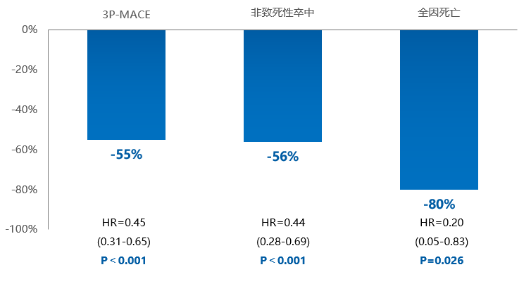 Fig. 1. Loxenatide vs. DPP‑4i: effects on 3P‑MACE, non‑fatal stroke, and all‑cause death
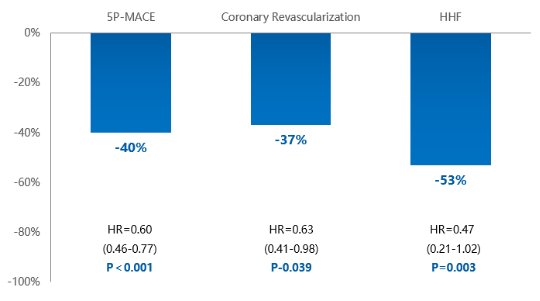 Fig. 2. Loxenatide vs. DPP‑4i: effects on 5P‑MACE and coronary revascularization
In this regard, Prof. Xuefeng Yu noted: “This indicates that the cardiovascular benefits of GLP‑1RAs are consistent across populations, and Chinese patients using loxenatide can also achieve clear cardiovascular protective effects.”
Basic Research Reveals Multiple Mechanisms of Loxenatide’s Cardiovascular Protection
The clinical hard endpoint benefits from the FIGHTING‑2 study have also been validated mechanistically in basic research. In the interview, Prof. Xuefeng Yu systematically elaborated on the mechanisms underlying loxenatide’s cardiovascular protection.
Promoting angiogenesis and protecting vascular endothelium. Under diabetic conditions, the HIF‑1α/VEGF/SDF‑1 axis is reactively impaired, leading to impaired angiogenesis. Loxenatide significantly upregulates the expression of HIF‑1α, VEGFA, and SDF‑1 in diabetic tissues, promoting neovascularization [13]. In vitro experiments have confirmed that loxenatide protects endothelial progenitor cells from high‑glucose‑induced apoptosis through the ROS‑mediated mitochondrial pathway via the SIRT3/Foxo3 signaling pathway, while also improving mitochondrial function and enhancing mitophagy [14]. Prof. Xuefeng Yu noted: “Animal studies have shown that loxenatide promotes angiogenesis in ulcer wound areas, regulates angiogenesis‑related signaling pathways, improves local blood supply, and accelerates tissue repair.”
Inhibiting inflammatory responses. Basic research suggests that loxenatide can inhibit the TLR4/NF‑κB inflammatory signaling pathway and cardiomyocyte apoptosis, enhance cardiac function, and thereby exert protective effects on the cardiovascular system [15]. Prof. Xuefeng Yu explained that the key to inhibiting inflammatory responses lies in the fact that diabetes itself involves chronic low‑grade systemic non‑infectious inflammation, and loxenatide can inhibit the expression of multiple inflammatory cytokines.
Improving myocardial injury and restoring cardiac function. Prof. Xuefeng Yu noted: “Loxenatide improves mitochondrial energy metabolism, reduces cardiomyocyte injury and promotes its repair, improves myocardial fiber arrangement, and increases left ventricular ejection fraction (LVEF), thereby exerting cardioprotective effects.” Basic research suggests that loxenatide may exert protective effects on cardiac function through pathways that increase LVEF and left ventricular fractional shortening (LVFS) [15].
Improving insulin resistance and metabolic regulation. Prof. Xuefeng Yu mentioned: “Loxenatide has weight‑reducing effects, reduces body fat, alleviates fatty liver, and improves insulin resistance and lipid profiles. Improvement in insulin resistance itself has anti‑inflammatory effects and synergistically improves glycemic control; improved glycemic control reduces glucotoxicity and lipotoxicity, thereby alleviating inflammatory responses and oxidative stress.” A study in T2DM rat models showed that high‑dose loxenatide significantly reduced fasting blood glucose and improved glucose tolerance, hyperinsulinemia, and insulin resistance [16].
Summary
Loxenatide, as a domestically developed GLP‑1RA weekly formulation, has had its cardiovascular protection in Chinese T2DM patients with high cardiovascular risk supported by important local evidence from the FIGHTING‑2 study. The findings—including a 56% reduction in non‑fatal stroke risk and an 80% reduction in all‑cause death risk—further consolidate the cardiovascular benefits of loxenatide in the Chinese population and provide strong evidence‑based support for its clinical application.
References:
[1] Hong T, Yan Z, Li L, et al. The prevalence of cardiovascular disease in adults with type 2 diabetes in China: results from the cross‑sectional CAPTURE study. Diabetes Therapy. 2022;13(5):969‑981.
[2] Du X, Patel A, Anderson C, et al. Epidemiology of Cardiovascular Disease in China and Opportunities for Improvement: JACC International. JACC. 2019;73(24):3135‑3147.
[3] Marso SP, Daniels GH, Brown‑Frandsen K, et al. Liraglutide and cardiovascular outcomes in type 2 diabetes. N Engl J Med. 2016;375(4):311‑322.
[4] Marso SP, Bain SC, Consoli A, et al. Semaglutide and cardiovascular outcomes in patients with type 2 diabetes. N Engl J Med. 2016;375(19):1834‑1844.
[5] Gerstein HC, Colhoun HM, Dagenais GR, et al. Dulaglutide and cardiovascular outcomes in type 2 diabetes (REWIND): a double‑blind, randomised placebo‑controlled trial. Lancet. 2019;394(10193):121‑130.
[6] Kalayci A, Januzzi JL, Mitsunami M, et al. Clinical features modifying the cardiovascular benefits of GLP‑1 receptor agonists: a systematic review and meta‑analysis. Eur Heart J Cardiovasc Pharmacother. 2025;11(6):552‑561.
[7] Chinese Diabetes Society. Chinese guidelines for the prevention and treatment of diabetes (2024 edition). Chinese Journal of Diabetes. 2025;17(1):16‑139.
[8] American Diabetes Association Professional Practice Committee. Standards of Care in Diabetes—2026. Diabetes Care. 2026;48(Suppl 1):S1‑S352.
[9] Xie ZL, Wang CC, Huang X, et al. Prevalence and risk factors of stroke in inpatients with type 2 diabetes mellitus in China. Curr Med Sci. 2024;44(4):698‑706.
[10] Lee MMY, Petrie MC, Sattar N, et al. Are the cardiovascular benefits of GLP‑1 receptor agonists modified by race or ethnicity? A systematic review and meta‑analysis. Diabetes Care. 2025;48(3):489‑493.
[11] Yu XF, et al. Real‑world comparison of the effects of loxenatide versus DPP4i on major adverse cardiovascular events in patients with type 2 diabetes: a multicenter cohort study (FIGHTING‑2). ECIM 2026. Abstract No.0633.
[12] Ussher JR, Drucker DJ. Glucagon‑like peptide 1 receptor agonists: cardiovascular benefits and mechanisms. (Full reference not provided in source)

