


He invented a system using CRISPR-Cas9 to work precisely and efficiently in human cells for the first time, transforming gene editing from a laboratory curiosity into a foundational tool freely shared with scientists worldwide.
By Ling Jun
By any measure of scientific achievement and accolades, Feng Zhang, a professor at the Massachusetts Institute of Technology (MIT), stands as one of the most consequential life scientists of his generation.
At the age of 30, Zhang had already produced research worthy of a Nobel Prize. By 34, he became the youngest tenured professor in MIT history, breaking a record previously held by Qian Xuesen. At 44, he counts among his honors membership in the U.S. National Academy of Sciences, the National Medal of Technology and Innovation, and Clarivate Citation Laureate status—a constellation of distinctions that commands the attention of the entire scientific community.
All of this traces back to a single achievement: he almost single-handedly redefined the field of gene editing.
Zhang's critical adaptation allowed the CRISPR-Cas9 system to edit the human genome with precision and efficiency for the first time. Gene editing was transformed from a niche laboratory technique into a foundational tool used across the global life sciences, opening the door to a new era of gene-editing therapeutics.
What sets Zhang apart from his peers is that he did not keep this revolutionary tool to himself. Upon its development, he made the key CRISPR toolkit freely available to researchers worldwide. In 2026, Zhang was inducted into the U.S. National Inventors Hall of Fame, with the citation noting that he "has continued to innovate in the gene-editing field and has generously shared his resources and expertise with the global scientific community."
A technology with enormous commercial potential was made freely available in academia. For this series of groundbreaking contributions, Feng Zhang was awarded the Basic Medical Research Prize at the 7th Value-Based Healthcare Mount Tai Award, presented by "DXY" (MedSci, the parent organization of the Mount Tai Awards).
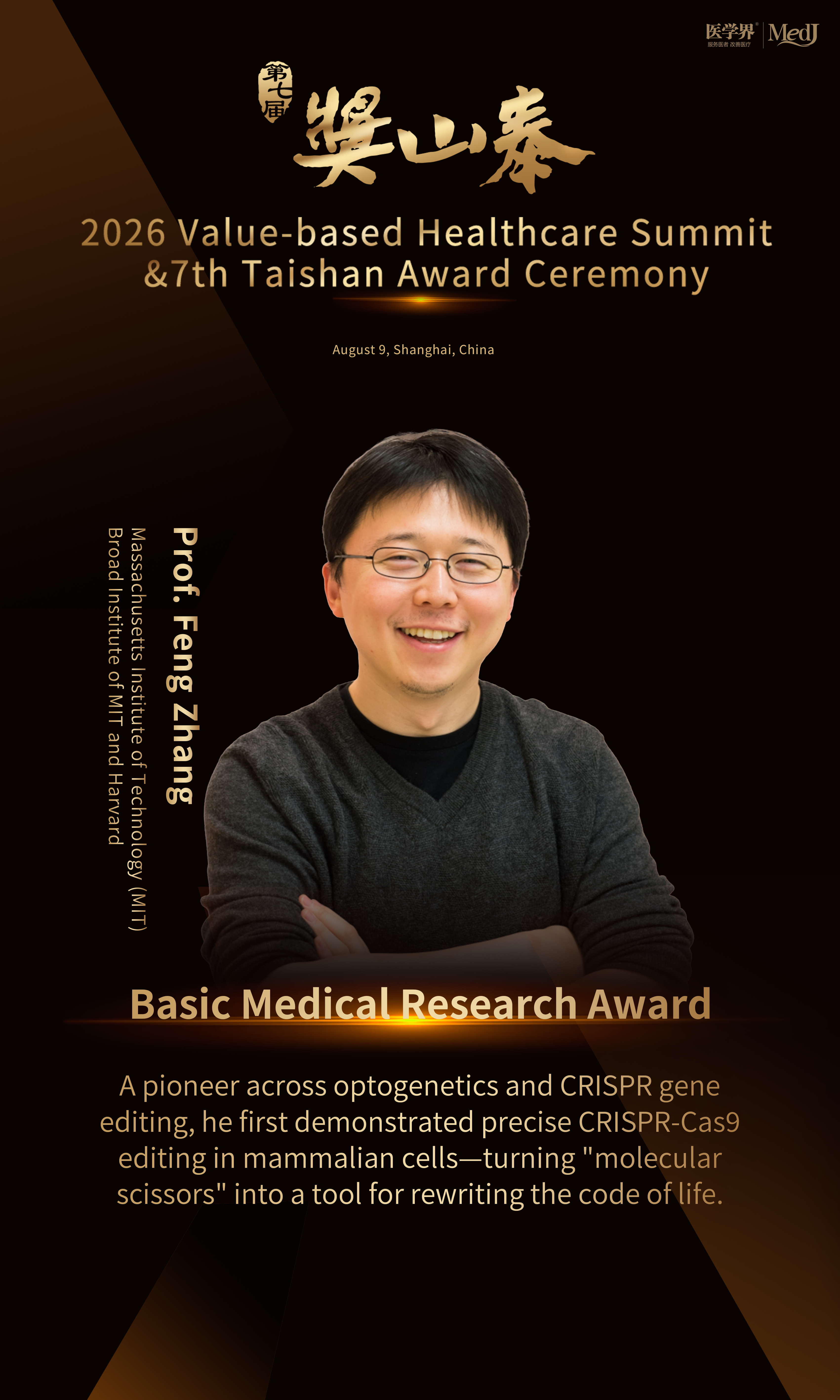
Fig.1. Prof. Feng Zhang
A Fateful Encounter with Genes
In 1993, an 11-year-old Zhang immigrated with his parents from Shijiazhuang, Hebei, to Iowa.
It was the first time Zhang had experienced genuine displacement. His mother, formerly a computer engineer, took a job as a motel housekeeper to support the family upon arrival. His father remained in China for several years, unable to join them immediately.
For the young Zhang, the challenges were immediate: he spoke no English, and everything in his surroundings had to be learned from scratch. At school, he found little interest in most subjects, particularly biology.
"It was mostly rote memorization—like which leaf grows on which tree. Not very interesting," Zhang later recalled. He was far more fascinated by things that could be taken apart and reassembled: space shuttles, rockets, robots.
The turning point came in an advanced molecular biology class. The instructor screened a film: *Jurassic Park*. The scene in which scientists extracted dinosaur DNA from a mosquito preserved in amber, bringing extinct creatures back to life, struck Zhang with the force of revelation.
"After that class, I realized biology could be 'programmed,' that we were just beginning to understand the most fundamental construction principles of life," he said. For someone who loved taking things apart and putting them back together, this was exhilarating.
Recognizing Zhang's passion, the teacher soon helped him secure a volunteer position at a local human gene therapy research institute. Every day after school, Zhang would report to the laboratory to learn the basics of molecular biology.
In high school, Zhang entered a gene-related project in the Intel Science Talent Search—often called the "Junior Nobel Prize"—and placed third nationally, winning a $50,000 scholarship. It was the first time he had been recognized by the wider world for scientific research.
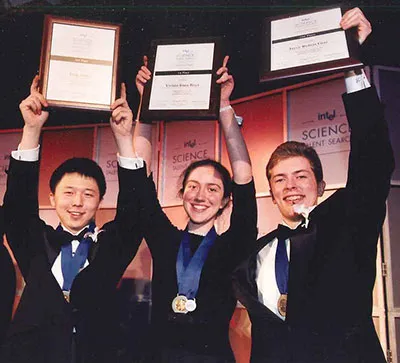
Fig.2. Feng Zhang Won Third Place and a $50,000 Prize at the Intel Science Talent Search for His Genetics Research Project
With excellent academic credentials, Zhang was admitted to Harvard University, where he majored in chemistry and physics. As an undergraduate, he joined the laboratory of Chinese-American biophysicist Xiaowei Zhuang, working on viral structure and engineering. "At the time, people were already using viruses as vectors to deliver genes into patients. I was very interested in understanding how viruses worked," Zhang later recalled.
After graduating in 2004, Zhang applied to Stanford University for graduate studies, hoping to work under Nobel Laureate Steven Chu. But when they met, Chu had limited openings and bandwidth. Disappointed, Zhang instead encountered a young professor who had just established his own laboratory: Karl Deisseroth.
After a conversation, Deisseroth was deeply impressed by Zhang's solid foundation in chemistry and physics and strongly encouraged him to join the fledgling lab. Zhang accepted.
This unplanned encounter gave rise to a technology that would later be written into textbooks: optogenetics. Using light-sensitive proteins derived from algae, they achieved, for the first time, precise optical control of neuronal activity in the brain—providing an unprecedented tool for understanding how the brain generates consciousness and how it fails in neurodegenerative diseases. This work established Zhang's name in neuroscience before he had even turned thirty.
After completing his doctorate, Zhang's independent research position was nearing its end, and he needed to find a new job—a period of uncertainty. Robert Desimone, director of the McGovern Institute for Brain Research at MIT, had heard of Zhang's capabilities from his doctoral advisor and actively reached out with an offer.
In 2011, Zhang joined MIT, with joint appointments at the Broad Institute and the McGovern Institute. Before him lay a goal even more ambitious than optogenetics: to find a simpler, more universal method for precisely editing the genome of any organism.
From a Bacterial Immune System to a Tool for the Human Genome
Before Zhang embarked on this work, gene editing was not a new concept, but truly usable tools were exceedingly rare.
At the time, two main gene-editing technologies dominated: zinc-finger nucleases (ZFNs) and transcription activator-like effector nucleases (TALENs). Both required scientists to design and construct an entirely customized protein for each new editing target—a cumbersome, expensive process that often took months to yield a usable tool.
Consequently, gene editing remained confined to a handful of elite laboratories as a "research project," far from being translated into accessible clinical therapies.
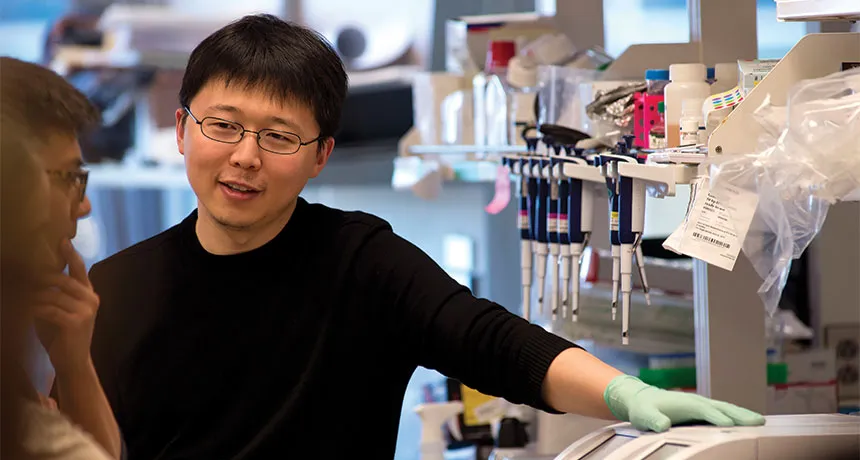
Fig.3.Prof. Feng Zhang in His Research Laboratory
The breakthrough came from a biological phenomenon seemingly unrelated to humans. CRISPR-Cas9 is a natural immune system found in bacteria: when a virus invades, the bacterium "records" fragments of the viral DNA, enabling it to recognize and cut the invader's DNA upon subsequent encounters.
In 2012, Jennifer Doudna at the University of California, Berkeley, and French scientist Emmanuelle Charpentier published an in vitro biochemical experiment that CRISPR-Cas9 could be programmed, by designing a guide RNA, to cut any specified DNA sequence in a test tube. Yet a critical question remained unresolved: could this bacterial immune system function in the human cell nucleus? The first obstacle was simply getting it inside. Bacteria lack a nucleus, but human DNA is sealed within one. A nuclear localization signal (NLS) had to be attached to the Cas9 protein just to get it into the nucleus and find its target.
The second obstacle was that the system originally relied on two separate RNA molecules—CRISPR RNA (crRNA) and trans-activating crRNA (tracrRNA)—working in concert. How to get this complex RNA machinery to be accurately transcribed, processed, and assembled in human cells was entirely uncharted territory.
In parallel to Doudna and Charpentier’s collaboration, Zhang was working to harness Cas9 for gene editing. He first learned of the CRISPR system during a talk at the Broad in February 2011 and he immediately undertook efforts to engineer this system to see if it could be made to work in human cells as he established his own fledgling lab and recruited students to join his efforts. During this period, stories circulated around the Broad Institute campus about Zhang's team "frantically iterating." They repeatedly designed, tested, and refined different versions of the system, verifying cutting efficiency and precision, adjusting RNA design and experimental conditions.
A former postdoctoral researcher who worked in the lab at the time and now leads his own laboratory recalled: "Zhang didn't try just one approach—he tried fifty at once: different nuclear localization signals, different codon optimization strategies, different RNA structural designs."
From the project's launch in early 2011 to the formal submission to *Science* in October 2012, this intensive process of iteration lasted nearly two years.
On January 3, 2013, the 31-year-old Zhang, as corresponding author, published in *Science* the paper that would become the most-cited work in the CRISPR field. The paper demonstrated for the first time how CRISPR-Cas9 could be used to edit the genomes of human and mouse cells with precision and efficiency.
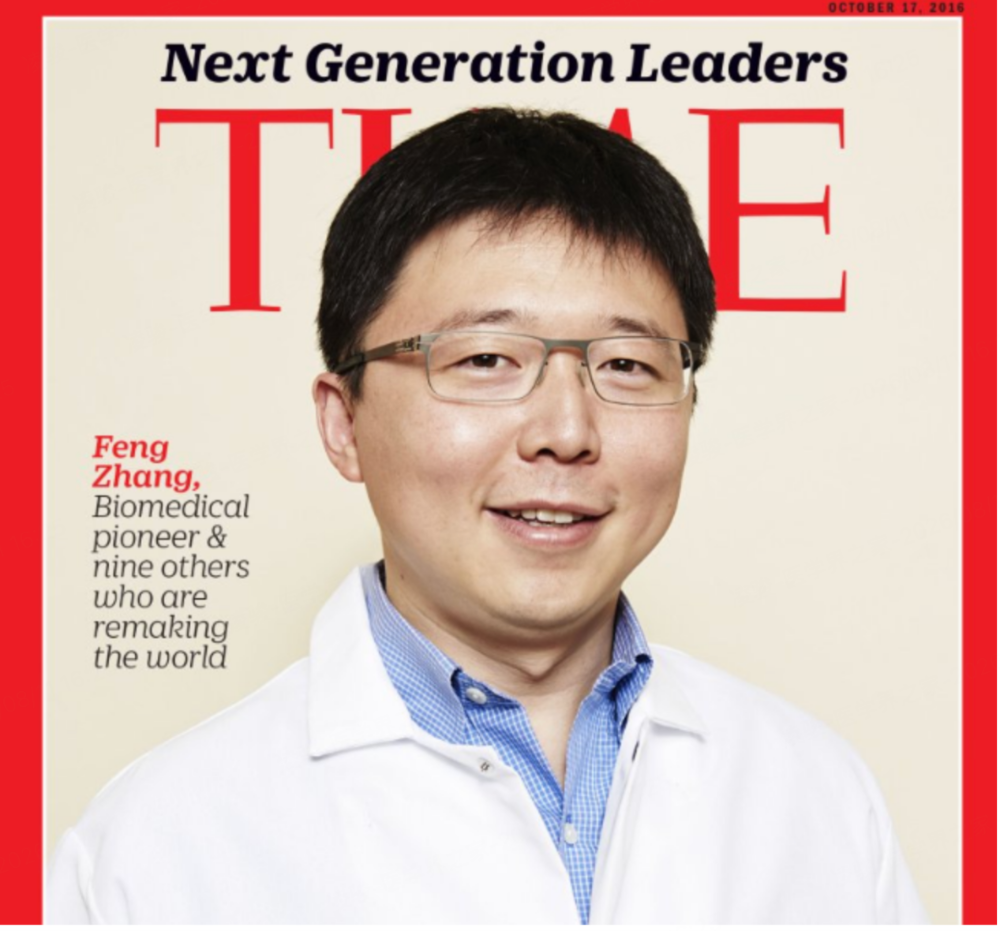
Fig.4. At Age 30, Feng Zhang Published in *Science* as the Corresponding Author
The study stunned the world. The paper quickly became the most-cited publication in CRISPR research. Between its publication and early 2017, more than 4,400 scientific studies worldwide had directly employed this technology. The previously dominant ZFN and TALEN technologies were almost overnight supplanted by a system that was more efficient, more precise, and orders of magnitude less expensive.
Gene editing was transformed into a foundational technology that virtually any life sciences laboratory could afford and operate. The clinical translation of gene-editing therapies had entered a new era.
Footsteps That Never Stopped
The weight of the technology soon manifested in legal and commercial arenas as well.With issuance of the first US patent, years-long dispute over patent rights to the application of CRISPR-Cas9 in eukaryotic cells ensued.
This prolonged controversy was also a backdrop frequently cited when the 2020 Nobel Prize in Chemistry was awarded to Doudna and Charpentier rather than to Zhang. In several rulings spanning many years, the U.S. Patent and Trademark Office repeatedly ruled in favor of the Broad Institute and its collaborating institutions.
But Zhang did not confine the value of this technology to patent certificates or prize attributions. He and the Broad Institute shared CRISPR tools widely, and Zhang went on to co-found multiple companies,rapidly advancing the translation of CRISPR from laboratory discovery to bona fide drug development.
In 2023, the world's first approved CRISPR-Cas9 therapy, Casgevy (exagamglogene autotemcel), was launched for the treatment of sickle cell disease.
Even standing at the frontier of the field, Zhang never stopped advancing. In the decade following the debut of CRISPR-Cas9, he and his team continued to expand the gene-editing "toolkit." Zhang’s team believed CRISPR was not the only solution to gene editing; nature likely held more tools waiting to be discovered. Zhang next identified and harnessed new systems, Cas13 which targets RNA rather than DNA and Cas12a (Cpf1) which are smaller and easier to deliver. In 2023, Zhang and his team discovered a previously unknown, naturally programmable gene-editing protein called Fanzor in eukaryotic organisms.
Also in 2023, his team discovered that certain bacteria naturally carry a "molecular syringe" capable of delivering proteins precisely into other cells. This discovery opened an entirely new avenue for how gene-editing tools might be delivered into the human body more safely and precisely in the future.
By 2025, Zhang's team had made further advances in two directions. First, through engineering modifications, they made Cas proteins less likely to be recognized and attacked by the human immune system after delivery—a critical safety threshold that gene therapies must cross to achieve large-scale clinical application.
Second, the team developed a method using mRNA technology to enable liver cells to temporarily serve as a "thymus substitute," opening a new window for combating the age-related decline of the human immune system.
In the eyes of his peers, Zhang has always been the "impatient" one. A journalist who has long followed his career described him as a man of impressive scientific vision,eager to see his field move faster.
In a 2014 interview with the journal *Cell*, when asked which scientist he admired most, Zhang did not name any Nobel Laureate. Instead, he said he admired scientists who are "passionate about their work, even if their projects seem somewhat impractical at first glance."
Zhang has also emphasized that teamwork is an indispensable part of science. "When people with different backgrounds and perspectives form the right team, they amplify and resonate with one another, ultimately producing "breakthroughs.”
Perhaps this statement is itself an annotation of Zhang's own journey over the past decade and more: from an early molecular biology class, to a technical breakthrough that almost redefined an entire discipline, to a still-growing list of achievements—he has never paused at any single highlight, but continues pressing forward, searching for the next answer.

