


On the evening of October 17th, local time, the state of Texas in the United States had originally planned to carry out a death penalty. The convict was 57-year-old Robert Roberson, who was charged with killing his 2-year-old daughter in 2002.
"At the time, doctors inferred that the little girl was abused to death by Roberson, and the cause of death was 'Shaken Baby Syndrome,'" recalled retired police officer Brian Wharton, who was the lead investigator on the case.
"Shaken Baby Syndrome" was first proposed in the 1970s by British pediatric neurosurgeon A. Norman Guthkelch. He suggested that infants and young children who suffered intracranial injuries without apparent external trauma might have been violently shaken, cautioning parents against casually shaking babies' bodies.
Roberson was the first person in the United States to be sentenced to death for "Shaken Baby Syndrome." In a dramatic twist, about 90 minutes before the execution, the Texas Supreme Court rarely intervened in this criminal case, halting the execution.
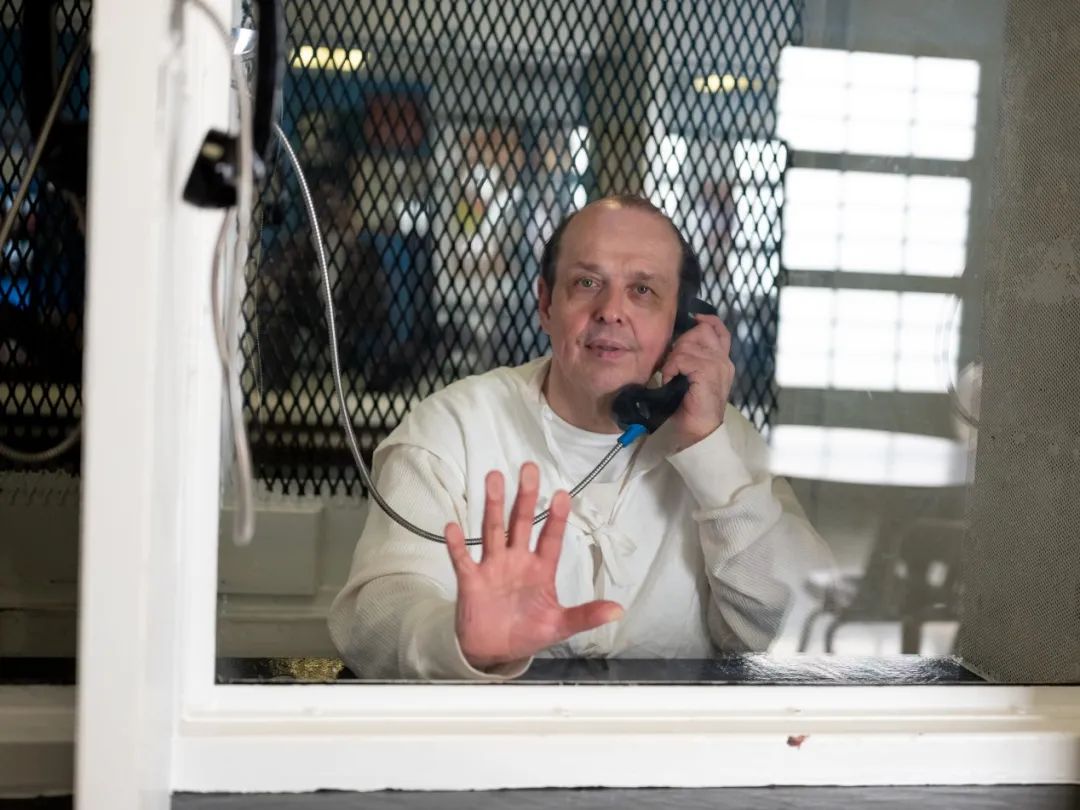
Robert Roberson, photographed in December 2023. Image source/Ilana Panich-Linsman
According to comprehensive media reports, this is due to the efforts of politicians, legal professionals, medical experts, and scientists who have been advocating for Roberson and trying to overturn his case in recent years, including Wharton, who investigated the case.
They believe that inferring criminal behavior based on a disease diagnosis is flawed and could lead to a miscarriage of justice for Roberson. Consequently, information surrounding the pathology and diagnosis of "Shaken Baby Syndrome" has become key evidence in this case, sparking widespread discussion.
Why is there continuous controversy over a disease?
This is not the first time "Shaken Baby Syndrome" has sparked controversy. Many people became aware of the condition through a case in 1997.
At that time, 18-year-old Louise Woodward was accused of abusing an 8-month-old male infant, which led to his death while she was working as a nanny.
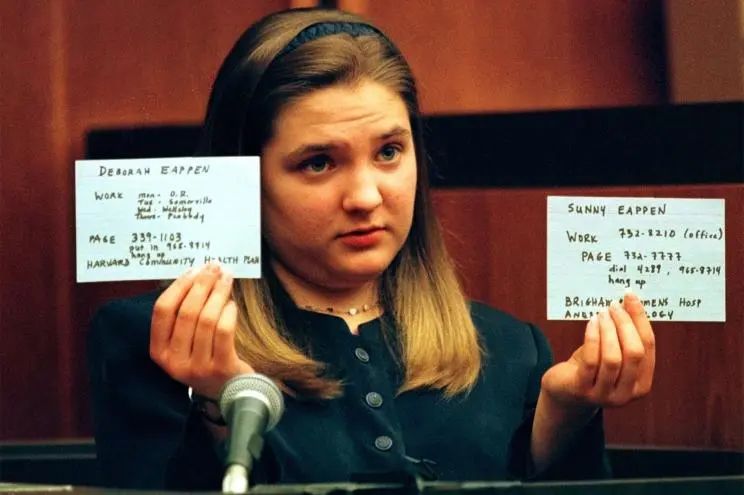
Louise Woodward's trial material image. Image source/Associated Press
The survey showed that the male infant had skull fractures, subdural hemorrhage, and retinal hemorrhage, which are known as the pathological triad of "Shaken Baby Syndrome." At that time, it was believed that if a serious accident could be ruled out and the triad appeared in the child, it could be inferred that the child had been violently shaken, indicating abuse by the caregiver.
Therefore, the focus of the initial case was on these three major symptoms. The prosecution's witnesses believed they proved the infant had been violently shaken, with his head hitting some hard surface. A neuroradiologist stated that this was definitely child abuse because "Shaken Baby Syndrome" was present, but Woodward maintained her innocence throughout.
Ultimately, Woodward was convicted of second-degree murder, later reduced to manslaughter, with her sentence reduced from 15 years to 279 days, with the reasons for the reduction not being publicly disclosed.
Similar to Woodward's case, Roberson was initially sentenced to death because his daughter exhibited the triad of "Shaken Baby Syndrome." Several attending medical staff and invited medical experts testified that the girl's intracranial hemorrhages were scattered everywhere, not consistent with the result of an accidental fall from a bed.
In addition, the daughter had multiple old injuries all over her body. His ex-wife accused Roberson of having a violent tendency, and some of his children stated that they had seen their father shake Nikki in the past.
About 13 months after his daughter's death, Roberson was found guilty of murder and sentenced to death. Over the next decades, his appeals were all denied. However, during this period, many people, including Officer Wharton who arrested Roberson, changed their original positions.
Further investigation revealed that Nikki had been frail since childhood and had fainted multiple times due to respiratory arrest. Two days before the incident, she had a high fever of 40.3°C, severe diarrhea, and had been given a prescription drug containing codeine by her parents. The autopsy confirmed that she had undiagnosed pneumonia and sepsis, all of which could have caused her death. Currently, Roberson is still awaiting the final verdict.
In fact, this is also the main reason for the industry's controversy over "Shaken Baby Syndrome," especially in criminal cases, where some medical experts believe that the diagnosis of "Shaken Baby Syndrome" is too hasty because, with medical advancements, other causes can also explain various bleeding and brain swelling symptoms.
For example, infections, previous accidental falls, and even vascular thrombosis suffered by the fetus in the womb can all lead to symptoms similar to "Shaken Baby Syndrome."
Some doctors also question whether simply shaking a baby without using other forms of violence can really cause the triad of "Shaken Baby Syndrome." However, it is almost impossible to explore this viewpoint, as no one would shake a baby in the name of science to verify what might happen.
Is Shaken Baby Syndrome always a sign of child abuse?
In 2001, the American Academy of Pediatrics issued guidelines recognizing the inference that "Shaken Baby Syndrome may indicate child abuse."
As countries gradually pay more attention to child abuse, this inference has almost become a consensus. A few years later, under the advice of the American Academy of Pediatrics, the disease was given a more professional name: "Abusive Head Trauma."
The cause of Abusive Head Trauma is due to the infant's brain development not being stable yet, and when subjected to violent shaking, the brain tissue is prone to impact, resulting in vascular tearing and damage to brain nerve fibers.
The sequelae of this condition include headaches, dizziness, memory loss, and intellectual impairment. In severe cases, due to the rupture of a large number of microvessels in the brain, it can lead to massive brain bleeding, paralysis, or even death.

Posters urging caregivers not to shake babies / Image source: Internet
In terms of child abuse, the incidence of infant abuse in the United States has increased tenfold since 1990. The latest data from the country's National Shaken Baby Syndrome Center shows that approximately 1,300 cases of related child abuse are reported each year. Similar incidents have occurred in Japan, Germany, Malaysia, and other countries.
During the COVID-19 pandemic, Necker Enfants Malades Hospital in Paris, France, found that the number of children with "Shaken Baby Syndrome" doubled, and the mortality rate increased ninefold, with the average age of the children being only four months old. Swiss pediatrician Dr. Ulrich Lips conducted a survey showing that in Western European countries, there are about 14 victims of "Shaken Baby Syndrome" per 100,000 newborns.
However, there is still disagreement within the medical community regarding the degree of association between "Shaken Baby Syndrome" and child abuse.
Since it is impossible to verify "Shaken Baby Syndrome" in healthy infants, some medical scientists have thought of animal experiments. From 1998 to 2023, seven relevant articles can be found through public channels. Among them, only one study on lambs has results closest to the inference that "Shaken Baby Syndrome indicates child abuse."
Kana Sasakura, a professor at the Faculty of Law at Konan University in Japan, has raised three points of doubt about "Shaken Baby Syndrome":
First, is the force of an adult shaking an infant sufficient to cause disease symptoms? Second, since it is related to violent shaking, why do most of the children not have neck tissue injuries? Third, the pathophysiological mechanism of "Shaken Baby Syndrome" has not been fully elucidated, and there is no medical scientific research to support that it is an exclusive diagnosis.
"Initially, the 'Shaken Baby Syndrome' inference was that shaking might produce the triad of symptoms, but later it became 'if there is a triad, we can determine that shaking and child abuse occurred,'" Kana Sasakura believes that tracing back the cause from symptoms carries risks. "A cold may cause a fever, but not all fevers are caused by colds."
"The father of 'Shaken Baby Syndrome," Norman Guthkelch, also publicly stated in 2011: "I think it is a bit of an overcorrection for medical and legal scholars to determine the existence of violent behavior and impose penalties based solely on the triad of symptoms."
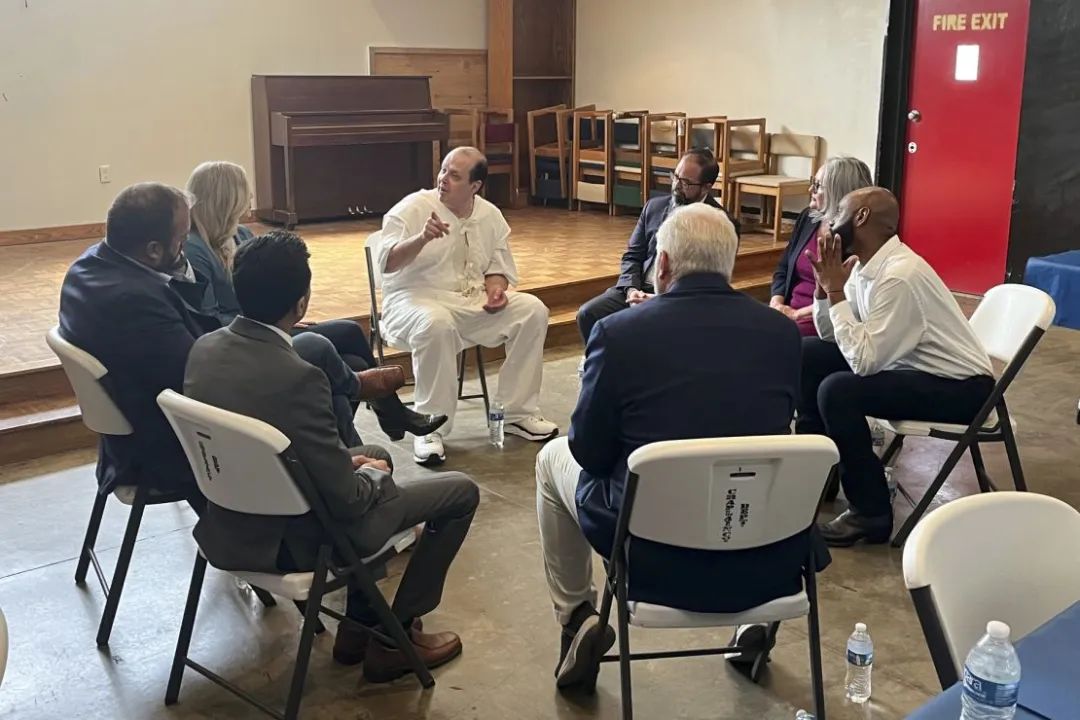
Recently, several Texas state legislators and legal professionals met with Roberson in prison. Image source/Associated Press
To correct the bias, in 2017, the Japanese legal community launched the "Shaken Baby Syndrome Examination Project," aiming to view this topic from an objective and scientific perspective. Two years later, the project joined hands with Japanese neurosurgeons to establish the "Child Brain Injury Research Association," aiming to further discuss issues related to Shaken Baby Syndrome from a medical standpoint.
As of October 2023, there have been 10 child abuse cases in Japan related to "Shaken Baby Syndrome," and through the collaboration of the aforementioned project and clinical doctors, these cases ultimately resulted in acquittals. The United States is also seeking change. In recent years, more than 30 caregivers in 18 states of the country, who were convicted due to "Shaken Baby Syndrome," have had their sentences reduced or have been released without guilt.
However, the debate continues. Two former presidents of the American Academy of Pediatrics firmly believe that there is a causal relationship between "Shaken Baby Syndrome" and child abuse, stating that this inference is supported by decades of clinical observation.
Regardless, the harm of "Shaken Baby Syndrome" is real. In recent years, many developed countries have paid high attention to this disease, adopting various measures including collecting information and researching effective prevention strategies.
Some medical professionals in our country are also studying this disease. A survey conducted in 2014 at a tertiary hospital in the north showed that only 5.1% of pregnant mothers delivering in the hospital were aware of "Shaken Baby Syndrome," indicating the need to strengthen disease education.
Research by pediatricians at another hospital in the country indicates that the clinical manifestations of children with "Shaken Baby Syndrome" are diverse, with significant differences in symptoms and signs between individuals, which can be mild or severe. The main symptoms include decreased responsiveness, irritability, loss of consciousness, seizures, respiratory abnormalities, and coma, which are easily overlooked by clinical doctors or attributed to infectious diseases.
However, these characteristics are usually non-specific and are often misdiagnosed in clinical work. Even with the discovery of corresponding cranial imaging features through CT and MRI, a multidisciplinary team including pediatrics, ophthalmology, neurosurgery, laboratory medicine, forensic medicine, and radiology is needed for a joint assessment and diagnosis.
"In our country, education related to 'Shaken Baby Syndrome' urgently needs to be strengthened, to educate the general public, especially child guardians and pediatric medical professionals, about Shaken Baby Syndrome, to enhance the recognition, diagnosis, and treatment of the disease, and to understand the related hazards," the study indicates.

