


For nearly 30 years, Professor Chen Huajiang, Director of the Cervical Spine Ward at Shanghai Changzheng Hospital, has treated countless cases of severe cervical spine trauma. However, this was the first time he had ever encountered what could be described as a true case of “internal decapitation.”
The patient before him had essentially been given a death sentence. Imaging revealed an extremely rare, large-span dislocation of the cervical spine, with severe spinal cord contusion and tears in critical neurovascular structures.
“We searched extensively through both domestic and international medical literature, but could not find a single case of cervical separation this severe—let alone one in which the patient survived after treatment,” Prof. Chen told The Medical Community.
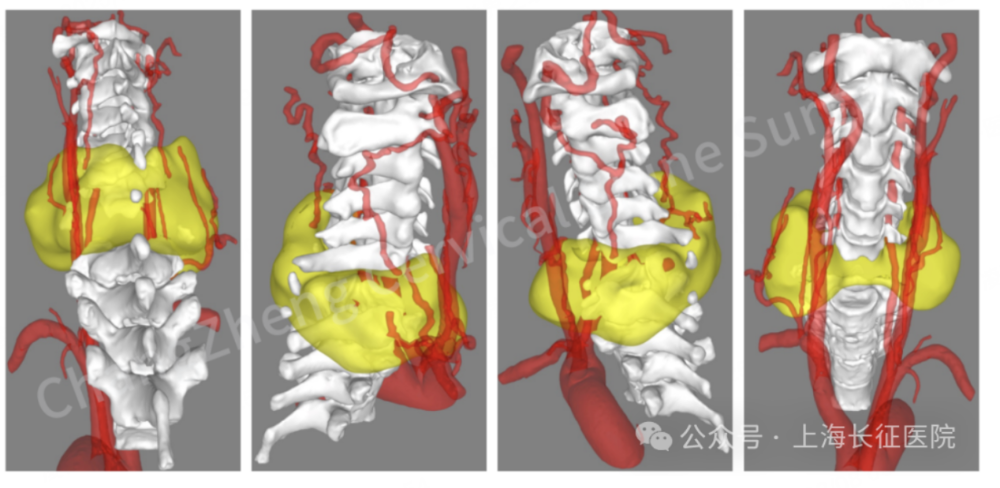
If surgery were attempted, the medical team would face numerous uncertainties, including bone fracture-dislocation, vertebral artery injury, and massive cerebrospinal fluid leakage. With no precedent to follow, each potential complication could prove catastrophic.
“Internal Decapitation” — A Surgery as Difficult as Reaching the Sky
On May 31 this year, Mr. Zhang was struck on the back of his neck by a mechanical arm. He collapsed instantly, semi-conscious, with bleeding from his mouth and nose.
After being rushed to a local hospital by ambulance, doctors found he had lost motor function in his lower limbs and immediately ordered a CT scan. En route to imaging, his blood pressure suddenly plummeted; rapid fluid resuscitation was administered to maintain circulation.
“After the scan, on the way back to his room, his heart actually stopped. It took about three minutes of CPR to bring him back,” Prof. Chen recalled. “When we saw the images, it looked like his head had been separated from his body—it shocked everyone.”
Mr. Zhang was urgently transferred to Shanghai Changzheng Hospital, where Prof. Chen quickly assembled a multidisciplinary team from Emergency Medicine, Intensive Care, and Anesthesiology for consultation.
“If we didn’t operate, the outcome was certain,” said Prof.
Chen. “The spinal cord injury would inevitably progress upward, eventually affecting respiratory and cardiovascular centers, leading to death.”Yet active surgical intervention would be extraordinarily difficult.
First, the patient’s vertebral artery was already injured and occluded, posing a high risk of massive intraoperative hemorrhage. Humans have two vertebral arteries—one on each side of the neck. CT angiography showed that Mr. Zhang’s right vertebral artery had ruptured, but was fortuitously blocked by displaced bone and clot.
The left vertebral artery had been stretched “like an elongated thin tube,” barely sustaining blood supply.“The vertebral artery is under high pressure—if the clot dislodged during surgery, bleeding could reach 1,000–2,000 mL within seconds, and the patient could die almost instantly,” Prof. Chen explained.
Second, no existing surgical protocol could be applied.
The patient’s anterior and posterior cervical bones and soft tissue were completely severed. For such a severe fracture-dislocation, an anterior-only approach would not provide sufficient fixation strength—posterior or combined approaches are usually needed.However, the skin at the back of the neck had large open wounds, making posterior surgery extremely prone to infection.
Combined with the presence of blood clots and cerebrospinal fluid leakage between the severed vertebrae, any bacterial contamination could lead to fatal intracranial infection.
Worsening matters, the patient’s condition was too unstable to allow further detailed imaging.
“Even moving him slightly could drop his blood pressure to 50 or lower. We could barely keep his basic vital signs stable,” said Prof. Chen.This meant the team would go into surgery without fully knowing the injury’s extent—forced to adapt step by step on the operating table.
Taking on the “Impossible”
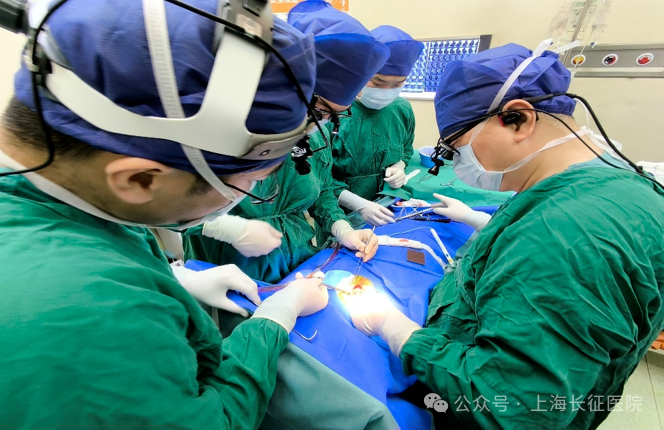
“No matter what, even if there’s only a sliver of hope, we will try—we cannot let a child lose his father,” said Prof. Chen, recalling the patient’s family’s plea before surgery.Under the leadership of Professors Yuan Wen, Chen Huajiang, Wang Xinwei, and Cao Peng, together with Emergency Director Li Wenfang and Anesthesiology Director Yuan Hongbin, the team refined the plan through multiple consultations.
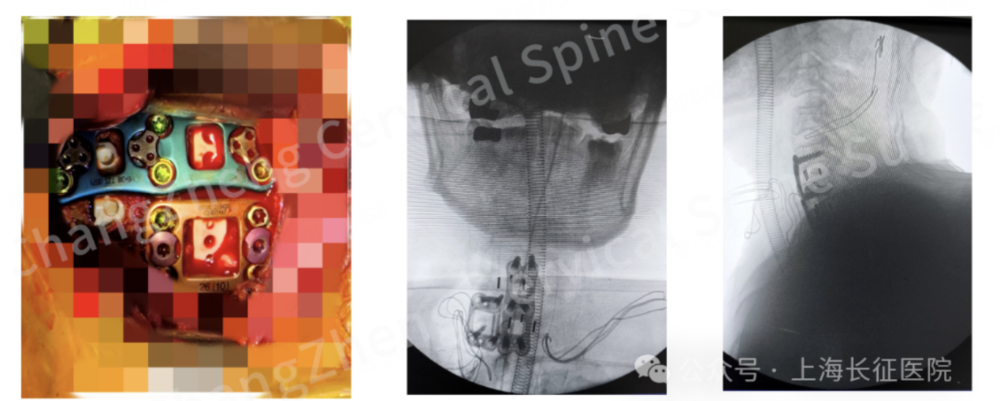
Prof. Chen devised a pioneering approach: “Satellite Plate-Assisted Stepwise Reduction and Internal Fixation.” This novel anterior cervical technique—an innovative combination of existing materials and methods—enabled one-stage reduction and reconstruction of stability for an extremely unstable cervical spine.
“No one has ever proposed or attempted this before, simply because there have never been such severe cases. Even if there were, most would go straight to a posterior approach,” Prof. Chen said.The multidisciplinary team prepared for every extreme risk—massive hemorrhage, circulatory collapse, insufficient brain perfusion—developing a detailed contingency plan and surgical roadmap.
On June 18 at 1:00 p.m., surgery began. Upon opening the anterior cervical soft tissues, the team encountered extensive hematomas and bulging prevertebral fascia. Using a fine needle to confirm the presence of cerebrospinal fluid and clots, they carefully cleared the field, exposing the completely separated vertebrae.
Because the two vertebral bodies were widely displaced, the team first brought them closer together, then removed residual disc tissue. Prof. Chen inserted vertebral screws into the upper body and, with the assistance of retractors and leverage techniques, compressed the two bodies tightly together.
Two satellite plates were fixed to stabilize the vertebrae, followed by the insertion of two fusion cages for additional reinforcement.Despite the absence of precedent, the procedure went smoothly, without any of the feared complications. After about three hours, complete anatomical reduction was achieved, avoiding the need for subsequent posterior surgery.
That same day, Mr. Zhang was weaned off vasopressors, his vital signs stabilized, and under ICU care, his respiratory function improved steadily. Eventually, he was discharged to a local hospital for rehabilitation. He can now breathe independently for up to 36 hours and has regained some upper limb and shoulder movement.
Pushing into the “No-Go Zone” of Surgery
News of the case spread quickly, attracting attention from spine surgeons across China. Many contacted Prof. Chen to learn about the details, noting they had never seen such a case.
In many ways, Mr. Zhang was “lucky”—his left vertebral artery could sustain limited blood flow, giving the team a chance. But success was equally due to decades of experience at Shanghai Changzheng Hospital’s spine surgery department, one of China’s top centers for spinal disorders.
Since the mid-1970s, the department has conducted extensive research on cervical spine pathogenesis and surgery, now performing over 14,000 spine operations annually, with world-class outcomes and a strong record in training specialists.
“Spine surgery, especially cervical spine surgery, is always full of risks. Many times, we must stand up to face the ‘impossible’ and fight for a patient’s survival,” said Prof. Chen.
With this case, Prof. Chen and his team have gained invaluable experience and confidence, ready to push further into the “no-go zones” of cervical spine surgery—continuing to challenge the limits of surgical innovation.

