


Atrial fibrillation (AF) is the most common sustained arrhythmia in clinical practice. It affects tens of millions of people worldwide and is associated with a stroke risk more than five times that of the general population [1]. Long-term management has historically centered on anticoagulation and rate or rhythm control, while one factor may have been under-discussed: physical activity.
In August 2026, a large prospective cohort study published in the Journal of the American Heart Association (JAHA) added 13-year evidence to this question [2]. The study suggests that even low-intensity physical activity may be associated with significantly lower stroke risk and all-cause mortality in patients with AF (Fig. 1), pointing to exercise as a possibly underutilized component of AF care.
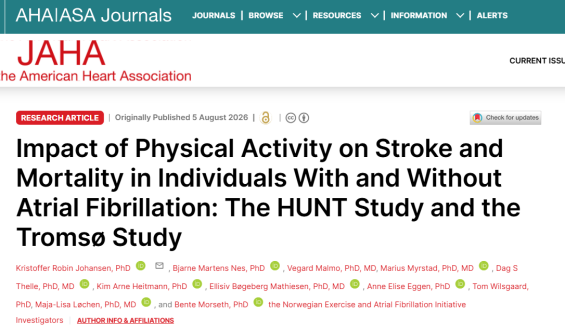 Fig. 1. Study overview (source: Journal of the American Heart Association, 2026).
Why This Question Matters
AF prevalence is rising globally. EU projections suggest the regional AF population could roughly double by 2060. In China, population aging is making AF an unavoidable challenge for cardiovascular disease control.
The link between AF and stroke is particularly tight. According to large multinational analyses, roughly one in five ischemic strokes may be attributable to AF [3], and stroke often has a devastating impact on quality of life and survival.
Both the European Society of Cardiology (ESC) and the American Heart Association (AHA) list physical activity as a core component of cardiovascular disease prevention. Yet in patients with AF specifically, the magnitude of benefit, and whether different intensities matter, has long lacked large, long-term evidence.
The Norwegian cohort study that recently reported its 13.5-year follow-up helps fill that gap.
What the Study Found
The research team combined two Norwegian population cohorts: the Tromsø Study and the HUNT Study, for a total of 87,340 adults, including 6,539 participants with established AF. Median follow-up was 13.5 years, during which 3,415 strokes and 7,833 deaths were recorded.
Participants were grouped by self-reported frequency, duration, and intensity of physical activity into four categories: inactive (0 MET-min/week), low activity (1-449 MET-min/week), moderate activity (450-899 MET-min/week), and high activity (≥900 MET-min/week). For reference, roughly 150 minutes of brisk walking per week corresponds to about 600 MET-min/week, which falls within the moderate-activity range.
Finding 1: More Activity, Lower Stroke Risk
Across the full cohort, compared with inactive participants:
- Low activity: stroke risk reduced by 9% (95% CI, 1%-16%).
- Moderate activity: stroke risk reduced by 19% (95% CI, 11%-27%).
- High activity: stroke risk reduced by 18% (95% CI, 8%-26%).
Among participants with AF, the stroke-risk reduction ranged from 12% to 20%. Notably, the relative reduction linked to physical activity appeared broadly similar in participants with and without AF, suggesting that AF patients may gain a comparable relative benefit from exercise as the general population.
The protective signal in this analysis was driven mainly by ischemic stroke; associations with intracerebral hemorrhage did not reach statistical significance.
Finding 2: Activity Linked to Longer Life
In the full cohort, compared with inactive participants:
- Low activity: all-cause mortality reduced by 11% (95% CI, 7%-14%).
- Moderate activity: all-cause mortality reduced by 18% (95% CI, 14%-22%).
- High activity: all-cause mortality reduced by 22% (95% CI, 18%-27%).
In participants with AF specifically, life expectancy versus inactive peers was approximately 0.50 years longer for the low-activity group, 0.66 years for the moderate-activity group, and 1.15 years for the high-activity group.
In other words, an AF patient who transitions from being inactive to maintaining regular activity may gain more than a year of life expectancy—a meaningful difference at the individual and family level.
Finding 3: Benefit Appears to Fade Over Time
The investigators also observed that the mortality protection associated with physical activity was strongest in the early years of follow-up and attenuated with time. The pattern suggests that exercise is not a one-time “investment” but a long-term lifestyle commitment to sustain.
What This Means for Clinical Practice
1. Activity May Be a Standard Adjunct to AF Management
Current standard AF treatment focuses on anticoagulation for stroke prevention, ventricular rate control, and rhythm management. This study suggests that physical activity may add an independent layer of protection on top of these measures. It is not a replacement for pharmacotherapy, but rather a low-cost, broadly accessible adjunct.
As the authors note: “Our findings provide arguments for adding physical activity as a complement to traditional AF treatment strategies to prevent stroke.”
2. Starting Is More Important Than Exercising Hard
One of the most actionable findings: even moving from “completely inactive” to “low-intensity activity” was associated with measurable benefit—stroke risk down by 9% and mortality by 11%.
For clinicians, this means exercise advice does not need to wait until the patient is ready to commit to high-intensity training. Recommending 20-30 minutes of brisk walking each day is a clinically meaningful intervention in its own right.
For patients, the message is straightforward: there is no need to become an athlete. Standing up from the sofa or taking a short walk around the neighborhood is already a step in the right direction.
3. Caveats and Limitations
The study has important limitations:
- Observational design: residual confounding cannot be fully excluded.
- Self-reported activity: may differ from actual activity. However, in a sub-cohort with accelerometer validation, self-reported data showed a moderate correlation with objectively measured moderate-to-vigorous activity (r=0.32-0.34).
- Anticoagulation data incomplete: the analysis could not fully rule out anticoagulation effects, although adjustments in the sub-cohort with available data did not materially alter the results.
The study also did not separate specific activity types (e.g., walking, running, swimming) nor isolate the independent effects of frequency versus session duration. These questions await randomized controlled trials.
Conclusion
AF patients have long been counseled to “est” and “avoid exertion.” A cohort of nearly 90,000 people followed for more than 13 years suggests the opposite is closer to the truth: regular activity may be safe, may lower stroke risk, and may extend life. Even modest doses—a few more steps each day, a few more active sessions each week—appear to be worth it.
References
[1] Wolf PA, Dawber TR, Thomas HE Jr, Kannel WB. Epidemiologic assessment of chronic atrial fibrillation and risk of stroke: the Framingham study. Neurology. 1978;28:973-977.
[2] Johansen KR, Nes BM, Malmo V, et al. Impact of Physical Activity on Stroke and Mortality in Individuals With and Without Atrial Fibrillation: The HUNT Study and the Tromsø Study. J Am Heart Assoc. 2026;15:e048812.
[3] O’Donnell MJ, Chin SL, Rangarajan S, Xavier D, Liu L, Zhang H, Rao-Melacini P, Zhang X, Pais P, Agapay S, et al. Global and regional effects of potentially modifiable risk factors associated with acute stroke in 32 countries (INTERSTROKE): a case-control study. Lancet. 2016;388:761-775.

