


The Cancer Center of Sun Yat-sen University (referred to as "SYSUCC" or "Cancer Center") has achieved remarkable results in scientific research. It ranks first in the Nature Index among domestic medical institutions in the field of health technology and fourth among global cancer centers. In 2023, it topped the list of Chinese Hospital Science and Technology Value in Oncology. Over the past five years, more than 70 high-level clinical research achievements have been adopted by international authoritative guidelines such as the NCCN (National Comprehensive Cancer Network) and promoted worldwide. Many of its achievements have been presented at high-level international academic conferences, giving a voice to China on the global stage. The academic journal it sponsors, Cancer Communications, has an impact factor of over 20.0, ranking first among Asian comprehensive oncology journals.
Regarding these outstanding achievements in scientific research, Professor Xu Ruihua, Director of the Cancer Center, Dean of the Cancer Hospital, and Director of the Cancer Institute at Sun Yat-sen University, emphasized that all scientific research is ultimately for the sake of "people."
The Cancer Center of Sun Yat-sen University (hereinafter referred to as "SYSUCC") has always adhered to innovation-driven development to strengthen the hospital through science and technology. Through institutional reforms and support mechanisms, SYSUCC has successfully built a unique "research ecosystem" and has given birth to a series of achievements on this basis.
"Moreover, scientific research is a long and arduous journey, requiring extraordinary dedication and diligence," he quoted from the former director of the Cancer Center and Academician of the Chinese Academy of Sciences, Zeng Yixin.
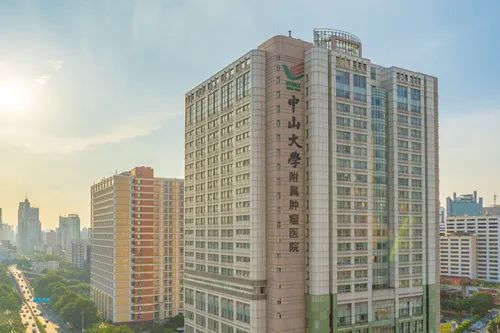
YueXiu Campus of the Cancer Center of Sun Yat-sen University
Clinical Orientation, Providing a "Chinese Solution" for Global Cancer Prevention and Treatment
The debate between "clinical practice or research" has been a long-standing topic. At the beginning of the new century, Academician Zeng Yixin initiated a major debate within the hospital—whether clinical doctors in national-level hospitals should engage in research. After intense discussions, the Cancer Center reached a consensus—oriented by clinical issues, to conduct scientific innovation and lead the development of oncology.
"Cancer poses a significant threat to human health, yet our understanding of oncology is still insufficient, with many unmet clinical needs. As the 'national team,' we must take on the responsibility of tackling these challenges," said Dean Xu Ruihua. "The people of SYSUCC have this spirit and mission, to provide good medical services while also conducting clinical research."
For patients with locally advanced rectal cancer (MSI-H type), the standard treatment used to be neoadjuvant chemoradiotherapy followed by total mesorectal excision and then adjuvant chemotherapy. This treatment model has benefited patients but also has its shortcomings. Chemoradiotherapy may cause various related complications and adverse reactions; some surgical patients need a "stoma," living with a permanent ostomy bag for excretion; some patients with low rectal cancer who forcibly preserve the anus suffer from symptoms such as tenesmus after surgery, significantly reducing their quality of life...
Professor Xu Ruihua and Professor Wang Feng pioneered an immunotherapy regimen for locally advanced rectal cancer (MSI-H type), which can cure patients with this type of cancer through immunotherapy alone, achieving a 75% clinical complete response rate.
This research achievement has subverted the existing treatment model, successfully allowing these patients to avoid chemoradiotherapy and surgery, preserving organ function and bringing new hope to patients. The study was published in the authoritative journal The Lancet Gastroenterology & Hepatology, selected for the American Society of Clinical Oncology (ASCO) annual educational publication, and included in the Chinese Society of Clinical Oncology (CSCO) Colorectal Cancer Diagnosis and Treatment Guidelines 2023.
"Addressing clinical practical issues is the starting point of scientific research," Dean Xu Ruihua told the "Medical Community Think Tank." Research should be people-oriented, and the research direction of SYSUCC has always been oriented by clinical needs, focusing on difficult problems encountered in clinical practice, exploring the stories behind these issues, and more importantly, seeking new diagnostic methods and treatment strategies to truly promote clinical diagnosis and treatment (prevention, screening, diagnosis, treatment, and rehabilitation).
He introduced that SYSUCC has explored a new paradigm of complementary anti-tumor research between clinical and basic research. Basic research focuses on elucidating the laws of tumor occurrence and development, providing targets for cancer prevention, diagnosis, and treatment; clinical research targets actual clinical needs, continuously introducing new diagnostic and therapeutic technologies and methods, and vigorously promoting technological breakthroughs.
Under the guidance of a culture of "stepping out of the comfort zone, bravely venturing into deep waters, and daring to explore uncharted territories," SYSUCC has achieved numerous representative results that create new treatment pathways and change guidelines. In just the past five years, more than 70 high-level clinical research achievements from the clinical front line of SYSUCC have been adopted by international authoritative guidelines such as the NCCN.
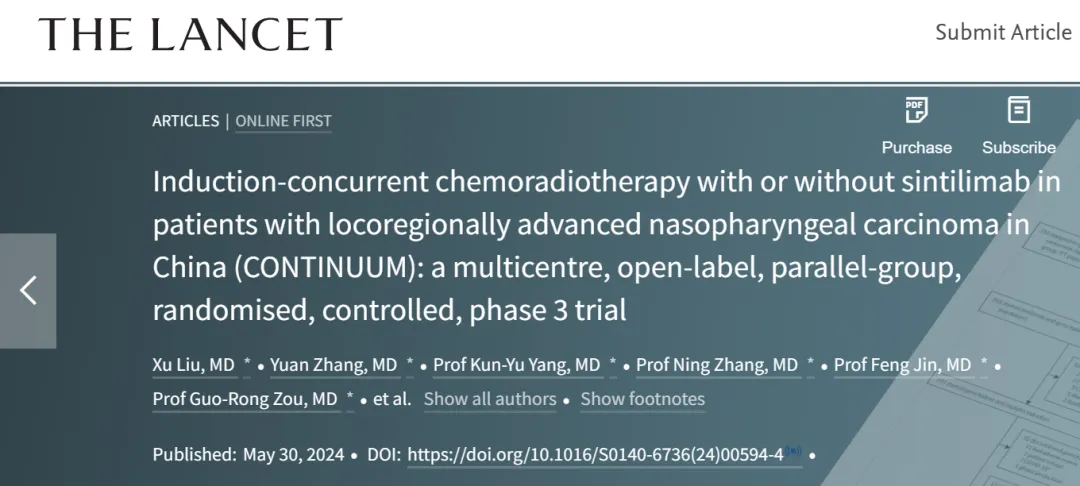
In May 2024, The Lancet published the latest research findings from the team of Academician Ma Jun. This study, through a prospective, multicenter, randomized controlled phase III clinical trial, found for the first time that adding PD-1 antibody to the standard chemoradiotherapy in high-risk locally advanced nasopharyngeal carcinoma patients significantly improved survival rates.This research achievement was invited to be orally presented at the 2023 ASCO (American Society of Clinical Oncology) Annual Meeting and was selected as a Late-breaking Abstract by ASCO. It was also awarded as the Best Research by ASCO, making it the only study from China to receive this honor that year.
Performance Incentives and Mechanism Support, Building a "Research Ecosystem"
Dean Xu Ruihua stated that the benefits of clinically oriented research results are not only in deepening our understanding of cancer but more importantly in promoting the birth of new treatment plans and measures, improving the level of disease treatment. Patients have thus gained more tangible benefits, and patients and their families have more confidence in the hospital, participating more actively in clinical research, forming a virtuous cycle.
"Oriented by clinical issues and encouraging the conduct and participation in clinical research" has become one of the core measures for hospital development. The performance "baton" has strongly supported this: the research enrollment rate of clinical patients is used as an evaluation indicator, incorporated into the comprehensive target management assessment of departments, and linked to the recruitment of chief physicians. For example, in medical oncology, the performance benchmark for ordinary chemotherapy is 1.0, the performance coefficient for clinical trial enrollment is 1.5, and the performance coefficient for new drug research enrollment is as high as 1.8.
From the data, this strategy has shown significant results. From 2017 to 2022, the patient enrollment rate in medical oncology has dramatically increased from 10.21% to 45.88%. The number of enrollments and the quality of projects across the hospital have also been rising year by year. In 2023, the number of participants in IITs (investigator-initiated clinical trials) reached around 30,000, with more than 1,100 IIT projects.
"To guide, support, and assist," Dean Xu Ruihua told the "MedJ Think Tank." To achieve these three goals, the hospital has implemented various measures:
Improve the allocation mechanism of scientific research funds and grant researchers greater autonomy;
Combine "breaking the four onlys" with "establishing new standards" to build an evaluation system and assessment mechanism that comply with the laws of scientific research activities;
Perfect incentive systems for high-level journals and representative achievements;
Establish a full-chain service and supervision system for clinical research;
Strengthen the support system and information system development for clinical research;
Build a platform for screening and validating new cancer drugs...
With these strong supports, SYSUCC has created a strong clinical research atmosphere, forming a unique "research ecosystem" of SYSUCC.
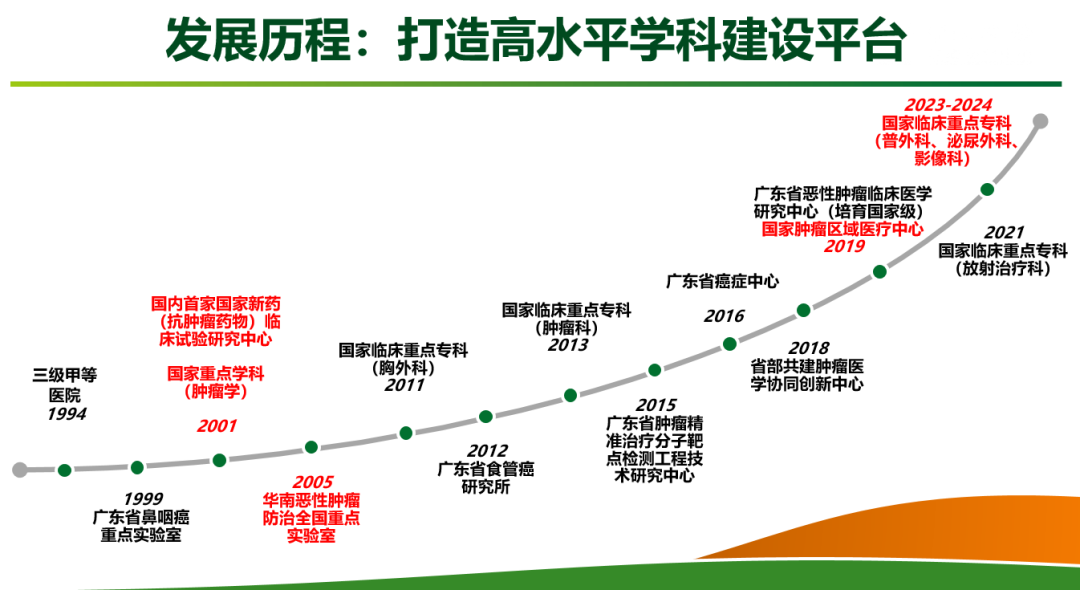
At the same time, the high-level clinical research platform built by SYSUCC has attracted high-quality biopharmaceutical companies in the industry to jointly build first-class R&D teams with the hospital, promoting the development of national original innovative drug R&D and device registration studies, and assisting in the development of "Made in China."
"The hospital has taken the lead in several clinical studies of domestic innovative drugs, promoting the listing of these innovative drugs in China and solving the 'bottleneck' problem of new drugs. The first domestic PD-1 antibody was launched at SYSUCC and has since been approved by the NMPA, FDA, and EMA for marketing," Dean Xu Ruihua introduced.
The aforementioned late-stage gastric cancer immunotherapy combined with chemotherapy study is a global multicenter study, with nearly 50% of participants coming from countries outside China in the Asia-Pacific and Europe and America. The success of this study will also help China's independently developed immune inhibitors go global, with the potential to be approved for indications in Europe and America, bringing benefits to global late-stage gastric cancer patients.
SYSUCC's achievements in technology transfer are also remarkable. In 2023, it was granted 82 invention patents, with 19 patents transferred, and the contract amount for technology transfer exceeded 100 million yuan.
Empowering Happiness, Cultivating the Next Generation of "Physician-Scientists"
In September of this year, Stanford University in the United States and Elsevier jointly released the latest list of the world's top 2% scientists, with 33 scholars from SYSUCC selected. Among them, eight scholars were included in the "Lifetime Scientific Impact Ranking," and 32 scholars were included in the "Annual Scientific Impact Ranking." This once again reflects SYSUCC's scientific research capabilities and high-level talent team construction. Currently, SYSUCC has 42 national high-level talents, most of whom are self-cultivated.
Xu Ruihua introduced that SYSUCC closely integrates talent introduction and cultivation, building a "three-layer, eight-level" talent cultivation system based on talent cultivation, talent improvement, and talent support, safeguarding the entire process of talent growth, fame, and success.
The talent cultivation plan includes postdoctoral training programs and overseas training programs, guiding the growth and development of young clinical physicians and researchers.
The young talent improvement plan includes the Outstanding Youth Improvement Plan and the Excellent Youth Improvement Plan, targeting young talents who have achieved certain innovative results and implementing training plans corresponding to the national talent training goals of "four youths" and "four young talents."
The special support plan targets outstanding talent teams, leading talent teams, and innovative talent (clinical medicine scientist) teams, providing support for the cultivation of high-level key talents in multiple fields.
Online, there is a widely circulated image titled "Heroes Have Always Emerged from the Young." The team of Academician Ma Jun has 11 young people who published high-impact papers as the first actual authors around the age of 30. Dr. Chen Yupeng published multiple high-level research results, including in The Lancet, J Clin Oncol, and Cell Res, as the actual first author/last corresponding author at the age of 29. In September of this year, the 2024 Asia-Pacific "35 Innovators Under 35" was announced, and Dr. Chen Yupeng, now 34 years old, was selected. He is also the first scholar from the medical field of Sun Yat-sen University to receive this award.
"Senior PIs should take the responsibility of cultivating academic successors; 'having no successors' is a dereliction of duty," Xu Ruihua once wrote in an article. How to help young people grow? SYSUCC has made great efforts in this regard.
Dean Xu Ruihua told the "MedJ Think Tank" that the hospital implements a mentor system, encouraging young people to join large teams, giving young talents more opportunities to participate in major projects, and continuously improving their personal abilities. "Let our young talents have support: teachers, platforms, teams, and a good cooperative atmosphere." Currently, some young backbones have been successfully selected as national talents through this large team cultivation model.
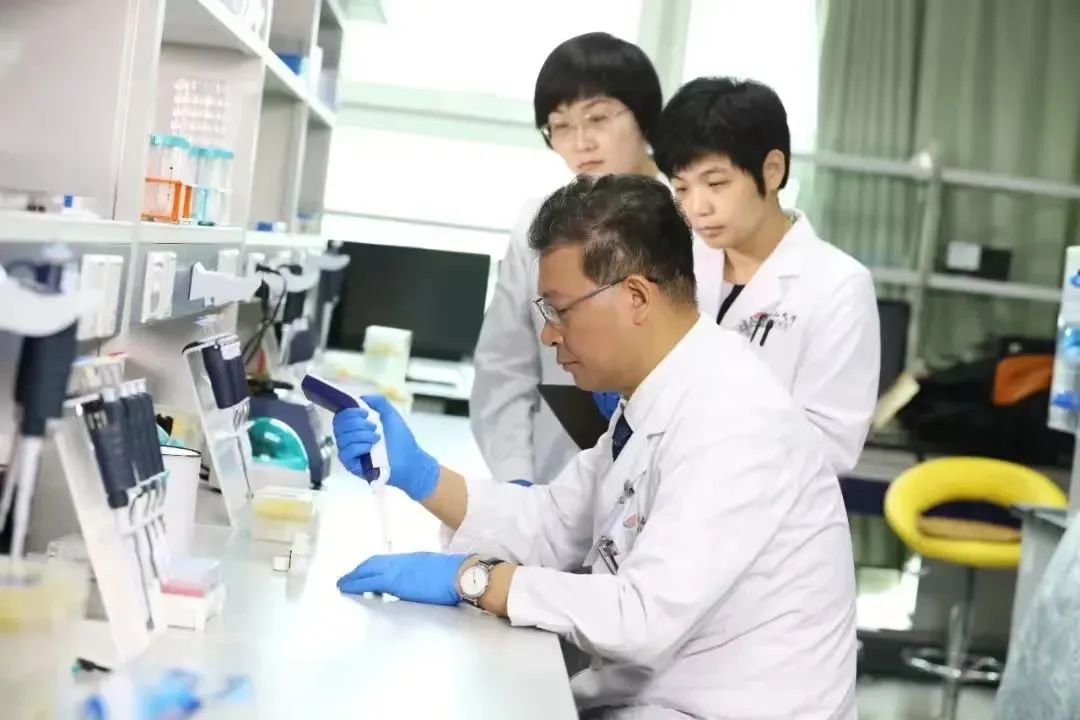
Dean Xu Ruihua guiding young researchers in the laboratory
The "Zhiguang Plan" is a youth physician training program launched by SYSUCC. The full name is the "Zhiguang Plan" Outstanding Young Physician-Scientist Program, named after Professor Xie Zhiguang, the first director of SYSUCC.
Dean Xu Ruihua introduced that the goal of this program is to cultivate the next generation of clinical medical scientists, "who need to be both outstanding clinical doctors and excellent researchers. Through systematic and individualized training, using the best people to train even better ones, we help them grow into leading talents and lead the discipline to new heights."
"Unity, Happiness, and Struggle" are the hospital culture of SYSUCC. Dean Xu Ruihua said that empowering happiness is the secret to mobilizing internal motivation in hospital management and the main theme of talent cultivation in the hospital. A promising career development path, competitive remuneration, inspiring humanistic care, and an effective support system give every employee a sense of identity, belonging, and achievement, creating a good atmosphere for innovation and entrepreneurship.
From "one of the best" to "the best one," SYSUCC is not only a medical unit but also aims to become a center of innovation in oncology in China and even the world. "Benchmarking against the MD Anderson Cancer Center, to comprehensively approach and even surpass it in the innovation system is the ambitious goal of SYSUCC," said Dean Xu Ruihua.

