


Ulcerative colitis (UC) is a chronic, relapsing inflammatory bowel disease whose incidence has been rising rapidly in East Asia in recent years. Despite a growing range of treatment options, current regimens still have significant limitations. Etrasimod, a novel oral sphingosine 1-phosphate (S1P) receptor modulator, exerts its therapeutic effect by precisely regulating lymphocyte trafficking and has shown potential in multiple global studies.
However, robust evidence for its efficacy and safety in East Asian populations had been lacking. The ENLIGHT UC study, now formally published in The Lancet Gastroenterology & Hepatology, is the first to systematically evaluate etrasimod’s induction and maintenance efficacy in East Asian patients, marking an important shift in the regional treatment landscape for UC.
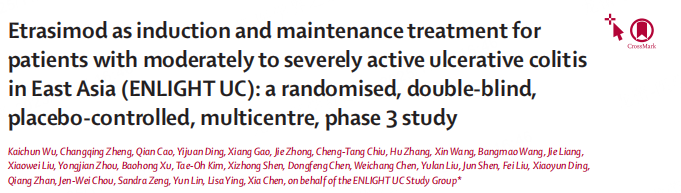 Fig. 1. Etrasimod Efficacy Study in East Asian Populations
Study Background and Design: A Milestone Study Focused on East Asian Patients
ENLIGHT UC (ES101002) is a randomized, double-blind, placebo-controlled, multicenter phase 3 clinical trial conducted at 52 hospitals across mainland China, Taiwan (China) and Korea. It aimed to evaluate the efficacy and safety of etrasimod for induction and maintenance treatment in patients with moderately to severely active UC.
The study was conducted in two phases:
l Induction phase (12 weeks): Patients were randomized 2:1 to etrasimod 2 mg or placebo.
- l Maintenance phase (40 weeks): Patients who achieved clinical remission during induction were re-randomized 1:1 to continue etrasimod or placebo.
- The primary endpoint was clinical remission as defined by the modified Mayo score — a composite endpoint requiring simultaneous improvement in stool frequency, absence of rectal bleeding and endoscopic mucosal healing. A total of 606 patients were screened, with 340 entering induction and 157 entering maintenance. All patients were East Asian, with balanced baseline characteristics.
Efficacy Results: Significantly Superior to Placebo, with Durable Treatment Effect
The findings show that etrasimod can rapidly control symptoms during induction and sustain efficacy during long-term maintenance.
1.Induction Efficacy
At week 12 of the induction phase, the clinical remission rate in the etrasimod group was significantly higher than in the placebo group (25.0% vs 5.4%, Δ=20.4%, p<0.0001). Key secondary endpoints — including endoscopic improvement (37.3% vs 9.8%), clinical response (58.3% vs 27.7%) and mucosal healing (25.9% vs 4.5%) — also significantly favored etrasimod (Fig. 2).
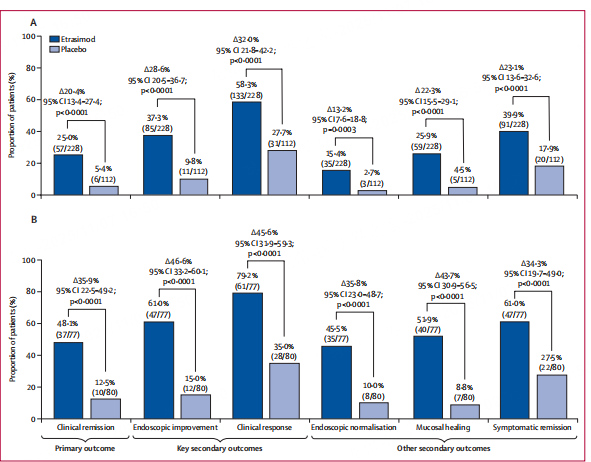 Fig. 2. Clinical Remission Rate in the Etrasimod Group During Induction
2.Maintenance Efficacy
At week 40 of the maintenance phase, the clinical remission rate in the etrasimod group remained significantly higher than in the placebo group (48.1% vs 12.5%, Δ=35.9%, p<0.0001). Endoscopic improvement, mucosal healing and symptom remission also continued to favor etrasimod, indicating that the treatment effect spans clinical symptoms, patient-reported outcomes and objective endoscopic endpoints.
Notably, symptom improvement appeared as early as week 2 of induction and was sustained through the end of maintenance, suggesting that etrasimod may have both rapid and durable efficacy (Fig. 3).
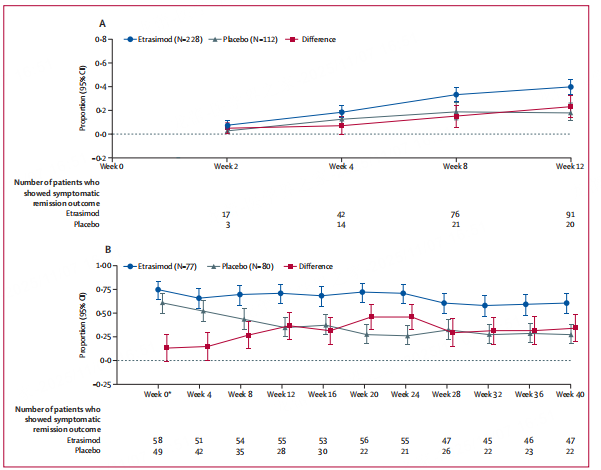 Fig. 3. 40-Week Efficacy in the Etrasimod Group
3.Subgroup and Sensitivity Analyses
Subgroup analyses further supported the study’s robustness. Regardless of disease severity, prior treatment history or prior biologic use, etrasimod showed consistent efficacy benefits. This consistency across subgroups suggests that etrasimod may be applicable to a broad UC population, including patients with refractory disease.
Safety Profile: Well Tolerated, with Manageable Risk
Etrasimod demonstrated a favorable safety and tolerability profile in East Asian patients. Most adverse events (AEs) were mild to moderate, and the incidence of serious adverse events (SAEs) was comparable to placebo. Common AEs included alanine aminotransferase (ALT) elevation, upper respiratory tract infection and sinus bradycardia — events related to the drug’s mechanism and generally self-limiting.
Among adverse events of special interest, transient decreases in heart rate and atrioventricular conduction delay after first dose are expected effects of S1P receptor modulators. Such events in the study were mostly asymptomatic or mild and resolved without intervention, consistent with the safety profile of other agents in the class. Liver enzyme elevations were more frequent than with placebo, but were mostly transient, asymptomatic, did not meet Hy’s law criteria, and no patient discontinued treatment due to liver injury. Regarding infection risk, no increase in opportunistic infections was observed, and herpes virus infections were uncommon and mild, suggesting a favorable selectivity of the immunomodulatory effect.
In addition, no grade ≥4 SAEs, malignancies, macular edema, pulmonary events or treatment-related deaths were reported during the study.
Conclusion
The ENLIGHT UC study marks a new stage in UC treatment in East Asia. It not only confirms that etrasimod has significant induction and maintenance efficacy in patients with moderate-to-severe UC, but also demonstrates a favorable safety and tolerability profile.
As the first oral S1P receptor modulator validated in East Asian patients, etrasimod may help reshape the current treatment landscape, providing a new option for clinicians and patients. As more real-world evidence and longer-term follow-up data accumulate, etrasimod is expected to play an increasingly important role in the full-course management of UC.
Reference
[1] Wu K, Zheng C, Cao Q, et al. Etrasimod as induction and maintenance treatment for patients with moderately to severely active ulcerative colitis in East Asia (ENLIGHT UC): a randomised, double-blind, placebo-controlled, multicentre, phase 3 study. Lancet Gastroenterol Hepatol. 2025 Sep 30:S2468-1253(25)00198-0.

