


Article Key Points
- Two meta-analyses at ESC 2026 confirmed dose-dependent SBP and DBP reductions with baxdrostat, a selective aldosterone synthase inhibitor, in patients with resistant or uncontrolled hypertension.
- In the 3-RCT meta-analysis (n=1260), baxdrostat 1 mg and 2 mg reduced SBP by -8.33 and -9.89 mmHg versus placebo, with corresponding DBP reductions of -3.49 and -4.11 mmHg; hyperkalemia risk increased (RR 7.84 and 11.88), but treatment-related discontinuation was only elevated at 2 mg (RR 2.31).
- In the 5-RCT meta-analysis (n=1729), pooled SBP fell by -7.08 mmHg and DBP by -3.01 mmHg; hyperkalemia risk was elevated (RR 5.35; NNH 19) and serum potassium rose by 0.4 mmol/L.
- Mechanistically, baxdrostat shows >100-fold selectivity for aldosterone synthase over cortisol synthase, avoiding first-generation ASI-related adrenocortical insufficiency and offering a new option for patients with persistent uncontrolled or resistant hypertension despite ≥2 agents (including a diuretic).
- Both meta-analyses are not yet peer-reviewed; long-term hard cardiovascular and renal endpoint trials are still needed.
Resistant and uncontrolled hypertension remain a clinical challenge. Even with combined therapy of three or more antihypertensive agents, including a diuretic, a substantial proportion of patients fail to reach blood pressure targets, while long-term use raises concerns about adherence, electrolyte disturbances, and renal function. Numerous investigations have shown that inappropriately elevated aldosterone is a key driver of poor blood pressure control in resistant hypertension. Beyond sodium and water retention, aldosterone also contributes to target organ damage via pro-inflammatory and pro-fibrotic pathways independent of blood pressure elevation.
Baxdrostat, a novel selective aldosterone synthase inhibitor (ASI), overcomes these limitations through a new mechanism and offers a new option for patients with resistant and uncontrolled hypertension. Recent clinical development has been substantial. The phase 2 BrigHTN trial demonstrated its potential: at 12-week follow-up, baxdrostat 2 mg and 1 mg reduced mean seated systolic blood pressure (SBP) by 11.0 mmHg (absolute change -20.3 mmHg; p<0.001) and 8.1 mmHg (absolute change -17.5 mmHg; p=0.003), respectively, compared with placebo, and reduced aldosterone levels by 44%-58% from baseline. The phase 3 BaxHTN trial subsequently confirmed efficacy in a larger population (n=794); at 12 weeks, the 1 mg and 2 mg doses reduced seated SBP by 8.7 mmHg and 9.8 mmHg versus placebo (absolute changes -14.5 mmHg and -15.7 mmHg; both p<0.0001), with blood pressure control rates (<130 mmHg) of 39.4% and 40.0%, respectively, versus 18.7% with placebo. The Bax24 trial further confirmed its 24-hour blood pressure profile: at 12 weeks, the baxdrostat group reduced 24-hour mean SBP by 16.6 mmHg from baseline versus 2.6 mmHg with placebo, a difference of 14.0 mmHg (p<0.0001); the 24-hour mean SBP control rate (<130 mmHg) reached 70.6% (n=60) with baxdrostat versus 16.7% (n=14) with placebo, with an odds ratio of 15.2 (p<0.0001) and a number needed to treat (NNT) of only 2, reflecting robust 24-hour blood pressure management.
ESC Congress 2025, AHA 2025, and the current ESC Congress 2026 have successively presented key phase 3 randomized controlled trial (RCT) primary results, providing high-level evidence for both efficacy and safety. The two latest meta-analyses and systematic reviews, released at this ESC Congress, systematically synthesize and integrate the relevant RCT data, providing high-level support for standardized clinical use.
Evidence Synthesis: Efficacy and Safety From the Two Meta-Analyses
The two most recent meta-analyses systematically synthesized the evidence, further validating baxdrostat’s clinical value. The first, a meta-analysis of multiple RCTs, comprehensively evaluated efficacy and safety. The study systematically searched PubMed, Embase, and Web of Science and included 3 RCTs comprising 1,260 participants (863 in the baxdrostat group and 397 in the placebo group), with all trials having at least 12 weeks of follow-up.
The results showed that baxdrostat 1 mg significantly reduced SBP versus placebo, with a mean difference (MD) of -8.33 mmHg (95% CI -10.67 to -5.99), and diastolic blood pressure (DBP) with an MD of -3.49 mmHg (95% CI -5.05 to -1.94). The 2 mg dose produced stronger antihypertensive effects: MD for SBP of -9.89 mmHg (95% CI -12.21 to -7.56), and MD for DBP of -4.11 mmHg (95% CI -5.57 to -2.65), indicating clear dose-dependent efficacy.
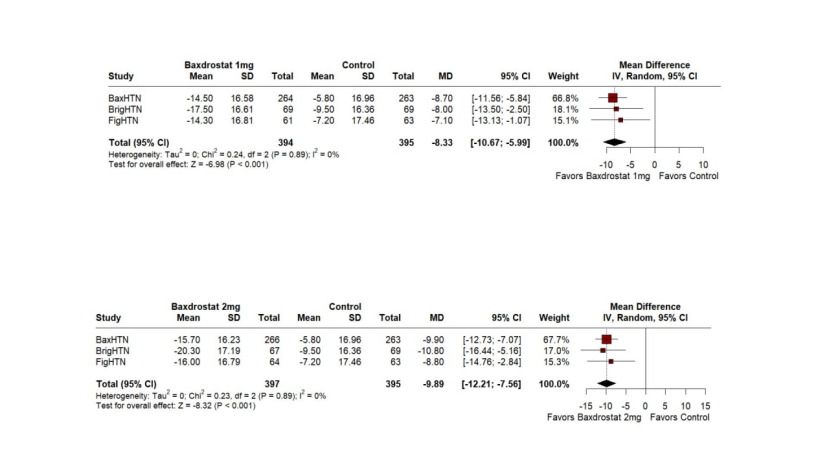 Fig. 1. Antihypertensive Effects of Baxdrostat 1 mg and 2 mg on SBP and DBP
On safety, the risk of hyperkalemia was significantly higher than with placebo (RR 7.84 for 1 mg; RR 11.88 for 2 mg), but treatment-related adverse events leading to discontinuation were only significantly elevated in the 2 mg group (RR 2.31; 95% CI 1.19 to 4.48), with no significant difference between the 1 mg group and placebo. Overall, adverse events during baxdrostat treatment were manageable, with favorable tolerability.
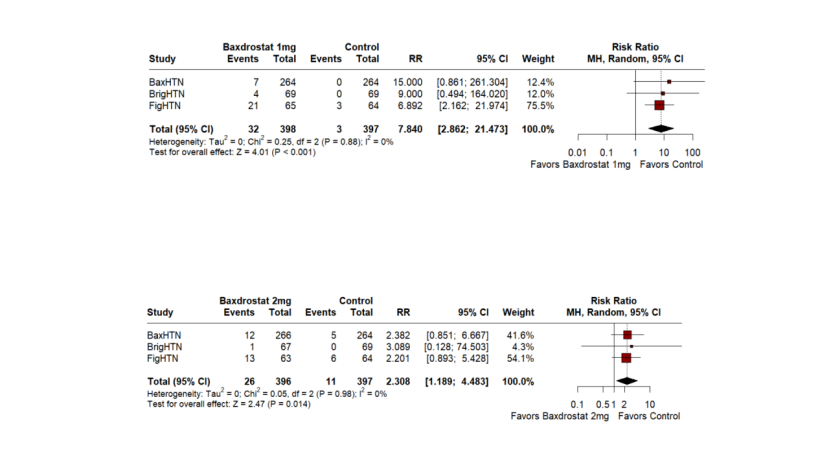 Fig. 2. Relative Risk of Hyperkalemia and Treatment-Related Discontinuation With Baxdrostat 1 mg and 2 mg
Building on this initial validation, a second systematic review and meta-analysis, published almost simultaneously, further confirmed and supplemented the above findings. This study expanded the search to PubMed, Embase, Cochrane, and unpublished data, including 5 RCTs with a total of 1,729 patients (pooled multi-dose analysis), and used a random-effects model with restricted maximum likelihood (REML) for variance components.
The results showed that baxdrostat significantly reduced SBP versus placebo (MD -7.08 mmHg; 95% CI -11.68 to -2.47; p=0.01; I²=73%) and DBP (MD -3.01 mmHg; 95% CI -5.70 to -0.31; p=0.04; I²=64%).
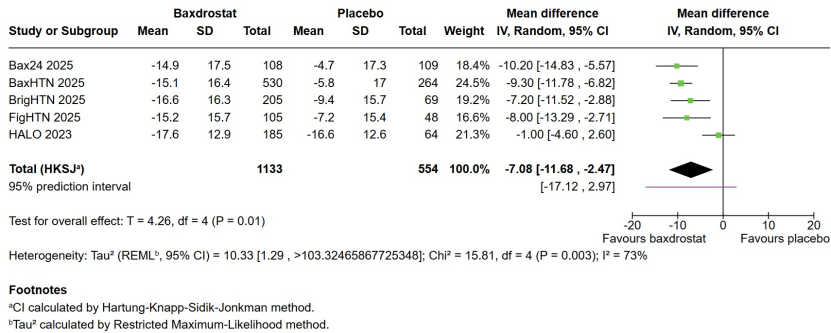 Fig. 3. Antihypertensive Effects of Baxdrostat on SBP and DBP
On safety, the risk of hyperkalemia was higher than with placebo (RR 5.35; 95% CI 1.76 to 16.25; I²=0%), with a number needed to harm (NNH) of 19, that is, one additional hyperkalemia event per 19 patients treated; serum potassium rose by an average of 0.4 mmol/L (95% CI 0.26 to 0.54). However, overall adverse events remained manageable, with favorable tolerability.
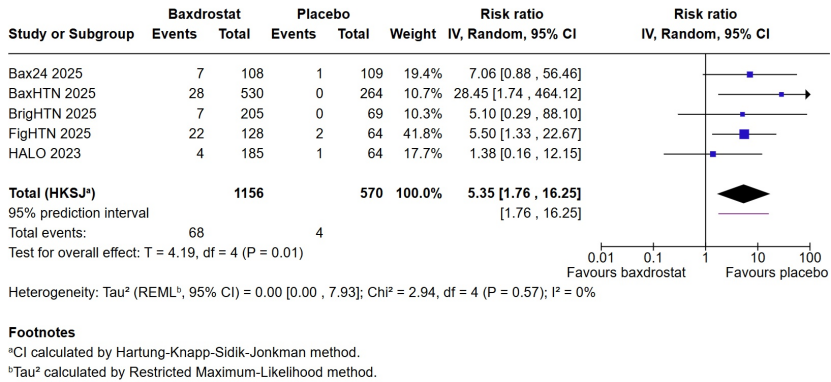 Fig. 4. Relative Risk of Hyperkalemia With Baxdrostat
Together, the two meta-analyses released at ESC 2026 integrated RCT evidence for baxdrostat from different angles, jointly confirming that baxdrostat provides clear dose-dependent antihypertensive benefit in resistant or uncontrolled hypertension, with hyperkalemia as the main safety risk and overall favorable tolerability.
Clinical Implications: Mechanism and Patient Population
Mechanistic Rationale
Baxdrostat selectively inhibits aldosterone synthase, reducing aldosterone production at its source rather than antagonizing it at the receptor. In vitro studies have shown that baxdrostat’s selectivity for aldosterone synthase is more than 100-fold that for cortisol synthase; it effectively suppresses aldosterone synthesis while having nearly no impact on the cortisol pathway, thereby avoiding the risk of adrenocortical insufficiency associated with non-selective first-generation ASIs.
In addition, by lowering aldosterone, ASIs may exert target organ protective effects through anti-inflammatory and antifibrotic pathways beyond blood pressure reduction. Preclinical studies have shown that selective aldosterone synthase inhibitors can reduce fibrosis and inflammatory responses in the heart, blood vessels, and kidneys, with some effects independent of blood pressure reduction. In animal models, ASI treatment improved left ventricular diastolic function, reduced proteinuria, and delayed renal function progression, suggesting direct target organ protective potential.
Clinical Positioning
For patients whose blood pressure remains uncontrolled despite treatment with two or more antihypertensive drugs (including a diuretic), baxdrostat offers a novel therapeutic option.
Traditional regimens face multiple mechanistic limitations. Renin-angiotensin system inhibitors (RASi), although a cornerstone of hypertension treatment, are frequently associated with “aldosterone escape” or “aldosterone breakthrough” during long-term use, in which circulating or local aldosterone levels rebound despite continued RASi therapy, attenuating both antihypertensive and target organ protective effects; in some patients, aldosterone levels can return to or even exceed pretreatment values during therapy. In addition, although diuretics are an essential component of recommended combination regimens, they are underused in Chinese clinical settings, partly due to adverse effects such as hyperuricemia, especially with thiazide diuretics, which can induce or worsen gout and further limit their use and dose escalation in Chinese hypertensive patients with comorbid hyperuricemia or renal impairment.
Beyond RASi escape and diuretic limitations, traditional steroidal mineralocorticoid receptor antagonists (MRAs) face dual mechanistic and safety constraints. MRAs act on the mineralocorticoid receptor and do not directly inhibit aldosterone synthesis; after treatment, circulating aldosterone may rise compensatorily and mediate target organ damage via non-MR-dependent pathways. Hyperkalemia is a common dose-limiting factor for MRAs, and some non-selective MRAs can also induce endocrine adverse effects such as gynecomastia and menstrual disturbances, leading to intolerance or contraindications in some patients.
As a novel selective ASI, baxdrostat reduces aldosterone production at its source, mechanistically avoiding RASi-related aldosterone escape or breakthrough and avoiding traditional MRA-related compensatory aldosterone increases and the activation of non-MR-dependent pathways.
Summary
The two meta-analyses released at ESC 2026 systematically integrated the RCT evidence for baxdrostat. The analysis by Bortolotto et al included 5 studies with a total of 1,729 patients and provided an overall efficacy and safety assessment (this meta-analysis covered the main RCTs including phase 2 BrigHTN and phase 3 BaxHTN); the analysis by Ferraz De Sousa et al included 3 studies with 1,260 patients and provided additional dose-stratified data for 1 mg and 2 mg. The conclusions of both analyses were mutually reinforcing: baxdrostat provides dose-dependent antihypertensive benefit, with hyperkalemia as the main safety risk.
Future long-term studies with hard cardiovascular and renal endpoints are still needed to determine whether the anti-inflammatory and antifibrotic mechanisms can translate into clinical cardiorenal protective benefit.
References
[1] Williams B. Resistant Hypertension Is Not Essential: It Is Primarily Aldosteronism. Circ Cardiovasc Interv. 2026;19(2):e000000.
[2] Virdis A, Salvetti M, Monticone S, et al. Adverse Effects of Aldosterone: Beyond Blood Pressure. J Am Heart Assoc. 2024;13(6):e030142.
[3] Freeman MW, Halvorsen YD, Marshall W, et al. Phase 2 Trial of Baxdrostat for Treatment-Resistant Hypertension. N Engl J Med. 2023;388(5):395-405.
[4] Williams B, et al. Baxdrostat for uncontrolled or resistant hypertension (BaxHTN): a phase 3, randomized, double-blind, placebo-controlled trial. N Engl J Med. 2025;393(9):815-827.
[5] Azizi M, Brown JM, Dwyer JP, et al. Effect of baxdrostat on ambulatory blood pressure in patients with resistant hypertension (Bax24): a phase 3, randomised, double-blind, placebo-controlled trial. Lancet. 2026;407(10532):988-999.
[6] Efficacy and safety of baxdrostat in resistant and uncontrolled hypertension: a systematic review and meta-analysis of randomised controlled trials. Presented at: ESC Congress 2026.
[7] Baxdrostat for treatment of uncontrolled and resistant hypertension: a meta-analysis and systematic review. Presented at: ESC Congress 2026.
[8] Taki Y, Kono T, Sakuma I, et al. Baxdrostat versus osilodrostat: steroid biosynthesis in human adrenocortical cells. Endocrine Connections. 2026;15(8):e250807.
[9] Merlo M, Zoccatelli F, Costa G, et al. Aldosterone synthase inhibitors across the translational spectrum: Mechanistic foundations and emerging clinical applications. J Intern Med. 2026;299(4):425-443.
[10] Mazzieri A, Battiston S, Reboldi G. Aldosterone synthase inhibitors in hypertension and chronic kidney disease: double the benefit? Curr Opin Nephrol Hypertens. 2026;35(3):338-346.
[11] Bomback AS, Klemmer PJ. The incidence and implications of aldosterone breakthrough. Nat Clin Pract Nephrol. 2007;3(9):486-492.
[12] Xing K, Gong JY, Luo JQ. Advances in pharmacogenomics of thiazide diuretic-related adverse reactions. Chinese Journal of Clinical Pharmacology and Therapeutics. 2021;26(2):204-212.
[13] Dey S, Frishman WH, Aronow WS. Baxdrostat: An Aldosterone Synthase Inhibitor for the Treatment of Systemic Hypertension. Cardiol Rev. 2025;33(3):243-245.
[14] Mazzieri A, Timio F, Patera F, et al. Aldosterone Synthase Inhibitors for Cardiorenal Protection: Ready for Prime Time? Kidney Blood Press Res. 2024;49(1):1041-1056.

