


The 2026 European Society of Cardiology (ESC) Congress—the world’s largest and most influential cardiology meeting—was held 28-31 August 2026 in Munich, Germany, under the theme “Transforming Cardiology Together,” with artificial intelligence designated as the annual highlight topic. The meeting released three 2026 ESC clinical practice guidelines and the 5th universal definition of myocardial infarction, and presented 59 major clinical study results across 12 Hot Line sessions—directly addressing multiple critical questions in current cardiovascular clinical practice. Among these, several landmark results may update clinical guidelines and reshape daily practice, potentially signaling new directions for future innovation in cardiovascular medicine.
Chinese innovative drug company Hengrui Pharmaceuticals brought six studies to this academic stage—two Late-Breaking Abstracts (LBAs), two oral presentations, and two posters—covering lipid-lowering (oral PCSK9, ANGPTL3, Lp(a), APOC3 and other novel targets) and heart failure (V2 receptor antagonist) arenas, comprehensively demonstrating its cardiovascular-metabolic innovation pipeline on the global evidence stage.
At-a-Glance: Six Studies
|
Product and Mechanism |
Meeting Format |
Key Results |
|
Revicibamab (ANGPTL3 Antibody) |
LBA |
Compared with placebo, the relative reduction in LDL-C at week 12 reached 64.2% in HoFH patients |
|
HRS-5346 (Oral Lp(a) Inhibitor) |
LBA |
Maximum Lp(a) reduction of 86.3% |
|
HRS-1301 (Oral PCSK9 Inhibitor) |
Oral Presentation |
Maximum LDL-C reduction of 41.8% |
|
HRS-9057 (V2 Receptor Antagonist) |
Oral Presentation |
Weight loss superior to tolvaptan |
|
Reccasimab (Long-acting PCSK9 Monoclonal Antibody) |
Poster |
Maximum LDL-C达标 rate of 88.8% in CAD patients |
|
HRS-7249 (APOC3 siRNA) |
Poster |
Maximum TG reduction of 74.7% |
I. Late-Breaking Abstracts: Two New-Mechanism Lipid-Lowering Drugs Debut Globally
The LBA session is the most closely watched of the ESC meeting, accepting only the latest data with potential to rewrite clinical practice. Hengrui’s two selected LBAs focus on homozygous familial hypercholesterolemia (HoFH) and elevated lipoprotein(a) [Lp(a)]—two long-standing clinical pain points lacking targeted therapies.
I.i. SHR-1918-301: Recaticimab Phase 3 RCT Hits Primary Endpoint in HoFH—ANGPTL3 Era Opens
HoFH is a rare but life-threatening genetic disease caused by significantly reduced or absent LDLR activity. Patients show extremely high LDL-C levels from birth, leading to early-onset atherosclerotic cardiovascular disease (ASCVD) [1]. In HoFH lipid-lowering management, traditional statins and PCSK9 inhibitors often fail to deliver satisfactory reductions because of severely impaired LDLR function; new LDLR-independent treatment strategies are urgently needed.
Therapies targeting angiopoietin-like protein 3 (ANGPTL3) act by inhibiting lipoprotein lipase and endothelial lipase activity, lowering lipid levels via LDLR-independent pathways [2, 3], offering new options for patients with refractory hypercholesterolemia such as HoFH. SHR-1918 (ruifuxibai), China’s first ANGPTL3-targeting fully human monoclonal antibody, previously reduced LDL-C by 59.09% in adult HoFH patients in a single-arm Phase 2 proof-of-concept study [4], demonstrating encouraging lipid-lowering potential.
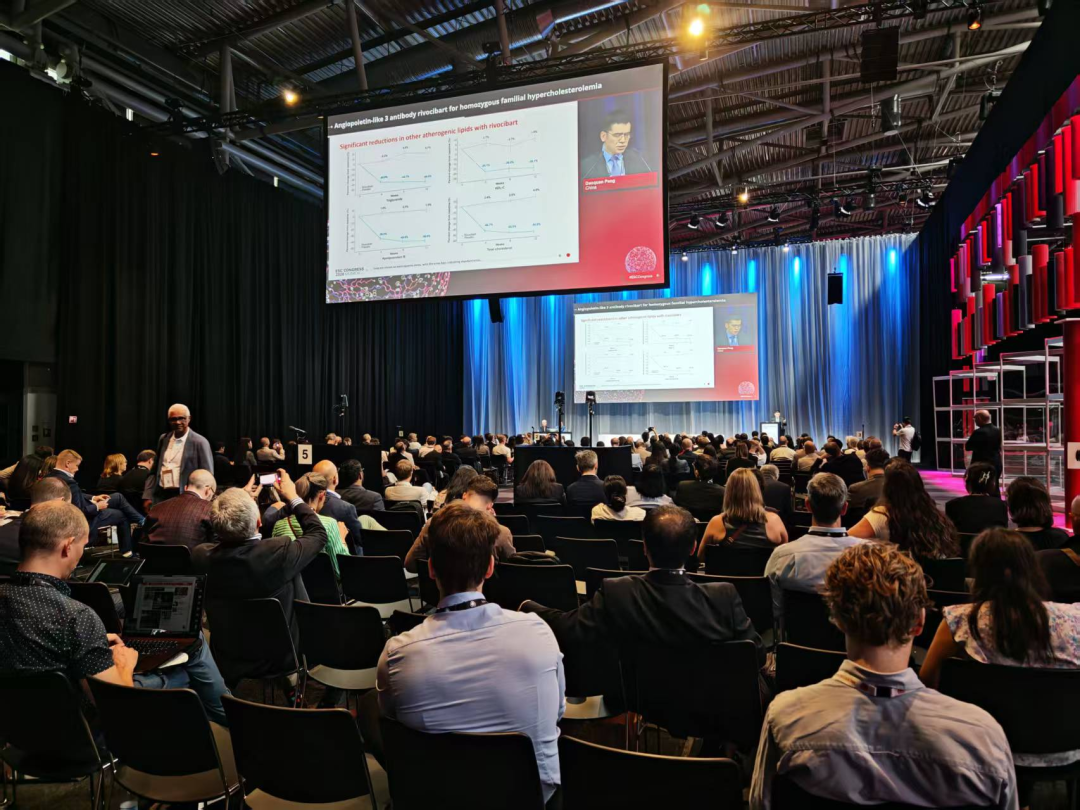
Prof. Daoquan Peng (Peng Daoquan) of Xiangya Second Hospital, Central South University, presented at ESC the multicenter, randomized, double-blind, Phase 3 SHR-1918-301 trial (NCT06723652). Conducted at 17 centers in China, it enrolled patients aged ≥12 years with genetic or clinical diagnosis of HoFH; the primary endpoint was the percentage change in LDL-C from baseline at week 12 [5].
Results:
At week 12, the SHR-1918 600 mg SC Q4W group (N=36) showed an LDL-C reduction from baseline of 58.8%, versus a 5.5% increase in the placebo group (N=18); between-group difference: -64.2% (95% CI: -74.0 to -54.5, P<0.0001) [5].
For absolute LDL-C change: SHR-1918 -5.7 mmol/L vs placebo -0.02 mmol/L; between-group difference -5.7 mmol/L (95% CI: -6.8 to -4.6, P<0.0001) [5].
At week 12, 83.3% (30/36) of SHR-1918 patients achieved ≥50% LDL-C reduction versus 0 in placebo [5].
In all clinically relevant subgroups (age, BMI, baseline LDL-C, baseline ASCVD risk, concomitant PCSK9 inhibitor use), SHR-1918’s lipid-lowering effect was significantly superior to placebo, with between-group differences ranging from -56.8% to -75.4% [5].
SHR-1918 also significantly reduced other atherogenic lipids: triglycerides -48.6%, non-HDL-C -57.1%, apolipoprotein B -48.9%, total cholesterol -54.8% (all week-12 data) [5].
Extended to week 24, the double-blind SHR-1918 group showed a mean LDL-C percentage change of -59.1% (-5.8 mmol/L) from baseline, with 88.9% (32/36) achieving LDL-C target; overall safety was favorable, with mainly mild adverse events [5].
I.ii. HRS-5346-201: Oral Small-Molecule Lp(a) Inhibitor Phase 2 Data—Up to 86.3% Reduction
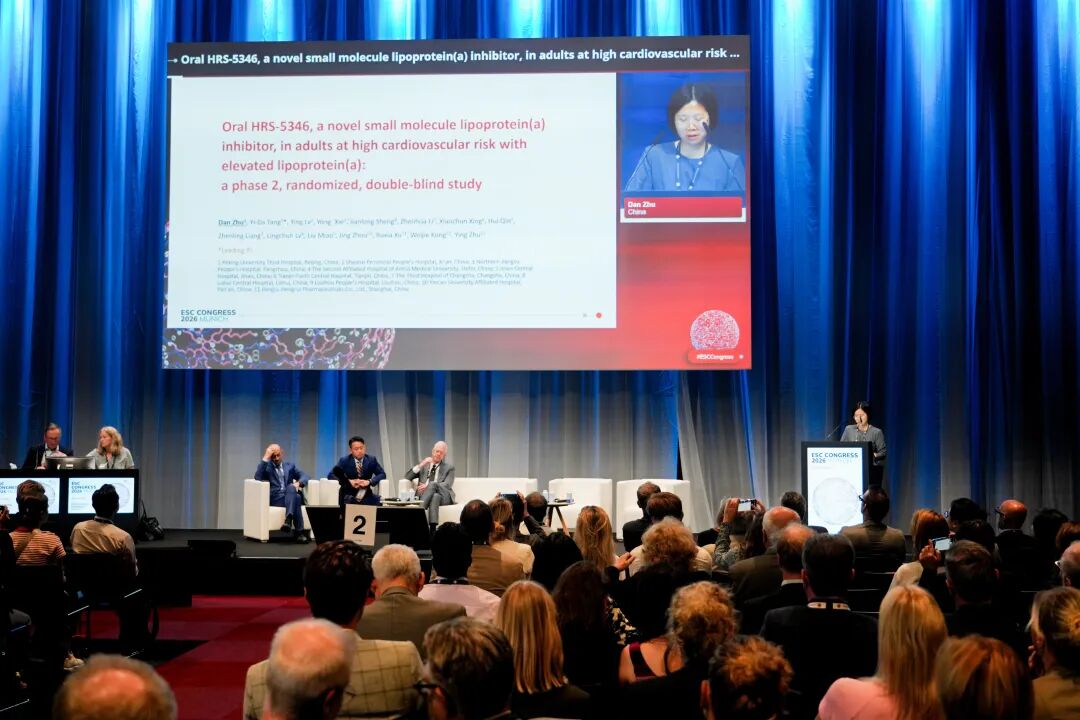
Elevated lipoprotein(a) [Lp(a)] is an independent risk factor for ASCVD, genetically determined, with no approved Lp(a)-targeted therapy currently available. Prof. Yida Tang and Prof. Dan Zhu of Peking University Third Hospital led the HRS-5346-201 study, a multicenter, randomized, double-blind, placebo-controlled Phase 2 trial (NCT06816264) evaluating the novel oral small-molecule Lp(a) particle assembly inhibitor HRS-5346 in adult patients with elevated Lp(a) and high cardiovascular risk [6].
Patients aged ≥18 years with Lp(a) ≥150 nmol/L (or 60 mg/dL) and high CV event risk were randomized 1:1:1:1 to HRS-5346 30 mg, 120 mg, 240 mg, or placebo once daily orally for 12 weeks. The primary endpoint was the percentage change from baseline at week 12 in Lp(a) measured by Apo(a) assay and by intact Lp(a) assay [6].
Key results:
At week 12, by Apo(a) assay, reductions were 67.0%, 75.0%, and 75.9% respectively; placebo reduced 14.4%. By intact Lp(a) assay, the 30, 120, 240 mg groups reduced Lp(a) from baseline by 67.1%, 77.7%, and 86.3%, respectively; placebo reduced 7.8% [6].
At week 12, by Apo(a) assay, the proportion achieving Lp(a)<75 nmol/L (<30 mg/dL) was 36.7%, 56.7%, and 60.0% for the 30, 120, 240 mg groups versus 0% for placebo [6].
Total cholesterol, LDL-C, and apolipoprotein B also showed dose-dependent decreases; plasminogen activity and high-sensitivity C-reactive protein showed no notable changes [6].
For safety, treatment-emergent adverse event (TEAE) rates in each dose group (53.3%, 63.3%, 60.0%) were comparable to placebo (53.3%); no treatment-related serious adverse events or deaths were reported [6].
II. Oral Presentations: Oral PCSK9 Inhibitor + V2 Receptor Antagonist—Two New Mechanisms Compete
The oral presentation session is the “main battleground” of academic exchange. Hengrui’s two selected oral presentations focus on lipid-lowering and heart failure, with HRS-1301 representing a milestone as the company’s first oral small-molecule PCSK9 inhibitor to enter clinical development.
II.i. HRS-1301-101: First-in-Human Study of Oral Small-Molecule PCSK9 Inhibitor—PCSK9 Target Enters the “Oral Era”
PCSK9 inhibitors have been shown to potently lower LDL-C, but previously approved PCSK9 inhibitors are all injectable biologics [9], with clinical use limited by cold-chain requirements, dosing adherence, and injection fear. HRS-1301 is Hengrui’s self-developed oral small-molecule PCSK9 inhibitor for inhibiting LDL receptor degradation, with potential advantages including oral convenience, high patient acceptance, and no cold-chain requirement [9].
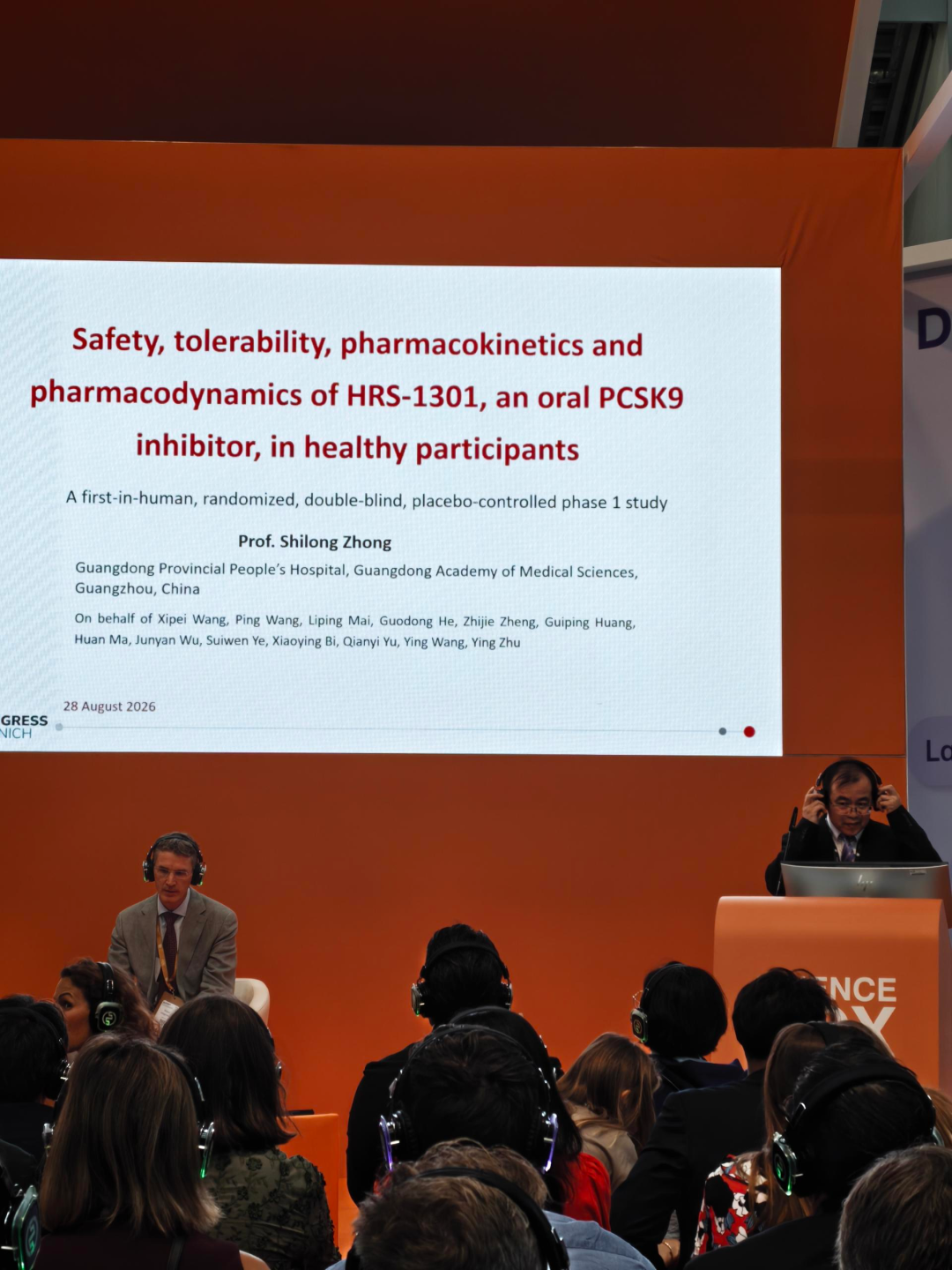
Prof. Shilong Zhong of Guangdong Provincial People’s Hospital, Southern Medical University, presented the HRS-1301-101 study (NCT06857253), a randomized, double-blind, placebo-controlled Phase 1 trial of HRS-1301 in humans. It included single-ascending-dose (SAD; 20, 50, 100, 200, 300 mg; 5 cohorts) and multiple-ascending-dose (MAD; 20, 50, 100, 200 mg; 4 cohorts; once-daily oral for 14 days) parts to evaluate safety, tolerability, pharmacokinetics, and pharmacodynamics in healthy subjects [9].
Key results:
Safety: After 14 days of once-daily dosing, TEAE rates were similar between HRS-1301 (60.6%) and placebo (62.5%); all TEAEs were mild; no serious AEs, no TEAE-related deaths, and no treatment discontinuations [9].
Pharmacokinetics: Linear PK was evident—AUC and Cmax increased dose-proportionally after single dosing; the food effect showed approximately 20% reduction in Cmax and 5% reduction in AUC with high-fat meals; approximately 50-60% of the dose was excreted unchanged in urine; steady state was reached after 3 days of once-daily dosing, with an accumulation ratio of 1.04-1.55 after 14 days (mild accumulation) [9].
Pharmacodynamics: After 14 days of HRS-1301, LDL-C showed dose-dependent decline; placebo-adjusted mean LDL-C reduction at day 14 was 30.1% (20 mg), 31.9% (50 mg), 35.6% (100 mg), and 41.8% (200 mg) [9]. The 20 mg and 50 mg doses plateaued for LDL-C reduction within 2 weeks, whereas 100 mg and 200 mg continued to show further decline. Similar dose-dependent decreases were observed for total cholesterol, non-HDL-C, and ApoB.
II.ii. HRS-9057-103: Selective V2 Receptor Antagonist Outperforms Tolvaptan in Heart Failure with Volume Overload
In end-stage cardiovascular disease, management of heart failure (HF) with volume overload remains a clinical challenge. Elevated plasma arginine vasopressin (AVP) drives V2-receptor-mediated free water reabsorption, leading to volume overload and fluid retention [10]. Selective V2 receptor antagonists promote water excretion with minimal electrolyte loss; preclinical and early clinical data have shown diuretic effects with favorable safety [11].
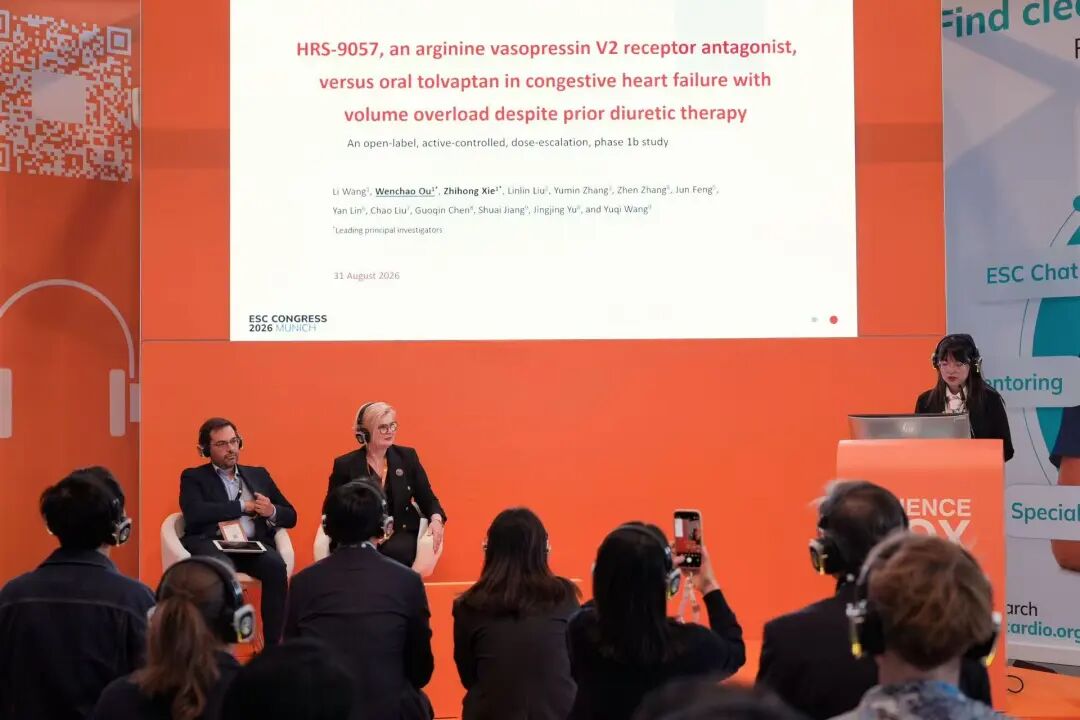
HRS-9057 is Hengrui’s self-developed selective V2 receptor antagonist. The HRS-9057-103 study (NCT06506994) is an open-label, active-controlled, dose-escalation Phase 1b study evaluating HRS-9057 IV in congestive heart failure (CHF) with volume overload, compared with oral tolvaptan [11].
Patients aged 18-75 years with chronic heart failure ≥1 month, prior diuretic use, and ≥1 fluid retention sign (lower-extremity edema, pulmonary congestion, jugular venous distension, pulmonary rales) were enrolled to HRS-9057 15 mg IV (N=12), HRS-9057 30 mg IV (N=12), or tolvaptan 15 mg oral (N=6), once daily. The primary outcome was safety and tolerability [11].
Key results:
Weight change: From baseline to day 8, the 15 mg and 30 mg HRS-9057 groups showed mean weight decreases of 1.81 kg and 2.82 kg, respectively, versus 1.40 kg in the tolvaptan group; both HRS-9057 groups showed earlier onset of weight reduction compared with tolvaptan [11].
Fluid retention improvement: At day 8, the proportion with resolution of lower-extremity edema was 9/9 (100%) in the 15 mg HRS-9057 group, 8/9 (88.9%) in the 30 mg group, and 3/5 (60.0%) in the tolvaptan group; the proportion with pulmonary rales resolution was 1/2 (50.0%), 3/3 (100%), and 3/4 (75%), respectively [11].
Durability of diuresis: Both HRS-9057 dose groups maintained negative volume balance over 7 days of treatment, whereas the tolvaptan group achieved negative volume balance only on day 1 [11].
Pharmacokinetics: After 1 hour of IV infusion, HRS-9057 showed a median Tmax of 1 hour and geometric mean t1/2 of 2-3 hours; plasma exposure increased approximately proportionally from 15 to 30 mg; steady state was reached after 3 days of dosing, with mild accumulation [11].
Safety: TEAEs were reported in 9/9 (100%), 8/10 (80.0%), and 6/6 (100%) in the 15 mg HRS-9057, 30 mg HRS-9057, and tolvaptan groups, respectively; most TEAEs were mild; no serious AEs occurred [11].
The study shows that 15 mg and 30 mg HRS-9057 IV over 7 days produced more pronounced weight reduction than oral tolvaptan; by day 8, the improvement and resolution rates of lower-extremity edema were higher in both HRS-9057 groups than in the 15 mg tolvaptan group; in CHF patients with fluid retention on stable background diuretic therapy, HRS-9057 was safe and well tolerated [11]. Its pronounced and sustained diuretic effect offers a new option for clinical management of heart failure with volume overload.
III. Posters: Recaticimab Patient-Level Pooled Analysis + APOC3 siRNA Phase 1 Strengthen Evidence Base
Poster presentations are an important supplement to academic exchange; two posters focus on deepening evidence for an already-marketed product and early exploration of a new mechanism, respectively.
III.i. Recaticimab: Patient-Level Pooled Analysis of 4 RCTs Solidifies Evidence—Benefit in Both CAD and Non-CAD Patients
Patients with coronary artery disease (CAD) require intensive lipid-lowering to reach guideline targets. Recaticimab, a long-acting anti-PCSK9 monoclonal antibody, has shown significant lipid-lowering effects in patients with dyslipidemia [12]. Prof. Chunjian Li and Prof. Tian Wu of the First Affiliated Hospital of Nanjing Medical University presented a patient-level pooled analysis including patients with primary hypercholesterolemia (non-familial and heterozygous) and mixed dyslipidemia from four randomized controlled studies—three Phase 3 (REMAIN 1-3) and one Phase 1b/2 study—evaluating recaticimab 150 mg Q4W and 300 mg Q8W by baseline CAD status (with vs without CAD) [13].
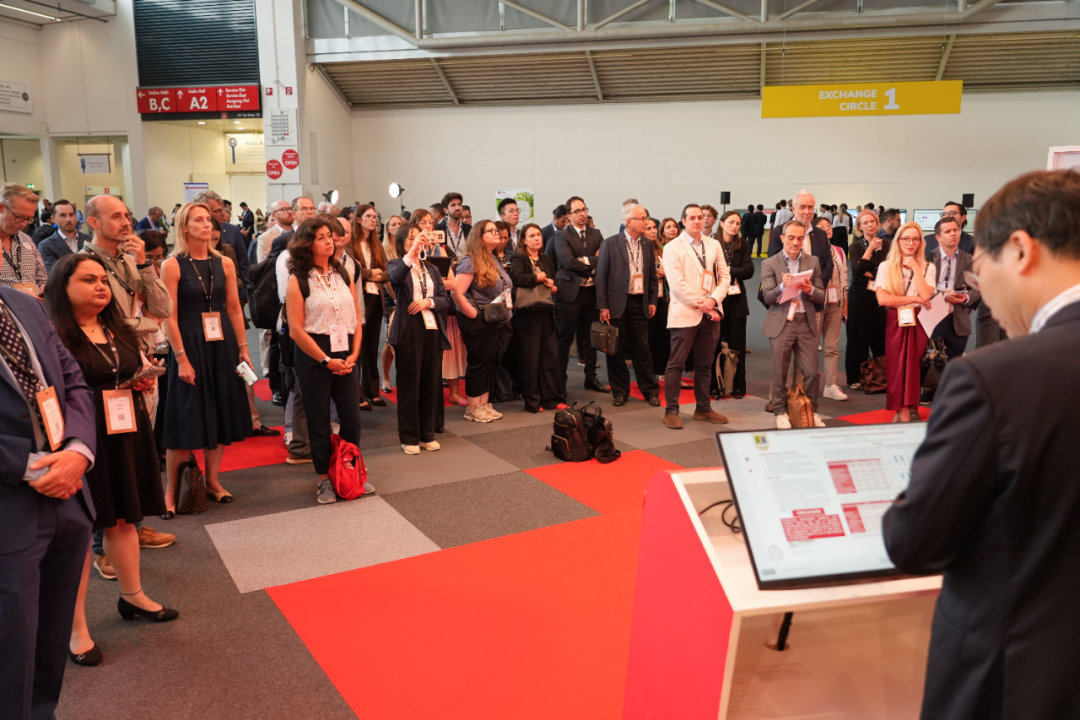
The pooled analysis included 1,120 patients—353 with CAD and 767 without; statin use was 99.2% in the CAD group, and approximately 60% of non-CAD patients received recaticimab monotherapy [13].
Key results:
Lipid-lowering magnitude: In CAD patients, recaticimab 150 mg Q4W and 300 mg Q8W reduced LDL-C from baseline at week 12 by 60.5% (95% CI: -65.8 to -56.8) and 60.2% (95% CI: -67.8 to -52.7), respectively; non-HDL-C reductions: 54.3% (95% CI: -61.8 to -48.3) and 55.0% (95% CI: -61.8 to -48.3); ApoB reductions: 51.2% (95% CI: -55.6 to -47.5) and 51.5% (95% CI: -57.7 to -45.4) [13].
In non-CAD patients, 150 mg Q4W and 300 mg Q8W reduced LDL-C by 49.5% (95% CI: -53.5 to -45.5) and 50.8% (95% CI: -55.2 to -46.4); non-HDL-C: 46.8% (95% CI: -50.5 to -43.1) and 45.7% (95% CI: -49.4 to -41.9); ApoB: 44.6% (95% CI: -47.3 to -40.6) and 48.0% (95% CI: -48.0 to -41.6) [13].
Recaticimab at both dose levels significantly reduced LDL-C and other atherogenic lipids compared with placebo [13].
Guideline-recommended target attainment: In CAD patients, the LDL-C<1.8 mmol/L attainment rate was 85.7% for 150 mg Q4W and 88.8% for 300 mg Q8W (versus 6.7%/15.9% with placebo); the rate of >50% LDL-C reduction from baseline was 79.8%/80.6% (versus 0/2.3%) [13].
In non-CAD patients, the LDL-C<2.6 mmol/L attainment rate was 89.4% for 150 mg Q4W and 89.8% for 300 mg Q8W (versus 11.2%/11.9% with placebo) [13].
Safety: TRAE rates were 27.7% in CAD patients and 21.4% in non-CAD patients; most events were mild, and the great majority of patients were well tolerated [13].
This pooled analysis shows that recaticimab delivered significant lipid-lowering, achieved high guideline-recommended atherogenic-lipid target attainment, and had favorable safety regardless of CAD status in dyslipidemia patients—supporting recaticimab use in both CAD and non-CAD populations [13]. As the world’s first ultra-long-acting anti-PCSK9 mAb and China’s first PCSK9 inhibitor with an approved monotherapy indication, this evidence-deepening effort offers robust support for the standardized use of recaticimab across CAD-status subgroups.
III.ii. HRS-7249-101: APOC3-Targeting siRNA Phase 1 Data—New Breakthrough for Hypertriglyceridemia
Apolipoprotein C3 (APOC3) is involved in triglyceride (TG) metabolism and is a novel therapeutic target for hypertriglyceridemia [14]. HRS-7249 is Hengrui’s self-developed small-interfering RNA (siRNA) designed to interfere with and inhibit APOC3 expression, thereby reducing TG levels [14].
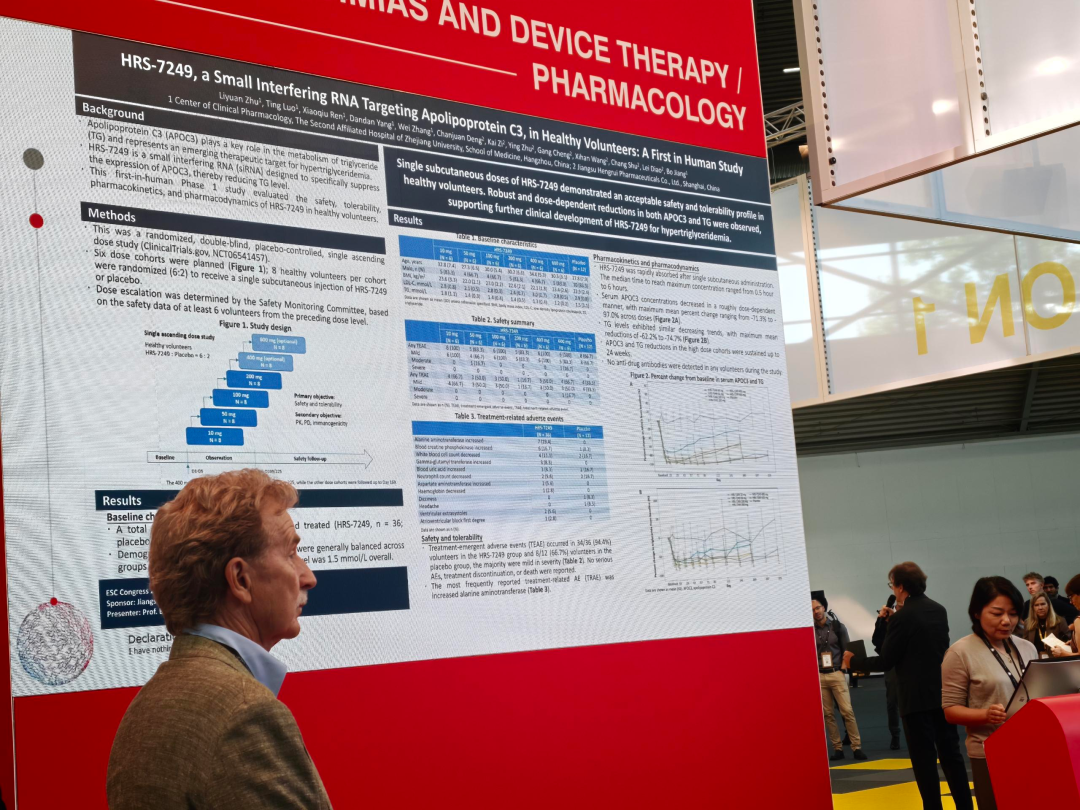
Led by Dr. Bo Jiang of the Second Affiliated Hospital of Zhejiang University School of Medicine, with co-investigators Dr. Liyuan Zhu, Dr. Ting Luo, Dr. Xiaoqiu Ren, Dr. Dandan Yang, and Dr. Wei Zhang, the HRS-7249-101 study (NCT06541457) is a randomized, double-blind, placebo-controlled single-ascending-dose Phase 1 study with six dose groups (10, 50, 100, 200, 400, and 600 mg); each cohort planned to enroll 8 healthy participants randomized 6:2 to HRS-7249 or placebo subcutaneously. The primary outcomes were safety and tolerability [14].
Key results:
A total of 48 participants were enrolled and treated (HRS-7249: n=36; placebo: n=12). TEAEs occurred in 94.4% (34/36) of HRS-7249 participants versus 66.7% (8/12) of placebo; most were mild; no serious AEs, treatment discontinuations, or deaths were reported [14].
After HRS-7249 administration, serum APOC3 concentrations decreased significantly, while the placebo group remained near baseline; APOC3 levels in the 10-600 mg HRS-7249 groups decreased in a roughly dose-dependent manner, with maximum mean percentage changes ranging from -71.3% to -97.0%; TG reductions showed a similar trend, ranging from -62.2% to -74.7% [14].
A single subcutaneous dose of HRS-7249 in healthy subjects demonstrated acceptable safety and tolerability, with robust and dose-dependent reductions in APOC3 and TG—providing support for further clinical development of HRS-7249 in hypertriglyceridemia [14].
As an APOC3-targeting siRNA, HRS-7249 achieves sustained inhibition of APOC3 expression through RNA interference, with single-dose administration delivering long-term lipid-lowering potential—it may become a preferred option for long-term management of hypertriglyceridemia.
Closing Note
The six Hengrui studies presented at this ESC meeting collectively demonstrate the global competitiveness of Chinese innovative drugmakers’ cardiovascular-metabolic pipelines. From a mechanism-innovation perspective, the company has covered five novel targets—PCSK9 (injection + oral), ANGPTL3, Lp(a), APOC3, and V2 receptor antagonist—forming a multi-target, full-pathway cardiovascular-metabolic matrix.
From a clinical-evidence perspective, this set of releases spans the full R\&D cycle: Phase 3 RCT top-line data (SHR-1918-301 HoFH), Phase 1b active-controlled study data (HRS-9057-103 V2 antagonist), Phase 2 RCT data (HRS-5346-201 Lp(a)), Phase 1 first-in-human data (HRS-1301-101 oral PCSK9, HRS-7249-101 APOC3 siRNA), and a patient-level pooled analysis of an already-marketed product (recaticimab across four RCTs). Together these illustrate the full trajectory from early concept validation to pivotal clinical verification to post-marketing evidence deepening. The hope is that these innovative results accelerate real-world adoption and bring more therapeutic options to cardiovascular patients worldwide.
References
[1] Tromp TR, et al. Worldwide experience of homozygous familial hypercholesterolaemia: retrospective cohort study. Lancet. 2022;399(10326):719-728.
[2] Shimizugawa T, Ono M, Shimamura M, et al. ANGPTL3 decreases very-low-density lipoprotein triglyceride clearance by inhibition of lipoprotein lipase. J Biol Chem. 2002;277(37):33742-33748.
[3] Shimamura M, Matsuda M, Yasumo H, et al. Angiopoietinlike protein3 regulates plasma HDL cholesterol through suppression of endothelial lipase. Arterioscler Thromb Vasc Biol. 2007;27(2):366-372.
[4] Peng D, Wang L, Pi L, et al. Anti-ANGPTL3 antibody SHR-1918 for homozygous familial hypercholesterolemia: a nonrandomized clinical trial. JAMA Cardiol. 2026;11(2):193-198.
[5] Peng D, et al. SHR-1918-301. Presented at ESC Congress 2026, Late-Breaking Clinical Trial. Munich, 2026.
[6] Zhu D, Tang Y, Lv Y, et al. HRS-5346-201. Presented at ESC Congress 2026, Late-Breaking Clinical Trial. Munich, 2026.
[7] Burgess S, Ference BA, Staley JR, et al. Association of LPA variants with risk of coronary disease and the implications for lipoprotein(a)-lowering therapies: a Mendelian randomization analysis. JAMA Cardiol. 2018;3(7):619-627.
[8] Langsted A, Nordestgaard BG. Antisense oligonucleotides targeting lipoprotein(a). Curr Atheroscler Rep. 2019;21(8):30.
[9] Zhong SL, et al. HRS-1301-101. Presented at ESC Congress 2026, Oral presentation. Munich, 2026.
[10] Costello-Boerrigter LC, Boerrigter G, Burnett JC. V2 receptor antagonists in heart failure: a review. Cardiol Res. 2017;8(3):87-95.
[11] Wang L, et al. HRS-9057-103. Presented at ESC Congress 2026, Oral presentation. Munich, 2026.
[12] Gao F, et al. Recaticimab, a long-acting anti-PCSK9 monoclonal antibody. Atherosclerosis. 2026;414:120670.
[13] Li C, Wu T. Recaticimab patient-level pooled analysis (REMAIN 1-3 + 1 Ib/II). Presented at ESC Congress 2026, Poster. Munich, 2026.
[14] Zhu LY, et al. HRS-7249-101. Presented at ESC Congress 2026, Poster. Munich, 2026.

