


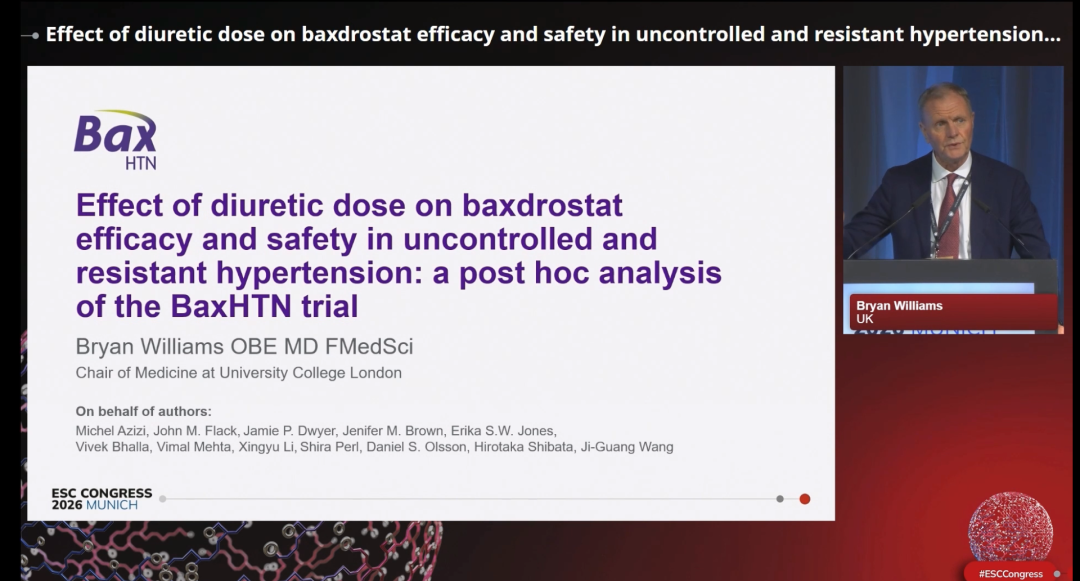
A post-hoc analysis of the BaxHTN phase 3 trial, presented at the European Society of Cardiology (ESC) Congress 2026, evaluated whether background diuretic dose affects the efficacy and safety of baxdrostat, a highly selective aldosterone synthase inhibitor, in patients with uncontrolled or resistant hypertension. Hypertension remains a major global public health problem, affecting an estimated 1.4 billion people worldwide, and persistently poor blood pressure control substantially raises the risk of target organ damage, including heart failure, stroke, and chronic kidney disease. Excessive aldosterone activation is known to play an important role in hypertension pathophysiology, and prior evidence suggests that aldosterone inhibition may improve cardiovascular outcomes and lower mortality risk. Baxdrostat directly blocks aldosterone synthesis and lowers plasma aldosterone levels to reduce blood pressure, and the BaxHTN phase 3 trial previously showed that baxdrostat added to standard therapy significantly reduced seated systolic blood pressure (sSBP) in patients with uncontrolled or resistant hypertension, with a generally well-tolerated safety profile.
 On-site Report Diagram
Notably, all patients in BaxHTN received a diuretic as part of background therapy, while diuretic choice, dose, and titration strategies differ widely in clinical practice across countries. Whether these differences affect the antihypertensive efficacy and safety of baxdrostat has not been clear. The BaxHTN post-hoc analysis presented at ESC 2026 addressed this question by systematically evaluating baxdrostat’s efficacy and safety across different baseline diuretic dose strata.
Article Key Points
- BaxHTN was a multicenter, randomized, double-blind, placebo-controlled phase 3 trial of baxdrostat 1 mg, 2 mg, or placebo once daily for 12 weeks in adults with uncontrolled hypertension (≥2 agents, including a diuretic) or resistant hypertension (≥3 agents, including a diuretic) and baseline sSBP 140-170 mmHg.
- This post-hoc analysis stratified participants by baseline diuretic dose, defined as low dose (≤0.5×DDD) versus standard dose (>0.5×DDD), with examples including indapamide ≤1.25 mg, chlorthalidone ≤12.5 mg, or hydrochlorothiazide ≤12.5 mg qualifying as low dose.
- Adjusted net sSBP reductions from baseline to week 12 with baxdrostat 1 mg and 2 mg versus placebo were -10.5 mmHg and -10.3 mmHg in the low-dose stratum (n=371), and -6.8 mmHg and -9.3 mmHg in the standard-dose stratum (n=388).
- The treatment-by-diuretic-dose interaction p-value was 0.3346, indicating that background diuretic dose did not significantly modify baxdrostat’s antihypertensive efficacy.
- Safety profiles were generally similar across the low- and standard-dose strata; serious adverse event rates were comparable, and hyperkalemia-related treatment discontinuations remained uncommon.
Study Design: Stratification by Baseline Diuretic Dose to Test Consistency of Baxdrostat Efficacy
BaxHTN was a multicenter, randomized, double-blind, placebo-controlled phase 3 trial that enrolled patients with uncontrolled hypertension (already receiving ≥2 antihypertensive agents, including a diuretic) or resistant hypertension (≥3 agents, including a diuretic), with baseline seated systolic blood pressure of 140-170 mmHg. After a 2-week placebo run-in, participants were randomized to baxdrostat 1 mg, 2 mg, or placebo once daily for 12 weeks of treatment. The present post-hoc analysis stratified participants by their baseline diuretic dose into a low-dose group (≤0.5×DDD) and a standard-dose group (>0.5×DDD), and examined baxdrostat’s efficacy and safety across these dose strata.
Note: DDD = Defined Daily Dose. Low-dose diuretics: ≤0.5×DDD, for example indapamide ≤1.25 mg, chlorthalidone ≤12.5 mg, or hydrochlorothiazide ≤12.5 mg. Standard-dose diuretics: >0.5×DDD, for example indapamide >1.25 mg, chlorthalidone >12.5 mg, or hydrochlorothiazide >12.5 mg.
Primary endpoint: change in seated systolic blood pressure from baseline to week 12.
Secondary endpoint: proportion of patients reaching sSBP <130 mmHg at week 12.
Safety endpoints: adverse events of special interest, including hyperkalemia (serum potassium >5.0 mmol/L), hyponatremia (serum sodium <135 mmol/L), and hypotension requiring medical intervention.
Efficacy Results: Background Diuretic Dose Did Not Affect Baxdrostat’s Antihypertensive Efficacy
Baseline characteristics: The low-dose stratum included 371 patients (baxdrostat 1 mg n=133; 2 mg n=121; placebo n=117) and the standard-dose stratum included 388 patients (1 mg n=121; 2 mg n=133; placebo n=134). Mean age was 61 years in both strata, baseline blood pressure was 149/86 mmHg in the low-dose group versus 150/87 mmHg in the standard-dose group, and the proportion of Asian patients was higher in the low-dose group (39.9% versus 14.7%).
Table 1. Baseline Characteristics
|
|
Low-Dose Group |
Standard-Dose Group |
|
Mean (SD) Age, Years |
61.3 (11.8) |
61.0 (11.6) |
|
Male, n (%) |
222 (59.8) |
248 (63.9) |
|
Race, n (%) |
|
|
|
White |
193 (52.0) |
278 (71.6) |
|
Black |
21 (5.7) |
36 (9.3) |
|
Asian |
148 (39.9) |
57 (14.7) |
|
Diabetes, n (%) |
136 (36.7) |
157 (40.5) |
|
Estimated Glomerular Filtration Rate (eGFR) [Mean (SD)], mL/min/1.73 m² |
86.0 (17.8) |
84.6 (18.7) |
|
Body Mass Index (BMI), kg/m² |
29.9 |
32.5 |
|
White |
31.2 |
32.8 |
|
Black |
33 |
36.1 |
|
Asian |
27.4 |
29.3 |
|
Serum Potassium [Mean (SD)], mmol/L |
4.2 (0.4) |
4.2 (0.5) |
|
Serum Aldosterone [Mean (SD)], ng/dL |
7.8 (5.1) |
9.1 (5.8) |
|
Plasma Renin Activity [Mean (SD)], ng/mL/h |
3.2 (5.2) |
4.9 (7.8) |
|
Glycated Hemoglobin (HbA1c) [Mean (SD)], % |
6.2 (1.1) |
6.2 (1.0) |
Primary Endpoint (Change in Seated Systolic Blood Pressure From Baseline to Week 12)
Low-dose stratum: baxdrostat 1 mg and 2 mg reduced seated systolic BP from baseline by 15.3 mmHg and 15.5 mmHg, respectively, versus 5.3 mmHg with placebo. Compared with placebo, the adjusted net reductions with baxdrostat 1 mg and 2 mg were -10.5 mmHg (95% CI -14.5 to -6.6) and -10.3 mmHg (95% CI -14.3 to -6.3), with similar magnitudes and clinically meaningful effects in both dose arms.
Standard-dose stratum: baxdrostat 1 mg and 2 mg reduced seated systolic BP from baseline by 13.4 mmHg and 15.9 mmHg, respectively, versus 6.6 mmHg with placebo. Compared with placebo, the adjusted net reductions were -6.8 mmHg (95% CI -11.1 to -2.4) with baxdrostat 1 mg and -9.3 mmHg (95% CI -13.4 to -5.1) with baxdrostat 2 mg, with the 2 mg dose showing a more favorable trend.
The interaction test showed a p-value of 0.3346 (>0.05) for the diuretic-dose group × treatment group interaction, indicating that background diuretic dose did not significantly affect baxdrostat’s efficacy (i.e., efficacy was consistent across diuretic dose strata).
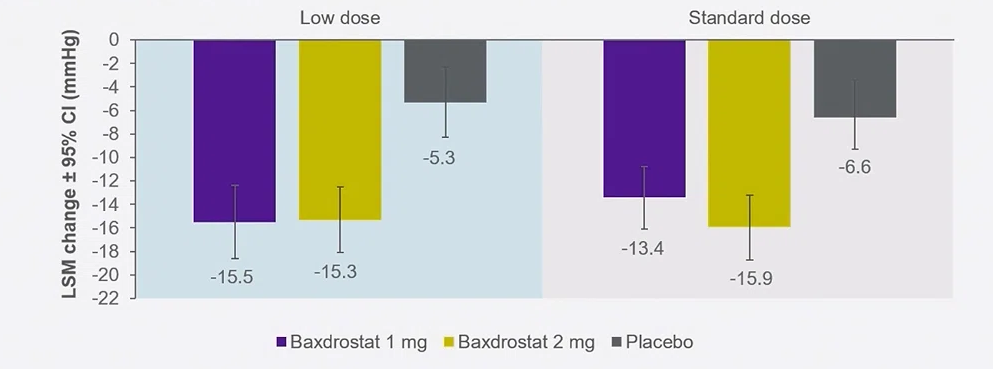 Fig. 1. Change in Seated Systolic Blood Pressure From Baseline to Week 12 by Group
Secondary Endpoint (Proportion of Patients Reaching sSBP <130 mmHg at Week 12)
In the low-dose stratum, response rates were 42.1% with baxdrostat 1 mg, 41.3% with baxdrostat 2 mg, and 14.8% with placebo. In the standard-dose stratum, response rates were 37.2%, 40.2%, and 22.4%, respectively.
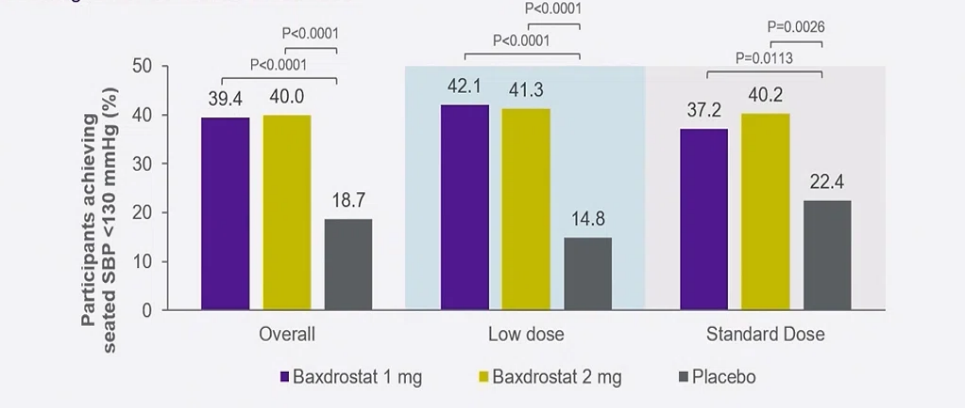 Fig. 2. Proportion of Patients Reaching Seated Systolic Blood Pressure <130 mmHg at Week 12 by Group
Changes in Aldosterone and Plasma Renin Activity (PRA) From Baseline to Week 12
Baxdrostat treatment reduced aldosterone levels (-4.8 ng/dL in the low-dose stratum, -6.0 ng/dL in the standard-dose stratum) and increased PRA levels (+6.2 ng/mL/h and +7.4 ng/mL/h, respectively), consistent with the pharmacodynamic profile of aldosterone synthase inhibition.
Table 2. Changes in Aldosterone and PRA From Baseline to Week 12
|
Parameter |
Diuretic Dose Stratification |
Baxdrostat 1 mg |
Baxdrostat 2 mg |
Placebo |
|
Aldosterone Change (ng/dL) |
Low-Dose Group |
-4.8 |
-6.0 |
0 |
|
Standard-Dose Group |
-0.5 |
-0.5 |
-0.5 |
|
|
PRA Change (pg/mL/min) |
Low-Dose Group |
6.2 |
7.4 |
-0.2 |
|
Standard-Dose Group |
10.1 |
9.1 |
1.2 |
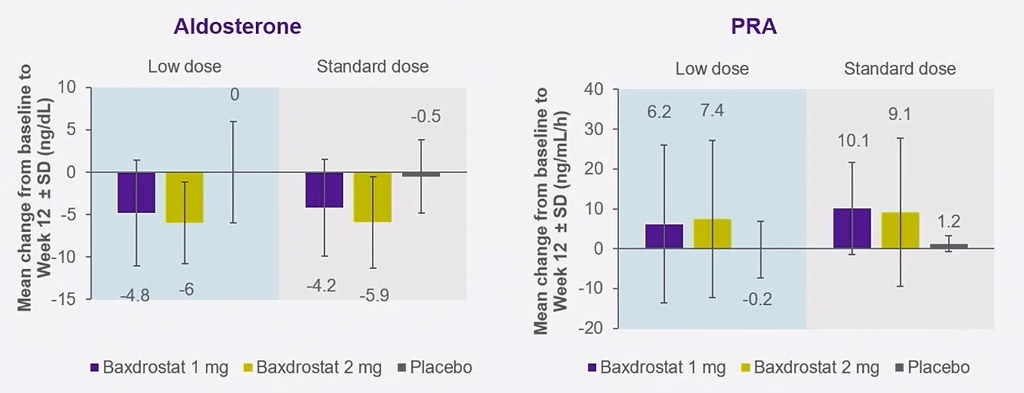 Fig. 3. Changes in Aldosterone and PRA From Baseline to Week 12 by Group
Safety Results: Safety Profiles Were Similar Across Diuretic Dose Strata
Rates of serious adverse events (SAEs) were comparable across groups. In the low-dose stratum, SAEs occurred in 1.5%, 2.5%, and 1.7% of participants in the baxdrostat 1 mg, 2 mg, and placebo groups, respectively. In the standard-dose stratum, SAEs occurred in 2.5%, 4.5%, and 3.7%, respectively. Treatment discontinuations due to hyperkalemia occurred in 2 participants in the low-dose stratum (both in the 2 mg arm, 1.7%) and 4 participants in the standard-dose stratum (2 in the 1 mg arm, 1.7%; 2 in the 2 mg arm, 1.5%).
Table 3. Safety Results
|
Event |
Low-Dose Diuretic Group |
Standard-Dose Diuretic Group |
Event |
Low-Dose Diuretic Group |
Standard-Dose Diuretic Group |
Event |
||||||||
|
Baxdrostat 1 mg |
Baxdrostat 2 mg |
Placebo |
Baxdrostat 1 mg |
Baxdrostat 2 mg |
Placebo |
Baxdrostat 1 mg |
Baxdrostat 2 mg |
Placebo |
Baxdrostat 1 mg |
Baxdrostat 2 mg |
Placebo |
|||
|
Total SAEs (%) |
2 (1.5) |
3 (2.5) |
2 (1.7) |
3 (2.5) |
6 (4.5) |
5 (3.7) |
Total SAEs (%) |
2 (1.5) |
3 (2.5) |
2 (1.7) |
3 (2.5) |
6 (4.5) |
5 (3.7) |
Total SAEs (%) |
|
Adverse Events of Special Interest (AESI), n (%) |
|
|
|
|
|
|
Adverse Events of Special Interest (AESI), n (%) |
|
|
|
|
|
|
Adverse Events of Special Interest (AESI), n (%) |
|
Hyperkalemia |
1 (0.8) |
8 (6.6) |
0 |
5 (4.1) |
12 (9.0) |
0 |
Hyperkalemia |
1 (0.8) |
8 (6.6) |
0 |
5 (4.1) |
12 (9.0) |
0 |
Hyperkalemia |
|
Hyponatremia |
1 (0.8) |
3 (2.5) |
0 |
1 (0.8) |
2 (1.5) |
1 (0.7) |
Hyponatremia |
1 (0.8) |
3 (2.5) |
0 |
1 (0.8) |
2 (1.5) |
1 (0.7) |
Hyponatremia |
|
Hypotension |
4 (3.0) |
1 (0.8) |
2 (1.7) |
5 (4.1) |
0 |
0 |
Hypotension |
4 (3.0) |
1 (0.8) |
2 (1.7) |
5 (4.1) |
0 |
0 |
Hypotension |
|
Week 12 Potassium |
|
|
|
|
|
|
Week 12 Potassium |
|
|
|
|
|
|
Week 12 Potassium |
|
>5.5 mmol/L, n (%) |
9 (6.8) |
10 (8.3) |
0 |
6 (5.0) |
18 (13.5) |
1 (0.7) |
>5.5 mmol/L, n (%) |
9 (6.8) |
10 (8.3) |
0 |
6 (5.0) |
18 (13.5) |
1 (0.7) |
>5.5 mmol/L, n (%) |
|
>6.0 mmol/L, n (%) |
2 (1.5) |
2 (1.7) |
0 |
0 |
0 |
0 |
>6.0 mmol/L, n (%) |
2 (1.5) |
2 (1.7) |
0 |
0 |
0 |
0 |
>6.0 mmol/L, n (%) |
|
Potassium Change from Baseline (Mean±SD), mmol/L |
+0.3±0.6 |
+0.4±0.6 |
+0.1±0.4 |
+0.4±0.5 |
+0.6±0.5 |
0.0±0.4 |
Potassium Change from Baseline (Mean±SD), mmol/L |
+0.3±0.6 |
+0.4±0.6 |
+0.1±0.4 |
+0.4±0.5 |
+0.6±0.5 |
0.0±0.4 |
Potassium Change from Baseline (Mean±SD), mmol/L |
|
Treatment Discontinuation due to Hyperkalemia, n (%) |
0 |
2 (1.7) |
0 |
2 (1.7) |
2 (1.5) |
0 |
Treatment Discontinuation due to Hyperkalemia, n (%) |
0 |
2 (1.7) |
0 |
2 (1.7) |
2 (1.5) |
0 |
Treatment Discontinuation due to Hyperkalemia, n (%) |
|
eGFR Change from Baseline (Mean±SD), mL/min/1.73 m² |
-5.7±10.9 |
-6.0±11.1 |
-0.6±8.6 |
-8.8±14.4 |
-8.2±13.2 |
+0.4±8.7 |
eGFR Change from Baseline (Mean±SD), mL/min/1.73 m² |
-5.7±10.9 |
-6.0±11.1 |
-0.6±8.6 |
-8.8±14.4 |
-8.2±13.2 |
+0.4±8.7 |
eGFR Change from Baseline (Mean±SD), mL/min/1.73 m² |
Clinical Implications and Summary
This BaxHTN post-hoc analysis did not identify a significant effect of background diuretic dose on the efficacy or safety of baxdrostat; baxdrostat effectively reduced blood pressure in both low- and standard-dose diuretic backgrounds. These findings support that, in patients with uncontrolled or resistant hypertension, baxdrostat’s antihypertensive efficacy and safety are not substantially affected by background diuretic dose. The result offers direct guidance for clinical practice: when combining baxdrostat with a diuretic, clinicians do not need to differentiate treatment strategy by the patient’s diuretic dose, which simplifies combination-therapy decision-making to some extent.
At the same time, these findings provide supportive evidence for the applicability of baxdrostat in a broader hypertensive population. Given the substantial real-world variation in diuretic choice and dose across countries, the consistent efficacy and safety profile observed across diuretic dose strata may strengthen clinicians’confidence in using baxdrostat under varied prescribing patterns and offers reference for future clinical studies and guideline development.
It should be noted that all patients in this analysis received a diuretic; efficacy and safety data in patients not using any diuretic are not yet available and warrant further study.
References
[1] Leopold JA, Ingelfinger JR. Aldosterone and Treatment-Resistant Hypertension. N Engl J Med. 2023 Feb 2;388(5):464-467.
[2] Lin X, Ullah MHE, Wu X, et al. Cerebro-Cardiovascular Risk, Target Organ Damage, and Treatment Outcomes in Primary Aldosteronism. Front Cardiovasc Med. 2022 Feb 2;8:798364.
[3] Li SM, Huang JY, Zhu CY, et al. Target organ damage in untreated hypertensive patients with primary aldosteronism. J Clin Hypertens (Greenwich). 2024 Jul;26(7):789-796.
[4] Hu WX. [Emphasis on tubular function examination in the diagnosis and treatment of glomerular diseases]. Chinese Journal of Nephrology, Dialysis and Transplantation. 2007;16(5):2.
[5] Dogra S, Shah S, Gitzel L, et al. Baxdrostat: A Novel Aldosterone Synthase Inhibitor for Treatment Resistant Hypertension. Curr Probl Cardiol. 2023 Nov;48(11):101918.
[6] Flack JM, Azizi M, Brown JM, Dwyer JP, Fronczek J, Jones ESW, Olsson DS, Perl S, Shibata H, Wang JG, Wilderäng U, Wittes J, Williams B; BaxHTN Investigators. Efficacy and Safety of Baxdrostat in Uncontrolled and Resistant Hypertension. N Engl J Med. 2025 Oct 9;393(14):1363-1374.

