


Respiratory infection care is undergoing a broader shift from pathogen-directed management toward approaches that also account for host response, precision intervention, and standardized outcome assessment. Identifying a pathogen does not necessarily translate into better clinical outcomes. Persistently high mortality from severe pneumonia, recurrent infection-related exacerbations in chronic airway disease, and post-COVID-19 sequelae have brought the role of host factors into sharper focus.
At the 2026 European Respiratory Society (ERS) Congress, Prof. Stefano Aliberti of Humanitas Research Hospital in Italy reviewed major respiratory infection studies published in the European Respiratory Journal (ERJ) in 2026. His overview highlighted an emerging shift from empirical, single-target approaches toward more precise management that considers both the host and the pathogen. At the same time, research endpoints are expanding beyond short-term microbiological clearance to standardized measures of longer-term functional outcomes.
Fig. 1. Presentation by Prof. Stefano Aliberti
Precision Diagnostics and Host-Response Phenotyping
At the diagnostic level, the focus is moving beyond pathogen identification toward a more comprehensive assessment of disease that can better inform clinical decisions. A joint ERS/European Society of Clinical Microbiology and Infectious Diseases (ESCMID) statement on rapid diagnostic tests (RDTs) supports the use of procalcitonin (PCT) to guide antibiotic de-escalation and shorten treatment duration in hospitalized patients. Strategies guided by C-reactive protein (CRP) and PCT did not show a statistically significant increase in key outcomes such as treatment failure or recurrence compared with standard of care (SOC).
However, an important evidence gap remains. The core evidence underpinning the statement was generated in studies that excluded immunocompromised patients, leaving uncertainty about how these approaches should be applied in this population.
Prof. Aliberti also highlighted the growing importance of host-related factors. In bronchiectasis, a large cohort study across four international medical centers identified substantial etiological differences between pediatric-onset bronchiectasis (POBE) and adult-onset bronchiectasis (AOBE). Primary ciliary dyskinesia (PCD) accounted for 27.3% of etiologies in POBE compared with 6.8% in AOBE, while patients with pediatric-onset disease tended to have a longer disease course and greater disease severity.
The ERS/American Thoracic Society (ATS) diagnostic framework for PCD provides a tiered pathway encompassing confirmed, highly likely, and possible disease. Building on this framework, a 2026 ERJ study led by Prof. Jinfu Xu and colleagues at Tongji Hospital affiliated with Tongji University evaluated exhaled nitric oxide (FeNO) as an initial screening tool for PCD among patients with bronchiectasis. At a cutoff of ≤20 nL/min, FeNO showed a sensitivity of 84.8% and a specificity of 97.1%.
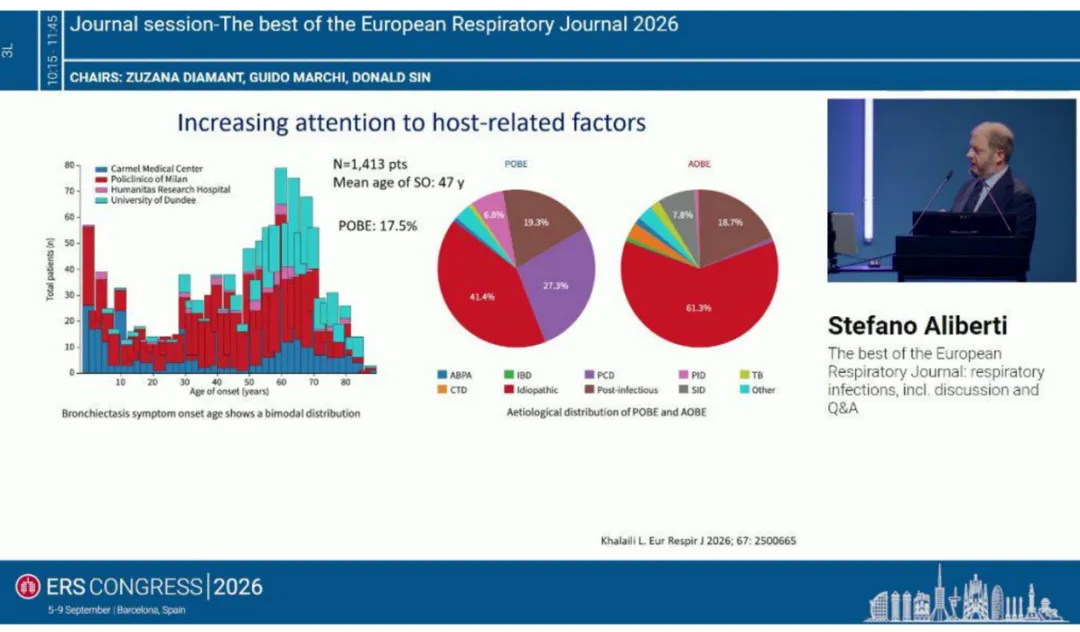
Fig. 2. A Multicenter Study (N=1,413) Showing a Bimodal Distribution of Age at Symptom Onset in Bronchiectasis
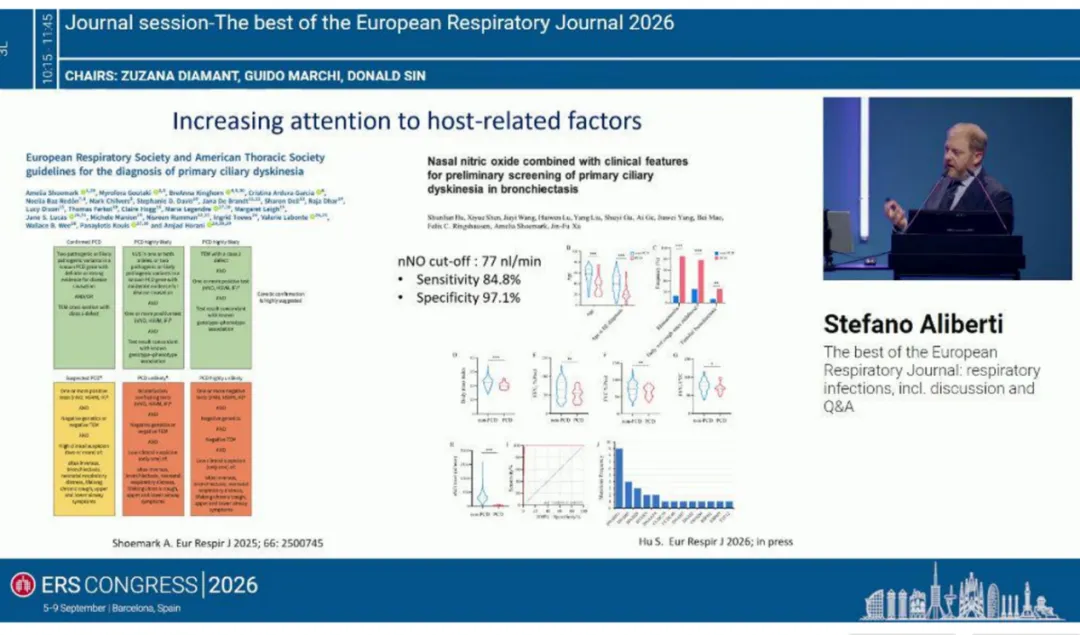
Fig. 3. ERS/ATS Tiered Diagnostic Pathway for PCD and the Diagnostic Performance of FeNO for PCD Screening in Bronchiectasis
Host inflammatory responses may also provide prognostic information. An observational study involving five independent international cohorts, including the PILOT cohort and four external validation cohorts, found that levels of neutrophil extracellular traps (NETs), measured using neutrophil elastase-DNA complexes in pleural fluid, were significantly associated with baseline disease severity and 1-year mortality in patients with empyema.
Separately, a translational study combining clinical sample analysis with animal-model validation suggested that differential expression of the leukocyte metalloproteases ADAM10 and ADAM17 may have an important role in modulating disease severity and systemic outcomes in bacterial and viral pneumonia.
Optimizing Treatment: Precision Delivery and Therapeutic De-Escalation
Precision treatment depends not only on selecting an appropriate drug, but also on delivering it to the relevant compartment and identifying the patients most likely to benefit. Allergic bronchopulmonary aspergillosis (ABPA) illustrates this challenge. Systemic itraconazole is subject to interindividual pharmacokinetic variability and may cause systemic adverse effects, including hepatotoxicity and gastrointestinal reactions.
A randomized, double-blind, placebo-controlled Phase 2 trial of PUR1900, an inhaled dry-powder formulation of itraconazole, reported that inhaled delivery achieved higher local airway exposure. Trends toward improved forced expiratory volume in 1 second (FEV1) and reduced total serum immunoglobulin E (IgE) were also observed. However, the clinical efficacy of this approach remains to be established in confirmatory trials.
Treatment optimization can also involve removing interventions that provide little incremental benefit. The randomized SCOPE trial enrolled 89 patients with pleural infection and assigned them to saline irrigation, saline irrigation plus intrapleural enzyme therapy, or intrapleural enzyme therapy alone. Median chest tube duration was significantly longer with saline irrigation alone than in the other two groups (4 days vs 3 days vs 3 days; p=0.003). Patients receiving intrapleural urokinase plus DNase had shorter drainage durations.
No statistically significant between-group differences were observed for secondary outcomes including the need for additional chest tubes, surgery, length of hospital stay, 3-month infection-related mortality, or adverse events. The findings therefore suggest that routinely adding saline irrigation may not provide additional clinical benefit and that its incremental value warrants careful assessment.
Beyond conventional antimicrobial therapy, host-directed strategies are also being explored. In an animal model, polyvalent immunoglobulin derived from human plasma promoted phagocytic clearance of Streptococcus pneumoniae, reduced pulmonary inflammation, and improved alveolar barrier integrity. Because these findings derive from an animal study, their clinical relevance requires further evaluation.
Another randomized controlled trial, incorporating bronchoscopy and cell-culture experiments, found that long-term azithromycin treatment enhanced airway epithelial antiviral immunity in patients with uncontrolled asthma and suppressed virus-induced interleukin-33 (IL-33) release. These findings provide evidence for a potential immunomodulatory mechanism relevant to infection responses in chronic airway disease.
From Acute Resolution to Long-Term Outcomes
Research in respiratory infections is increasingly extending beyond short-term microbiological clearance to longer-term functional outcomes. This transition is reflected in several recent international consensus statements and guidelines.
For refractory nontuberculous mycobacterial (NTM) pulmonary disease, a multidisciplinary expert consensus has established a systematic management pathway following treatment failure, defined as persistent culture positivity for 6 months. The consensus emphasizes multidisciplinary team (MDT) discussion when considering treatment intensification, de-escalation, and supportive care.
Meanwhile, clinical practice guidelines for the prevention and treatment of long COVID, developed by an international multidisciplinary group using the GRADE methodology, provide 10 conditional recommendations covering key areas including prevention, immunomodulatory therapies, cognitive behavioral therapy, and rehabilitation.
Standardizing outcomes is another priority. An ERS statement on core outcome sets for trials in the management of adult community-acquired and hospital-acquired pneumonia found substantial heterogeneity in outcomes reported by previous antibiotic and corticosteroid trials. Long-term functional status and quality of life were particularly underrepresented, limiting comparisons between studies and their utility for clinical decision-making.
Using the COS-STAD methodology, the statement defined six core outcomes for community-acquired pneumonia: treatment success or failure, all-cause mortality, serious adverse events, hospital readmission, duration of symptoms, and time to clinical stability. Standardized reporting of these endpoints could improve comparability and evidence synthesis across future clinical trials.
A Broader Framework for Respiratory Infection Research
In closing, Prof. Aliberti emphasized that pathogens represent only one part of the clinical picture and that host responses are equally important. Taken together, the studies reviewed at ERS 2026 point toward a new framework for respiratory infection management: precision diagnostics, simultaneous consideration of host and pathogen biology, more targeted interventions, and standardized assessment of longer-term outcomes.
Important questions remain unresolved. Evidence in immunocompromised populations is still limited, while further work is needed to determine how host endotyping can be translated into individualized treatment strategies. These gaps are likely to remain important priorities for future respiratory infection research.

