


Case Presentation
On the evening of March 4, 2025, a 33-year-old male factory worker in Enping, Guangdong Province, sustained a severe perineal injury when his clothing was drawn into an operating lathe. The traction force caused complete avulsion of the penile and scrotal skin, with immediate exposure of the penile shaft, bilateral testes, and perianal soft tissue.
The patient was transported to Enping People's Hospital, a facility within the trauma referral network of Zhujiang Hospital of Southern Medical University (SMU). Given the wound's complexity — involving full-thickness genital skin loss approximating the anal sphincter — the local team activated the regional trauma transfer pathway and contacted Zhujiang Hospital's Trauma Emergency Center.
After wound stabilization, the patient arrived at Zhujiang Hospital at approximately 11:30 PM following a four-hour transfer. Physical examination revealed a wound measuring approximately 14 cm × 14 cm with full exposure of the penile body and bilateral testes extending to the anal sphincter margin. Urological consultation confirmed an intact urinary tract and unobstructed catheter drainage.
Surgical Planning and Decision-Making
By the American Association for the Surgery of Trauma (AAST) scrotal injury grading scale, avulsion exceeding 50% of the scrotal surface constitutes Grade V — the most severe category. This patient presented with 100% scrotal skin loss, representing the extreme end of the injury spectrum.
The reconstructive team, led by Dr. Jiang, evaluated multiple repair strategies. Artificial dermis grafting was excluded owing to the requirement for a staged procedure and anticipated post-operative restriction of penile elasticity. Conventional split-thickness skin grafting was similarly ruled out due to known risks of contracture and potential cavernosal fibrosis.
Both free skin grafting and pedicled flap transfer were considered appropriate for a defect of this size and location. Skin grafts provide thin, pliable coverage favorable to testicular thermoregulation but require secondary surgery. Pedicled flaps permit single-stage repair with superior aesthetic outcomes; however, flap tissue bulk may elevate scrotal temperature relative to the physiological norm and potentially compromise spermatogenesis.
Following patient consultation — the patient is divorced with existing children and indicated that fertility recovery was a secondary priority relative to preserving sexual function and cosmetic appearance — the team selected bilateral inguinal pedicled flap transfer. Residual prepucial tissue with intact blood supply, identified intraoperatively after dressing removal, provided additional coverage for a portion of the penile shaft.
Operative Technique
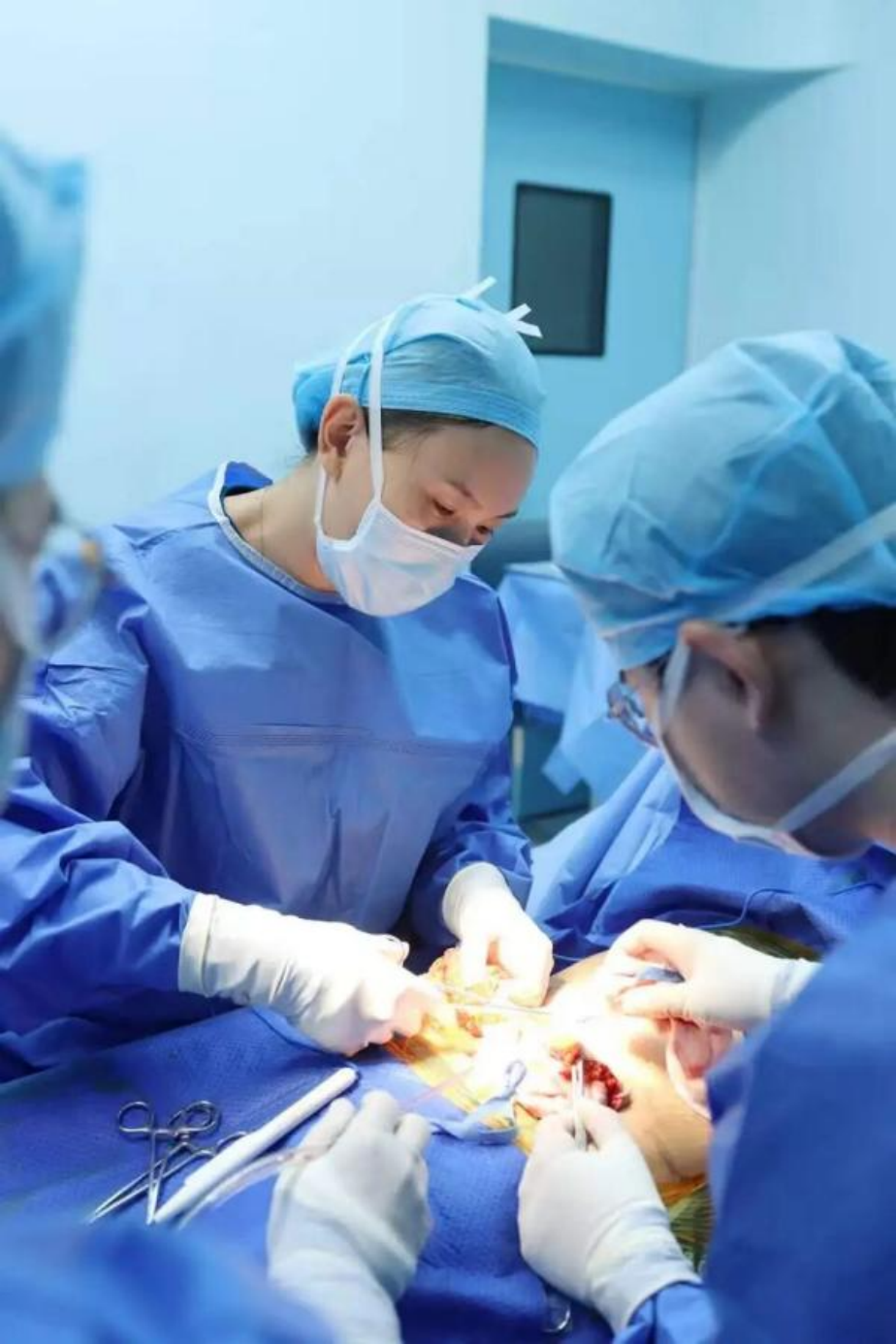
Fig.1 Dr. Xuan Jiang performing intraoperative perineal reconstruction. Surgery commenced at 3:30 AM on March 5 and concluded approximately four hours later.
The procedure began at 3:30 AM on March 5 and involved sequential wound debridement, bilateral inguinal flap harvest, meticulous vascular anastomosis, and multilayer wound closure. To mitigate the risk of impaired testicular thermoregulation associated with bulky flap tissue, Dr. Jiang constructed a pouch-like cavity between the two flaps to facilitate passive heat dissipation from the testes.
Vacuum-sealed drainage (VSD) was applied postoperatively to promote flap adherence and perfusion. Total operative time was approximately four hours. The patient regained consciousness from general anesthesia by 8:00 AM.
Dr. Jiang emphasized that operative decisions in such cases must remain individualized and responsive to intraoperative findings. Had adequate donor tissue been unavailable, the team had provisionally planned to revert to artificial dermis or split-thickness grafting, illustrating the necessity for real-time adaptability over rigid protocol adherence.
Postoperative Course and Outcomes
At two-week follow-up, bilateral flap viability was confirmed. Mildly compromised perfusion was noted at the penile base, requiring localized debridement and continued VSD therapy. The patient was transferred to a general ward for ongoing rehabilitation.
Hormonal suppression of erectile activity was initiated to minimize mechanical stress on the newly established flap. Assessment of erectile and sexual function has been deferred to the three-month postoperative review. Dr. Jiang noted that, absent complications, the reconstruction is expected to substantially preserve long-term physiological function and quality of life.
Clinical Context: Scope of Perineal Reconstruction in Plastic Surgery
Penile and scrotal degloving injuries are rare, typically arising from high-energy mechanisms including motor vehicle crashes, industrial machinery incidents, and animal attacks. Their surgical management ranks among the most technically demanding challenges in acute reconstructive practice, given the region's complex three-dimensional anatomy, proximity to urinary and gastrointestinal structures, and the functional and psychological significance of the genitalia.
Dr. Jiang noted that perineal reconstruction indications extend well beyond traumatic presentations. Common clinical scenarios include post-oncological defects following radical excision of gynecological malignancies, rectal carcinoma, or prostate cancer, where perineal skin, subcutaneous tissue, the urethra, or vaginal wall may be resected as part of curative surgery. Burn-related perineal scar contracture represents another significant indication, with sequelae including urethral stenosis, anal margin deformity, and functional impairment of voiding and defecation.
"Function-preserving perineal reconstruction is the emerging clinical frontier," said Dr. Jiang. "The goal is not only to achieve wound closure, but to restore the anatomical and physiological integrity of the region — and in plastic surgery, aesthetic outcome is an integral component of functional recovery."

