


At EHA 2026 in Stockholm, a CBMTRG retrospective study assessed donor age in haplo-HSCT. 979 patients (2018–2023) were analyzed; 260 younger (≤35) and 260 older (≥50) donors were matched 1:1. No significant differences in OS, DFS, relapse, NRM, or GVHD were found. Multivariable analysis showed donor age was not an independent prognostic factor; outcomes were mainly driven by recipient age, HCT-CI, sex mismatch, and disease status. Results suggest older related donors are comparable in efficacy and safety, supporting expanded donor selection.
The 2026 Annual Meeting of the European Hematology Association (EHA) is currently being held in Stockholm, Sweden. The congress brings together leading experts in the field of hematology worldwide to share cutting-edge research findings.
Just recently (June 11, 17:45–18:00 local time; 23:45 Beijing time), a study from the team of Professor Zhang Xi at Xinqiao Hospital, Army Medical University, based on data from the China Bone Marrow Transplantation Registry Group (CBMTRG), was presented as an oral abstract at the meeting. The study focuses on the association between donor age and transplantation outcomes in haploidentical hematopoietic stem cell transplantation (haplo-HSCT), providing large-scale real-world evidence to guide donor selection in clinical practice. A summary is provided below for readers.
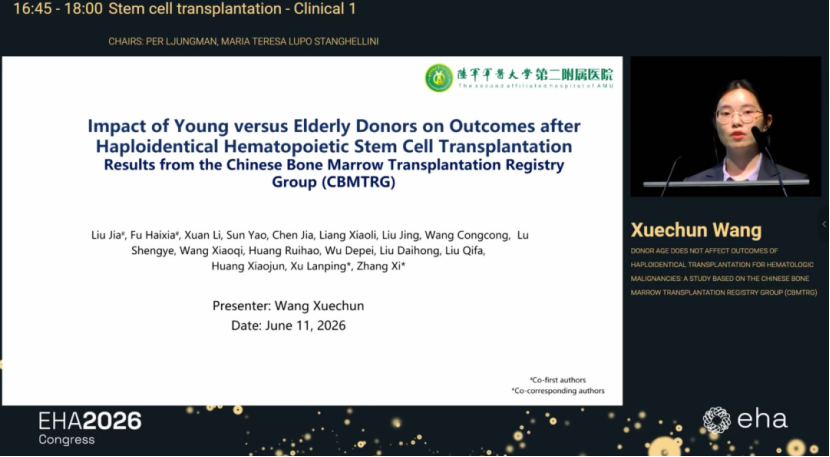
Figure 1. Dr. Xuechun Wang Presenting at the Conference
Allogeneic hematopoietic stem cell transplantation (allo-HSCT) remains a cornerstone curative therapy for high-risk hematologic malignancies. With advantages including broad donor availability and lower HLA-matching barriers, haplo-HSCT has become the dominant transplantation modality in China.
However, whether donor age affects long-term survival, relapse risk, and transplantation-related complications in haplo-HSCT has long been debated. Existing evidence varies across transplant types and disease populations, and remains inconclusive.To date, large-scale real-world studies specifically evaluating the relationship between donor age and haplo-HSCT outcomes in hematologic malignancies have been lacking, leaving a critical evidence gap in clinical decision-making.
Study Design
This was a multicenter retrospective study based on the CBMTRG database, including patients with hematologic malignancies who underwent haplo-HSCT at five transplantation centers in China between 2018 and 2023.
Inclusion criteria were strictly defined: only cases with donor age ≤35 years or ≥50 years were included. A 1:1 propensity score matching (PSM) approach was applied to ensure baseline comparability between groups.Key endpoints included overall survival (OS), disease-free survival (DFS), non-relapse mortality (NRM), and cumulative incidence of relapse (CIR). The study also evaluated the incidence of acute graft-versus-host disease (aGVHD) and chronic graft-versus-host disease (cGVHD). Multivariable Cox regression was used to identify independent prognostic factors, and subgroup analyses stratified by recipient age were performed to assess result robustness.
Results
A total of 979 patients met the initial eligibility criteria. After 1:1 PSM, 260 patients were included in the younger donor group and 260 in the older donor group.
- Overall efficacy outcomes: No statistically significant differences were observed between the younger donor group (<30 years) and the older donor group (>50 years). OS (P=0.617), DFS (P=0.824), NRM (P=0.96), and CIR (P=0.970) showed no significant differences, indicating that donor age did not affect long-term survival, relapse risk, or transplant-related mortality.
- Subgroup analyses: Across all recipient age strata, donor age showed no significant impact on OS, DFS, NRM, CIR, aGVHD, or cGVHD. All subgroup comparisons yielded P values >0.05, demonstrating consistent findings across different recipient populations.
- Safety outcomes: The incidence of grade II–IV aGVHD (P=0.190) and cGVHD (P=0.530) showed no significant differences between groups, indicating that donor age does not increase the risk of major post-transplant complications.
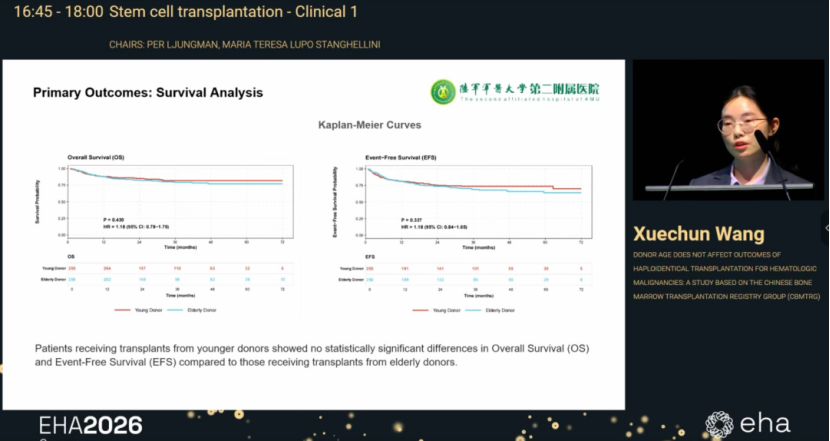
Figure 2. Impact of Donor Age on Outcomes after Haploidentical HSCT
Multivariable Cox regression analysis further confirmed these findings. Donor age was not an independent predictor of OS. Instead, key determinants of transplant outcomes were recipient-related factors, including recipient age, donor–recipient sex mismatch, Hematopoietic Cell Transplantation Comorbidity Index (HCT-CI), and disease status prior to transplantation.
Conclusion
These findings challenge the long-standing clinical preference for younger donors. The study demonstrates that, in patients undergoing haplo-HSCT for hematologic malignancies, donor age does not significantly influence overall efficacy, relapse risk, or transplant-related complications, thereby substantially broadening the donor pool.
In clinical practice, donor selection may be guided by a multidimensional assessment incorporating donor health status, HLA compatibility, and physiological condition, helping to alleviate donor shortages. At the same time, greater emphasis should be placed on pre-transplant evaluation, comorbidity management, and disease control prior to transplantation to further improve outcomes.
Based on real-world clinical data from China, these findings are highly relevant to domestic transplant populations and also provide valuable reference for global practice in haploidentical donor selection.

