


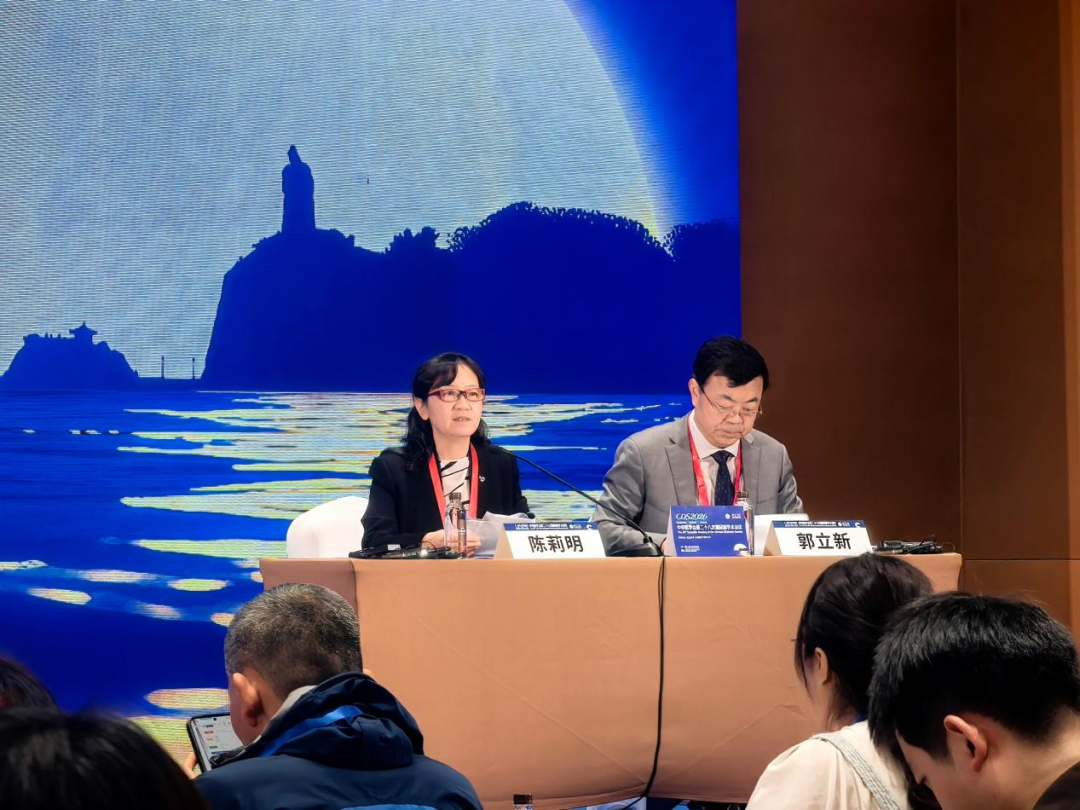
The EASD in China session at the 28th Annual Conference of the Diabetes Branch of the Chinese Medical Association (CDS 2026), held in Xiamen from November 18 to 21, 2026, brought international and Chinese metabolic research onto a single agenda. It was organized in two blocks, In-Depth Dialogues, EASD Highlights and Expert Exchange, Shared Chinese Wisdom. Prof. Liming Chen of Tianjin Medical University Zhu Xianyi Memorial Hospital and Prof. Lixin Guo of Beijing Hospital chaired the first block; Prof. Linong Ji of Peking University People’s Hospital and Prof. Guijun Qin of First Affiliated Hospital of Zhengzhou University chaired the second. Prof. Julia Mader of Medical University of Graz, Austria, joined by video link, and Prof. Liming Chen delivered the interpretation of Chinese research. Most data presented were conference abstracts from EASD 2026, held in Milan on September 28 to October 2, 2026, and have not been peer-reviewed in full.
Article Key Points
- EASD in China at CDS 2026 paired EASD 2026 findings with Chinese data across two blocks
- FLOW analyses: semaglutide improved HRQoL; 5 of 72 proteins mediated the kidney outcome
- Nordic registry: no excess pancreatic cancer risk with semaglutide (pooled HR 0.91)
- SPOTLIGHT China: m3P-MACE risk 25% lower, all-cause mortality 65% lower than other new drugs
- EASD 2026 featured 206 China studies; session data are conference abstracts, not yet peer-reviewed
In-Depth Dialogues, EASD Highlights
Prof. Janaka Karalliedde of King’s College London used selected EASD 2026 studies in cardiorenal metabolism to review progress in continuous glucose monitoring (CGM) and the head-to-head comparison of dapagliflozin and metformin in early type 2 diabetes (T2D).
Prof. Yan Bi of Nanjing Drum Tower Hospital, Nanjing University Medical School traced the conceptual shift from cardiovascular-kidney-metabolic (CKM) syndrome to the proposed metabolic dysfunction-liver-cardiovascular-kidney (MLCK) syndrome, also referred to as CKLM in the panel discussion. She described the interaction between metabolic dysfunction-associated steatotic liver disease (MASLD) and CKM syndrome, reviewed recent international consensus documents and global disease-burden data, and discussed prevention priorities and management challenges under the new framework.
Semaglutide: Patient Benefit, Mechanism, Long-Term Safety and Treatment Strategy
Prof. Mader’s presentation was organized around four dimensions, and the evidence she discussed was drawn largely from analyses presented at EASD 2026.
On patient benefit, she described the patient-reported outcomes of the FLOW trial, in which semaglutide improved health-related quality of life (HRQoL) compared with placebo, adding a patient-centered component to the trial’s efficacy and safety evidence [1].
On mechanism, she described a mediation analysis of 72 prespecified proteins in FLOW. Early changes in the urine albumin-to-creatinine ratio (UACR) and estimated glomerular filtration rate (eGFR) explained only part of the renal benefit; after adjustment for cystatin C-based eGFR, five proteins, including LAYN and LTBR, significantly mediated the composite kidney outcome, and these mediators spanned inflammation, tissue remodeling and fibrosis, and oxidative stress. The analysis was presented as suggesting that semaglutide may affect kidney outcomes through broader CKM biology pathways [2]. Plasma proteomics from the same trial supported this reading: semaglutide significantly modulated 38 prognostic-relevant proteins by week 12, spanning inflammatory, fibrotic and oxidative stress pathways [3].
On long-term safety, she presented a cohort study based on Nordic registry data, in which semaglutide was not associated with an increased risk of pancreatic cancer compared with non-incretin glucose-lowering drugs (pooled HR 0.91), with no observed effect related to cumulative dose or duration of use [4].
On treatment strategy, she noted that dose escalation to 2.0 mg and switching to tirzepatide are both common intensification strategies for patients already receiving semaglutide 1.0 mg, while real-world cardiovascular outcome evidence for the two approaches remains limited. A study presented at the meeting suggested that escalating semaglutide to 2.0 mg, compared with switching to tirzepatide, was associated with a 6% lower risk of 3-point major adverse cardiovascular events (3P-MACE) [5]. The OCTANE study addressed formulation choice: among patients with overweight or obesity switched from injectable semaglutide or tirzepatide to oral semaglutide for weight management, mean weight and body mass index (BMI) fell significantly over three months, with mean weight loss of 4.1% and 40.7% of patients achieving at least 5% weight loss; the proportion of patients with obesity fell from 87.1% at baseline to 65.5%. Treatment satisfaction was high, with three of four patients satisfied, and adherence reached 86.7% [6].
Prof. Hongyu Kuang of First Affiliated Hospital of Harbin Medical University then summarized the latest clinical evidence for incretin-based therapies in MASLD and in cardiovascular and renal protection.
Expert Exchange, Shared Chinese Wisdom
Prof. Qi Pan of Beijing Hospital reviewed research hotspots in endocrinology and metabolism for 2026 along three lines of work, guideline and consensus documents, major studies, and emerging technology, spanning integrated MLCK management, the evidence for multi-organ protection, and precision monitoring and the search for curative approaches.
Prof. Chen’s interpretation of Chinese research at EASD 2026 opened with the scale of participation. A total of 206 China studies were presented, comprising 45 oral presentations and 161 short oral presentations; 80.6% were domestic studies and 19.4% international collaborations, and 138 (67%) were clinically oriented.
She then read these studies through two themes, the changing burden of MLCK and new progress in related drug classes.
On MLCK burden, she presented four Chinese studies. A 34-year follow-up of the Da Qing Diabetes Study showed that in newly diagnosed diabetes, the hypertension-obesity phenotype and the hyperglycemia-dominant phenotype carried significantly higher cardiovascular mortality risk than mild metabolic phenotypes [7]. A study from Hong Kong, China built a residual cardiovascular risk model for patients with T2D who reached low-density lipoprotein cholesterol (LDL-C) targets on statin therapy; the model discriminated well in both the derivation cohort and a temporal validation cohort, and subgroups predicted to have low (below 5%) and high (at least 20%) residual cardiovascular risk had actual cardiovascular event rates of 2.4% and 30% [8]. An analysis of chronic kidney disease (CKD) burden attributable to early-onset T2D in individuals aged 15 to 39 years, globally and in China, found high BMI to be a key determinant of mortality and years of life lost [9]. A multicentre prospective cohort study of patients with T2D and MASLD found that over a median follow-up of nine months, more patients improved than progressed in steatosis and fibrosis [10].
On drug progress, she presented the SPOTLIGHT series of real-world studies in China. In patients newly starting glucose-lowering therapy, semaglutide initiation was associated with a 25% lower risk of modified 3-point major adverse cardiovascular events (m3P-MACE) and a 65% lower risk of all-cause mortality compared with newly starting other glucose-lowering drugs, and these associations tracked with adherence: higher adherence was linked to larger cardiorenal benefit, while treatment discontinuation was linked to higher cardiorenal event risk [11]. In a primary prevention population of Chinese patients with T2D who had no diagnosed cardiovascular disease or CKD but had hypertension and/or dyslipidemia, semaglutide was associated with a significantly lower risk of modified 5-point major adverse cardiovascular events (m5P-MACE), by up to 48% [12]. Compared with sodium-glucose cotransporter-2 inhibitor (SGLT2i) therapy alone, adding semaglutide was associated with a 54% lower risk of m3P-MACE and a 65% lower risk of hospitalization for heart failure [13].
Semaglutide evidence extended to finer patient subgroups. A post hoc analysis of PIONEER 5 showed that oral semaglutide for 26 weeks, compared with placebo, significantly lowered UACR in patients with T2D and CKD, reduced the risk of new-onset albuminuria, and improved UACR category distribution [14]. A real-world study in patients with T2D and MASLD comparing semaglutide with liraglutide and pegylated lanreotide found that semaglutide improved liver fat content significantly more than both comparators, while for subcutaneous and visceral fat area, semaglutide and liraglutide both improved outcomes significantly more than pegylated lanreotide [15]. Prof. Chen also covered the latest developments in a domestic oral glucagon-like peptide-1 (GLP-1) receptor agonist, a domestic GLP-1 and glucose-dependent insulinotropic polypeptide (GIP) dual-target drug, weekly insulin formulations including IcoSema, finerenone, and islet cell therapy.
Environmental and Spatial Data, and Panel Discussion
Prof. Peng Jia of Renmin Hospital of Wuhan University drew on multi-source data to examine the relationship between environmental factors such as air pollution and community greening and metabolic disease risk, and analyzed the spatial distribution of hypoglycemia, adding environmental and spatial dimensions to metabolic research.
In the panel discussion, Prof. Karalliedde, Prof. Mader, Prof. Chen and Prof. Kuang addressed the trend toward earlier onset of the MLCK and CKLM syndrome burden, the interplay between heart, kidney, liver and metabolism, and the transition from single-target intervention toward multi-organ integrated “full-chain” management. Their discussion focused on patients with T2D who also have atherosclerotic cardiovascular disease (ASCVD), CKD or MASLD, and on the clinical use of combinations of incretin-based therapies, SGLT2i and nonsteroidal mineralocorticoid receptor antagonists (nsMRA).
Conclusion
The parent trials underlying much of this coverage are published, including FLOW and PIONEER 5, and the Da Qing Diabetes Study has a long follow-up record. The specific analyses presented at CDS 2026 are, however, conference material: the FLOW quality-of-life analysis was presented at ERA 2026, and the FLOW mediation and proteomics analyses along with the other studies were presented as EASD 2026 abstracts (LBA and SO designations) and have not been peer-reviewed in full. The SPOTLIGHT and other Chinese real-world findings are retrospective database analyses, and their associations should not be read as causal effects. The MLCK framework discussed in this session is a proposed construct whose prognostic value and clinical utility remain to be established, and its terminology is not yet uniform, appearing as MLCK in some presentations and CKLM in others. All reported populations were Chinese adults or Chinese cohorts, limiting generalization.
Reference
[1] Mann J, et al. The effects of semaglutide on health-related quality of life in adults with type 2 diabetes and chronic kidney disease: FLOW trial. ERA 2026.
[2] Tuttle KR, et al. Mediation of cardiovascular kidney outcomes by 72 prespecified proteins in the FLOW trial. EASD 2026. LBA 30.
[3] Rossing P, et al. FLOW trial plasma proteomics identifies prognostic signatures and pharmacodynamic pathway modulation by semaglutide. EASD 2026. LBA 28.
[4] Karlstad Ø, et al. Epidemiological assessment of the risk for pancreatic cancer associated with the use of semaglutide in patients with type 2 diabetes: a cohort study based on Nordic registry data. EASD 2026. LBA 35.
[5] Fang G, et al. Major adverse cardiovascular events in adults with type 2 diabetes escalating to semaglutide 2.0 mg vs switching to tirzepatide. EASD 2026. LBA 44.
[6] Smith BJ, et al. Three-month real-world weight outcomes among patients with overweight or obesity after switching from injectable semaglutide or tirzepatide to oral semaglutide for weight management: the OCTANE study. EASD 2026. LBA 59.
[7] Data-driven metabolic phenotypes and CV mortality in newly diagnosed diabetes and impaired glucose tolerance: a 34-year follow-up of the Da Qing Diabetes Study. EASD 2026. SO007-311.
[8] Residual cardiovascular risk in statin-treated Chinese with type 2 diabetes achieving LDL-C targets: a 5-year prediction model. EASD 2026. LBA 80.
[9] Analysis of the disease burden of chronic kidney disease attributed to early-onset type 2 diabetes among individuals aged 15-39 years globally and in China: findings from the GBD Study 2021. EASD 2026. SO001-226.
[10] Regression and progression of steatosis and fibrosis in adults with type 2 diabetes and MASLD: a multicentre prospective cohort study. EASD 2026. SO037-543.
[11] Shan C, Zhang B, Hu P, et al. Semaglutide reduces the risk of cardiovascular and renal events in Chinese type 2 diabetes patients: a real-world retrospective database study. EASD 2026. SO061-733.
[12] Sun B, Shan C, Zhang B, et al. Semaglutide reduces cardiovascular event risk in the primary prevention setting among Chinese patients with type 2 diabetes: a real-world retrospective cohort study. EASD 2026. LBA 40.
[13] Shan C, et al. Semaglutide in combination use with SGLT2i reduces cardiovascular events compared to SGLT2i alone use in Chinese patients with type 2 diabetes. EASD 2026. LBA 42.
[14] Effects of oral semaglutide on urinary albumin-to-creatinine ratio in patients with type 2 diabetes and CKD: a post-hoc analysis of the PIONEER 5 trial. EASD 2026. SO106-1076.
[15] Glucagon-like peptide-1 receptor agonists in the treatment of type 2 diabetes with MASLD: a real-world study. EASD 2026. SO035-523.

